 Birch Bay
 Why Semiahmoo Homes Wear Differently Than Homes Inland
Semiahmoo sits right where Whatcom County's coastline meets Semiahmoo Bay, and that location shapes everything about how a house ages here. Homes just a few miles inland deal with rain and cold. Homes in Semiahmoo and the rest of Birch Bay deal with rain, cold, salt-laden air rolling off the water, and wind-driven moisture that finds its way into places a calmer climate never would. If you've owned a home here for more than a winter or two, you've probably already noticed it: paint that fails faster on the water-facing wall, trim that stays damp longer than it should, or moss creeping across siding and roof surfaces that never get a full day of direct sun.
None of this is unusual for the area. It's just what coastal Whatcom County does to exterior building materials over time. The homes that hold up best aren't necessarily the newest — they're the ones built or re-sided with materials and techniques that were chosen with this specific climate in mind, not a generic Pacific Northwest climate.
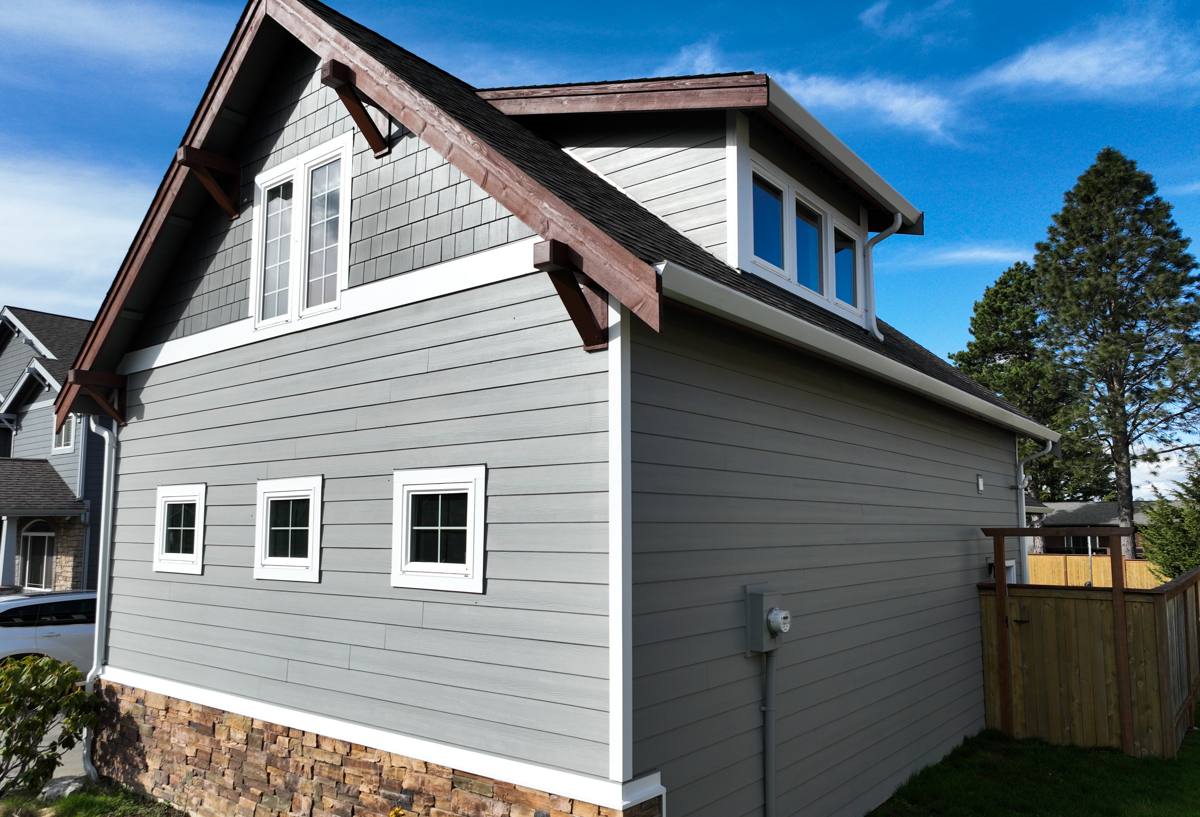
The Three Things Working Against Your Siding Here
Salt Air
Proximity to Semiahmoo Bay and the broader Salish Sea means airborne salt is a constant, low-level presence on exterior surfaces. Salt is corrosive to exposed metal fasteners and flashing, and it accelerates the breakdown of lower-quality paints and finishes. It doesn't take a storm to do this damage — it's the everyday exposure, wall after wall, year after year, that adds up.
Driving Rain
Birch Bay's winter storms don't just drop rain straight down — wind pushes it sideways, into seams, laps, and joints that were never designed to be soaked head-on. Siding materials and installation details that work fine in a sheltered inland yard can underperform on a west- or south-facing wall that takes the brunt of a Semiahmoo storm.
A Long Moss Season
Between the marine humidity and the shade many Birch Bay lots get from mature trees, moss and algae have a long growing window here — often close to year-round on north-facing or shaded walls. Moss holds moisture against a surface, and a siding material that can't shed that moisture or resist organic growth will show it in discoloration, soft spots, or premature wear well before its expected lifespan is up.
What This Means for Your Siding Choice
We've been honest with Birch Bay and Semiahmoo homeowners for a long time about why we only install James Hardie fiber cement siding on the homes we work on. It's not a marketing position — it's a response to what we've seen this specific coastal climate do to other materials over the years.
| Material | How it tends to hold up in this climate |
|---|---|
| Vinyl siding | Can warp or become brittle with temperature swings, and seams are a common entry point for wind-driven rain |
| Primed spruce / cedar | Requires diligent, ongoing repainting and caulking to resist moisture; salt air and shade shorten the window between maintenance cycles |
| LP SmartSide (engineered wood) | Performs reasonably when maintained perfectly, but is more sensitive to sustained moisture exposure at cut edges and joints than fiber cement |
| James Hardie fiber cement | Non-combustible, engineered for moisture resistance, holds factory-baked ColorPlus finish without the frequent repainting cycle |
We're not going to tell you other products are junk — plenty of homes in this county have vinyl or wood siding that's been reasonably maintained and looks fine. What we will say is that after years of doing exterior work along this stretch of coastline, we stopped installing anything other than James Hardie because it's the material that gives Birch Bay and Semiahmoo homeowners the best odds against salt air, driving rain, and moss — with the least amount of upkeep required from them.
James Hardie in a Coastal Climate
Hardie's fiber cement siding is engineered specifically for regional climate conditions, and that includes a HardieZone HZ10 product line built for the Pacific Northwest's wet, marine-influenced weather. A few things matter specifically for a Semiahmoo property:
- Fiber cement doesn't rot, and it isn't a food source for the moss and algae that thrive in this area's shade and humidity
- The ColorPlus factory finish is baked on and warrantied against fading and peeling, which matters on walls that face direct salt spray and sun exposure
- It's non-combustible, which is a genuine safety advantage regardless of coastal location
- Correctly installed with the right fastener spacing, flashing, and caulking details, it resists the wind-driven rain that Birch Bay storms deliver
That last point is worth underlining: the material is only half the equation. Correct installation — proper flashing above windows and doors, correct clearance from grade and roof lines, sealed joints, and fasteners rated for coastal exposure — is what actually keeps water out. We've seen Hardie installed poorly by out-of-area crews who don't adjust their approach for this climate, and it doesn't perform the way it should. That's a big part of why hiring locally matters here.
Why a Local Crew Matters in Semiahmoo
A contractor who works Whatcom County's coastline regularly knows which walls on a Semiahmoo property take the worst of the weather, where moss tends to establish first, and how the local building department expects flashing and moisture barriers to be detailed. That's not something you get from a national franchise crew rotating through on a regional schedule. We're in Birch Bay and the surrounding area routinely — we see how houses here actually age, not just how they look on installation day.
It also means faster response for anything that comes up after the job is done, and a crew that stands behind its work because it isn't going anywhere. If a flashing detail needs a second look after a hard winter storm, we're a local call, not a call center.
Beyond Siding: The Whole Exterior Envelope
Siding doesn't work in isolation — it's one piece of an exterior envelope that also includes your roof, windows, and any exposed structures like decks. In a climate like Semiahmoo's, these all interact:
- Roofing: A roof that's shedding moss, holding moisture, or has failing flashing will send water down onto siding and trim, undermining even well-installed fiber cement
- Windows: Poorly flashed or aging window units are one of the most common sources of water intrusion behind siding, especially on walls exposed to driving rain
- Decks: Ledger boards and deck-to-house connections are another common point where water gets behind the exterior wall if not detailed correctly
Because we handle siding, roofing, windows, and decks, we can look at a Semiahmoo home's exterior as one connected system rather than fixing one component while ignoring a leak source somewhere else. That's often how the most persistent moisture problems on coastal homes actually get solved — not by re-siding alone, but by correcting the roof or window detail that was feeding water to the siding in the first place.
Signs It's Time to Have Your Siding Looked At
Coastal wear doesn't always show up as an obvious failure. It's usually gradual, and homeowners often live with early warning signs for a while before calling anyone. Worth a look if you're seeing:
- Moss or dark streaking that keeps coming back within a season or two of cleaning
- Paint or finish that's peeling, chalking, or fading faster on the water-facing side of the house
- Soft spots, swelling, or visible seams opening up, especially near the bottom courses or around windows
- Musty smells or visible staining on interior walls that back up to exterior siding
- Caulking that's cracked or pulled away around trim, windows, or corners
What a Siding Project Actually Involves
For homeowners who haven't been through a re-siding project before, here's the general shape of it:
Assessment and Estimate
We walk the exterior, look at what's driving the current wear (climate exposure, existing material, any hidden moisture issues), and give you an honest picture of what's needed and why.
Moisture Barrier and Flashing
Before any new siding goes up, the house wrap, flashing, and any water-damaged sheathing underneath get addressed. This step matters more in a coastal climate than almost anywhere else in the county — it's the layer that actually keeps driving rain out.
Installation
James Hardie panels or lap siding go up with fastener spacing, joint treatment, and clearances suited to this climate, not a generic install spec.
Trim, Caulking, and Finish Details
The small details — corner boards, window trim, caulk joints — are often where coastal homes fail first if rushed. We treat them as load-bearing to the whole system, not cosmetic afterthoughts.
Cost Factors Specific to This Area
| Factor | Why it matters in Semiahmoo / Birch Bay |
|---|---|
| Wall exposure | Walls facing the water or prevailing storm direction may need more attention to flashing and fastener detail, affecting labor time |
| Existing moisture damage | Homes with a history of moss or water intrusion may need sheathing repair before new siding goes on |
| Access and site conditions | Wooded or waterfront lots can affect scaffolding, staging, and cleanup logistics |
| Trim and detail complexity | Homes with more window and roofline transitions require more flashing and trim work per square foot |
If your Semiahmoo or Birch Bay home is showing signs of coastal wear, or you're simply planning ahead for a siding, roofing, window, or deck project, we're happy to come take a look and walk you through what we're seeing — no pressure, no obligation. Use the form below to request a free estimate.