 Birch Bay
 Ferndale sits close enough to the Salish Sea and the Nooksack River lowlands that its homes take on a specific kind of weather load: salt-tinged marine air drifting in off Birch Bay and the Strait, driving horizontal rain for months at a stretch, and a moss season that seems to start earlier and last longer every year. None of that is unusual for Whatcom County. But it does mean the exterior materials on a Ferndale home are working harder than the same materials would on a house fifty miles inland, and it's worth understanding what that work actually involves before you pick what goes on your walls, roof, and trim.
What the Climate Actually Does to a House Here
Three things drive most of the exterior wear we see on Ferndale homes, and they compound each other rather than acting alone.
Salt Air and Moisture Together
Proximity to the bay means airborne salt settles on siding, flashing, and fasteners. On its own, salt is mostly a corrosion issue for metal components. Paired with the region's near-constant humidity and rainfall, it becomes a moisture problem too — salt is hygroscopic, meaning it pulls in and holds moisture rather than letting a surface dry out between rain events. Materials that already struggle to shed water get worse in a salt-air environment because they stay damp longer.
Driving Rain, Not Just Rain
Whatcom County doesn't just get a lot of rain — a good portion of it arrives wind-driven, hitting walls at an angle rather than falling straight down. That matters because it pushes water into laps, seams, and joints that would stay dry in a calmer climate. Siding systems, window flashing, and roof-to-wall transitions all need to be detailed for wind-driven rain specifically, not just designed to shed water that falls straight down.
A Long Moss and Algae Season
Cool temperatures, shade from mature trees, and sustained dampness are exactly what moss and algae need to establish themselves, and Ferndale has all three for a large part of the year. Moss on a roof holds moisture against shingles and can work into laps over time. Algae streaking on siding is mostly cosmetic, but it's also a sign of a surface that stays wet — which tells you something about how that material is performing in this climate.
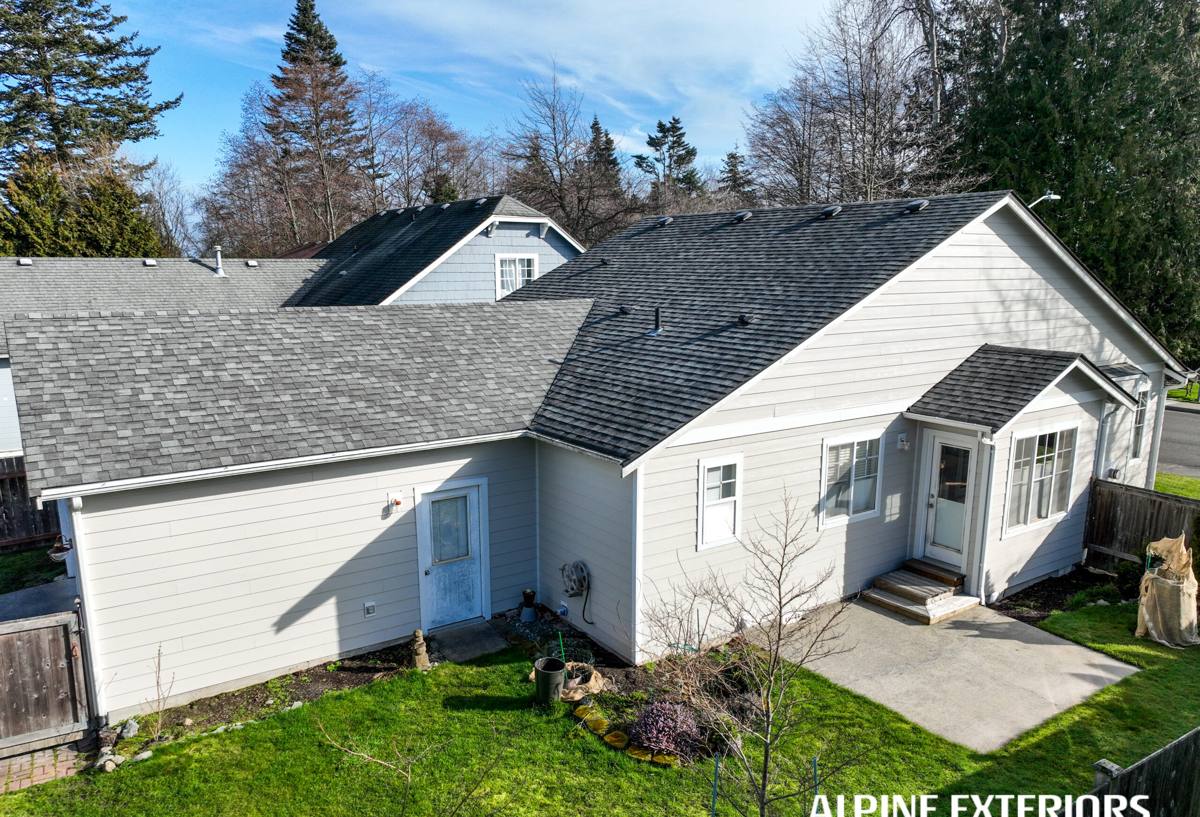
Why Siding Choice Matters More Here Than in a Dry Climate
In a drier region, the difference between siding materials shows up mostly in appearance and upfront cost. In a marine climate like Ferndale's, the difference shows up in how the material behaves over fifteen, twenty, thirty years of near-constant moisture exposure. This is the entire reason we standardized on James Hardie fiber cement and don't install vinyl, LP SmartSide, Cemplank, Allura, primed spruce, or cedar on the homes we work on.
That's not a knock on every homeowner who has one of those products on their house today — plenty of them perform fine for years with regular maintenance. It's a statement about our own standard: we'd rather install one product we can stand behind in this climate than offer a menu of options with very different long-term outcomes.
| Material | How It Handles Sustained Moisture | Maintenance Load in This Climate |
|---|---|---|
| James Hardie fiber cement | Non-combustible, engineered for moisture and freeze-thaw cycling; ColorPlus finish is baked on, not field-applied | Low — occasional wash, no repainting cycle |
| Vinyl | Sheds bulk water but can warp, and seams/laps allow moisture behind the panel over time | Low upfront, but repair and color-matching get harder as panels age and fade |
| Cedar | Natural material that absorbs and releases moisture; performance depends heavily on ongoing sealing/staining | High — regular refinishing needed to prevent rot in a wet climate |
| Primed spruce / engineered wood | Sensitive to sustained moisture exposure at cut edges and joints if not maintained | Moderate to high — paint film needs monitoring, especially at seams |
James Hardie: The System We Install
James Hardie fiber cement is cement, sand, and cellulose fiber formed under pressure — it doesn't burn, it doesn't rot, and it's not a food source for insects. For a coastal-influenced climate like Ferndale's, two things matter most:
- ColorPlus Technology — the color finish is baked onto the board at the factory in multiple coats, rather than sprayed or brushed on site. That matters in a climate where field-applied paint has to cure and bond in damp, cool conditions that aren't always ideal for it.
- HZ5 engineering — Hardie's HZ product lines are engineered for specific climate zones, and the versions we install here are matched to the Pacific Northwest's combination of moisture and temperature swings, not a one-size-fits-all national spec.
Hardie also carries a strong transferable warranty on both the substrate and the ColorPlus finish, which matters if you sell the home before the siding's functional life is up — something worth asking about with any product you're considering.
Roofing: The Other Half of Keeping Water Out
Siding and roofing work together as one water-management system, and in Ferndale that partnership gets tested constantly. Roof-to-wall transitions, valleys, and flashing details are where driving rain and moss buildup cause the most trouble over time. When we're on a roof, we're checking:
- Flashing condition at every wall intersection, chimney, and vent penetration
- Moss and organic growth that's holding moisture against the roofing material
- Gutter and drainage performance — undersized or clogged systems push more water toward the wall assembly than it was designed to handle
- General wear consistent with the roof's age and this climate's demands
Windows and the Water-Management Envelope
A window opening is one of the most vulnerable points in any wall assembly, and it's a common source of hidden moisture problems in homes we look at around Ferndale. Wind-driven rain finds gaps in old flashing tape, deteriorated caulk, or window units that have simply reached the end of their sealed-glass life. When we replace siding, we treat the window openings as part of the same water-management plan — proper flashing integration matters as much as the window unit itself.
Decks: Built for Wet-Season Reality
Outdoor living structures in this part of Whatcom County spend a large share of the year wet, shaded, or both. Decking material choice, proper spacing for drainage and airflow, and ledger board flashing all affect how long a deck holds up before rot or structural softening becomes a problem. A deck built without those details in mind can look fine for a few years and still be failing underneath.
Why a Local Crew Is Worth Something Here
A crew that works Whatcom County regularly has already seen how salt air, driving rain, and moss season actually play out on homes in this area — not in a manual, but on roofs and walls they've stood on. That translates into practical judgment calls: how much overhang matters on a given exposure, which details need extra attention on a bay-facing wall, and what maintenance schedule actually makes sense here versus what a generic guide says. It also means someone is genuinely reachable if a warranty question or a follow-up item comes up down the road.
What to Look For When Hiring a Contractor in This Area
- Manufacturer training or certification specific to the products they're installing, not just general contracting experience
- A written scope that names flashing details, house wrap, and fastener schedule — not just "siding replacement"
- Willingness to explain trade-offs between materials honestly, including for products they don't install
- Local references or a local track record in Whatcom County specifically
- Clear warranty terms in writing, including what's covered by the manufacturer versus the installer
- A plan for coordinating siding, roofing, and window work so water management is handled as one system, not three separate jobs
Putting It Together for a Ferndale Home
None of this means a Ferndale home needs an unusual amount of exterior work compared to elsewhere in the county — the climate here is consistent across the region. It means the materials and details matter more, because the margin for error in a marine climate with sustained rain and moss pressure is smaller than it is somewhere drier. Fiber cement siding installed with attention to flashing and drainage, a roof system checked regularly for moss and flashing wear, windows integrated properly into the water-management plan, and decks built with drainage in mind — that combination is what holds up through a Whatcom County winter after Whatcom County winter.
If you'd like a straightforward look at how your home's exterior is holding up against Ferndale's climate, we're glad to come take a look. There's no pressure and no obligation — just an honest assessment and, if it's useful, a written estimate you can take your time with.