 Birch Bay
 Terrell Creek's Exterior Challenges Are Real, Not Generic
Terrell Creek sits close enough to Birch Bay and the Strait of Georgia that homes here deal with a specific combination of exterior stress: salt-laden air moving in off the water, long stretches of driving rain through fall and winter, and a moss and algae season that can run most of the year in the shaded, moisture-heavy pockets common to this part of Whatcom County. None of that is unusual for northwest Washington, but it adds up differently depending on how a home is sited, how much tree cover surrounds it, and what the exterior is actually made of. A house tucked against a wooded lot near the creek corridor faces more sustained dampness and shade than one sitting more open toward the water, and the right exterior approach should reflect that difference rather than treat every property the same.
We work Terrell Creek as part of our regular Birch Bay service area, which means we're not learning the local conditions on your job. We know what a Whatcom County winter does to caulk joints, what happens to end grain on wood trim that never fully dries out between rains, and which north- and west-facing walls tend to hold moss longest. That local familiarity shapes how we approach siding, roofing, window, and deck work here — not just what products we use, but how we detail and install them for this specific stretch of coastline.
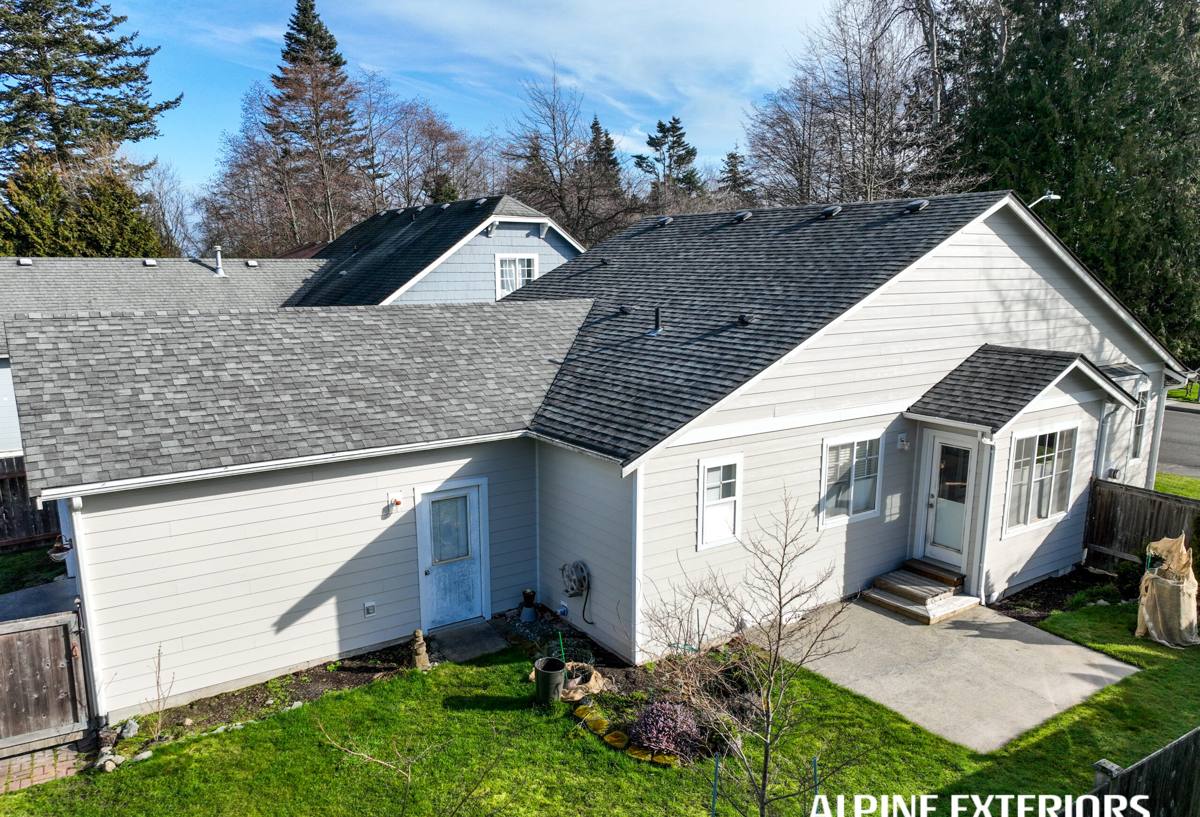
What Salt Air and Rain Actually Do to a Building Envelope
Salt air is corrosive to exposed metal fasteners, flashing, and hardware, and it accelerates the breakdown of finishes that aren't engineered to resist it. Combined with the region's rain volume, the bigger long-term issue is usually moisture management rather than any single storm event — it's water finding its way behind siding through failed caulk, undersized flashing, or a butt joint that was never properly sealed, then sitting there because the wall assembly can't dry out fast enough between rain systems.
Moss and algae growth is the visible symptom most homeowners notice first, especially on north-facing walls, under eaves, and anywhere a roofline shades the siding below it. Moss itself isn't usually what damages a wall — the problem is what moss retains: constant surface moisture against a material that isn't built to handle it. On products that absorb water or swell at cut edges and seams, that sustained dampness is where the real deterioration starts.
Where We See the Most Wear Locally
- North and west-facing walls with limited sun exposure and heavier moss buildup
- Trim and butt joints where caulk has failed and water has tracked behind the surface
- Areas near grade or dense landscaping where airflow is limited and things stay damp longer
- Roof-to-wall intersections and deck ledger connections, where flashing quality determines whether water gets managed or trapped
- South and west exposures on decks, where UV and repeated wet-dry cycles stress fasteners and coatings
Why We Install Only James Hardie Fiber Cement Siding
We made a deliberate decision as a company to install James Hardie fiber cement exclusively and not offer vinyl, LP SmartSide, Cemplank, Allura, primed spruce, or cedar. That's not a marketing position — it's a practical one, built around what actually holds up on homes in conditions like Terrell Creek's.
Fiber cement is non-combustible, which matters given Washington's increasing wildfire-season awareness even on the wetter west side of the state. More relevant to this specific coastline, Hardie's HZ5 product line is engineered for exactly the freeze-thaw and moisture-cycling conditions the Pacific Northwest produces, and it doesn't absorb and swell at cut edges and seams the way wood-based products can when installation isn't perfect or maintenance lapses for a season. Its factory-applied ColorPlus finish is baked on under controlled conditions rather than field-applied, which gives it meaningfully better resistance to fading and moisture intrusion at the surface than a site-painted product, and it comes with a strong, transferable warranty that reflects the manufacturer's confidence in how the material performs over decades, not just years.
We're not going to tell you vinyl or wood siding is worthless — plenty of homes wear them fine for a while. But vinyl can crack and warp in temperature swings and doesn't offer real fire resistance; wood and wood-based products demand a maintenance commitment (repainting, sealing, edge protection) that a lot of homeowners underestimate until moss and moisture have already gotten a foothold. Given what we see happen to exteriors in this specific climate over a 10-15 year window, we decided we'd rather install one product well than offer several and let homeowners find out the hard way which one was the compromise.
Fiber Cement vs. Common Alternatives
| Factor | James Hardie Fiber Cement | Vinyl | Wood / Primed Spruce / Cedar |
|---|---|---|---|
| Moisture absorption | Very low, engineered for wet climates | Non-absorbent but can warp/gap | Absorbs at cut edges, joints, end grain |
| Fire resistance | Non-combustible | Combustible | Combustible |
| Finish durability | Factory-baked ColorPlus finish | Color molded through, can fade/chalk | Field-applied paint/stain, needs recoating |
| Maintenance burden | Low — periodic wash, occasional caulk check | Low, but cracks/warps age poorly | High — repainting, sealing, edge protection |
| Typical warranty | Long-term, transferable | Varies widely by manufacturer | Limited, mostly on paint/finish only |
Siding Work in Terrell Creek
Most of our siding calls in this area fall into two categories: full replacements on homes where the existing siding has reached the end of its useful life, and repair or partial replacement where moisture has gotten into a specific section — usually near grade, under a deck, or at a poorly flashed trim detail. Either way, the process starts the same: we look at the wall assembly, not just the surface. That means checking for trapped moisture, evaluating the house wrap or building paper underneath, and making sure flashing at windows, doors, and rooflines is actually doing its job before new siding goes up over it. Installing good siding over a compromised wall just hides a problem instead of fixing it.
For full replacements, we install Hardie's plank, shingle, or panel systems depending on the home's style, with HZ5 formulations appropriate to this climate zone. We pay particular attention to butt joints, caulking, and fastener patterns, since those details are where most premature siding failures actually originate — not from the material itself.
Roofing, Windows, and Decks Round Out the Envelope
Siding is only part of what keeps water out of a house. We also handle roofing, window replacement, and deck construction and repair, because those systems interact directly with the siding at flashing points, and a weak link in any one of them undermines the others.
Roofing
Roof-to-wall flashing is one of the most common places we find hidden water intrusion in this area, especially where a lower roofline meets a wall below a second story. A roof replacement or repair is also the right time to correct flashing details that were never done right the first time.
Windows
Older windows in this area often have degraded seals or flashing that let moisture track down into the wall cavity behind the siding — a slow leak that can go unnoticed for years. When we replace windows, we integrate the new flashing with the surrounding siding rather than treating it as a separate job.
Decks
Decks facing the water or open sky take a heavier UV and rain beating than the rest of the house, and ledger board connections are a common point of hidden rot if they weren't flashed correctly when built. We build and repair decks with attention to drainage and ledger flashing specifically because of how much water this region sees.
Why a Local Crew Matters Here
Terrell Creek isn't a huge, well-known landmark-heavy neighborhood, and that's fine — what matters more than a list of nearby streets is understanding the microclimate patterns that repeat across Birch Bay and the surrounding Whatcom County coastline. We know which orientations hold moisture longest, how far salt air's effects extend inland from the water, and what a proper installation needs to look like to hold up through years of the same weather pattern repeating. A crew unfamiliar with this specific stretch of coast might install a technically correct product with details suited to a drier or more inland climate. We don't have that gap, because this is the area we work.
What a Typical Project Looks Like
Every home is different, but most siding and exterior projects in this area follow a similar sequence:
- On-site assessment of existing siding, trim, flashing, and any visible moisture or moss issues
- Evaluation of the wall assembly and weather barrier underneath, not just the surface material
- A written estimate outlining scope, product line, and any repair work needed before new siding goes on
- Correction of flashing, drainage, or moisture issues discovered during tear-off
- Installation of James Hardie fiber cement siding to manufacturer and local climate specifications
- Final walk-through covering care and what to watch for going forward
Simple Maintenance Checklist for Terrell Creek Homes
- Rinse siding and trim periodically to keep salt residue and organic buildup from accumulating, especially on north-facing walls
- Check caulking at butt joints, window and door trim, and penetrations once a year for cracking or gaps
- Keep landscaping trimmed back from siding to allow airflow and faster drying after rain
- Look for moss buildup under eaves and in shaded corners before it spreads across a wider area
- Have roof-to-wall flashing and deck ledger connections checked periodically, since these are common hidden entry points for water
If you're noticing moss, staining, soft spots, or aging siding on a home in Terrell Creek, we're glad to take a look. We offer free, no-pressure estimates and can walk you through what we find and what your realistic options are — no obligation either way.