 Birch Bay
 Birch Bay Village: A Coastline That Tests Every Exterior
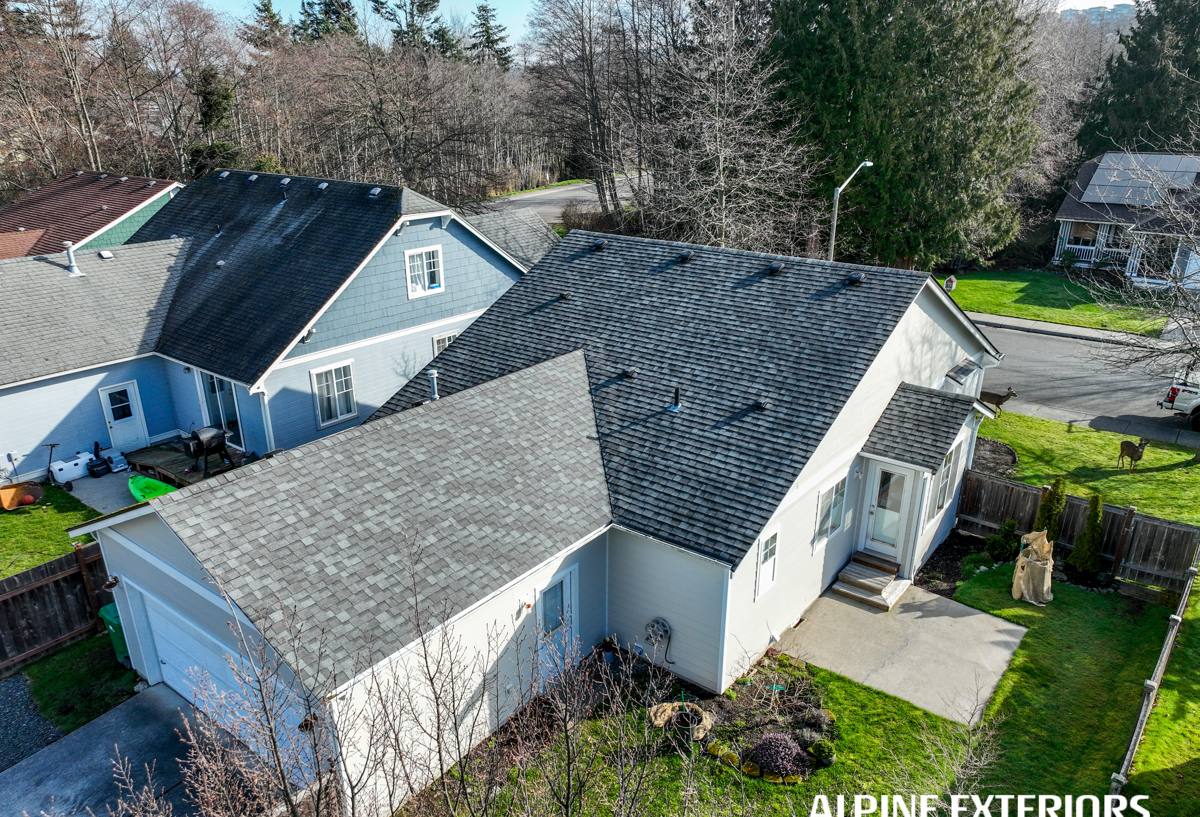
Birch Bay Village sits right up against the water, which is exactly what makes it a great place to live and a tough place to keep a house looking good. Homes here take a steady combination of salt-laden air, wind-driven rain off the Strait of Georgia, and long stretches of gray, damp weather that Whatcom County is known for. None of that is dramatic on any single day. It's the accumulation — season after season — that shows up first on siding, trim, and anything painted or wood-based.
We work throughout Birch Bay and the surrounding Whatcom County coastline, and Birch Bay Village homes tend to show a consistent pattern of wear: moisture intrusion at poorly flashed joints, moss and algae staining on north- and west-facing walls, and paint or coating failure well ahead of what the same product would show inland. A siding system that isn't built for this environment gets outmatched by it, sometimes within a handful of years.
What Salt Air, Driving Rain, and Moss Actually Do
Salt Air
Airborne salt is corrosive and hygroscopic — it pulls moisture out of the air and holds it against surfaces longer than they'd otherwise stay wet. On siding, that means fasteners, trim edges, and any exposed cut ends stay damp longer, which accelerates rot in wood-based products and corrosion in lower-grade metal components.
Driving Rain
Storms coming off the water don't just fall straight down — wind pushes rain sideways into wall assemblies, seams, and butt joints. Siding that isn't installed with proper flashing, gapping, and caulking detail lets that water find its way behind the cladding, where it can sit against sheathing and framing unnoticed for months.
Moss Season
Whatcom County's wet season runs long, and shaded or north-facing walls near mature trees rarely get enough sun exposure to dry out fully between rain events. That's the exact environment moss and algae need. Beyond looking bad, sustained moss growth holds moisture against the siding surface, which is a slow but real threat to any product that isn't fully resistant to moisture absorption.
Why We Install Only James Hardie Fiber Cement
We made a deliberate decision to install one siding system — James Hardie fiber cement — rather than offering a menu of products at different price points. In a climate like Birch Bay's, that decision matters more than it would somewhere drier.
- Non-combustible material. Fiber cement doesn't feed a fire the way wood-based products can, which matters for insurance conversations and long-term peace of mind.
- Built for moisture, not just painted against it. Hardie's fiber cement formulation resists the swelling, cupping, and rot that wood, engineered wood, and some composite products are prone to when they stay wet for extended periods.
- ColorPlus factory finish. The color is baked on in a controlled factory process rather than field-applied, which gives it better adhesion and fade resistance than most job-site paint jobs — a real advantage against UV and salt exposure.
- Climate-engineered HZ product lines. Hardie manufactures HZ5 formulations specifically for wetter, harsher climates like the Pacific Northwest, rather than a single one-size-fits-all product.
- A strong, transferable warranty. That matters to future buyers as much as current owners, especially on a coastal property where a documented siding history is worth something at resale.
We don't install LP SmartSide, vinyl siding, Cemplank, Allura, primed spruce, or cedar. Each of those has legitimate uses somewhere, but we're not willing to put our name on an install in this climate using a product we don't believe holds up to what Birch Bay throws at a house. Standardizing on one system also means our crews install it constantly — there's no guessing on flashing details or fastener schedules because it's the only siding we touch.
How Fiber Cement Compares to the Alternatives We Don't Install
| Product | Common Trade-Off in a Coastal Climate |
|---|---|
| Vinyl siding | Can warp or become brittle with temperature swings; seams and butt joints are a common water entry point in driving rain |
| LP SmartSide / engineered wood | Wood-based core is vulnerable to swelling and edge deterioration if moisture gets past the coating over time |
| Primed spruce / cedar | Natural wood requires ongoing repainting and sealing to keep moisture out; salt air and moss shorten that maintenance cycle |
| James Hardie fiber cement | Cement-based composition doesn't rot or absorb moisture the way wood-based products can; factory finish reduces field-paint maintenance |
How We Approach a Siding Project in Birch Bay Village
Every property is different, but the process we follow doesn't change:
- On-site assessment. We look at existing siding condition, moisture damage, flashing details around windows and doors, and any areas where trees or shade create prolonged dampness.
- Detailed install plan. We identify where extra flashing, house wrap detail, or gapping is needed — particularly on walls that take direct wind-driven rain off the water.
- Correct fastening and clearances. Hardie's performance depends heavily on installation to spec — proper nailing patterns, ground clearance, and joint treatment aren't optional steps, they're what makes the material perform the way it's designed to.
- Finish and trim work. Trim, corners, and transitions get the same attention as the field siding, since these are the spots most likely to leak if rushed.
- Final walkthrough. We go over the finished work with the homeowner before calling the job done.
Beyond Siding: Roofing, Windows, and Decks
Siding doesn't work in isolation — it's one piece of a home's exterior envelope, and in Birch Bay that envelope has to work together to keep water out. We also handle roofing, windows, and decks, which matters because these systems interact directly with siding at flashing points, window trim, and deck ledger connections. A roof that's shedding water improperly onto a wall, or a window that isn't flashed correctly into the siding plane, can undermine even a well-installed fiber cement job. Having one crew responsible for the whole exterior means fewer gaps between trades and fewer places for water to find a way in.
Decks in a coastal, high-moisture environment face their own version of the same problem — sustained dampness, limited sun exposure on shaded sides of the house, and salt exposure on hardware and fasteners. We build and repair decks with that reality in mind, not with materials or details better suited to a drier inland lot.
Why a Local Crew Matters Here
Birch Bay Village isn't a generic Pacific Northwest zip code — it's a specific microclimate shaped by its direct exposure to the water. A crew that mostly works inland Whatcom County or elsewhere in the region may not have the same instinct for where this neighborhood tends to fail first: the north walls that never fully dry, the trim details that take the brunt of storms rolling in off the Strait, the areas where moss takes hold within a season if it's not addressed. We work this coastline regularly, and that shows up in where we put extra attention during install and what we flag during an inspection.
Maintenance: What Birch Bay Village Homeowners Should Watch For
- Moss or algae streaking on north- or west-facing walls, especially near tree cover
- Soft spots, staining, or bubbling paint around window and door trim
- Caulking that's cracked, shrunk, or pulled away from joints and seams
- Discoloration or chalking on older paint finishes from sustained UV and salt exposure
- Water staining on interior walls near exterior corners, which can indicate a flashing failure behind the siding
- Gutter and downspout function — poor drainage sends more water down the wall than the siding was ever meant to handle
Cost Factors for a Birch Bay Village Siding Project
Every home is priced individually, but the same factors tend to drive cost up or down on projects in this area:
| Factor | Why It Matters Locally |
|---|---|
| Existing moisture damage | Homes closer to the water or with older siding often need sheathing repair before new siding goes on |
| Wall exposure to wind-driven rain | Sides facing the water may need additional flashing detail, which adds labor |
| Trim and architectural detail | More corners, transitions, and window trim mean more precision work |
| Access and site conditions | Waterfront lots and tighter properties can affect staging and scaffolding needs |
| Siding profile and ColorPlus selection | Different Hardie profiles and factory finishes carry different material costs |
Let's Take a Look at Your Home
If you own a home in Birch Bay Village and you're noticing moss buildup, failing paint, or soft trim, it's worth having a local crew take a look before those small issues become structural ones. We're happy to walk the property, point out what we see, and give you an honest read on what your siding actually needs — whether that's a full replacement or something smaller. Reach out for a free, no-pressure estimate using the form below.