 Birch Bay
 Bellingham sits close enough to the water and far enough into the Pacific Northwest weather pattern that its homes take on a particular kind of punishment year after year. Between the salt-tinged air drifting in off Bellingham Bay, the driving rain that comes sideways during winter storms, and a moss season that can stretch from October well into spring, exterior siding here works harder than it does almost anywhere else in the state. Birch Bay Siding has built its business around understanding exactly what that combination does to a house, and around installing one product system that's actually engineered to hold up to it.
What Bellingham's Climate Actually Does to a House
It's easy to think of Whatcom County weather as "just rain," but the real story for siding is more specific than that. Three factors combine here in a way that's harder on exterior materials than a simple rainfall total would suggest.
Salt Air and Marine Moisture
Homes closer to Bellingham Bay and the broader Salish Sea shoreline are exposed to a fine, near-constant salt mist carried on the wind. Salt is corrosive to fasteners and hardware, and it also accelerates the breakdown of paints and coatings that aren't formulated to resist it. Over years, that steady low-grade exposure shows up as premature fading, chalking, and finish failure on materials that were never designed with coastal conditions in mind.
Driving, Wind-Driven Rain
Bellingham doesn't just get a lot of rain — it gets rain that's frequently pushed horizontally by wind off the water. That matters because most siding failures aren't caused by water hitting a wall; they're caused by water finding its way behind the wall through seams, laps, and fastener points. A product and installation method that assumes mostly vertical rainfall will underperform here.
A Long, Aggressive Moss and Mildew Season
Cool temperatures, high humidity, and long stretches without direct sun give moss, algae, and mildew a wide window to establish themselves on north-facing walls, under eaves, and in any spot that stays damp longer than it should. On siding that absorbs moisture, that growth doesn't stay on the surface — it can work its way into the material itself over time.
Why Material Choice Matters More Here Than Elsewhere
In a drier climate, a homeowner can get away with a wider range of siding products and still see decent results. Bellingham isn't that climate. The materials that struggle most here are the ones that either absorb moisture, rely on a paint film as their primary defense, or use seams and joints that aren't built for wind-driven rain. That's exactly why we standardized on one product line rather than offering a menu of options.
Our Standard: James Hardie Fiber Cement
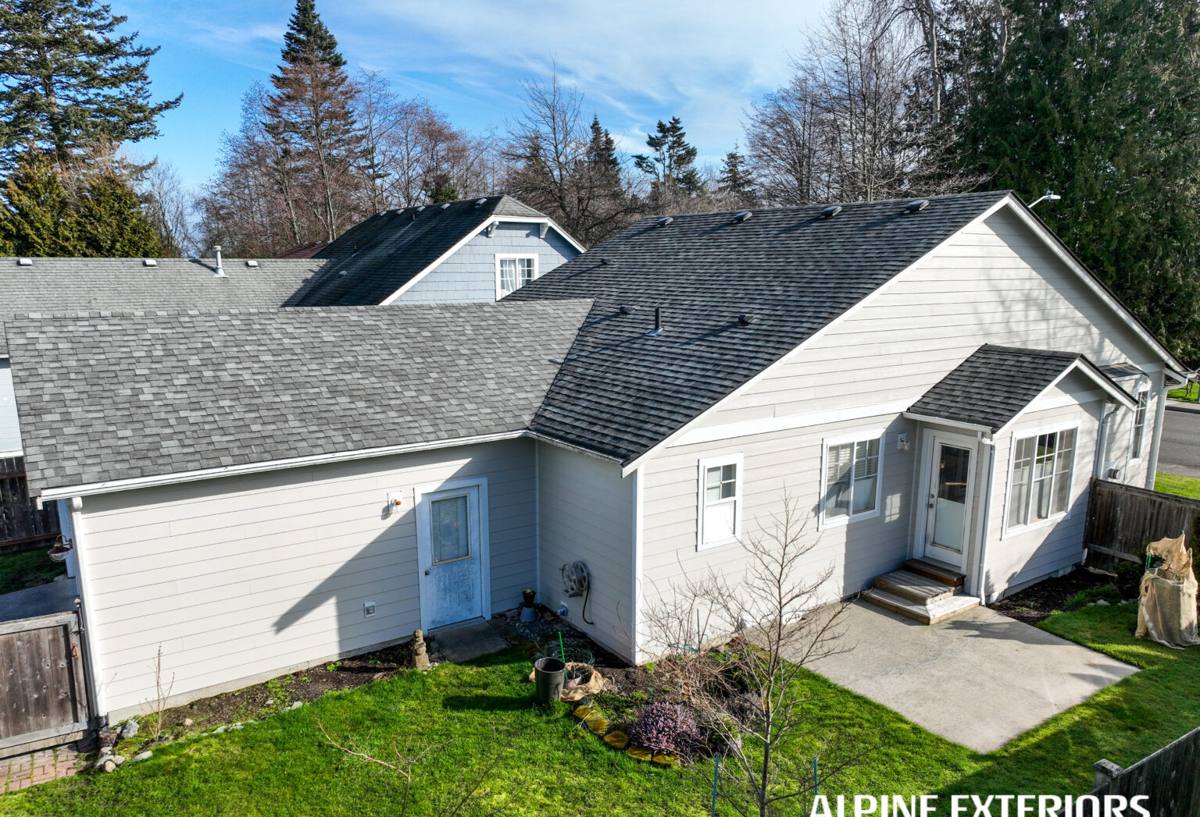
Birch Bay Siding installs James Hardie fiber cement siding exclusively. It's a cement-based composite, not a wood product and not vinyl, which means it doesn't absorb moisture the way wood-based sidings can, and it doesn't soften, warp, or become brittle the way some other materials do under sustained damp conditions. James Hardie also engineers specific product lines for different climate zones — the HZ5 line used in our region is built with Pacific Northwest weather in mind, not a generic national spec. It's non-combustible, holds a factory-applied ColorPlus finish that resists the fading and chalking that plain field-painted surfaces are prone to, and carries a strong transferable warranty when installed to manufacturer specification.
We get asked fairly often about LP SmartSide, vinyl, Cemplank, Allura, and primed wood species like spruce or cedar. We don't install any of them, and we're upfront about why: some rely on paint films that need more frequent maintenance in this climate, some are engineered wood products that behave differently than fiber cement when consistently exposed to moisture, and some simply don't hold color and finish integrity as well over the long run near salt air. None of those products are inherently bad — they can work fine in the right climate and application. We've just made a professional judgment that fiber cement is the right standard for the conditions Bellingham homes actually face, and we'd rather install one product well than several products adequately.
How We Approach a Bellingham Project
Correct installation matters as much as product choice, maybe more. Fiber cement performs the way it's supposed to only when flashing, fastening, and joint details are done right — and those details are exactly where wind-driven rain finds weaknesses if they're skipped.
- Proper flashing and weather-resistive barrier detailing behind every seam, window, and door opening
- Correct fastener spacing and type to hold up under wind exposure without loosening over time
- Attention to clearances at grade and around decks so siding doesn't sit in standing moisture
- Caulking and sealant only where the manufacturer specifies it — not as a substitute for proper flashing
- Ventilation behind the siding plane where the assembly calls for it, to let any incidental moisture dry out
A local crew that installs in this climate regularly develops an instinct for where problems tend to start — the north wall that never fully dries, the eave line that catches wind-driven rain at an angle, the spot near grade where moss gets a foothold first. That local pattern recognition is hard to replace with a generic install checklist.
Beyond Siding: Roofing, Windows, and Decks
Siding doesn't work in isolation. Roofing, windows, and decks all interact with the same wind, rain, and moisture exposure, and a weak point in any one of them can undermine an otherwise solid siding job. Birch Bay Siding handles all four exterior systems, which lets us look at a Bellingham home as one connected building envelope rather than a set of unrelated projects.
- Roofing: proper drainage and flashing at the roofline directly affects how much water your siding has to shed
- Windows: window flashing integration is one of the most common failure points where siding meets an opening
- Decks: deck ledger connections and grade-level moisture near the house tie directly into how the lower courses of siding hold up
Comparing Common Siding Materials for This Climate
The table below reflects general characteristics of common siding materials as they tend to perform in a marine, high-rainfall, high-moss climate like Bellingham's. It's not a claim about any specific manufacturer's product failing — it's a general comparison of material behavior that informs our standard.
| Material | Moisture Behavior | Maintenance in This Climate | Finish Longevity Near Salt Air |
|---|---|---|---|
| James Hardie fiber cement | Cement-based, does not absorb moisture like wood | Low; occasional wash-down | Factory ColorPlus finish, engineered for durability |
| Engineered wood (e.g. LP SmartSide) | Wood-based core, more moisture-sensitive at cut edges and seams | Moderate; edge sealing and paint upkeep matter | Depends on field-applied coating maintenance |
| Vinyl | Doesn't absorb water, but can warp or become brittle with age and temperature swings | Low, but limited repair options if damaged | Color is molded-in but can fade and chalk over time |
| Primed wood (spruce, cedar) | Absorbs moisture readily without diligent maintenance | High; regular repainting and sealing required | Relies entirely on paint film condition |
What to Look for When Hiring a Contractor Here
Bellingham homeowners get pitched by a lot of siding and roofing crews, including out-of-area companies that show up seasonally. A few questions tend to separate a contractor who understands this climate from one who's just installing to a generic spec.
- Do they install one product system consistently, or a wide menu of materials with no stated standard?
- Can they explain their flashing and weather-barrier detailing without hedging?
- Are they familiar with how local conditions — salt air, wind direction, moss growth — affect siding placement and maintenance?
- Do they carry proper licensing and insurance, and are they willing to put warranty terms in writing?
- Are they based locally and likely to be reachable years from now if a warranty question comes up?
Cost Factors Homeowners Should Understand
We don't publish fixed pricing because every home's exposure, siding condition, and scope are different, but a few factors consistently drive cost on Bellingham projects:
| Factor | Why It Matters |
|---|---|
| Home size and wall complexity | More corners, gables, and trim details mean more labor and material |
| Condition of existing sheathing and moisture barrier | Hidden water damage found during tear-off can add scope |
| Siding profile and color selection | Certain HZ5 profiles and ColorPlus finishes vary in material cost |
| Access and site conditions | Steep lots, limited access, or extensive scaffolding add time |
| Scope beyond siding | Bundling roofing, window, or deck work can affect overall project sequencing and cost |
A Long-Term View of Exterior Maintenance
Even the right material benefits from basic upkeep in this climate. An annual rinse-down to clear moss spores and salt residue before they establish themselves, a periodic look at caulking and trim joints, and prompt attention to anything that looks like standing moisture near grade all go a long way toward protecting the life of a siding investment — Hardie or otherwise. Part of what a local crew offers is straightforward guidance on that kind of maintenance, specific to where your home sits and how it's exposed.
If you're weighing a siding, roofing, window, or deck project for a Bellingham home, we're happy to take a look and talk through what your specific exposure calls for. Request a free, no-pressure estimate below and we'll walk the property with you.