 Birch Bay
 Siding Built for Lynden's Climate, Not Against It
Lynden sits in northern Whatcom County, close enough to the water and the international border to catch the same weather patterns that shape exterior work across this whole corner of Washington. Homes here take on salt-tinged marine air, long stretches of wind-driven rain from fall through spring, and a moss and mildew season that can run most of the year on shaded walls. Siding is the exterior system that absorbs the most direct, continuous exposure to all three, which is why the material and the installation details matter more here than in a milder, drier climate.
We install siding, and we also handle roofing, windows, and decks, because those four systems work together as one building envelope. But siding specifically is where we've drawn a hard line: we install James Hardie fiber cement exclusively. That's not a brand preference we picked off a price sheet — it's a standard we settled on after years of installing, inspecting, and tearing off siding on homes exactly like the ones in and around Lynden.
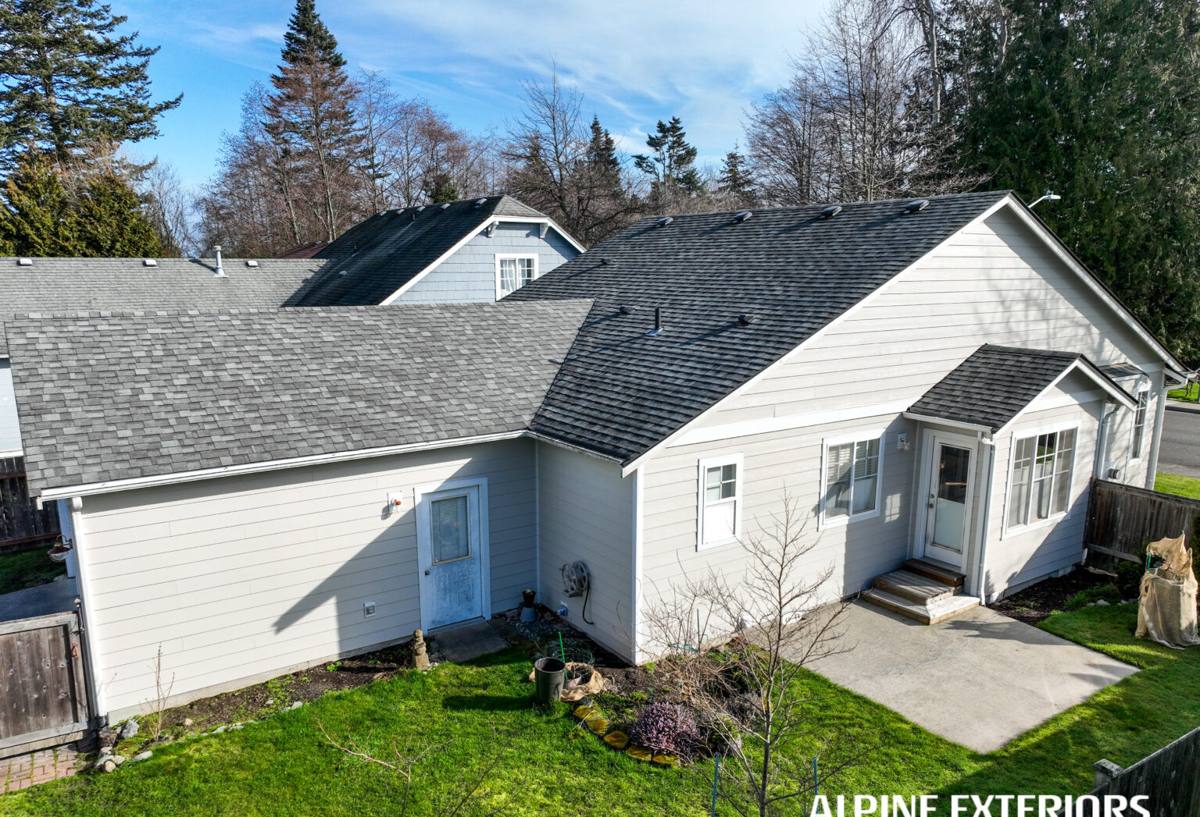
What This Climate Does to Siding
Salt Air and Fastener Corrosion
Even set back from the immediate shoreline, Whatcom County homes get a steady dose of salt-laden air moving in off the Sound. Salt speeds up corrosion in fasteners, flashing, and trim, and it wears down lower-quality finishes faster than a drier, inland climate would. Every fastener and piece of trim hardware on a siding job needs to be chosen with that corrosion risk in mind, not just picked for cost or appearance on installation day.
Driving Rain and Wall Assemblies
Rain in this part of the state rarely falls straight down. Wind pushes it sideways into siding joints, trim intersections, and anywhere the wall assembly has a seam. That's a heavier and more directional moisture load than an annual rainfall total suggests, and it's why siding that performs fine in a calm, sheltered location can still fail here — not because it got more total rain, but because that rain found a way in from the side instead of from above.
Moss, Mildew, and Porous Materials
Mild temperatures, shade from mature trees, and near-constant moisture add up to a long moss and mildew season across this stretch of Whatcom County. Siding is usually the first place it shows up on the wall plane, especially on north-facing exposures and anything shaded by trees or a neighboring structure. Any material that's even slightly porous, or that holds moisture against its own substrate, becomes a growth surface over time rather than shedding water the way it should.
Why We Only Install James Hardie Fiber Cement
We used to install a wider range of siding brands. We stopped, and the reason came from what we kept finding on service calls and tear-offs in this specific climate — not from a supplier relationship or a sales incentive.
- Non-combustible core: Fiber cement doesn't feed a fire the way wood-based siding products can, which matters for safety and can matter for insurance rates as well.
- Factory-applied ColorPlus finish: The color is baked on under controlled factory conditions rather than brushed or sprayed on-site, and it holds up longer against fading, chalking, and moisture than field-applied paint does.
- Climate-engineered HZ product lines: Hardie's HZ5 formulation is built specifically for regions with heavy moisture exposure and freeze-thaw cycling, which describes northern Whatcom County well.
- Dimensional stability: Fiber cement doesn't swell, warp, or cup the way engineered wood siding can after repeated wetting over a long wet season.
- Strong transferable warranty: Hardie backs the product with one of the more robust warranty structures in the industry, provided the installation follows their published spec.
We won't install LP SmartSide, vinyl siding, Cemplank, Allura, primed spruce, or cedar. Every one of those products has a legitimate place in the market and homeowners elsewhere who are happy with them. But we've made a professional call that in a climate with this much sustained moisture and salt exposure, we'd rather stand fully behind one system than offer a cheaper option that shifts more long-term maintenance risk onto the homeowner.
What Correct Installation Actually Involves
Fiber cement only performs the way it's engineered to when it goes on correctly. That means the right fastener type and spacing for the substrate, proper clearance from grade and roof lines so water doesn't wick up from below, drainage or rain-screen detailing behind the panels where the wall assembly calls for it, and factory-mitered or properly caulked joints at every corner and trim intersection. A Hardie board installed loosely, with the wrong fasteners, or with clearances ignored will still develop moisture problems in this climate — the product is only as good as the crew installing it.
Beyond Siding: Roofing, Windows, and Decks
Siding doesn't work in isolation. A roof shedding water improperly, a window leaking at the flashing, or a deck ledger rotting into the wall can all send moisture behind good siding and cause damage that looks, at first, like a siding problem. When we're on a property for a siding job, we look at how the roof, windows, and any attached deck tie into that same wall assembly, because catching a bad flashing detail before new siding goes over it saves the homeowner from paying to fix the same wall twice.
Signs Lynden Siding Needs Attention
- Soft or spongy panels, especially low on the wall or around window and door trim
- Moss or dark streaking that returns quickly after cleaning, particularly on shaded or north-facing walls
- Visible warping, cupping, or gaps opening up at seams and corner boards
- Peeling or chalking paint on wood-based or primed siding that wasn't factory-finished
- Bubbling or staining on interior walls near exterior corners, which often points to moisture already behind the siding
Comparing Siding Materials in This Climate
| Material | Moisture Behavior | Maintenance Here | Typical Longevity |
|---|---|---|---|
| James Hardie fiber cement | Dimensionally stable, resists swelling and cupping | Low; factory finish resists fading and moss growth | 30+ years with correct installation |
| Vinyl siding | Can warp with heat and trap moisture behind panels | Low upfront, but seams and fasteners are exposure points | Variable; shorter in wind-exposed spots |
| LP SmartSide / engineered wood | Wood-based core is moisture-sensitive at cut edges and joints | Moderate; edge sealing and caulk upkeep matter | Depends heavily on install quality and upkeep |
| Cedar / primed spruce | Absorbs and releases moisture readily | High; regular refinishing needed in a wet climate | Shorter without consistent maintenance |
Why a Local Crew Matters in Lynden
Lynden's mix of open farmland and tree-sheltered residential lots means moisture and shade patterns vary more from property to property here than they might in a more uniform neighborhood. A crew that works this area regularly has already seen how a wide-open farmhouse wall dries out compared to a shaded lot two streets over, and that experience shapes real decisions on install day — where extra flashing attention pays off, which wall orientations need closer inspection before new siding goes up, and which details are worth the extra time so a homeowner isn't dealing with a callback two winters later. That's the kind of judgment that doesn't come from a spec sheet; it comes from doing this work on Whatcom County homes, season after season.
A Simple Checklist Before Hiring a Siding Contractor
- Ask what siding material they install and why, and whether they'll put a written warranty behind it
- Confirm current Washington contractor licensing and active liability insurance
- Ask how they handle substrate damage discovered during tear-off, before it becomes a change order surprise
- Ask about fastener type and clearance details specific to this region's moisture and salt exposure
- Get a clear, written scope of work before signing anything
Our Process
We start with an on-site look at the existing siding and the wall assembly behind it, checking for moisture intrusion, substrate damage, and how the roof and window flashing tie into the walls. From there we put together a clear, written scope and timeline before any work begins. On installation day, fastener spacing, clearances, and drainage detailing are handled as standard practice, not as optional add-ons, because those are the details that determine whether siding lasts one wet season or several decades in this climate.
If you're weighing your siding options for a Lynden home, we're glad to walk the exterior with you and give an honest read on what it actually needs. Reach out below for a free, no-pressure estimate.