 Birch Bay
 Why Lynden Homes Need Siding Built for This Climate
Lynden sits inland from the water, but that doesn't mean it escapes what Whatcom County weather does to a house. The same weather systems that bring driving rain off the Strait and through the lowlands push straight across the valley, and Lynden gets its full share of it. Add a long, gray moss season where surfaces stay damp for weeks at a stretch, and you have a climate that is genuinely tough on exterior materials — even ones marketed as low-maintenance.
Homes closer to Birch Bay and the shoreline deal with salt-laden air on top of that, which accelerates corrosion on fasteners, trim, and anything with exposed metal. Lynden is far enough inland that salt exposure is lighter, but the moisture side of the equation is just as real here as anywhere else in the county. Wood-based and composite sidings that struggle with sustained dampness in Birch Bay struggle the same way in Lynden — just on a slightly different timeline.
What this means practically: siding on a Lynden home needs to shed water fast, resist swelling and rot when it does get wet, and hold up under repeated wet-dry cycles year after year without the seams, edges, or face of the material breaking down.
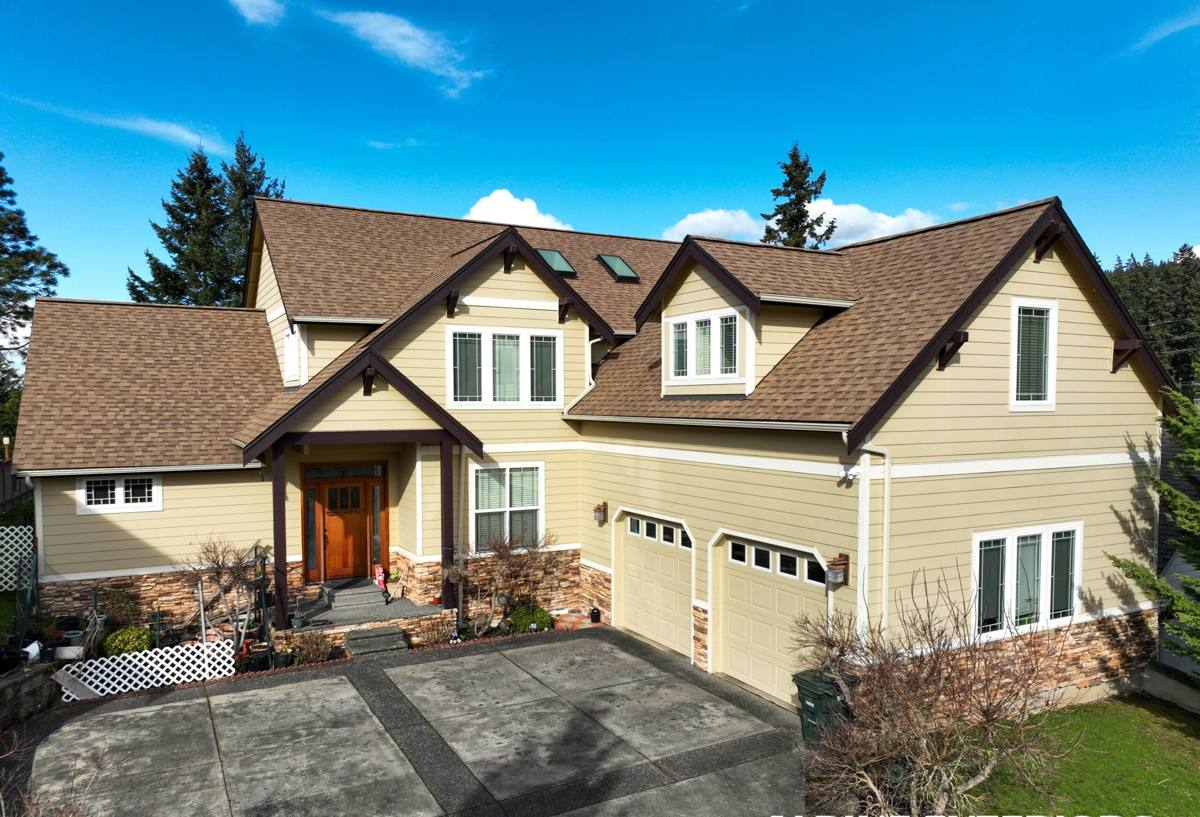
What "Correct" Fiber Cement Installation Actually Involves
Fiber cement siding has a good reputation, but that reputation depends entirely on the installation. A poorly installed job with the right material can fail faster than a well-installed job with a lesser one. There's no shortcut around doing the details right.
Clearance and Flashing
Siding needs proper clearance from grade, roof lines, decks, and any horizontal surface where water and debris collect. Flashing has to be installed at every window, door, and penetration so water is directed out and away from the wall assembly, not trapped behind the siding where it can't dry out. This is the single most common place we see older siding jobs fail — not the material itself, but missing or undersized flashing.
Fastening and Joints
Fiber cement has to be fastened according to the manufacturer's specification — correct fastener type, spacing, and depth. Butt joints need to be treated correctly, whether that's factory-primed and caulked joints or a rain-screen approach that lets air move behind the siding. Loose or over-driven fasteners are a quiet failure point that shows up years later as cracking or water intrusion.
Caulking and Sealant
Sealant belongs at specific transition points — not everywhere, and not nowhere. Over-caulking a fiber cement installation can trap moisture just as badly as under-caulking it. This is a judgment call that comes from experience, not a generic checklist.
Painted Field Cuts
Any cut edge of fiber cement siding needs to be sealed and painted before installation, especially cuts that will be exposed at corners, window returns, or vents. An unsealed cut edge is a direct path for water into the core of the board.
Why We Install Only James Hardie
We don't install LP SmartSide, vinyl, Cemplank, Allura, primed spruce, or cedar. That's a deliberate standard, not a limitation on what we're capable of installing. We settled on James Hardie because it's non-combustible fiber cement, it comes with a factory-applied ColorPlus finish that holds color far better than field-painted siding, and Hardie engineers specific product lines (their HZ system) for different climate zones — including the wet marine climate that covers Whatcom County. That matters more here than in a dry climate, because the margin for error on moisture management is smaller.
Hardie also backs the product with a strong, transferable warranty structure, which gives homeowners real protection if something does go wrong down the line — not just on the material, but in a lot of cases on the finish as well. When we stand behind a job in Lynden, we want the manufacturer standing behind it too.
Our Process for a Lynden Fiber Cement Job
- On-site assessment. We look at the existing siding, wall assembly, and any moisture or rot issues before quoting anything. What's under the current siding often matters more than what's on top of it.
- Tear-off and inspection. Once the old siding comes off, we check sheathing, framing, and existing flashing for damage. Any rot or compromised wood gets addressed before new siding goes up — covering a problem never fixes it.
- Weather barrier and flashing. A correctly lapped weather-resistant barrier and new flashing at every penetration go in before a single piece of Hardie board is installed.
- Installation to Hardie spec. Fastening, clearances, joint treatment, and cut-edge sealing are all done to the manufacturer's published requirements — the same standard that keeps the warranty valid.
- Final detailing. Trim, caulking at the right transition points, and a final walk-through so you know exactly what was done and why.
Choosing the Right Hardie Line and Finish
James Hardie offers several product lines and profiles — lap siding, shingle-style panels, and vertical board options — along with a range of ColorPlus factory finishes. For a Lynden home, the practical question isn't just which look you want, it's which profile and finish will hold up best against the amount of direct wind-driven rain a given elevation of the house takes. North and west-facing walls that catch the brunt of storms often benefit from different detailing than more sheltered elevations, even on the same house.
We'll walk through the color and profile options with you, but we'll also tell you honestly if a particular choice needs extra flashing or drainage detailing on your specific home to perform the way it should.
What Fiber Cement Siding Costs Depend On
We don't publish fixed prices because every home is different, but these are the factors that actually move the number on a Lynden job:
| Factor | Why It Matters |
|---|---|
| Home size and wall complexity | More corners, gables, and cutouts mean more labor and material waste |
| Condition of existing sheathing | Rot or water damage found during tear-off adds repair scope before new siding can go on |
| Siding profile chosen | Lap, shingle-style, and vertical panel products have different material and labor costs |
| Trim and detail work | Window returns, corner boards, and fascia detailing add time but improve water management |
| Access and site conditions | Multi-story sections, tight lot lines, or landscaping obstacles affect labor time |
The only way to get a real number is a walk-through of the actual house, which is what a free estimate is for.
Keeping Fiber Cement Siding Performing Long-Term in Lynden
Fiber cement is genuinely low-maintenance compared to wood, but "low-maintenance" doesn't mean "no maintenance," especially in a climate with a real moss season. A few habits go a long way:
- Keep gutters clear so overflow doesn't run down the face of the siding repeatedly in the same spot
- Trim back vegetation and tree cover that keeps siding shaded and damp longer than it needs to be
- Rinse off accumulated moss, algae, or grime with a garden hose and soft brush rather than a high-pressure washer, which can force water behind joints and trim
- Check caulking at windows, doors, and trim every couple of years and have gaps resealed before they become entry points for water
- Walk the exterior after major storms and note any cracked boards, loose trim, or staining that could point to a flashing issue
None of this is difficult, but it's the difference between siding that looks good for decades and siding that starts showing problems in year eight.
Why Hiring a Crew That Already Works in Lynden Matters
Whatcom County's building requirements, wind exposure, and moisture patterns aren't identical to what a crew coming from a drier or more sheltered region is used to accounting for. A crew that regularly works Birch Bay, Lynden, and the surrounding areas already knows how the local weather behaves against different house orientations, which details tend to fail first on older homes in this area, and how to detail a job so it doesn't become a callback three winters from now.
That familiarity shows up in small decisions — extra flashing at a vulnerable elevation, a different fastening approach near ground level where splash-back is a factor, catching a moisture problem in the sheathing before it's covered up. Those are the details that separate a fiber cement job that performs for thirty years from one that needs attention in five.
If you're weighing siding options for a Lynden home, we're happy to take a look and give you an honest read on what your house actually needs — no pressure, no upsell on a product we wouldn't put on our own home. Fill out the form below for a free estimate.