 Birch Bay
 Exterior Contracting for Cottonwood Beach Homes
Cottonwood Beach sits close enough to the water that its homes live with a different set of exterior problems than houses even a few miles inland. Salt-laden air, wind-driven rain off the Strait of Georgia, and long stretches of gray, damp weather each fall and winter put steady pressure on siding, trim, roofing, and anything wood-based on the outside of a house. We work this stretch of Whatcom County regularly, and the patterns repeat from property to property: moisture finds the weak points first, and salt air accelerates whatever is already starting to fail.
Our crews handle siding, roofing, windows, and decks — the four systems that take the brunt of Birch Bay's climate and that most often fail together, since a leak at one usually starts as a small gap in another. We're not a call center dispatching subcontractors; the people who show up to look at your home are the people who understand what this specific coastline does to a house over ten, twenty, thirty years.
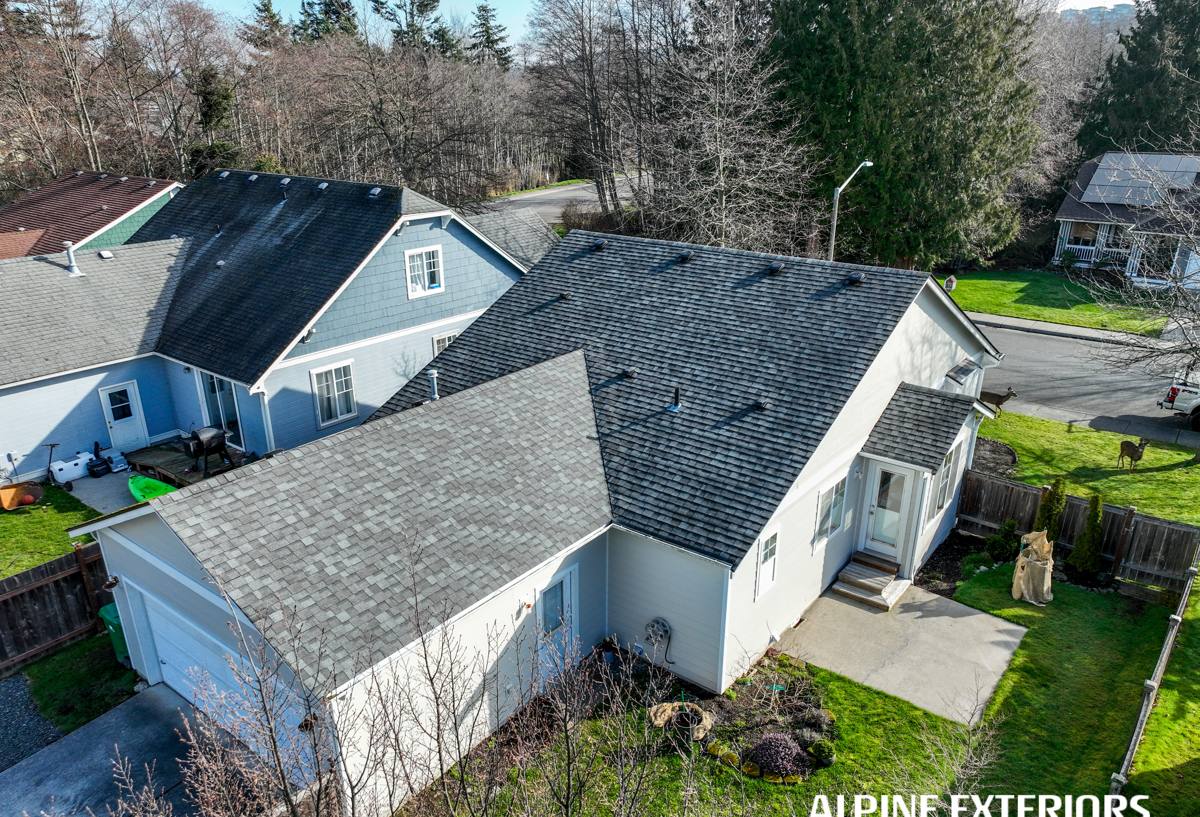
What the Cottonwood Beach Climate Does to a House
Salt Air and Corrosion
Proximity to saltwater means airborne salt settles on every exterior surface, not just the ones facing the water directly. Over years, salt exposure degrades unprotected wood trim, accelerates rust on exposed fasteners and flashing, and breaks down cheaper paint finishes faster than the same product would fail inland. Siding materials and fastener choices that work fine in Bellingham's inland neighborhoods sometimes underperform here specifically because of the salt factor.
Driving Rain and Wind-Driven Moisture
Storms coming off the water don't just drop rain — they push it sideways into siding laps, window frames, and any gap in the building envelope. This is a different stress than vertical rainfall, and it's why proper flashing, house wrap detailing, and tight siding installation matter more here than in more sheltered inland lots. Water that gets behind siding in a driving-rain event can sit there through a long wet season before anyone notices a problem.
Moss, Algae, and the Long Wet Season
Whatcom County's wet season runs long, and shaded or north-facing walls near Cottonwood Beach's tree cover stay damp for extended stretches. That constant moisture is exactly what moss and algae need to take hold on roofing and siding surfaces. Beyond the cosmetic issue, moss holds water against a surface, which shortens the useful life of whatever it's growing on — shingles, wood siding, and painted trim all suffer more from prolonged dampness than from occasional heavy rain.
Siding: Why We Only Install James Hardie
We install James Hardie fiber cement siding exclusively. We don't install vinyl, LP SmartSide, Cemplank, Allura, primed spruce, or cedar, and we think homeowners in a coastal environment like Cottonwood Beach deserve a straightforward explanation of why.
The Trade-Offs We Weighed
- Vinyl siding is inexpensive and low-maintenance in mild climates, but it can warp or become brittle under temperature swings and doesn't hold up as well against wind-driven debris in coastal storm conditions. It's also a combustible material, which matters more to some homeowners than others.
- LP SmartSide is an engineered wood product with a treated strand board core. It performs well when installation and maintenance are kept up perfectly, but any gap in caulking or paint maintenance lets moisture reach the wood-based core, and a coastal climate with a long wet season is an unforgiving place for a product that depends on an intact moisture barrier.
- Cemplank and Allura are also fiber cement products and share many of the same underlying strengths as Hardie. Our reason for standardizing on one manufacturer isn't a claim that these are inferior products — it's that we've built our installation training, warranty relationships, and product knowledge around one system, and we'd rather be excellent with one line than adequate across several.
- Primed spruce and cedar are traditional, attractive, and genuinely good wood species — but they're wood, and wood needs consistent repainting and sealing to keep moisture out. In a climate with this much sustained dampness and salt exposure, that maintenance burden is real and ongoing, not a one-time cost.
Why Hardie Fits This Coastline
James Hardie fiber cement is non-combustible, doesn't have a wood core to rot, and holds its factory-applied ColorPlus finish far longer than field-applied paint typically does — which matters when you're fighting salt air and UV together. Hardie's HZ5 product line is engineered specifically for climates with significant moisture exposure, which describes Birch Bay well. The factory finish also means fewer repainting cycles over the life of the siding, which is a meaningful maintenance savings in a climate that makes exterior painting its own seasonal project.
Roofing for a Wet, Mossy Climate
Roofs near Cottonwood Beach deal with the same moss and moisture pressure as siding, plus wind exposure off the water. We look at ventilation, underlayment quality, and flashing detail as closely as we look at the shingle or roofing material itself — a roof can have great materials and still fail early if the ventilation and flashing weren't done right underneath. Moss removal and preventive treatment are part of a realistic maintenance plan for most homes in this area, not an occasional afterthought.
Windows: Sealing Out Wind-Driven Rain
Older windows in coastal homes are a common source of hidden water intrusion, especially where wind-driven rain hits the wall directly. Failing seals, deteriorated flashing, and gaps between the window unit and the wall assembly let moisture in slowly, often without an obvious sign until there's damage to the wall cavity behind it. Replacement windows installed with proper flashing and integration into the surrounding siding system close off one of the more common leak points we find in this area.
Decks: Built for Salt Air and Standing Moisture
A deck near Cottonwood Beach faces the same corrosion and moisture pressures as the rest of the house, plus direct weather exposure with no siding or roof to shield it. Fastener corrosion, ledger board rot at the house connection, and moss buildup on decking surfaces are the recurring issues we see. Proper ledger flashing, corrosion-resistant fasteners, and material choices suited to a wet, salty climate make the difference between a deck that needs attention every few years and one that needs occasional cleaning.
What to Expect From a Local Crew
A crew that works this coastline regularly already knows which details matter here — how tight the flashing needs to be around a window facing the water, how much ventilation a roof needs to fight moss in a shaded, damp lot, where fastener corrosion tends to start first on a deck near saltwater. That's different knowledge than a crew that mostly works drier, inland projects and treats every job the same way.
Signs It's Time for an Exterior Evaluation
- Visible moss or algae growth on siding, trim, or roofing
- Soft spots, staining, or bubbling paint on wood trim or siding
- Rust streaks near fasteners, flashing, or hardware
- Drafts, fogging, or visible gaps around window frames
- Soft or spongy decking, or a ledger board that looks discolored where it meets the house
- Siding laps that look separated or caulk that has cracked and pulled away
Cost Factors to Understand Before You Decide
| Factor | Why It Matters Here |
|---|---|
| Home size and wall complexity | More corners, gables, and trim detail mean more labor and material regardless of the siding chosen |
| Siding material | Fiber cement has a higher upfront cost than vinyl but a longer service life and lower repainting frequency |
| Existing damage or rot | Moisture-related repairs found during tear-off add cost but prevent hidden problems from persisting |
| Roof condition and ventilation | Inadequate ventilation found during a roofing project may need correction, which affects overall scope |
| Window count and flashing condition | Poorly flashed openings often need more work at the wall interface than the window swap alone |
| Deck framing condition | Ledger and joist condition under an old deck surface can change the scope once uncovered |
A Straightforward Process
We start with an honest look at what's actually happening with your home's exterior — not a sales pitch, an assessment. If moisture has already gotten into a wall cavity or deck frame, we'll tell you what we find before any material decisions get made. From there, we talk through the realistic options for your specific home and budget, with James Hardie as our siding recommendation and an honest explanation of why, not a default upsell.
If you're in Cottonwood Beach or elsewhere around Birch Bay and want a clear-eyed look at what your siding, roofing, windows, or deck actually need, we're happy to come take a look. The estimate is free, and there's no pressure attached to it — just a straight answer about what your home is facing and what it would take to address it.