 Birch Bay
 A Company Policy, Not a Sales Pitch
Most siding contractors will install whatever a homeowner picks — vinyl, LP SmartSide, fiber cement, cedar, whatever the budget allows. We stopped doing that. Every job we take on in Birch Bay and the rest of Whatcom County goes on the house as James Hardie fiber cement siding. Nothing else leaves our trailer.
That's not a marketing angle. It's a decision we made after years of tear-off jobs where we pulled failed siding off houses and saw the same patterns over and over: trapped moisture, soft edges, peeling paint, and materials that just weren't built for what this stretch of coastline throws at a house year-round. This page explains the reasoning plainly, product by product, so you can decide for yourself whether it holds up.
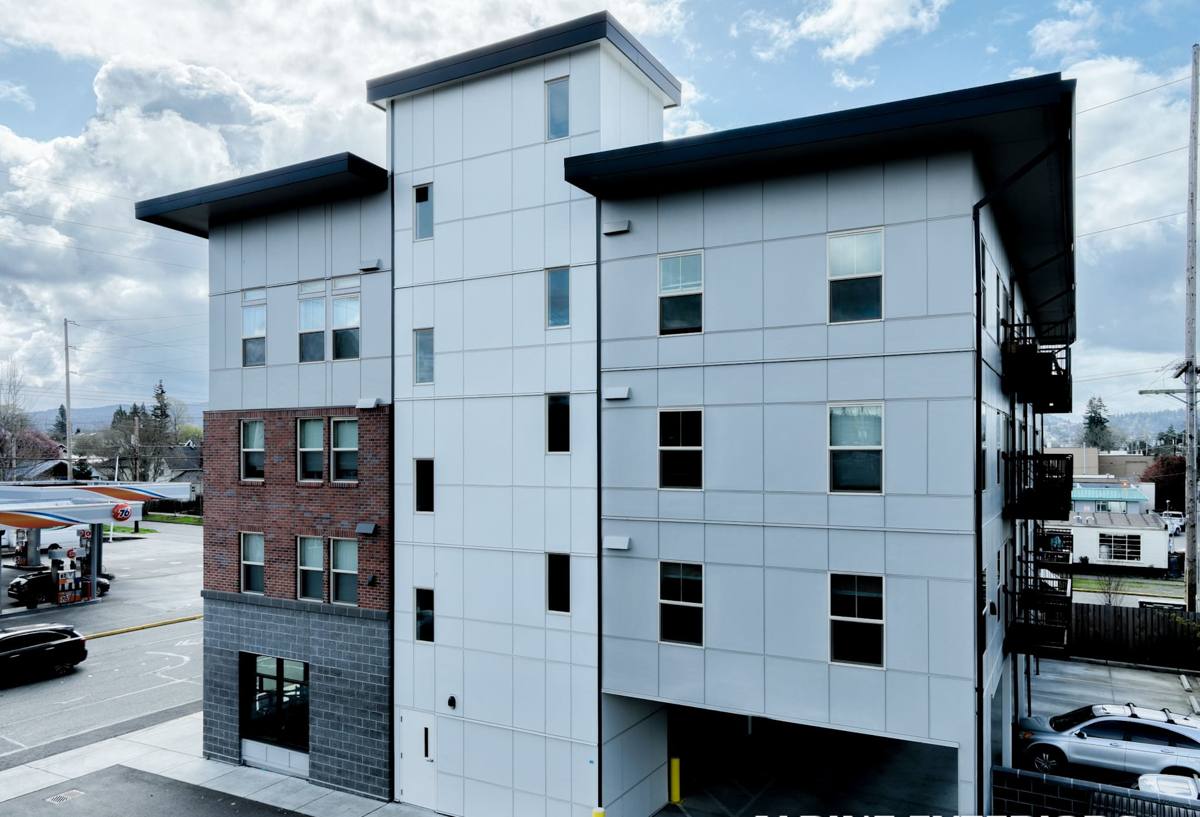
What Birch Bay Actually Does to Siding
Birch Bay sits right on the water, and that changes the math on every exterior material. Three things matter most here:
- Salt air. Airborne salt accelerates corrosion on fasteners, trim, and any exposed metal, and it degrades certain paint and coating systems faster than inland exposure.
- Driving rain off the Strait. Wind-driven rain doesn't just wet a wall surface — it pushes water sideways into seams, laps, and butt joints that would stay dry on a calmer site.
- A long moss and algae season. Whatcom County's wet, mild winters and shaded, tree-lined lots give moss and algae months of ideal growing conditions on north-facing and shaded walls.
A siding product that performs fine in a dry inland climate can struggle here. That's the filter we run every material through before deciding whether to put it on a customer's home.
Why We Don't Install Vinyl
Vinyl siding is inexpensive and low-maintenance in the sense that it doesn't need repainting. But it's a thin, flexible plastic product, and in a marine climate that works against it in a few specific ways. It expands and contracts more than fiber cement with temperature swings, which over time opens gaps at seams and trim — exactly where wind-driven rain wants to get in. It can also become brittle and crack in cold snaps, and impact damage (a wayward branch, a ladder, a baseball) usually means replacing a whole panel rather than a patch. Color is baked into the plastic itself, so scratches and gouges show as a different shade underneath, and vinyl fades unevenly over a couple decades of UV exposure. It's a reasonable product for some climates and budgets. We just don't think it's the right long-term investment for a waterfront county with this much wind-driven weather.
Why We Don't Install LP SmartSide
LP SmartSide is an engineered wood product — strand board coated with resin and a factory finish. Installed correctly and maintained on schedule, it performs reasonably well. The issue is that it's still wood at its core, and wood-based siding depends entirely on an intact factory coating and sealed cut edges to keep moisture out. Any breach — a missed caulk joint, an unsealed cut end, a scratch that goes untouched — gives water a path into the substrate, and once wood-based siding takes on moisture it can swell, delaminate, or rot from the inside where you can't see it until the damage is advanced. In a climate with this much annual rainfall and a long damp season, that margin for error is thinner than we're comfortable with. We've done enough tear-offs on engineered wood siding in this county to know how it fails when maintenance slips even a little.
Why We Don't Install Cemplank or Allura
Cemplank and Allura are both fiber cement products, made from a similar cement, sand, and cellulose formula to James Hardie. On paper, that makes them a fair comparison. In practice, we standardized on Hardie for a few concrete reasons: its ColorPlus factory finish process, the depth of its climate-specific engineering (see below), and the strength and transferability of its warranty. Fiber cement as a category is the right call for this climate — we just settled on the manufacturer whose specific formulation, finish process, and track record we trust most to back that up.
Why We Don't Install Primed Spruce or Cedar
Solid wood siding — primed spruce, cedar, and similar — has a real appeal: it's a natural material with a look that some homeowners simply prefer. But raw wood is the most maintenance-intensive siding option in a climate like this one. It needs repainting or restaining on a strict cycle, every seam and knot is a potential moisture entry point, and in a county with this much rain and shade, mildew and moss take hold on wood surfaces faster than on almost anything else we install. Cedar has natural rot resistance, but that resistance fades over decades of constant moisture exposure, not indefinitely. We'll be honest: some homeowners still want the wood look badly enough to accept the upkeep, and that's a legitimate choice. We just don't offer it, because we don't want to sell a product we know will need more attention than most owners are prepared to give it.
What James Hardie Does Differently
Non-Combustible Material
Hardie fiber cement is roughly 90% sand, cement, and cellulose fiber. It won't ignite from an ember or contribute fuel to a fire the way wood-based products can. That's a meaningful difference in a state that has seen wildfire smoke and ember exposure reach further west in recent years.
ColorPlus Factory Finish
Instead of field-painting siding after installation, ColorPlus color is baked onto the boards at the factory under controlled conditions, then cured. It resists fading, chipping, and the kind of touch-up patchwork that field-applied paint eventually needs. In a salt-air environment, a factory-cured finish holds up more consistently than paint applied on-site.
HZ5 Engineering for This Climate
James Hardie engineers specific product formulations for different climate zones — HZ5 boards are built for regions with freeze-thaw cycles, sustained moisture, and coastal exposure, which describes Whatcom County well. That's not a marketing label; it's a different manufacturing specification for the areas that need it.
Moss and Algae Resistance
Fiber cement is inorganic — it doesn't feed mold, mildew, or algae the way wood-based products can. That doesn't mean a shaded, north-facing wall in Birch Bay will never develop surface growth from ambient moisture, but the board itself isn't a food source, which matters over a 30- or 40-year timeline.
Warranty Strength
James Hardie backs its siding with a 30-year non-prorated limited warranty on the substrate, and ColorPlus finishes carry their own separate finish warranty. Critically, these warranties are transferable to a new owner if you sell the home within the coverage window — something that matters more than most homeowners expect when it comes time to sell.
Comparing the Options Side by Side
| Material | Moisture Behavior in Marine Climate | Maintenance Cycle | Fire Rating | Typical Warranty |
|---|---|---|---|---|
| Vinyl | Seams open over time; can crack in cold | Low, but limited lifespan | Combustible plastic | Prorated, non-transferable in most cases |
| LP SmartSide | Vulnerable at breaches in coating/cut edges | Coating and caulk maintenance required | Combustible (treated) | Prorated after early years |
| Cemplank / Allura | Similar to Hardie as fiber cement | Low | Non-combustible | Varies by manufacturer |
| Primed spruce / cedar | High risk at seams, knots, end grain | Repaint/stain cycle every few years | Combustible | Manufacturer paint warranty only |
| James Hardie | Engineered for this climate zone (HZ5) | Low | Non-combustible | 30-year non-prorated, transferable |
Why Installation Matters as Much as the Product
Fiber cement, including James Hardie, only performs as designed when it's installed to manufacturer spec. This is where we've seen otherwise-good products fail on Whatcom County homes — not because the material was wrong, but because the installation cut corners that matter a lot in a wet, wind-driven climate.
- Correct clearance between siding and grade, decks, and roof lines to keep the board out of standing water and splashback
- Proper fastener placement and type — the wrong nail pattern or a fastener into a stud miss can open a stress point
- Sealed and primed cut edges on-site, every time a board is trimmed to fit
- Correct overlap and flashing at butt joints, windows, and doors so wind-driven rain has nowhere to track behind the plane
- Rainscreen or proper drainage plane behind the siding where the wall assembly calls for it
A Hardie board installed poorly can still develop moisture problems. We treat the installation spec as non-negotiable, which is really the other half of why we only work with one product — it lets our crews master one system's details instead of spreading that attention across five different manufacturers' instructions.
What This Means for Your Project
If you're planning a re-side in Birch Bay, Blaine, or elsewhere in Whatcom County, this policy means a few things in practice: you'll get one consistent recommendation instead of a menu of options we're not fully confident in, you'll get a crew that installs this specific product day in and day out, and you'll get a warranty structure that's actually meaningful if you sell the home down the line. It also means we'll walk you through Hardie's plank, shingle, and panel lines, and its full color range, rather than trying to fit your project into whatever material happens to be cheapest that month.
If you'd like to talk through what this looks like for your specific home, we offer a free, no-pressure estimate — no obligation, just a straight answer about what your project would involve.