 Birch Bay
 Exterior Work Built for Sandy Point's Waterfront Exposure
Sandy Point sits right up against the Strait of Georgia on the northern edge of Birch Bay, and that beachfront location comes with a specific set of exterior maintenance problems. Homes here are closer to open salt water than almost anywhere else in Whatcom County, which means siding, trim, roofing, and window assemblies take on a heavier and more constant dose of salt-laden air than homes even a few miles inland. Add in the canal-front lots common throughout the community, and you have a lot of houses sitting directly in the path of wind-driven moisture nearly year-round.
We've worked on homes throughout Birch Bay and the surrounding Whatcom County shoreline long enough to know that "waterfront" isn't just a marketing word here — it's a maintenance reality. Salt air accelerates corrosion on fasteners and metal flashing, driving rain finds every gap in a poorly detailed wall assembly, and the shaded, damp lots common near the water grow moss on roofs and siding faster than drier inland properties. A house built or sided without that exposure in mind will show it within a few years, not a few decades.
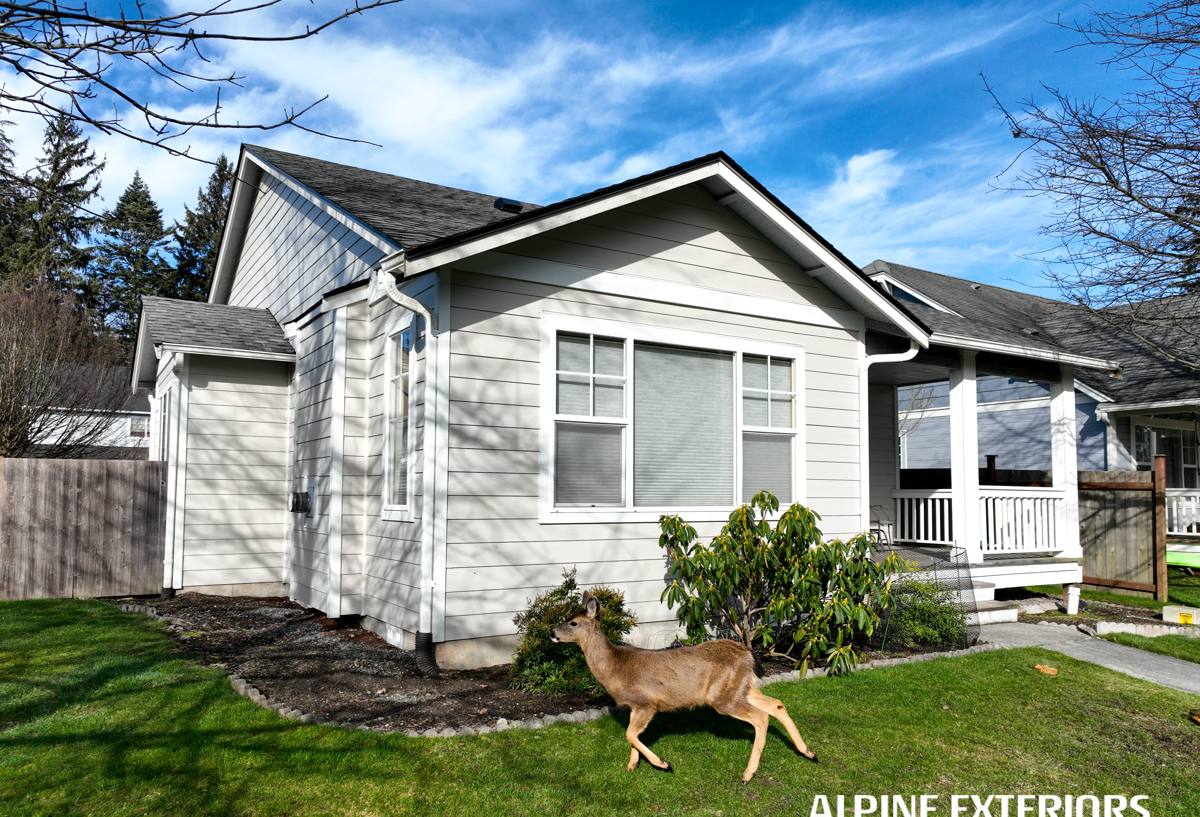
What the Marine Climate Actually Does to a House
Salt Air and Corrosion
Airborne salt doesn't just affect boats and dock hardware. It settles on exterior surfaces, works into seams and fastener heads, and speeds up corrosion on anything not rated for coastal exposure. Standard interior-grade fasteners, unprotected flashing, and some vinyl trim systems degrade noticeably faster in a location like Sandy Point than they would ten or fifteen miles inland.
Driving Rain
Storms coming off the Strait of Georgia don't fall straight down — wind pushes rain sideways into wall surfaces, soffits, and window trim. That means the water-management details behind the siding (flashing, house wrap, proper laps, and drainage gaps) matter as much as the siding material itself. A beautiful product installed without attention to water management will still leak.
Moss and Constant Dampness
Between marine humidity, regular rainfall, and shaded lots near the water and tree lines, moss and algae growth is a near-constant battle on roofs, north-facing siding, and shaded trim. Untreated wood surfaces and porous siding materials give moss more to grip onto, while non-combustible fiber cement gives it much less to work with.
Why We Install Only James Hardie Fiber Cement Siding
We made a deliberate decision to stop installing vinyl, LP SmartSide, Cemplank, Allura, primed spruce, and cedar siding. Every one of those products has legitimate strengths, and we're not going to pretend otherwise. But for the climate profile Sandy Point and the rest of Birch Bay actually deal with, we found the trade-offs stacked up against homeowners over the long run.
- Vinyl is inexpensive and low-maintenance in mild climates, but it can warp or become brittle with UV and temperature cycling, and its seams and J-channels give wind-driven rain more places to find a way in.
- LP SmartSide and other engineered wood products perform well when detailed and maintained correctly, but they're wood-based, meaning any consistent moisture exposure — the kind Sandy Point sees regularly — raises the stakes on caulking, paint maintenance, and edge sealing.
- Cemplank and Allura are also fiber cement and share some of Hardie's core strengths, but we standardized on one manufacturer so we can guarantee installation specs, warranty terms, and finish consistency without managing multiple product systems.
- Primed spruce and cedar are beautiful, traditional choices, but raw or primed wood siding demands the most ongoing maintenance of any option — repainting, re-caulking, and constant vigilance against moisture and rot, which is a tall order this close to the water.
James Hardie fiber cement is non-combustible, dimensionally stable, and built specifically for climates like this one. Hardie's HZ5 product line is engineered for regions with significant moisture and freeze-thaw cycling, and the factory-applied ColorPlus finish resists fading and chipping far better than field-applied paint — which matters when your siding is dealing with salt air and rain nearly every week of the year.
How Our Process Works for Sandy Point Homeowners
1. On-Site Assessment
We start with a walk-around of the home, looking at current siding condition, trim and flashing details, roof condition, window seals, and any signs of moisture intrusion — especially on the sides of the house facing the water or prevailing wind.
2. Honest Scope and Quote
We tell you what actually needs attention versus what can wait. If your siding is structurally sound but the trim and flashing need work, we'll say so instead of pushing a full replacement you don't need yet.
3. Correct Installation
Fiber cement siding performs the way it's supposed to only when installed to manufacturer spec — proper clearances, fastening patterns, flashing integration, and caulking at penetrations. This is where a lot of siding problems actually originate, regardless of the product used.
4. Roofing, Windows, and Decks as Part of the Same Envelope
Siding doesn't work in isolation. We also handle roofing, windows, and decks because a home's exterior is one connected water-management system. A well-installed siding job can still leak if the roof flashing above it or the window trim beside it is failing.
Comparing Siding Options for a Coastal Whatcom County Property
| Material | Moisture Resistance | Maintenance in Salt Air | Typical Lifespan Here |
|---|---|---|---|
| Vinyl | Moderate — seams can admit water | Low, but prone to warping/fading | 15–25 years |
| Cedar / Primed Spruce | Low without diligent upkeep | High — regular repainting and sealing | 10–20 years depending on upkeep |
| LP SmartSide | Good if edges/seams stay sealed | Moderate — edge sealing is critical | 20–30 years with maintenance |
| James Hardie Fiber Cement | Excellent — engineered for moisture cycling | Low — factory finish resists fade/chip | 30+ years to manufacturer warranty terms |
These are general guidelines, not guarantees — actual performance always depends on installation quality, site exposure, and upkeep. But the pattern holds across coastal Pacific Northwest properties: materials engineered for moisture and finished at the factory tend to outlast field-painted or seam-heavy alternatives in this specific climate.
What to Look for When Hiring an Exterior Contractor Here
- Ask whether the crew has worked on waterfront or near-waterfront properties in Whatcom County specifically — coastal detailing is different from inland work.
- Ask how they handle flashing and water management, not just what siding brand they install.
- Ask about fastener and hardware specs — coastal-rated fasteners matter more here than in most parts of the state.
- Get a written scope that separates siding, trim, roofing, and window work so you know exactly what's included.
- Check that warranty terms are transferable, since waterfront homes in communities like Sandy Point change hands regularly.
Roofing, Windows, and Decks in a Marine Environment
The same salt air and moisture load that affects siding affects the rest of a home's exterior. Roofing systems near the water deal with faster granule wear and more moss growth on shaded slopes. Windows need well-sealed flashing to keep wind-driven rain from working behind the frame. Decks exposed to salt air need hardware and fasteners rated for corrosion resistance, plus attention to ledger board flashing where the deck meets the house — a common source of hidden rot in coastal properties. We handle all four scopes as one connected job, which avoids the finger-pointing that happens when separate contractors handle each piece.
Planning a Siding Project Around Birch Bay's Seasons
Siding and exterior work in this part of Whatcom County goes best in the drier stretches of late spring through early fall, though we can schedule around weather windows outside that range too. Waiting until visible damage shows up — soft trim, peeling paint, or heavy moss buildup — usually means the underlying sheathing or framing has already started absorbing moisture. Addressing failing siding or flashing earlier is almost always less invasive and less costly than waiting for a full failure.
A Long-Term View for Sandy Point Homes
Homes in this community are an investment in a specific, desirable piece of Washington coastline, and the exterior envelope is what protects that investment from the environment it sits in. We don't think every home needs the most expensive option available, but we do think the climate here — salt air, driving rain, and a long moss season — calls for materials and installation practices that were actually built to handle it. That's the reasoning behind standardizing on James Hardie fiber cement, and it's the same standard we bring to every roof, window, and deck project we take on in Birch Bay.
If you'd like a straightforward look at what your home's siding, roofing, windows, or decking actually need, we're happy to come take a look. Fill out the form below for a free, no-pressure estimate.