 Birch Bay
 Exterior Wear in Nooksack: What the Climate Actually Does to a Home
Nooksack sits in a stretch of Whatcom County where the weather doesn't do anything dramatic — it just doesn't let up. Homes here deal with long stretches of driving rain, damp air off the Salish Sea and the Nooksack River valley, and short winter days that never quite dry things out. That combination is harder on an exterior than any single big storm. It's the slow, patient kind of wear: moisture that sits, wood that swells and shrinks, and moss that finds every north-facing wall and shaded eave.
Rain That Doesn't Just Fall, It Sits
This part of the county gets a lot of low-intensity, long-duration rain rather than short downpours. That means siding, trim, and roofing are wet for days at a time, not hours. Any product that absorbs moisture, or any seam or joint that isn't properly flashed, has a long window to let water work its way in. Over years, that's how you get soft trim boards, stained siding, and rot at the bottom courses near grade.
Salt Air and Wind Off the Water
Being close to the Birch Bay shoreline and the broader Whatcom County coastline means homes in the area get periodic exposure to salt-laden air, especially during winter storm systems. Salt air accelerates corrosion on fasteners, flashing, and any metal component, and it's tougher on painted or coated surfaces than most homeowners expect. It's not a daily assault, but it's a steady one, and it adds up over a couple of decades.
A Long Moss and Algae Season
Shade, moisture, and mild temperatures are a perfect recipe for moss and algae growth, and that season runs most of the year here — not just late fall through spring like drier parts of the state. Moss on siding isn't just a cosmetic problem. It holds moisture against the surface, and on the wrong material, that trapped moisture is what eventually causes swelling, delamination, or rot underneath the growth.
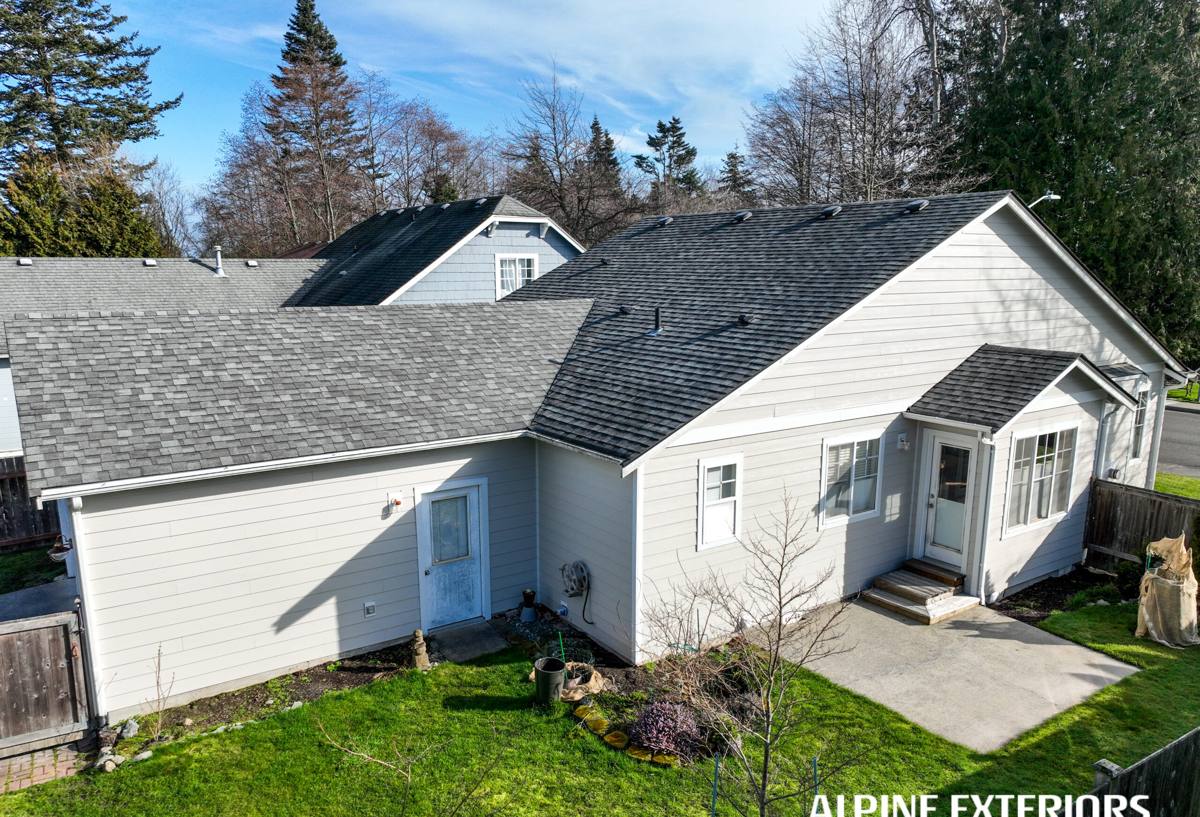
Why We Install Only James Hardie Fiber Cement Siding
We made a deliberate decision to install one siding system, and it's James Hardie fiber cement. We don't install vinyl, LP SmartSide, Cemplank, Allura, primed spruce, or cedar. That's not us being precious about a brand — it's a standard we hold because of what we've seen this Whatcom County climate do to exteriors over the years.
Fiber cement is made from cement, sand, and cellulose fibers. It doesn't absorb water the way engineered wood products can, it doesn't expand and contract the way vinyl does in temperature swings, and it's non-combustible. James Hardie backs its siding with a strong, transferable limited warranty and manufactures climate-specific HZ product lines engineered for wetter regions like the Pacific Northwest. For a home that's going to sit through decades of Whatcom County rain and moss season, that combination matters more than upfront cost alone.
Hardie's ColorPlus factory-applied finish is baked on under controlled conditions rather than field-painted, which gives it more consistent coverage and better resistance to fading and moisture intrusion at the surface than most site-applied paint jobs achieve. That's a meaningful difference in a climate where paint failure is usually a moisture problem first and a cosmetic problem second.
How We Approach a Siding Project in Nooksack
Every home in this area is a little different depending on how exposed it is to wind, how much tree cover shades the walls, and how old the existing siding and flashing details are. Our process starts with a real look at the home, not a generic estimate.
- Walk the exterior and check for existing moisture damage, especially at trim, window sills, and the bottom few feet of wall near grade
- Assess flashing, house wrap, and drainage plane condition — this is where most long-term failures actually start, not the siding material itself
- Recommend the right Hardie plank profile, exposure, and color for the home's exposure and style
- Plan installation to Hardie's fastening and clearance specifications, which matter more in a wet climate than in a dry one
- Review the project scope, timeline, and honest cost range before any work begins
Beyond Siding: Roofing, Windows, and Decks
Siding doesn't work in isolation. A home's exterior is one connected system, and problems in one area often show up as damage in another. We handle roofing, windows, and decks alongside siding for that reason — it's easier to get water management right when one crew is thinking about the whole envelope instead of coordinating between separate contractors who never talk to each other.
Roofing
A roof in poor condition sends water down behind siding and trim long before a homeowner notices a leak inside. When we're on a property for siding work, we check roof condition, flashing at wall-roof intersections, and gutter function as part of the picture.
Windows
Old or poorly flashed windows are one of the most common sources of hidden water intrusion around siding. Replacing siding without addressing failing window flashing just repeats the same problem behind new material.
Decks
Decks attached to the home share ledger connections and flashing details with the siding and structure behind them. In a climate this wet, that connection point deserves the same attention as any other.
Comparing Exterior Siding Options for This Climate
Homeowners in Nooksack often ask why we're firm about fiber cement instead of offering a lower-cost alternative. Here's an honest look at the trade-offs.
| Factor | James Hardie Fiber Cement | Vinyl | Engineered Wood / LP-Type |
|---|---|---|---|
| Moisture behavior | Doesn't absorb water; dimensionally stable | Doesn't absorb but can warp/buckle with heat and cold cycling | Absorbs moisture at cut edges and joints if not sealed correctly |
| Fire resistance | Non-combustible | Combustible, can melt/deform near heat | Combustible |
| Finish durability | Factory-baked ColorPlus finish | Color molded in, can fade and chalk over time | Field-applied primer/paint, maintenance-dependent |
| Typical lifespan when installed to spec | Multiple decades | Multiple decades but appearance degrades sooner | Shorter, heavily dependent on maintenance and moisture control |
| Maintenance | Periodic cleaning, repaint on long horizon | Low, but limited repair options if damaged | Regular caulking, painting, and edge sealing |
None of these products are inherently "bad" — vinyl and engineered wood have legitimate uses and price points. We simply don't install them, because for a climate like this one, the maintenance burden and moisture sensitivity of the alternatives don't line up with what we're willing to put our name behind.
Maintenance That Actually Matters Here
Fiber cement is low-maintenance compared to the alternatives, but "low-maintenance" isn't "no-maintenance." A little attention goes a long way in a climate with this much moss and moisture pressure.
- Rinse siding once or twice a year to remove moss, algae, and organic buildup, especially on shaded north- and west-facing walls
- Keep gutters clear so overflow doesn't run down the wall surface
- Trim back vegetation and tree limbs that keep siding shaded and damp longer than it needs to be
- Check caulking at trim, window, and door joints annually and re-caulk where it's cracked or pulling away
- Look at the bottom few inches of siding near grade periodically — that's the most common spot for hidden moisture problems to start
Signs Your Current Siding Is Past Its Useful Life
Homeowners often live with early warning signs longer than they should, mostly because the damage isn't obvious from the street.
- Soft or spongy spots when you press on siding or trim, particularly low on the wall
- Persistent moss or dark staining that comes back quickly after cleaning
- Paint that's bubbling, peeling, or failing faster than it used to
- Visible gaps, warping, or buckling in panels or planks
- Rising heating bills that suggest the wall assembly isn't performing the way it should
If any of that sounds familiar, it's worth having someone look before it turns into a structural repair instead of a siding replacement.
Why a Local Crew Matters
Whatcom County's microclimates vary more than people expect — a home a few miles from the water deals with different exposure than one further inland, and shaded, tree-covered lots hold moisture differently than open ones. A crew that works this area regularly knows what to look for before it becomes a problem, understands how local building conditions affect flashing and drainage details, and isn't guessing at how a product will hold up here — we've already seen it, one house at a time.
If you're weighing a siding replacement, or want a second opinion on roofing, windows, or a deck attached to your home, we're happy to take a look. The estimate is free, there's no pressure, and you'll get a straight answer about what your home actually needs — not just an upsell.