 Birch Bay
 Siding Built for Life on Lummi Island
Lummi Island sits out in Whatcom County's marine waters, and that location shapes everything about how a home ages here. Being surrounded by salt water means constant airborne salt exposure, exposed shoreline and bluff-top lots take driving rain straight off the water, and the tree cover combined with our long wet season keeps north-facing walls damp for months at a time. Siding on Lummi Island has to hold up to a different set of stresses than siding on a home twenty miles inland, and homeowners here tend to find that out the hard way when a product that would have been fine in a drier, more sheltered spot starts failing early.
Birch Bay Siding works throughout Whatcom County, and Lummi Island is part of our regular service area. We understand the island isn't a quick in-and-out job — getting a crew, equipment, and materials over means real planning — and we build that into how we schedule and quote work here so there are no surprises once the project starts.
What Salt Air Actually Does to a House
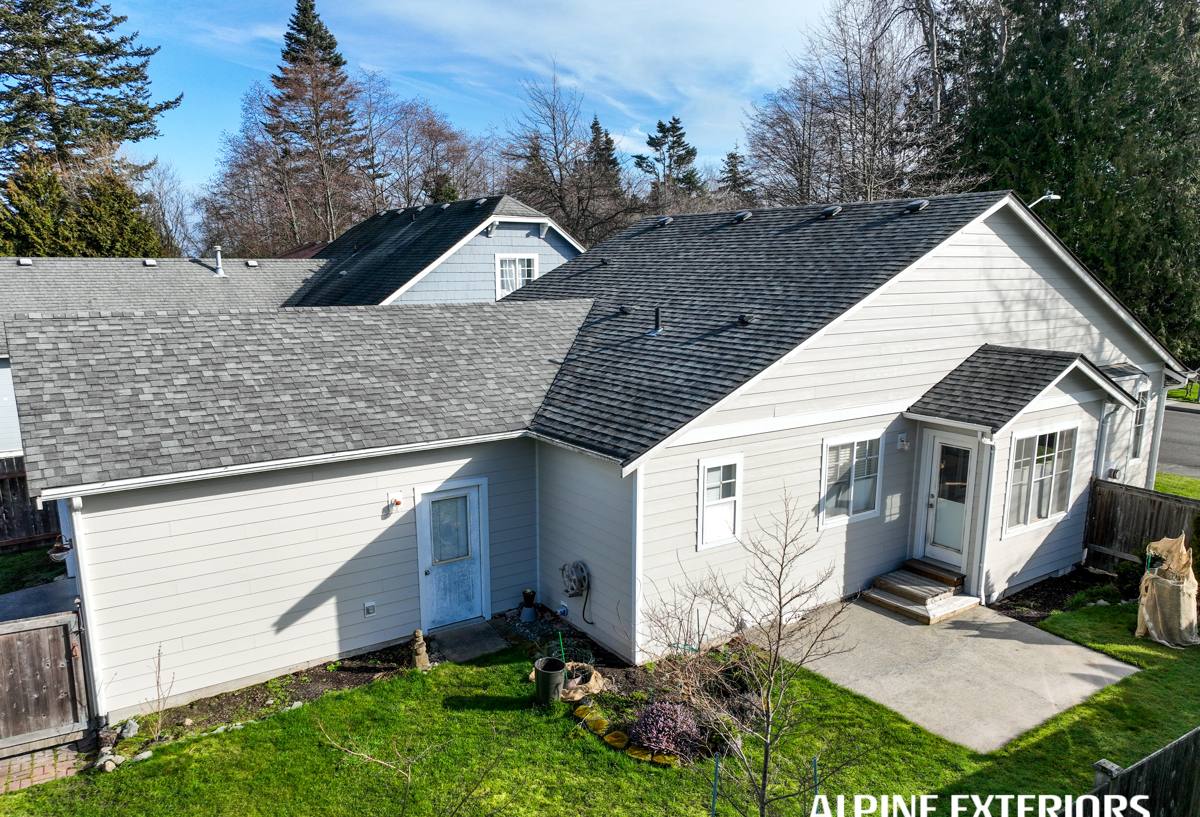
Salt air is corrosive in ways that aren't always obvious from the street. It doesn't just sit on the surface of a wall — fine salt particles carried on wind and fog work into seams, fasteners, and any place where two materials meet. Over years, that accelerates corrosion in metal flashing and fasteners, breaks down cheaper paint films faster than the same paint would fail inland, and can worsen moisture problems by keeping surfaces slightly damp longer after a storm passes.
Why This Matters for Siding Choice
Some siding materials are more vulnerable to this than others. Wood-based products can see finish breakdown and edge swelling accelerate in a salt-air environment. Vinyl can become brittle and discolored faster under the combination of UV, salt, and temperature swings common to shoreline exposure. The fastener and flashing details matter as much as the siding panel itself — a product that's fine on paper can still fail early if the installation doesn't account for what marine exposure does to metal and seams over time.
Driving Rain and the Island's Wet Months
Whatcom County gets a long, wet stretch every year, and on an exposed island lot that rain often arrives sideways rather than straight down. That matters because siding isn't just judged on how it looks dry — it's judged on how it manages water that's being pushed horizontally into laps, seams, and trim by wind. Weak points in a siding system, whether that's an undersized water-resistive barrier detail, a poorly flashed window, or a butt joint that wasn't sealed correctly, show up faster here than they would in a calmer, drier location.
This is also why we pay close attention to the whole wall assembly on island jobs, not just the visible siding. House wrap, flashing tape, window and door integration, and proper clearance at the bottom of the wall all need to work together. A great siding product installed over a weak water-management system will still let water in.
Moss Season: The Slow, Quiet Damage
Moss doesn't destroy a house overnight, but Lummi Island's shade, humidity, and long damp season give it plenty of time to work. Moss and algae growth on siding holds moisture against the surface for extended periods, which is exactly the condition that causes paint failure, substrate softening, and — on wood-based products — rot. North and east-facing walls under tree cover are usually the first to show it.
Reducing Moss Buildup
- Trim back vegetation and tree limbs that shade siding and restrict airflow along walls
- Keep gutters clear so overflow isn't running down the siding face
- Choose a siding material and finish that resists moisture absorption at the surface
- Have siding inspected periodically for trapped moisture behind trim and at butt joints
- Rinse heavy moss and algae buildup gently rather than pressure-washing, which can force water behind panels
Why We Install Only James Hardie Fiber Cement
Given everything above — salt exposure, driving rain, and a long moss season — we made a decision a long time ago to only install James Hardie fiber cement siding, and not LP SmartSide, vinyl, Cemplank, Allura, primed spruce, or cedar. That's not a marketing position; it's a practical one based on what actually holds up in this climate.
Fiber cement is non-combustible and dimensionally stable, meaning it doesn't swell, shrink, or warp with moisture the way wood-based products can. James Hardie's ColorPlus finish is baked on at the factory rather than field-applied, which gives it better long-term color and film integrity than most site-painted or primed products — a real advantage in an environment where paint failure is accelerated by salt and moisture. Hardie also engineers specific product lines (their HZ5 line, for example) for regions with more demanding moisture exposure, which is relevant for shoreline and marine-exposed lots like many on Lummi Island. The warranty is also transferable, which matters to buyers if the home ever sells.
We're not going to tell you other products are junk — vinyl, LP SmartSide, and engineered wood all have legitimate uses and reasonable performance in the right setting. But we've chosen to build our business around one product system we can install correctly, warranty confidently, and stand behind on exactly the kind of exposed, wet, salt-air lots common on the island.
How the Main Siding Options Compare
| Material | Salt Air Resistance | Moisture Behavior | Maintenance |
|---|---|---|---|
| James Hardie fiber cement | Strong — non-combustible, dimensionally stable | Doesn't swell or rot; factory finish resists film breakdown | Low — occasional rinse, no repainting cycle needed for years |
| Vinyl | Can become brittle/discolored faster under UV and salt | Doesn't rot, but can trap moisture behind panels if installed loosely | Low, but limited repair/color-match options over time |
| LP SmartSide / engineered wood | Moderate — treated, but still wood-based | Vulnerable at cut edges and seams if sealing isn't maintained | Moderate — edge sealing and finish upkeep matter |
| Cedar / primed spruce | Weaker without diligent upkeep | Absorbs moisture; prone to swelling, checking, and rot over time | High — regular refinishing and moisture monitoring |
Getting the Work Done on an Island
Working on Lummi Island means factoring in ferry scheduling for crew, equipment, and material deliveries. We plan our island jobs around that reality rather than treating it as an afterthought — that means grouping tasks efficiently, scheduling material drops ahead of the crew, and being upfront with homeowners about timelines so a ferry schedule doesn't turn into project delays. It also means we're careful about job-site logistics: staging materials properly, protecting the site from weather between phases, and not leaving a home more exposed than necessary while work is underway.
A local, Whatcom County-based crew that already understands island logistics and this region's climate is worth more here than it would be on a straightforward mainland job. We're not learning the ferry schedule or the exposure patterns for the first time on your project.
A Full Exterior, Not Just Siding
Siding, roofing, windows, and decks all interact on a home — a leak at a window or roofline can show up as a siding problem, and failing siding can undermine trim and decking below it. We handle all four, which means we can look at an island home's exterior as one connected system rather than quoting a single piece and hoping it lines up with everything else.
On a marine-exposed property, that matters more than usual. Roof drainage that dumps water directly onto a wall, a deck ledger board that's trapping moisture against siding, or window flashing that wasn't integrated correctly with the water-resistive barrier are all common contributors to premature siding failure — and they're easiest to catch and fix when one crew is looking at the whole exterior.
What to Look for When Hiring for Island Work
- Experience specifically with marine or shoreline-exposed siding projects, not just general remodeling
- A clear plan for scheduling around ferry access rather than treating it as a minor detail
- Manufacturer training or certification for the specific siding product being installed
- A written scope that addresses flashing, house wrap, and water management — not just the visible siding panel
- Willingness to explain trade-offs between siding materials honestly, rather than pushing one option without context
Planning a Project on Lummi Island
Whether you're dealing with siding that's showing moss staining and paint failure, planning ahead of a sale, or tackling roofing, windows, or a deck alongside siding work, it helps to start with an honest look at what your home's exposure actually demands. We're happy to walk a property, talk through what we're seeing, and explain what a James Hardie installation would involve for your specific lot and orientation.
If you'd like a free, no-pressure estimate for your Lummi Island home, the form below is the easiest way to get started — we'll take it from there.