 Birch Bay
 Siding Built for Cherry Point's Shoreline Climate
Cherry Point sits along the Strait of Georgia in Whatcom County, close enough to the water that salt air is simply part of daily life here. Homes in this stretch of the county face a specific combination of stressors: salt-laden marine air that corrodes and degrades poorly-protected materials, driving rain that comes in sideways off the water during winter storms, and a moss and algae season that can run eight months or longer in the shaded, damp microclimates common to this part of the coast. Any exterior product installed here has to hold up to all three at once, year after year, without constant upkeep from the homeowner.
We're a local siding, roofing, window, and deck contractor working the Birch Bay area, and Cherry Point is squarely inside our service territory. That matters more than it might sound like — a crew that works this specific stretch of coastline knows which walls take the worst of the weather, which details fail first, and what actually holds up versus what just looks good on a spec sheet.
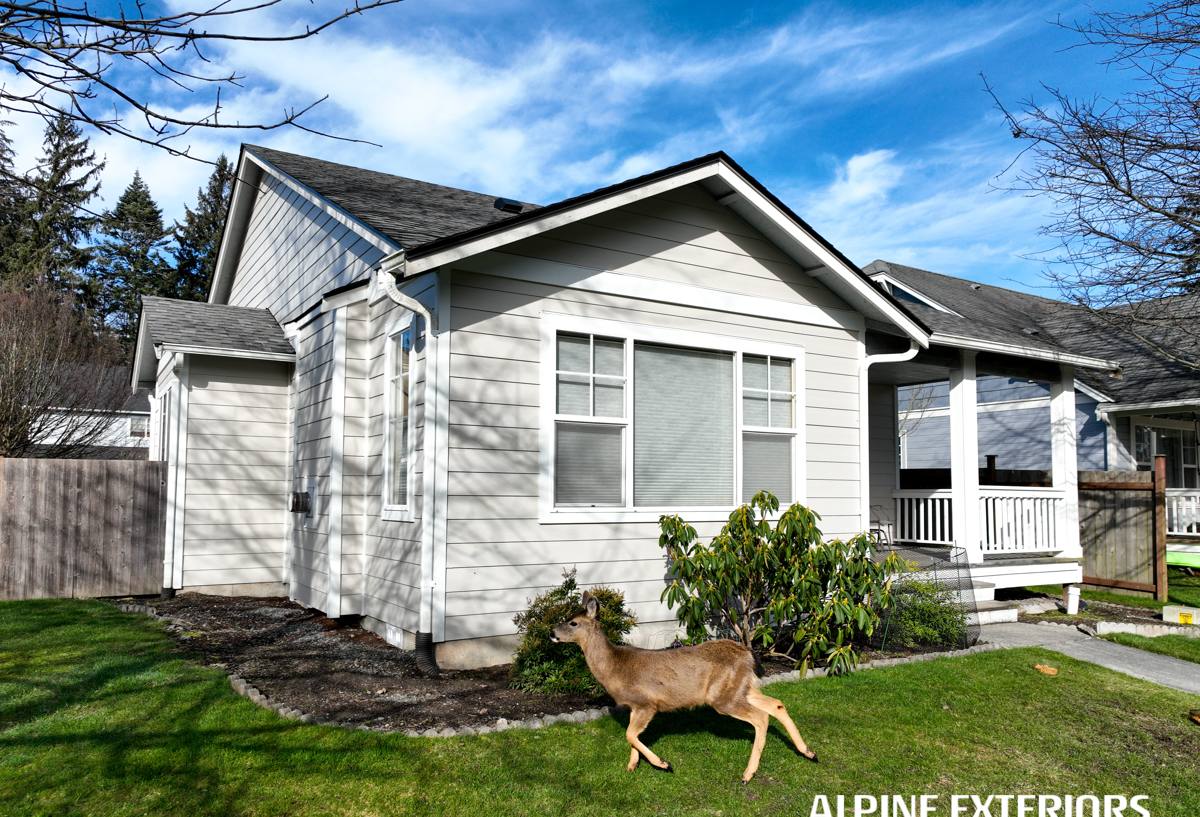
What the Climate Actually Does to a House Here
Salt Air and Corrosion
Proximity to the Strait means airborne salt settles on every exterior surface, including siding, trim, fasteners, and flashing. Salt is hygroscopic — it pulls moisture out of the air and holds it against whatever it lands on. Over time that accelerates corrosion in metal components and speeds up the breakdown of materials that aren't formulated to resist it. Paint films on wood-based products tend to chalk and fail faster in salt-exposed zones, which is part of why we pay close attention to fastener selection and flashing details on every Cherry Point project, not just the siding itself.
Driving Rain and Wind-Driven Moisture
Storms coming off the water don't just drop rain straight down — wind pushes it sideways into wall assemblies, working into seams, laps, and penetrations that a calmer climate would never stress-test. This is a wind-driven rain environment, and it punishes any siding system with weak lap joints, undersized overlaps, or caulk-dependent seams. It also means the water-resistive barrier and flashing behind the siding matter just as much as the siding itself — a beautiful facade over a poorly detailed wall assembly will still leak.
Moss, Algae, and Prolonged Dampness
Cherry Point's tree cover and marine humidity create long stretches where north- and west-facing walls simply don't dry out fully between rain events. That's the exact condition moss and algae need to establish. Once organic growth gets a foothold on a porous or absorbent surface, it holds moisture against the substrate and accelerates whatever decay process is already underway. Siding that absorbs water is siding that stays damp longer, and that's a losing combination in this climate.
Why We Only Install James Hardie Fiber Cement
We've made a deliberate decision as a company: we install James Hardie fiber cement siding exclusively. We don't install vinyl, LP SmartSide, Cemplank, Allura, primed spruce, or cedar. That's not a marketing position — it's a standard we hold because of what we've seen matters most in exactly the conditions Cherry Point deals with.
Non-Combustible Material
Fiber cement is engineered from cement, sand, and cellulose fibers, which makes it non-combustible. That's a meaningful safety consideration for any home, and it's a material property that vinyl and wood-based sidings simply can't match.
Factory-Applied ColorPlus Finish
Hardie's ColorPlus finish is baked on in a controlled factory environment, not brushed on at the jobsite. That finish is engineered specifically to resist fading and hold up in UV and salt exposure better than field-applied paint, which is a real advantage in a marine environment where site-applied coatings tend to break down faster.
Climate-Engineered HZ Product Lines
James Hardie makes region-specific HZ formulations, and the Pacific Northwest falls under a wet, moisture-heavy engineering profile. That means the product going on a Cherry Point home is formulated with this exact climate in mind, not a generic national spec.
Moisture Behavior
Fiber cement doesn't absorb and swell the way wood-based products can, and it doesn't trap moisture behind the surface the way some vinyl installations do. In a wind-driven rain environment with a long damp season, how a material handles water contact over years — not just on install day — is one of the most important factors in long-term performance.
A Warranty You Can Actually Use
Hardie backs its siding with a strong, transferable warranty. Transferability matters on the coast, where homes change hands and buyers want documented protection on a major exterior investment, not a warranty that resets to zero the day the house sells.
Why We Walked Away From the Alternatives
We used to get asked why we don't offer more product options. Here's the honest answer, product by product.
Vinyl Siding
Vinyl is affordable and low-maintenance in mild climates, and we're not going to pretend otherwise. But it's a petroleum-based product that expands and contracts significantly with temperature swings, and its seams and laps rely heavily on correct installation to shed wind-driven rain. In a marine environment with real storm exposure, we've found the long-term moisture management case for vinyl weaker than fiber cement's.
LP SmartSide
LP SmartSide is a wood-strand product with real strengths — it's workable, reasonably impact-resistant, and less expensive than fiber cement in many markets. Its long-term vulnerability is that it's still an engineered wood product, and wood-based sidings are inherently more moisture-sensitive than cement-based ones. In a climate with an eight-month-plus damp season, that's a trade-off we're not willing to install and stand behind.
Cemplank and Allura
Both are legitimate fiber cement competitors to Hardie, and the base material science is similar. Our decision to standardize on Hardie comes down to the factory-applied ColorPlus finish system, the region-specific HZ engineering, and the depth of Hardie's transferable warranty program — differentiators we haven't found matched elsewhere.
Primed Spruce and Cedar
Cedar is a beautiful, genuinely traditional Pacific Northwest material, and we understand its appeal. But solid wood siding demands ongoing maintenance — refinishing, caulking, spot repairs — to keep moisture out, and that maintenance burden only grows in a salt-air, high-rain environment like Cherry Point. Primed spruce carries similar exposure risk without cedar's natural rot resistance. We'd rather install something that doesn't put homeowners on a recurring maintenance treadmill just to keep water out.
Comparing the Options
| Material | Salt Air Resistance | Wind-Driven Rain Performance | Maintenance Burden | Do We Install It |
|---|---|---|---|---|
| James Hardie Fiber Cement | Strong | Strong when properly detailed | Low | Yes |
| Vinyl | Moderate | Seam-dependent, moderate | Low | No |
| LP SmartSide | Moderate | Moisture-sensitive over time | Moderate | No |
| Cedar / Primed Spruce | Weak without upkeep | Requires diligent sealing | High | No |
How We Approach a Cherry Point Siding Project
Assessment First
Every project starts with a walk of the exterior to look at existing siding condition, moisture staining, trim and flashing details, and which walls take the heaviest weather exposure. On a Cherry Point home, we're paying particular attention to the windward and shaded walls, since those tend to show the most wear from wind-driven rain and prolonged dampness.
Water Management Behind the Siding
Correct installation isn't just nailing panels to a wall. It includes a properly lapped water-resistive barrier, correctly flashed windows and doors, and rainscreen or drainage detailing where it's called for. In a driving-rain environment, the assembly behind the siding is doing as much work as the siding itself.
Fastener and Trim Selection
In salt-air zones we use fasteners and trim details suited to corrosion resistance, since standard hardware can fail well before the siding does in this kind of exposure.
Finish and Color
ColorPlus finishes come pre-baked in a range of colors, which removes on-site painting variability and gives a consistent, factory-controlled finish from day one.
Roofing, Windows, and Decks Face the Same Climate
Siding isn't the only part of a Cherry Point home under pressure from salt air and rain. Roofing systems need flashing and underlayment detailed for wind-driven moisture, not just standard shingle installation. Windows need proper flashing integration with the wall assembly so water doesn't track in around the frame. Decks exposed to salt air and constant damp shade need materials and fastener choices that won't corrode or trap moisture against the structure. We handle all four — siding, roofing, windows, and decks — because on a coastal home, they're really one connected weather-resistant envelope, and treating them as separate, disconnected projects is how leaks and premature failures happen.
Why a Local Crew Matters
A contractor who only occasionally works this stretch of Whatcom County coastline doesn't have the same feel for which walls fail first, how moss establishes locally, or how far inland the salt exposure realistically extends. Working Birch Bay and the surrounding communities regularly means we've seen how this specific climate treats different products and installation details over time, and we bring that judgment to every estimate — not a generic national playbook.
What to Look For When Hiring for This Kind of Work
- Manufacturer training or certification specific to the fiber cement system being installed
- A clear explanation of how the crew will detail flashing and the water-resistive barrier, not just the visible siding
- Local references or project history in Whatcom County, ideally near the coast
- A written scope that specifies fastener type and trim details, not just "siding replacement"
- Proper licensing and insurance, verifiable through the state contractor registry
- A warranty explanation that covers both material and workmanship, and whether it transfers to a future homeowner
Signs Your Current Siding May Be Struggling
A few things worth watching for on a Cherry Point exterior, especially heading into or coming out of the wet season:
- Persistent moss or algae growth that returns quickly after cleaning
- Soft spots or visible swelling, particularly near the bottom edges of panels
- Peeling or chalking paint on wood-based siding, especially on wind-exposed walls
- Visible corrosion streaking from fasteners or trim
- Gaps opening up at seams, corners, or around window and door trim
None of these mean a full replacement is automatically necessary, but they're worth having looked at before they turn into a larger repair.
Get a Free, No-Pressure Estimate
If you're weighing your options for a Cherry Point home, we're happy to take a look, walk you through what we're seeing, and give you an honest read on what your exterior needs — whether that's a full siding replacement or a smaller repair. Use the form below to request a free estimate, no pressure and no obligation.