 Birch Bay
 Metal Roofing Built for Lynden's Weather, Not Just Its Look
Lynden sits inland from the water compared to the immediate Birch Bay shoreline, but it shares the same Whatcom County weather pattern that wears down roofs all over this corner of the state: long stretches of driving rain off the Pacific, wind that comes sideways more often than straight down, and a moss and moisture season that can run eight or nine months out of the year. A roof that works fine in a drier climate can fail here in ways homeowners don't expect — not from one big storm, but from years of steady, low-grade moisture pressure finding every weak seam, fastener, and flashing detail.
Metal roofing has earned its reputation as one of the better answers to that pressure, but only when it's installed correctly for this climate. A metal roof that's improperly fastened, poorly flashed, or fitted with the wrong underlayment can trap moisture just as easily as it sheds it. This page covers what a metal roof needs to hold up on a Lynden-area home, what a correct installation actually involves, and how we approach the job.
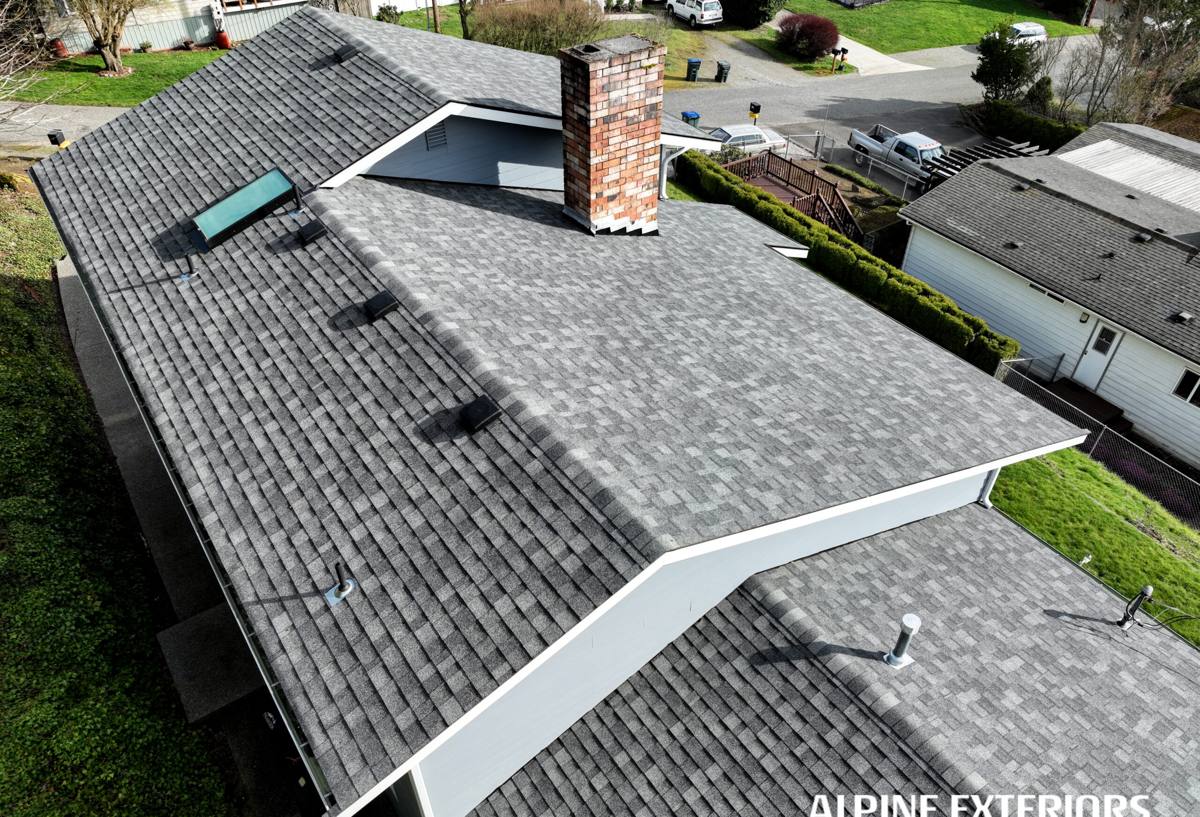
What Whatcom County Weather Actually Does to a Roof
Understanding the failure points helps explain why installation quality matters more here than in milder climates:
- Driving rain: Wind-driven rain doesn't just run off a roof — it can push sideways under poorly lapped seams, around fastener heads, and into any gap left by rushed flashing work.
- Extended damp season: Long stretches of overcast, wet weather mean roofing materials rarely get a chance to fully dry out between rain events, which is exactly the condition moss, algae, and slow-rot need to take hold.
- Moss and organic growth: Shaded roof sections, valleys, and north-facing slopes stay damp longest and are where moss establishes first. On the wrong roofing material, moss holds moisture against the surface and works into seams over time.
- Temperature swings: Whatcom County gets enough freeze-thaw cycling in winter that any trapped water in a roofing system has the chance to expand and work a small problem into a bigger one.
Metal roofing, done right, addresses most of these directly — it sheds water fast, doesn't absorb moisture into the material itself, and gives moss far less to grip onto than a textured surface. Done wrong, it can concentrate water at bad seams and fastener points instead of solving the problem.
What a Correct Metal Roof Installation Involves
Underlayment and Deck Prep
Before any metal goes down, the roof deck needs to be sound, dry, and properly prepped. We check for soft spots, water staining, or rot in the sheathing — issues that are common on older homes where a prior roof leaked slowly for years without an obvious sign inside the house. A high-quality synthetic underlayment, with extra ice-and-water membrane at eaves, valleys, and around penetrations, is non-negotiable in this climate. It's the backup layer that protects the structure if wind-driven rain ever gets past the metal itself.
Fastening and Panel Layout
How a panel is fastened matters as much as what it's fastened with. Panels need consistent spacing, correct fastener type for the substrate, and layout planned around the roof's actual water flow — not just laid out for speed. Rushed fastening is one of the most common causes of early leaks on metal roofs we've inspected.
Flashing and Transitions
Valleys, chimneys, skylights, and wall-to-roof transitions are where the overwhelming majority of roof leaks start, on metal roofs and every other type. Correct flashing detail — custom-formed where needed, properly lapped, and sealed with the right method for the material — is the difference between a roof that sheds water for decades and one that leaks within a few winters.
Ventilation
A metal roof without adequate attic or roof ventilation can trap heat and moisture underneath it, which shortens the life of the deck and can lead to condensation issues that have nothing to do with the roofing material itself. We check ventilation as part of every metal roofing job, not as an afterthought.
Choosing a Metal Roofing System for a Lynden Home
There isn't one "best" metal roof — the right system depends on the home's roof pitch, budget, and how long the owner plans to be in the house. Here's how the two most common systems compare for this climate:
| Factor | Standing Seam | Exposed-Fastener Panel |
|---|---|---|
| Fastener exposure | Concealed clips, no exposed penetrations | Fasteners exposed through panel face |
| Long-term maintenance | Very low — no fasteners to re-seat or reseal | Fasteners can back out or seals degrade over years, needing occasional attention |
| Upfront cost | Higher material and labor cost | More budget-friendly |
| Best fit | Homeowners planning to stay long-term, complex rooflines | Simpler roof shapes, cost-conscious projects, outbuildings |
| Performance in driving rain | Excellent — hidden fastener system reduces entry points | Good when installed correctly, more dependent on fastener maintenance over time |
Both systems can perform well in Whatcom County's climate. The deciding factor is usually budget versus how much long-term, hands-off performance the homeowner wants — and, just as important, the quality of the installation regardless of which system is chosen.
A Note on Panel Finish
Paint and coating quality varies significantly between manufacturers. We install systems with a factory-applied finish rated for coastal and marine-influenced climates, since even homes set back from the water in Lynden still get enough moisture exposure over a roof's lifespan to matter. A weaker coating will chalk, fade, or corrode at fastener heads years before a properly rated finish shows any wear — that's a durability and warranty issue worth asking about before signing any contract, not just a color choice.
Moss, Debris, and Long-Term Roof Care
Metal roofing resists moss far better than composition shingle or wood, but it isn't moss-proof, especially in shaded areas or where organic debris — fir needles, leaves, seed pods — is allowed to accumulate in valleys and against roof-to-wall transitions. A few habits go a long way:
- Keep overhanging branches trimmed back so roof sections get some sun and airflow.
- Clear valleys and gutters of debris at least twice a year, especially after fall leaf drop.
- Watch for streaking or dark patches in shaded areas — early moss growth is much easier to address than an established colony.
- Avoid pressure washing metal roofing; it can damage seams and finish. A soft brush and appropriate cleaner is the safer approach if growth does appear.
Our Process, Start to Finish
- On-site inspection and estimate: We look at the existing roof, deck condition, ventilation, and any problem areas before quoting anything — not a drive-by estimate.
- System recommendation: Based on the roof's pitch, complexity, and the homeowner's budget and timeline, we recommend a panel system and walk through the tradeoffs honestly.
- Tear-off and deck assessment: Old roofing comes off and we inspect the deck underneath for rot or damage before covering it back up — this is where hidden problems get caught.
- Underlayment and flashing installation: The waterproofing layer goes down first and gets done right, since it's the last line of defense if anything ever gets past the metal.
- Panel installation: Panels are installed to correct spacing and fastening standards, with attention to how water will actually move across the finished roof.
- Final walkthrough and cleanup: We walk the finished roof with the homeowner, and the site is cleaned of debris, nails, and packaging before we consider the job done.
Signs a Roof Needs a Closer Look
A quick self-check homeowners can run before deciding whether to call anyone:
- Visible moss, algae streaking, or dark patches, especially on shaded slopes
- Rusting, chalking, or fading fastener heads on an existing metal roof
- Granule buildup in gutters (a sign of an aging composition roof, if that's what's currently installed)
- Water stains on interior ceilings or in the attic after heavy rain
- Daylight visible through the roof deck from inside the attic
- Sagging or uneven rooflines, which can indicate deck or structural issues
- Loose, missing, or visibly deteriorated flashing around chimneys, vents, or skylights
What Affects Metal Roofing Cost in This Area
| Cost Factor | Why It Matters |
|---|---|
| Roof size and pitch | Steeper or more complex rooflines take longer to install and require more material planning |
| Panel system chosen | Standing seam runs higher than exposed-fastener panel due to material and labor |
| Deck condition | Rot or damage found during tear-off adds repair work before roofing can proceed |
| Number of penetrations | Chimneys, skylights, and vents each require custom flashing work |
| Tear-off vs. layover | Removing old roofing adds labor but allows a full deck inspection, which we generally recommend |
| Ventilation upgrades | Adding or correcting attic ventilation during the job protects the new roof's lifespan |
Exact numbers depend on the specifics of the roof, which is why we quote after an actual inspection rather than a rough phone estimate.
Why It Matters That We Already Work in Lynden
A crew that regularly works the Lynden and broader Whatcom County area already understands the local permitting expectations, the way weather patterns hit different rooflines in this area, and what problems tend to show up on homes of a certain age or construction type here. That familiarity shows up in fewer surprises during the job — knowing to check for a certain deck material common in older local construction, or recognizing early moss patterns before they become a bigger issue. It also means we're not learning the region on the homeowner's dime, and we're not disappearing after the invoice clears — we're still working in this area next year if a warranty question comes up.
Get a Free, No-Pressure Estimate
If you're weighing metal roofing for a home in the Lynden area, we're happy to come take a look, answer questions honestly, and put together a clear estimate with no obligation. Use the form below to get started.