 Birch Bay
 Siding Repair Built for Lynden's Inland Whatcom County Climate
Lynden sits inland from the coast, tucked into the Nooksack River valley in Whatcom County, but don't let the distance from saltwater fool you into thinking the climate is easy on a house. Lynden gets the same long, wet Pacific Northwest winters as the rest of the county, plus its own local wrinkles: valley fog that settles in overnight, humidity that lingers over farmland, and temperature swings between summer heat and hard winter frosts. Add in the driving rain that blows through the valley during fall and winter storms, and siding here takes a steady, cumulative beating whether or not it ever sees a drop of salt spray.
We work throughout Whatcom County, including the coastal stretch around Birch Bay where salt air is a daily factor, so we understand how the same general climate produces different failure patterns depending on where a house actually sits. In Lynden, the issues we see most often are moisture-driven: siding that's stayed damp too long because of poor drainage, trim that's trapped water against the wall, and a moss season that runs longer than most homeowners realize. This page is about what siding repair actually means for a Lynden home, and how to tell a real fix from a temporary patch.
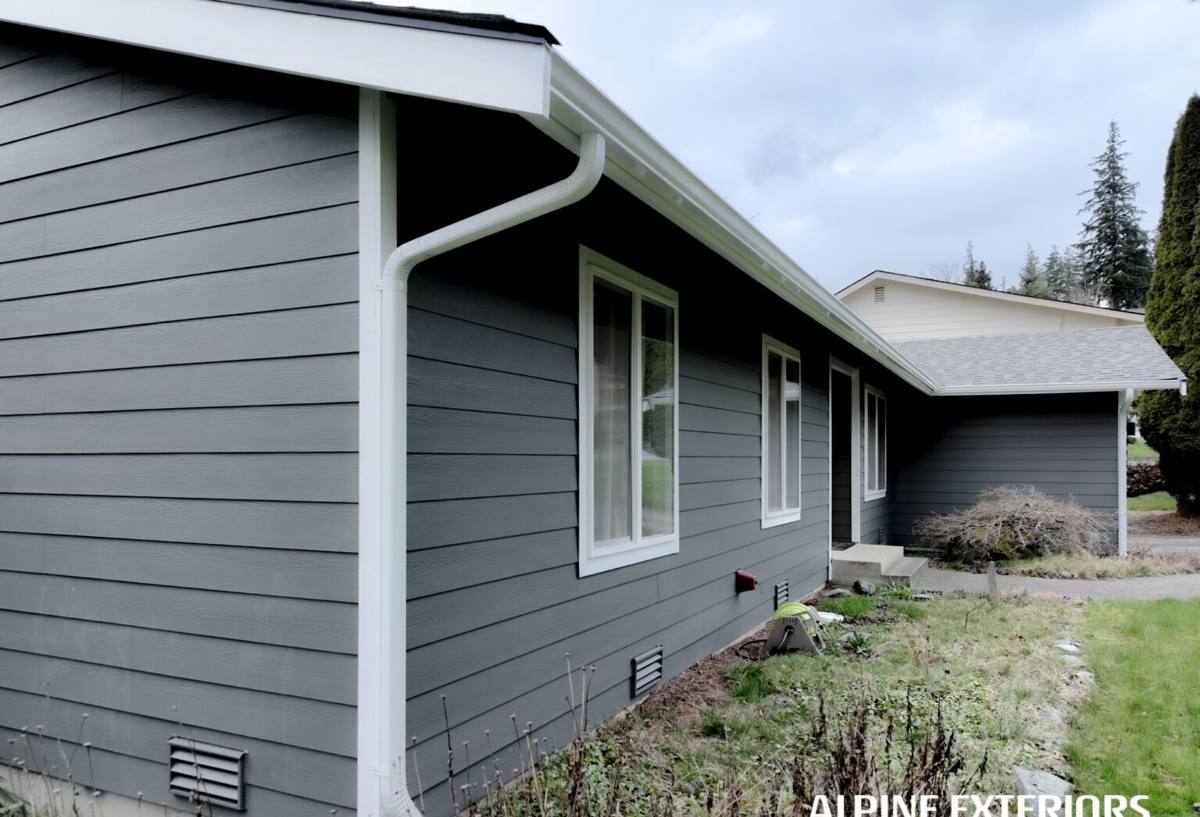
Why Lynden Homes Need Siding Repair More Than Homeowners Expect
Whatcom County's wet season isn't a few weeks — it's several months of low-intensity rain, overcast skies, and slow-drying conditions. That combination is hard on any siding material, but it's especially hard on anything that wasn't installed with proper drainage, flashing, and clearances in the first place. A siding repair need in Lynden usually traces back to one of a handful of root causes:
- Trapped moisture: Siding installed tight to trim, decks, or roof lines without a drainage gap holds water against the wall long after a storm passes.
- Failed or missing flashing: Around windows, doors, and roof transitions, flashing is what keeps water out of the wall assembly. When it's missing, corroded, or installed wrong, water gets behind the siding instead of running off it.
- Moss and organic growth: Whatcom County's moss season can run from fall through spring. Moss holds moisture against the siding surface, and on materials that aren't moisture-tolerant, that constant dampness accelerates rot and paint failure.
- Freeze-thaw stress: Lynden's winter frosts aren't as mild as the immediate coastline. Water that gets into cracks or seams can freeze, expand, and widen the damage over a single cold snap.
- UV and weathering cycles: Summers bring real heat to the valley, and the expansion-contraction cycle between hot summer days and cold, wet winters puts ongoing stress on caulking, seams, and fasteners.
None of these causes are unique to Lynden, but the combination — valley humidity, a long damp season, and real seasonal temperature swings — means siding problems here tend to be moisture-related first and cosmetic second. A repair that only addresses the visible damage without fixing the water path behind it will fail again, usually within a season or two.
What a Correct Siding Repair Actually Involves
Diagnosis Before Patching
The first step on any legitimate repair is figuring out why the siding failed, not just where. That means checking for soft spots with hand pressure, looking for staining or discoloration that indicates water intrusion, inspecting flashing at windows and rooflines, and checking whether the original installation left proper clearance at the bottom of the wall and around penetrations. Repairing a damaged panel without addressing a flashing gap or a clearance problem just delays the next repair call.
Removing Damaged Material Cleanly
Damaged siding needs to come off cleanly, without tearing the weather-resistive barrier underneath or damaging adjacent panels that are still sound. This is where experience matters — siding that's been on the wall for years can be brittle or fused to caulking, and a careless removal can turn a small repair into a bigger one.
Inspecting What's Behind the Siding
Once the damaged section is off, we check the sheathing and house wrap underneath. If water has been getting behind the siding for a while, there can be hidden rot or moisture damage that needs to be addressed before any new material goes back on. Skipping this step is the single most common reason a "repaired" wall keeps having problems.
Correcting the Water Path
If the failure was caused by missing flashing, poor caulking, or a clearance issue, that gets fixed as part of the repair — not left for next time. This might mean adding or replacing flashing at a window head, correcting the gap between siding and a deck ledger board, or re-establishing proper clearance at grade.
Matching and Installing New Material
New siding needs to match the existing product in profile, exposure, and finish as closely as possible. On homes with older or discontinued siding, an exact match isn't always possible — we'll walk you through the realistic options rather than promise a seamless match we can't deliver.
Why We Repair With — and Recommend — James Hardie Fiber Cement
We install James Hardie fiber cement siding exclusively. We don't install vinyl, LP SmartSide, Cemplank, Allura, primed spruce, or cedar, and when a Lynden homeowner is dealing with siding failure on one of those materials, part of our job is being honest about what caused the failure and what the long-term fix looks like.
Vinyl siding can crack in a hard freeze and doesn't hold paint if you want to change the color. Engineered wood products like LP SmartSide are moisture-sensitive at cut edges and seams — exactly the kind of exposure Lynden's wet season creates. Cedar and primed spruce require ongoing maintenance to keep moisture out, and in a climate with this much sustained dampness, that maintenance schedule is unforgiving. Cemplank and Allura are also fiber cement products, but we've standardized on Hardie specifically for its ColorPlus factory-applied finish, its HZ5 product engineering for moisture and freeze-thaw climates, and the strength of its transferable warranty when installation is done to spec.
Fiber cement doesn't rot, doesn't feed moss the way wood fibers can, and holds paint and factory finish far longer than wood-based alternatives — which matters directly in a place where the siding stays damp for months at a stretch. When we do a repair on a Hardie-sided home, we're matching into a system engineered for exactly this climate. When we do a repair on a different material, we'll tell you plainly what we're seeing and let you decide.
Material Comparison for Lynden's Climate
| Material | Moisture Behavior | Maintenance Burden | Freeze-Thaw Durability |
|---|---|---|---|
| James Hardie Fiber Cement | Does not rot or absorb moisture into the core | Low — factory finish resists fading and chalking | Engineered HZ lines built for wet, cold climates |
| Vinyl | Sheds water but can warp/crack at seams | Low, but color can't be changed | Can become brittle and crack in hard frost |
| Cedar / Primed Spruce | Absorbs moisture, prone to rot without upkeep | High — repainting and sealing on a recurring cycle | Vulnerable if moisture gets trapped and freezes |
| LP SmartSide / Engineered Wood | Moisture-sensitive at cut edges and seams | Moderate — edge sealing is critical | Edge swelling risk in freeze-thaw cycles |
Our Repair Process, Start to Finish
- On-site inspection: We walk the exterior, identify all areas of concern (not just the spot you called about), and check for hidden moisture issues.
- Honest scope and estimate: You get a clear explanation of what needs to be repaired, what caused it, and what it will cost — no pressure, no inflated scope.
- Careful removal: Damaged material comes off without harming sound siding or the underlying barrier.
- Underlying repair: Any hidden rot, flashing failure, or clearance issue gets corrected before new siding goes on.
- Installation to spec: New material is installed with proper fastening, clearances, and sealant per manufacturer requirements.
- Final walkthrough: We review the completed work with you and point out anything worth keeping an eye on going forward.
Signs a Lynden Homeowner Should Call for a Repair Inspection
- Soft, spongy, or bubbling spots when you press on the siding
- Visible staining, streaking, or dark patches, especially below windows or near rooflines
- Persistent moss or algae growth that keeps coming back after cleaning
- Cracked, warped, or separating panels or seams
- Peeling paint or a chalky surface that wasn't there a few years ago
- Gaps or daylight visible at trim, corners, or penetrations
- A musty smell or interior wall staining near an exterior wall
Any one of these on its own might be minor. Several together, especially concentrated on one side of the house, usually points to a moisture path that needs a proper diagnosis rather than a quick patch.
Why Hiring a Crew That Already Works Lynden Matters
Siding repair isn't just a materials question — it's a judgment call about what's actually happening behind the wall, and that judgment gets sharper with local experience. A crew that works across Whatcom County regularly, from the coastal exposure around Birch Bay to the inland valley conditions in Lynden, has seen how the same general climate produces different repair patterns depending on a home's exposure, orientation, and age. That matters when you're trying to figure out whether a stain under a window is a one-time event or a sign of an ongoing flashing failure.
It also matters for accountability. A local crew that's going to be back in Lynden next month and next year has every incentive to get the repair right the first time, match materials correctly, and stand behind the work. We're not passing through — we're doing repairs, replacements, and new installs across this county on an ongoing basis, and our reputation here depends on the work holding up through the next wet season, not just looking good on the day we finish.
What to Expect on Cost
Siding repair costs vary widely based on the size of the damaged area, whether hidden rot or flashing issues are found once the old siding comes off, and how closely new material needs to match existing siding. A small, isolated panel repair is a very different job from a section that's been compromised by long-term moisture intrusion. We'll never give you a number over the phone without seeing the damage first, and we'll always explain what's driving the cost before any work starts.
If you're seeing signs of siding trouble on your Lynden home, we're happy to come take a look. We offer free, no-pressure estimates — you'll get an honest read on what's going on and what it would take to fix it right, with no obligation to move forward.