 Birch Bay
 Custer Roofs Work Harder Than Most
Custer sits in a stretch of Whatcom County that gets the full Pacific Northwest treatment: onshore wind carrying salt air off the Strait of Georgia and Birch Bay, long stretches of driving rain that comes in sideways more often than straight down, and a moss season that can run eight or nine months out of the year in shaded, north-facing sections of a roof. None of that is unusual for this part of Washington. What is unusual is how often we get called out to a Custer home where a small, fixable problem was left alone for a year or two and turned into a deck-level repair or a full section replacement.
A correctly done roof repair here isn't just about stopping a drip. It's about understanding why that drip started in the first place — usually wind-driven rain finding a weak seam, moss holding moisture against shingles that were never designed to stay wet that long, or flashing that was installed adequately for a drier climate but not for this one.
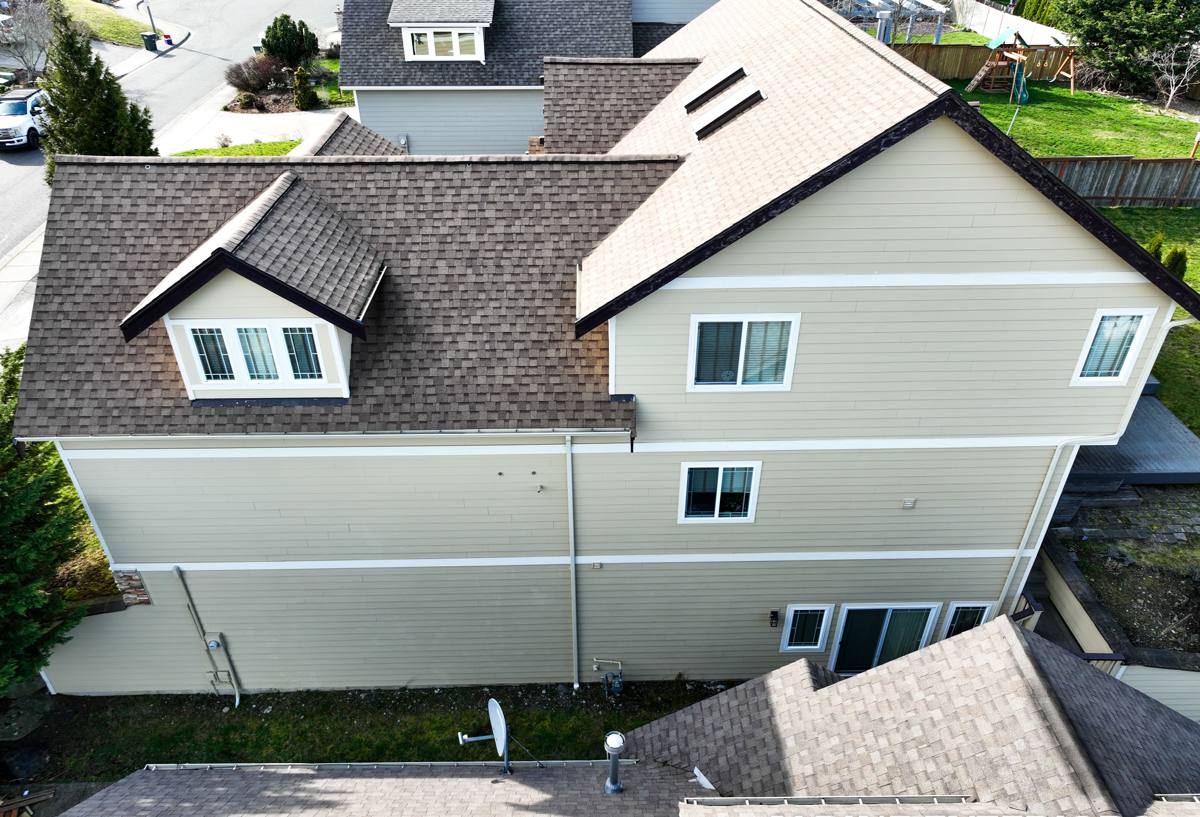
What Actually Goes Wrong on Roofs in This Area
Moss and Organic Growth
Moss doesn't just look bad. It lifts shingle edges as it grows, holds water against the roofing material long after a storm has passed, and works its way into fastener lines. On shaded roofs — common on lots with mature trees, which describes a fair number of properties around Custer — moss can establish itself within a single wet season if it isn't kept in check.
Wind-Driven Rain Intrusion
Rain that falls straight down is easy for a roof to shed. Rain that's being pushed sideways by wind off the water finds every gap: under a lifted shingle tab, around a poorly sealed pipe boot, along a valley where flashing has started to separate. This is one of the more common repair calls we get in this area, and it's often mistaken for a leak "somewhere in the middle of the roof" when the actual entry point is at an edge or a valley several feet away.
Flashing Failures
Flashing around chimneys, skylights, dormers, and roof-to-wall transitions is where most leaks actually start — not the field of the roof itself. Sealant-only "repairs" from a previous owner or a rushed patch job are a frequent culprit. Sealant breaks down; correctly lapped and fastened metal flashing doesn't rely on caulk to do the structural work.
Nail Pops and Fastener Corrosion
Salt-influenced air accelerates corrosion on exposed fasteners and lower-grade flashing metal. Over years, this shows up as rust streaking, popped nail heads that lift shingles, and small perforations in older flashing.
What a Correct Repair Actually Involves
A roof repair done right starts with figuring out the actual cause, not just the visible symptom. Water can travel a surprising distance under roofing material before it shows up as a stain on a ceiling, so a leak over the kitchen might originate at a valley or vent penetration well away from that spot.
- Locating the true entry point, not just the interior stain
- Checking the roof deck underneath for soft spots or rot before covering anything back up
- Replacing damaged underlayment, not just the visible shingle layer
- Installing new flashing where old flashing has corroded or separated, rather than re-sealing it
- Matching shingle color and profile as closely as possible so the repair doesn't stand out
- Clearing moss and debris from the surrounding area so the repair isn't undermined again within a season
Skipping any of these steps is how a "repair" ends up needing a second repair twelve months later.
Our Process for Custer Roof Repairs
1. Inspection
We get on the roof (or use a camera where access or pitch makes that safer) and look at the whole system — shingles, flashing, valleys, penetrations, and the deck where it's visible — not just the spot where the leak showed up inside.
2. Honest Diagnosis and Written Quote
You get a clear explanation of what's actually wrong, what caused it, and a written price before any work starts. If the damage is limited, we say so. If it's more extensive than a simple patch, we explain why and what the options are.
3. The Repair Itself
We work to match your existing roofing material as closely as available product allows, tie new flashing and underlayment into the existing system correctly, and don't leave shortcuts under the surface that will fail again in a year or two.
4. Cleanup and Walkthrough
Debris and old material removed, gutters checked for anything that fell in during the work, and a walkthrough so you know exactly what was done and why.
Repair or Replace? How We Help You Decide
Not every roof problem calls for a full replacement, and not every leak can be permanently solved with a patch. We'll give you a straight answer based on the roof's age, condition, and how widespread the damage actually is.
| Factor | Leans Toward Repair | Leans Toward Replacement |
|---|---|---|
| Roof age | Under roughly 12-15 years | Nearing or past manufacturer's expected lifespan |
| Extent of damage | Isolated to one area (valley, flashing, one section) | Multiple areas failing, widespread granule loss |
| Deck condition | Solid, dry decking under the damaged area | Soft spots, rot, or repeated water staining in several rooms |
| Moss history | Light, surface-level growth | Long-term moss growth that has lifted shingles across large areas |
| Repair history | First or second repair on this roof | Same area has already been patched more than once |
When repair is the right call, we do the repair. We don't push a replacement a roof doesn't need yet.
Materials: What We Install and Why
Most repair work in this area involves matching or upgrading existing asphalt composition shingle roofing, since that's what covers the large majority of homes around Custer and Birch Bay. When a full section or roof replacement is on the table, here's how we think about the common options honestly, including the trade-offs.
| Material | Strengths | Trade-offs |
|---|---|---|
| Asphalt composition shingle | Cost-effective, wide color range, straightforward to repair and match later | Shorter lifespan than metal, susceptible to moss if roof stays shaded and damp |
| Metal roofing | Sheds moss more readily, long service life, handles heavy rain well | Higher upfront cost, requires correct fastening and detailing to avoid its own leak points |
| Cedar shake | Traditional look that fits some older homes in the area | Higher maintenance burden in a wet climate, more susceptible to moisture damage if not kept clear of debris |
We'll tell you plainly if a material isn't a good fit for your roof's pitch, shading, or exposure — that's a maintenance and moisture conversation, not a sales pitch for whatever we happen to have on the truck.
Keeping a Repair From Becoming a Recurring Problem
Roof repairs last longer around here when a homeowner does a few simple things between visits. This is especially true on shaded or tree-covered lots common in and around Custer.
- Clear leaves and needles from valleys and gutters at least twice a year
- Watch for dark streaking or green growth on north-facing slopes, the first sign of moss taking hold
- Keep overhanging branches trimmed back so the roof gets more sun and airflow
- Check attic insulation and ventilation — poor airflow traps moisture and speeds up shingle wear from the underside
- Have a fresh eye look at the roof after any major windstorm, even if nothing looks obviously wrong from the ground
Why a Crew That Already Works This Area Matters
A roofer who works Whatcom County regularly already knows what driving rain off Birch Bay does to flashing, how fast moss takes hold on shaded roofs out toward Custer, and which failure points show up again and again on homes built to handle this specific climate. That's not something you can fully substitute with a general contractor passing through once. It shows up in faster, more accurate diagnosis, fewer surprises once a repair is underway, and material choices that actually hold up here rather than in a drier climate somewhere else.
It also matters for response time. A leak found during a storm doesn't wait for a crew to drive in from out of the area — having someone local who can get to your roof quickly can be the difference between a contained repair and a ceiling repair added to the bill.
Get a Straight Answer on Your Roof
If you're dealing with a leak, moss buildup, or damaged flashing on a Custer-area home, we're happy to take a look and give you an honest read on what it needs — repair or otherwise — with no pressure to buy more than the roof actually requires. The estimate is free; use the form below to get started.