 Birch Bay
 Ferndale's Roofing Climate: What Whatcom County Weather Actually Does to a Roof
Ferndale sits just inland from Birch Bay, but it shares the same weather pattern that defines roofing work across this stretch of Whatcom County. Air coming off the water carries salt that slowly works on metal fasteners, flashing, and any exposed hardware. On top of that, this part of Washington gets long stretches of drizzle and driving rain rather than short, hard storms, which means water has more time to find its way into small gaps instead of running off quickly. Add a shaded, damp climate for much of the year and you get ideal conditions for moss and algae to take hold on roofs that don't get much direct sun.
None of this is unusual for the area — it's just what a roof here is up against, year after year. A roof replacement that doesn't account for salt exposure, sustained moisture, and moss growth is a roof that will show its age faster than it should. The materials, underlayment, ventilation, and flashing choices we make for a Ferndale home are chosen with that specific combination in mind, not a generic weather assumption.
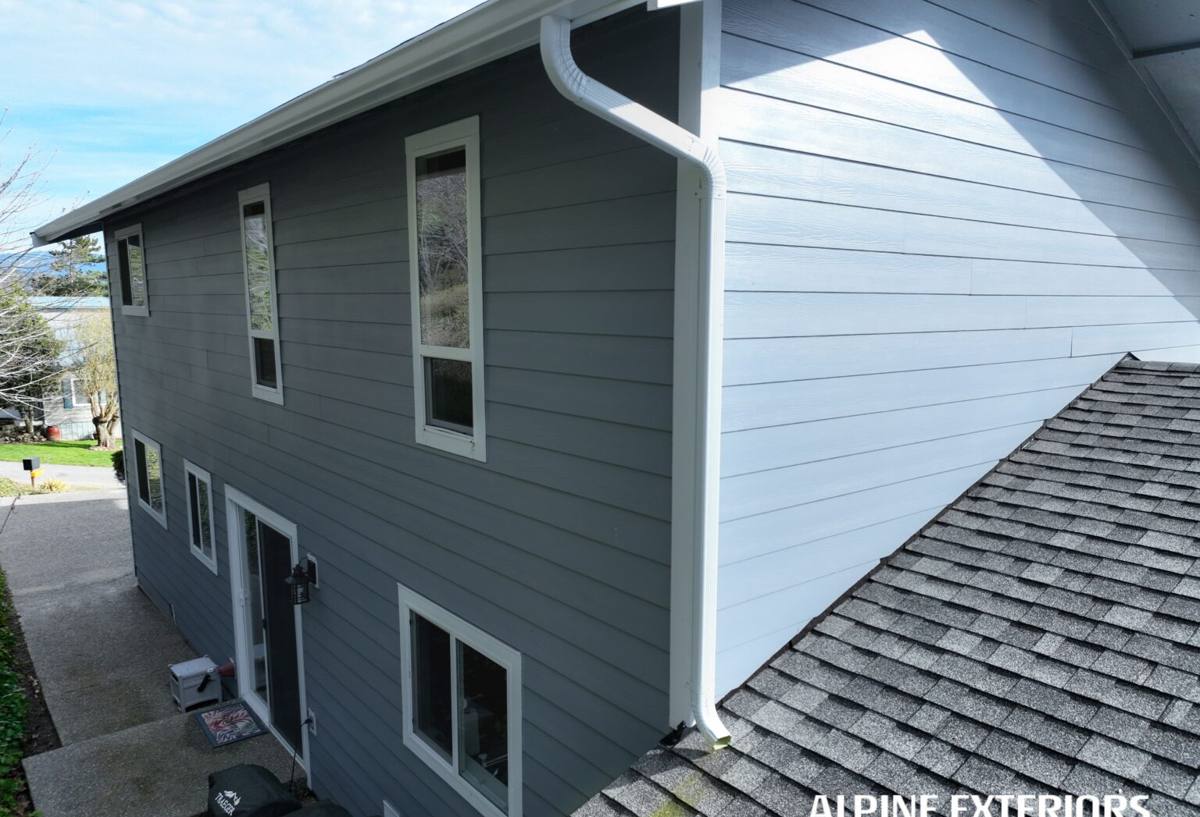
Signs a Ferndale Roof Needs Replacing, Not Just Repair
Not every roofing problem calls for a full replacement, and we won't tell you it does. But there are signs that point past the point where patching makes financial sense.
Visual and Physical Warning Signs
- Shingles that are cupping, curling at the edges, or losing their granules in patches
- Moss established thick enough that it's lifting shingle edges rather than just sitting on the surface
- Soft spots or noticeable sagging when walking the roof deck
- Daylight visible through the roof deck from inside the attic
- Repeated leaks in different spots each season, rather than one isolated failure
- Granules collecting in gutters in large amounts, especially on a roof over 15-20 years old
Age as a Factor
Standard three-tab asphalt shingles in this climate often need replacement in the 15-20 year range, sometimes sooner if moss and moisture haven't been managed. Architectural (dimensional) shingles and other upgraded materials can run longer, but age alone isn't the deciding factor — a well-maintained roof can outlast its "expected" lifespan, and a neglected one can fail early. We look at actual deck condition, not just the calendar.
Roofing Materials That Hold Up in This Climate
Material choice matters more here than in drier parts of the country. Some products handle sustained moisture and salt-tinged air better than others, and some require more upkeep to stay ahead of moss. Here's how the common options compare for a Ferndale-area roof.
| Material | Moisture & Moss Resistance | Salt Air Durability | Typical Lifespan | Maintenance Notes |
|---|---|---|---|---|
| Architectural asphalt shingle | Good with proper underlayment and algae-resistant granules | Good — minimal exposed metal | 25-30 years | Periodic moss removal recommended |
| Standard 3-tab asphalt shingle | Fair — thinner profile, less moss resistance | Good | 15-20 years | More frequent moss monitoring needed |
| Metal (standing seam or panel) | Excellent — sheds moisture, moss struggles to anchor | Requires coated or corrosion-resistant fasteners near the water | 40-50+ years | Low; occasional debris clearing |
| Cedar shake | Poor without diligent upkeep — retains moisture | Fair | 20-30 years with maintenance | High; needs regular treatment and cleaning |
We don't push one material as universally "best." An architectural asphalt shingle with algae-resistant granules is a solid, cost-effective choice for most Ferndale homes. Metal roofing costs more upfront but asks the least of a homeowner over time in a wet, mossy climate. Cedar shake can look great, but we're upfront that it's the highest-maintenance option here — not because the wood is bad, but because sustained moisture is exactly what it struggles with, and skipping upkeep shortens its life fast.
What a Correct Roof Replacement Actually Involves
A roof replacement is more than swapping old shingles for new ones. In a climate like this, the parts of the job you don't see matter as much as the parts you do.
Tear-Off and Deck Inspection
We remove the old roofing down to the deck rather than layering over it. That's the only way to actually see the plywood or OSB underneath — soft, delaminated, or water-stained decking gets replaced before anything new goes down. Roofing over a compromised deck just hides a problem that will resurface.
Underlayment and Moisture Barriers
Given how much sustained rain this area sees, underlayment isn't a place to cut corners. Synthetic underlayment across the full roof, with self-adhering ice-and-water shield at vulnerable points — eaves, valleys, around penetrations, and along roof-to-wall transitions — gives the roof a real second line of defense if wind-driven rain gets past the shingles.
Ventilation
Poor attic ventilation traps moisture underneath the roof deck, which accelerates rot and can void material warranties. Balanced intake (soffit vents) and exhaust (ridge vents or similar) keeps air moving so condensation doesn't build up in the attic space — a detail that matters more in a persistently damp climate than in a dry one.
Flashing and Valleys
Flashing around chimneys, skylights, vent pipes, and in roof valleys is where most leaks actually originate — not in the open field of shingles. We use corrosion-resistant flashing material given the salt exposure in this area, and we form and seal it correctly rather than relying on caulk to make up for a poor fit.
Our Process, Start to Finish
Homeowners generally want to know what's going to happen and roughly when. Here's how a typical Ferndale roof replacement runs with our crew.
- Free on-site inspection and estimate — we walk the roof (or use appropriate access for steep pitches), check the attic if accessible, and give you an honest read on repair versus replacement.
- Written scope and material selection — you get a clear breakdown of what's being replaced, what materials are proposed, and why, with straightforward pricing.
- Scheduling around weather windows — we plan tear-off for dry stretches where possible and use protective measures if weather turns during the job.
- Tear-off and deck inspection — old material removed, deck checked and repaired as needed before anything new is installed.
- Underlayment, flashing, and material installation — installed in the sequence and manner the manufacturer specifies, which matters for warranty coverage.
- Cleanup and final walkthrough — magnetic sweep for nails, debris hauled off, and a walkthrough so you can see the finished work before we consider the job done.
Cost Factors for a Ferndale Roof Replacement
Every roof is different, so we won't quote a number without seeing the actual job — but a few factors consistently drive cost up or down:
- Roof size and pitch — steeper roofs take longer and require more safety setup
- Number of layers to remove — tearing off two layers of old shingles costs more than one
- Deck condition — rotted or soft decking sections need replacement before install, which adds material and labor
- Material choice — asphalt, architectural shingle, and metal carry different price points, as shown above
- Roof complexity — valleys, dormers, chimneys, and skylights all add labor and flashing work
- Access and site conditions — tree cover, steep lot grade, or limited driveway access can affect logistics
We walk through these factors with you during the estimate so the number you get reflects your actual roof, not a generic average.
Why a Crew That Already Works Ferndale Matters
A roofing crew that regularly works Ferndale and the broader Birch Bay area isn't guessing at how this climate treats a roof — we've seen what moss does to a north-facing slope with heavy tree cover, and we've seen how salt-tinged air chews through the wrong grade of fasteners over a decade near the water. That local pattern recognition shapes material recommendations and installation details before problems show up, not after.
There's also a practical side: being local means we're reachable if a question comes up after the job, we're familiar with the permitting expectations in Whatcom County, and we're not disappearing to the next region once the crew wraps up. For a project as significant as a full roof replacement, that accountability matters.
Maintaining Your New Roof After Installation
A correctly installed roof still benefits from basic upkeep, especially in a climate that grows moss well. None of this is complicated, but skipping it shortens the life of even a good roof.
- Keep gutters clear so water isn't backing up under the shingle edge
- Have moss growth treated or removed before it establishes and lifts shingles — don't wait for it to spread
- Trim back overhanging branches to reduce shade, debris, and moisture retention on the roof surface
- Schedule a visual inspection every year or two, particularly after major windstorms
- Address small flashing or sealant issues promptly rather than letting them turn into deck damage
If you're weighing whether your Ferndale roof needs a repair or a full replacement, we're glad to take a look and give you a straight answer either way. Fill out the form below for a free, no-pressure estimate.