 Birch Bay
 Blaine's Coastal Climate Asks More of a Roof
Homes in Blaine sit close to the water, and that changes what a roof has to deal with year-round. The salt-laden air off Semiahmoo Bay and the Salish Sea works on exposed metal fasteners, cut panel edges, and flashing details in ways that inland Whatcom County homes never experience. Add in the long stretch of driving rain that defines a typical Pacific Northwest winter, plus the shaded, damp conditions that let moss take hold on north-facing slopes for much of the year, and you have a roofing environment that punishes shortcuts.
None of this means a roof is doomed to fail early. It means the material, the details, and the installer's habits matter more here than they would somewhere drier and further from the coast. That's the lens we bring to every metal roofing job in Blaine.
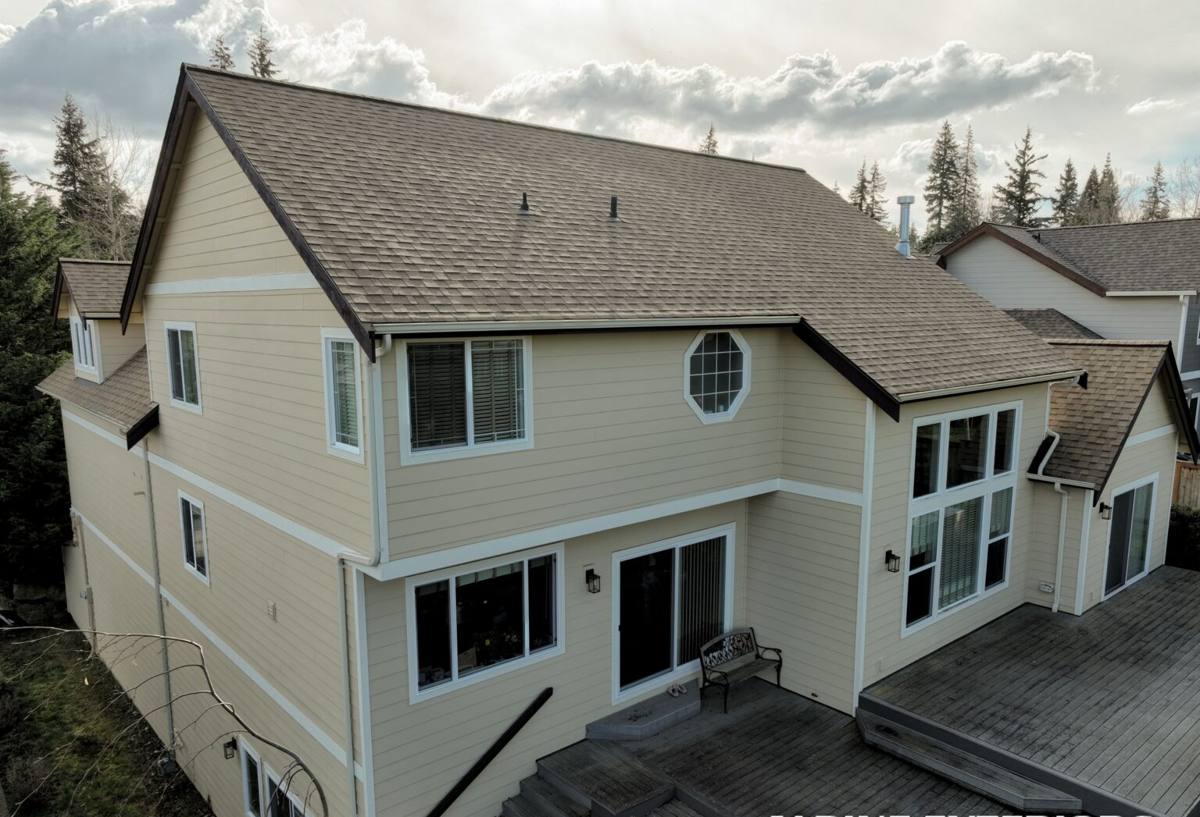
Why Metal Roofing Makes Sense for Blaine Homes
Metal isn't the right call for every home or every budget, but for a coastal Whatcom County property it solves several problems at once:
- Steep, slick metal panels shed moss and organic debris far better than asphalt shingle grain, which gives algae and moss a texture to grip.
- A correctly installed metal roof handles sustained, driving rain without the granule loss and mat exposure that shortens shingle life near the water.
- Standing seam systems in particular have very few horizontal laps for wind-driven rain to work into, which matters on a shoreline lot with fewer windbreaks.
- Properly coated metal resists UV and moisture cycling over a long service life, which offsets the higher upfront cost for homeowners planning to stay put.
The trade-off is that metal is unforgiving of poor workmanship. A shingle roof with a slightly imperfect flashing detail often still sheds water. A metal roof with the same mistake can funnel water directly to a seam or fastener and cause a problem years later, quietly, under the panel.
What a Correct Metal Roof Install Actually Involves
Panel Type and Layout
We choose between standing seam (concealed fastener) and exposed-fastener panel systems based on the roof's pitch, how visible it is from the street, and the homeowner's budget. Standing seam costs more but has no exposed screws for salt air to attack over time. Exposed-fastener panels cost less up front but require honest disclosure that the fasteners and their neoprene washers are a maintenance item in a coastal climate, not a set-and-forget detail.
Underlayment and Water Protection
Given how much rain Blaine sees in a normal winter, we don't treat underlayment as an afterthought. Eaves, valleys, and any low-slope transitions get self-adhered ice-and-water membrane, with a high-temperature synthetic underlayment across the rest of the field. This layer is what protects the roof deck if wind ever drives rain up under a seam or around a penetration.
Flashing and Penetrations
Every pipe boot, chimney, skylight curb, and wall transition is a place water can find its way in. On a metal roof these details have to be formed and sealed to move with the panel through temperature swings, not just caulked and hoped for. This is where a rushed install shows up years later as a stain on a ceiling.
Ventilation
A well-vented attic keeps the roof deck at a stable temperature and reduces the condensation that feeds moss and mildew from underneath. We check existing intake and exhaust venting on every metal reroof and correct it when it's inadequate, rather than covering over a problem.
Panel Options We Install
There's no single "best" metal panel — the right choice depends on how exposed the home is to salt air, how visible the roof is, and budget. Here's how the common options compare for a Blaine property:
| Panel Type | Fastener Style | Best For | Maintenance Notes |
|---|---|---|---|
| Standing Seam | Concealed clips | Homes closest to the water, steep-slope main roofs | Very low; no exposed screws to inspect or replace |
| Exposed-Fastener Panel | Screws with rubber washers | Outbuildings, budget-conscious reroofs, lower-visibility slopes | Washers and screws should be checked periodically as they age |
| Stone-Coated Steel | Concealed or clipped | Homeowners wanting a shingle or shake look with metal durability | Low; coating protects the steel substrate |
Corrosion and Galvanic Issues in Salt Air
This is the detail that separates an installer who's used to inland roofs from one who actually works the Blaine and Birch Bay shoreline. Salt air accelerates corrosion at any point where a panel's protective coating is broken — cut edges, drilled holes, and scratches from mishandling during installation. We field-cut as little as possible, prime any cut edges that can't be avoided, and handle panels with the coating in mind rather than just moving material fast.
Galvanic corrosion is the other coastal-specific issue: when two dissimilar metals stay in contact and wet, one corrodes faster than it would on its own. That means matching fasteners, flashing, and gutter materials to the panel metal — steel screws on steel panels, compatible flashing metals, and isolating any point where copper or dissimilar metal might touch the roof system. We also favor factory-applied PVDF (Kynar-type) coatings over cheaper baked-on finishes, since they hold color and resist chalking far longer in salt-exposed, high-UV coastal conditions.
Our Process, Start to Finish
- On-site assessment — we walk the existing roof, check the deck condition, ventilation, and how exposed the home is to wind and salt air.
- Honest scope and estimate — panel type, underlayment plan, and flashing details are spelled out before any work starts, no vague allowances.
- Tear-off or overlay decision — we'll tell you plainly if the existing roof condition means a tear-off is the right call rather than covering over a problem.
- Deck repair and underlayment — any soft or damaged decking is replaced before underlayment goes down.
- Panel installation and flashing — panels, seams, and all penetration flashing installed to manufacturer spec, not shortcuts.
- Final walkthrough — we go over the finished roof and the maintenance items specific to your panel choice.
Moss, Debris, and Long-Term Maintenance
Even a well-installed metal roof in Whatcom County benefits from basic upkeep, especially on shaded slopes where the long moss season gives organic growth time to establish. A metal roof needs far less attention than shingles, but "none" isn't realistic this close to the water and this much rain.
- Clear gutters and valleys of needles and debris at least twice a year — clogged drainage is the most common cause of water backing up under a metal roof edge.
- Rinse off accumulated moss or algae on shaded slopes before it builds a mat; on metal this is usually a quick job compared to shingle cleaning.
- Walk the roofline visually after major windstorms to check for lifted flashing or debris impact, especially on waterfront-exposed homes.
- On exposed-fastener panels, have the fasteners and washers checked every few years as part of a broader home maintenance routine.
- Keep overhanging branches trimmed back to reduce both debris load and the shade that extends moss season.
Cost Factors on a Blaine Metal Roof
We won't quote a number without seeing the roof, but these are the variables that actually move the price:
| Factor | Why It Matters |
|---|---|
| Roof size and pitch | More material and steeper, harder-to-access slopes increase labor time |
| Panel type | Standing seam runs higher than exposed-fastener panel for the same footprint |
| Tear-off vs. overlay | Removing an old roof and repairing deck issues adds cost but avoids covering problems |
| Number of penetrations | Chimneys, skylights, and valleys each add flashing labor |
| Coating grade | Higher-grade PVDF finishes cost more but last longer in salt air |
Why a Crew That Already Works Blaine and Birch Bay Matters
A roofing crew based in Birch Bay and already working Blaine roofs isn't a marketing line — it changes how the job gets planned. We already know how hard the wind comes off the water on an exposed lot, how much rain a typical winter dumps here compared to inland Whatcom County, and which slopes on a shoreline home tend to hold moss the longest. That local pattern recognition means fewer surprises mid-job and a roof detailed for the actual conditions it will face, not generic best practices pulled from a drier region.
It also means we're not disappearing after the invoice clears. We're a short drive away if a question comes up after a storm, and we're not learning the local building department's expectations for the first time on your project.
If you're weighing options for a metal roof in Blaine, we're happy to walk the roof, talk through panel choices honestly, and put together a straightforward estimate — no pressure, no sales script. Use the form below to get started.