 Birch Bay
 Deck Building in Lynden: What the Local Climate Actually Demands
Lynden sits inland from the water, but it still shares the same marine-influenced weather pattern that defines Whatcom County: long stretches of steady, driving rain from fall through spring, short summers, and shaded yards that stay damp well after the rain stops. A deck built here isn't judged by how it looks in July. It's judged by how it holds up in February, after five straight months of moisture, and whether it's growing moss by year three or still shedding water the way it should.
We build and repair decks for homeowners across this part of Whatcom County, and Lynden jobs come with their own set of considerations — different from a coastal Birch Bay lot, but just as demanding in their own way. Understanding those differences up front is what separates a deck that lasts fifteen-plus years from one that needs structural work by year eight.
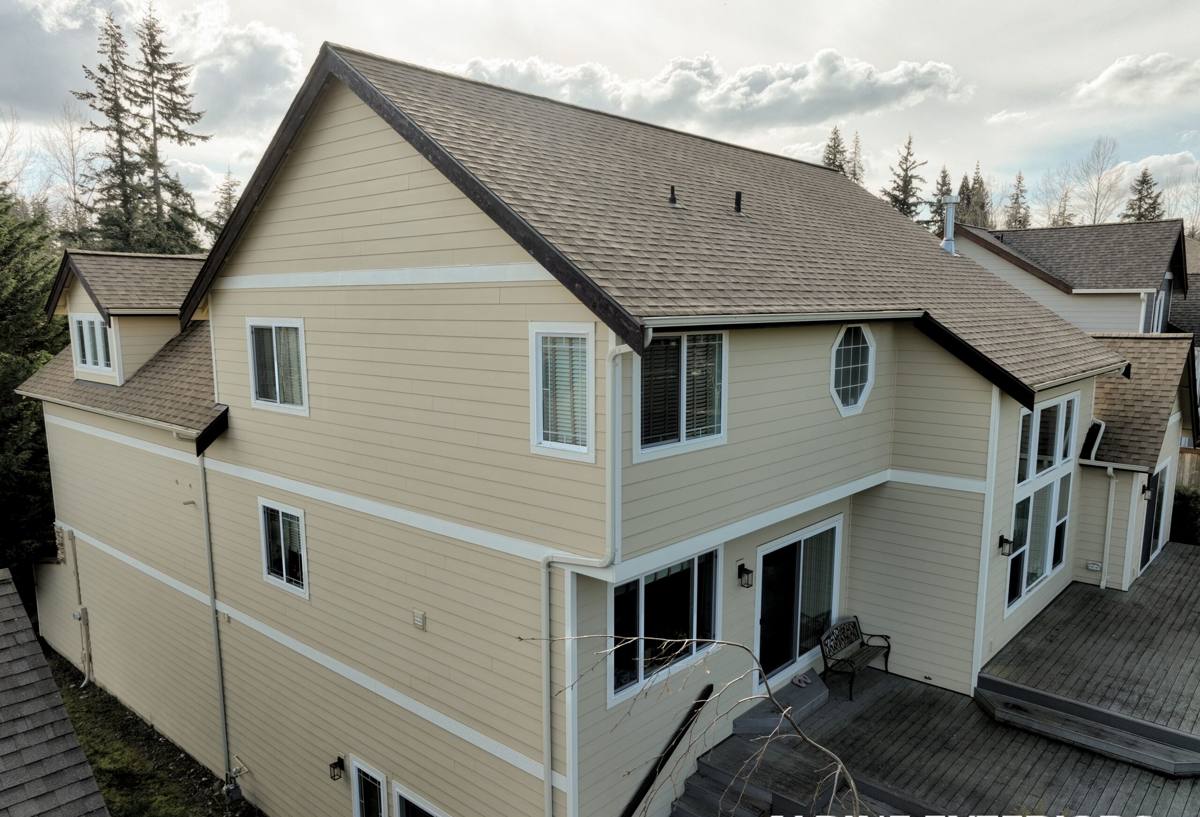
Why Lynden Decks Fail Early
Moisture That Doesn't Leave
Lynden's inland location means less direct salt exposure than lots right on the water, but it doesn't mean less moisture. Many Lynden properties sit on larger lots with mature trees and fence lines that block sun and airflow from the deck surface. Combined with our long wet season, that shade keeps boards damp far longer after a storm than a more open, sun-exposed deck would stay. Damp wood that never fully dries is exactly the condition moss, algae, and rot organisms need.
Moss and Algae Growth
Once moss gets established on a deck surface, it holds moisture directly against the wood or composite decking, which accelerates whatever damage is already happening underneath. It also makes the surface genuinely slippery — a real safety issue on stairs and landings, not just a cosmetic one. A deck's angle of pitch, gap spacing between boards, and surface material all affect how much moss pressure it will face over time, and all three are decisions made at the design stage, not fixes applied after the fact.
Driving Rain and Ledger Connections
Whatcom County rain rarely falls straight down — it comes in sideways during winter storms, which pushes water into places a calmer climate wouldn't test. The ledger board connection, where a deck attaches to the house, is the single most important structural and moisture detail on the whole project. A ledger that isn't properly flashed will let water track behind the siding and into the rim joist, and that kind of damage stays hidden until someone finally pulls the deck boards years later and finds soft, compromised framing.
What a Correctly Built Deck Includes
A deck that's going to hold up under Lynden's wet-shade conditions needs several things done right, not just one. None of these are optional upgrades — they're the baseline for a job that won't need early repair.
- Proper ledger flashing with a drainage gap or flashing tape system that directs water away from the house band joist, not into it
- Joist tape or a flashing membrane on the tops of all structural framing members to keep standing water off cut and fastened wood
- Hot-dip galvanized or stainless structural hardware — coastal-grade fasteners are worth using even on inland Lynden lots, since damp-climate corrosion isn't only a saltwater problem
- Board spacing calculated for wood movement in our humidity swings, not a fixed gap that ignores seasonal expansion
- A slight, consistent pitch away from the house so water sheets off instead of pooling
- Footings sized and set to current frost depth and load requirements for this area, inspected before backfill
- A decking material choice that matches how much shade and moisture exposure the specific yard actually gets
Choosing Decking Material for a Shaded, Wet Lot
There's no single "best" decking material — there's a best material for the specific site conditions, and a shaded Lynden lot with limited airflow calls for different priorities than an open, sun-exposed one.
| Material | How It Handles Damp Shade | Maintenance Reality |
|---|---|---|
| Pressure-treated wood | Performs well if kept sealed and cleaned regularly; struggles if neglected in constant shade | Needs cleaning and re-sealing every 1-2 years to resist moss and rot |
| Cedar | Naturally moisture- and insect-resistant, but still needs airflow to fully dry between rains | Periodic cleaning and oil/sealant; shows weathering faster in deep shade |
| Composite decking | Doesn't absorb water into the board itself, which helps in low-airflow spots | Low upkeep, but surface film and moss can still build up and need periodic washing |
| PVC/capped polymer | Fully moisture-sealed surface, best resistance to the wet-shade combination | Occasional washing; higher upfront cost, longest low-maintenance run |
We'll walk a specific yard with you and talk through how much direct sun the deck actually gets across the season before recommending a material — a lot shaded most of the day by fencing or mature trees changes the calculation compared to a more open one.
Our Process for Lynden Deck Projects
1. On-Site Assessment
We look at sun exposure, drainage patterns, the condition of the house band joist and siding at the attachment point, and any existing deck we'd be replacing. If we're tying into an existing structure, we check it for rot or corrosion before assuming it's sound.
2. Design and Permitting
Deck height, guardrail requirements, footing depth, and stair geometry are all governed by Whatcom County building code, and most deck projects at typical residential heights require a permit. We handle that process rather than leaving it to the homeowner, and we won't cut corners on code minimums to save time.
3. Framing and Flashing
This is the stage that determines whether the deck lasts. Ledger flashing, joist protection, and hardware selection all happen here, and it's the part of the job that's completely invisible once decking boards go down — which is exactly why it has to be done right the first time.
4. Decking, Railing, and Final Details
Board installation, railing systems, stair treads, and any lighting or fascia details are finished last, with attention to consistent spacing and a clean, level surface.
5. Walkthrough
We go over the finished deck with you, including basic maintenance expectations specific to the material chosen and the site's sun/shade conditions.
Deck Repair vs. Full Replacement
Not every aging Lynden deck needs to be torn out. The deciding factor is almost always what's happening at the structural level, not how the surface boards look.
Signs a Repair Can Work
Surface-level moss, graying wood, loose boards, or a wobbly railing are often repairable if the framing and footings underneath are still sound. A deck cleaning and board replacement, done alongside a hardware and flashing check, can add years of life to an otherwise solid structure.
Signs You're Looking at Replacement
Soft or spongy spots near the ledger, visible rot in joists, rusted or failing hardware, or a structure that predates current code minimums for railing height and baluster spacing are all signs the deck needs to come down and be rebuilt correctly rather than patched. We'll always tell you honestly which category a deck falls into — there's no benefit to us talking a homeowner into a full rebuild when a repair will genuinely hold.
Why a Crew Already Working in This Area Matters
Deck work in Whatcom County isn't identical from one property to the next. A crew that regularly works Lynden and the surrounding Birch Bay area has already seen how local drainage patterns, shaded lots, and our wet-season timing affect a build — and knows which permit and inspection steps the county actually requires, so there are no surprises mid-project. That familiarity also means fewer callbacks: a deck built with this climate in mind from day one shouldn't need emergency attention two winters later.
Scheduling is worth thinking about too. Deck work goes faster and cures better in drier stretches of the year, and a crew that knows the local weather pattern can help time a project to avoid rushing footings or finish work into a stretch of driving rain.
Basic Deck Care in a Wet Climate
Whatever material a Lynden deck ends up with, a few habits go a long way toward avoiding early problems:
- Sweep leaves and debris off the surface regularly, especially in fall — trapped organic matter holds moisture and feeds moss
- Keep nearby shrubs and tree limbs trimmed back to let air and light reach the deck surface
- Check the ledger flashing area once a year for any gaps, cracking caulk, or signs of water staining on the siding above it
- Clean composite or PVC decking with a soft-bristle brush and mild cleaner rather than a high-pressure setting that can damage the surface
- Reseal wood decking on the schedule appropriate to the product — don't wait until graying and cracking are already visible
Get a Straightforward Estimate
If you're planning a new deck in Lynden or need an honest read on whether an existing one needs repair or replacement, we're happy to come take a look. It's a free, no-pressure estimate — just a straight assessment of what your specific yard and structure actually need, using the form below.