 Birch Bay
 Roofing Built for Lynden's Weather, Not a Generic Climate
Lynden sits inland from the water compared to a lot of Whatcom County, but that doesn't mean the roof over your head gets an easier ride. The Nooksack Valley still sees the same long, wet Pacific Northwest winters as the rest of the county, with months of low-intensity rain, heavy cloud cover, and short winter days that keep roof surfaces damp for extended stretches. Add in the shade from mature trees common on Lynden properties, and you get exactly the conditions moss and algae need to take hold. Homes closer to the water around Birch Bay deal more directly with salt-laden air that accelerates corrosion on metal components; a few miles inland, that factor eases up, but the moisture and moss pressure does not. A roof installed here needs to be evaluated for what actually happens on this property, not treated with a one-size-fits-all spec sheet.
That's the starting point for every new roof installation we do in Lynden: look at the site, the tree cover, the roof's pitch and orientation, and the way water and moss actually behave on that specific structure before recommending a system.
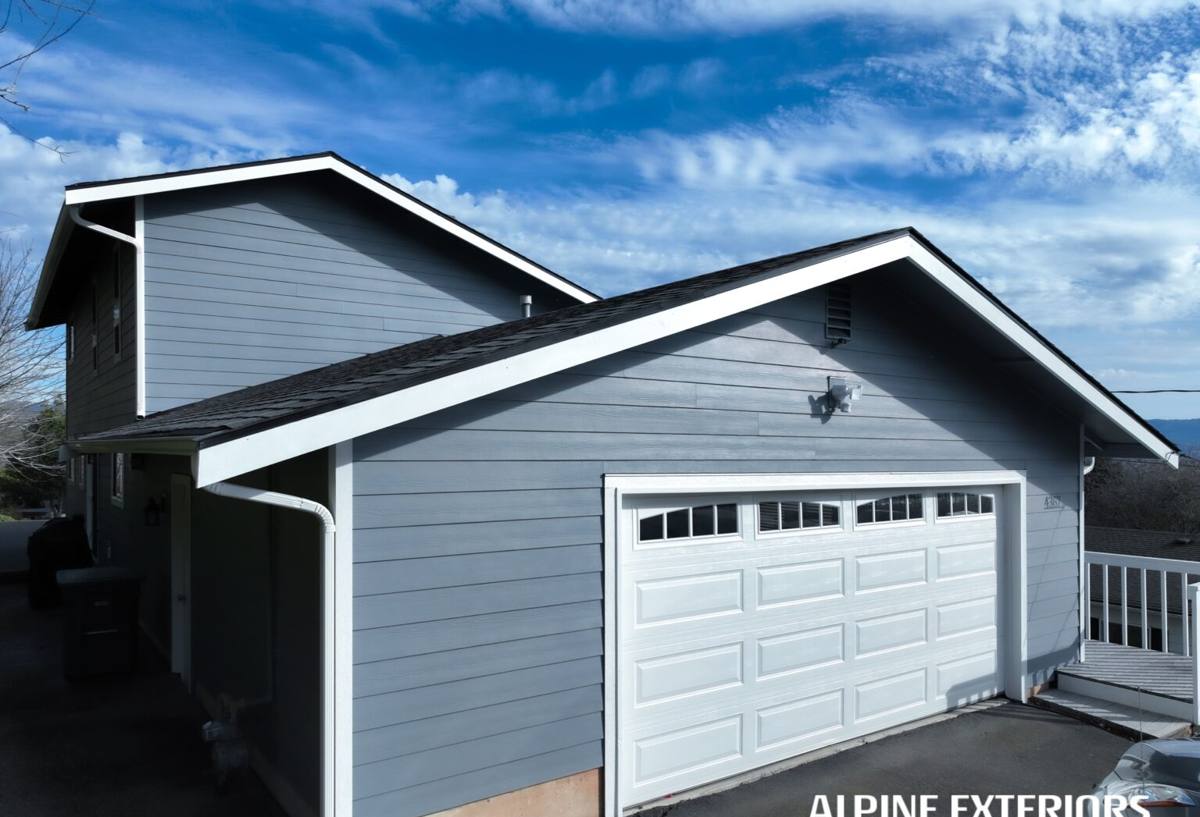
Signs a Repair Won't Cut It Anymore
A lot of homeowners call us thinking they need a patch job, and sometimes that's true. But there's a point where repeated repairs stop making financial sense and a full replacement becomes the honest recommendation. Some of the clearer signals:
- Shingles that are cupping, curling, or losing their granules in large patches rather than isolated spots
- Moss established in the shingle mat itself, not just sitting on the surface — this means it's already working into the material
- Soft or spongy decking felt underfoot in the attic, a sign moisture has reached the sheathing
- Daylight visible through the roof deck from inside the attic
- Multiple past repairs in different areas of the same roof within a few years
- A roof approaching or past 20-25 years old (for standard asphalt composition) regardless of how it looks from the ground
If a roof is showing one or two of these in isolation, targeted repair may still be the right call. When several show up together, replacement is almost always the more cost-effective path — you stop paying for repeated service calls on a system that's structurally past its useful life.
What a Correct New Roof Installation Actually Involves
"New roof" gets used loosely. A correct installation is a system, not a stack of shingles, and every layer matters for how the roof performs through a Whatcom County winter.
Tear-Off and Deck Inspection
We remove the existing roofing down to the deck rather than layering over old material. That's the only way to actually inspect the sheathing for rot, soft spots, or delamination — problems that are common on older homes where moisture has been working its way in slowly for years without an obvious leak. Any damaged decking gets replaced before anything new goes down; installing new roofing over a compromised deck just hides the problem and shortens the life of the new roof.
Underlayment
This is the layer most homeowners never think about, and it's one of the most important for this climate. A synthetic underlayment provides the water-resistant barrier between the shingles and the deck, and in vulnerable areas — eaves, valleys, and low-slope sections — we use self-adhering ice-and-water shield for extra protection against wind-driven rain and any freeze-thaw cycling in colder stretches.
Flashing
Flashing around chimneys, skylights, vent pipes, and roof-to-wall transitions is where the majority of leaks actually originate, not the shingle field itself. Old flashing gets replaced, not reused, and every penetration is sealed correctly rather than just caulked over.
Ventilation
Proper intake and exhaust ventilation keeps the attic temperature and moisture level balanced. Without it, condensation builds up on the underside of the deck — especially in a wet climate like this one — and that moisture rots sheathing and feeds mold from the inside, completely independent of whatever is happening on the outside of the roof.
Field Installation
Shingles or panels go down to the manufacturer's exact nailing pattern and exposure spec. This sounds basic, but it's the single biggest factor in whether a roof holds up to wind and whether the manufacturer's warranty is actually valid if something goes wrong later.
Choosing the Right Roofing Material
There's no universally "best" roofing material — there's the right material for this house, this budget, and this climate. Here's how the common options stack up for a property in the Lynden area:
| Material | Moisture / Moss Resistance | Typical Lifespan | Maintenance Needs |
|---|---|---|---|
| Standard 3-tab asphalt shingle | Fair — needs periodic moss treatment | 15-20 years | Moderate; moss/algae checks recommended |
| Architectural (laminate) asphalt shingle | Good — thicker mat resists moss intrusion longer | 25-30 years | Low to moderate |
| Metal (standing seam or panel) | Very good — sheds moisture fast, minimal moss anchoring | 40-50+ years | Low; watch fastener and coating condition over time |
| Cedar shake/shingle | Poor without diligent upkeep — organic material feeds moss | 20-30 years with maintenance | High; regular treatment required |
Given the moisture and moss pressure common across Whatcom County, we lean toward architectural asphalt shingles or metal roofing for most Lynden homes. We don't install cedar shake as a standard offering — it's a beautiful, traditional material, but in a climate this wet it demands a maintenance commitment most homeowners underestimate when they choose it, and we'd rather be upfront about that trade-off than sell a product we know will become a maintenance burden.
Our Installation Process
- On-site evaluation. We walk the roof and attic, check the deck condition, ventilation, and flashing points, and take measurements.
- Written estimate. You get a clear scope of work and material selection in writing — no verbal promises that don't make it onto paper.
- Material order and scheduling. We confirm a start date around weather windows, since a proper tear-off and dry-in should not happen in the middle of a storm system.
- Tear-off and deck repair. Old roofing comes off, decking is inspected and repaired as needed.
- Underlayment and flashing installation. The water-resistant layer and all flashing details go in before a single shingle is laid.
- Field installation and ventilation tie-in. Roofing material is installed to spec, and ventilation components are integrated correctly.
- Cleanup and final walkthrough. Job site is cleared of debris and nails, and we walk the finished roof with you.
Most standard residential re-roofs are completed in a matter of days once work begins, weather permitting. Rain doesn't necessarily stop a project outright, but an open deck should never sit exposed overnight — that's a scheduling and sequencing discipline, not luck.
Ventilation and Moisture: The Detail That Gets Skipped
We mentioned ventilation above, but it deserves its own emphasis because it's the part most likely to get shortcut on a rushed job. In a climate where the air stays damp for months at a stretch, an attic without balanced intake and exhaust ventilation traps humidity. That moisture condenses on cold surfaces, saturates insulation, and creates the exact damp, dark conditions that rot wood and grow mold — independent of whether the roof surface itself is leaking. A roof can look brand new from the curb and still be failing from the inside if the ventilation wasn't sized and installed correctly. We calculate ventilation needs based on the actual attic square footage and existing intake/exhaust balance, not a generic assumption.
What Affects the Cost of a New Roof
Every roof is priced based on its own specifics, so we won't quote numbers that don't apply to your house. What we can tell you is what actually drives cost up or down, so an estimate makes sense when you get one:
| Factor | Why It Matters |
|---|---|
| Roof size and number of facets | More square footage and more complex geometry (hips, valleys, dormers) means more material and labor time |
| Pitch and accessibility | Steeper roofs require more safety setup and slower, more careful work |
| Deck condition | Rotten or damaged sheathing found during tear-off adds material and labor to replace it |
| Material choice | Architectural shingle, metal, and other systems carry different material and installation costs |
| Layers to remove | Tearing off multiple existing layers takes more labor and disposal than a single layer |
| Ventilation upgrades needed | Adding or correcting intake/exhaust vents is sometimes necessary and adds scope |
The only way to get an accurate number is a real on-site look — anyone quoting a firm price over the phone without seeing the roof is guessing, and that guess tends to grow once they're standing on the deck.
Why Hiring a Crew That Already Works in Lynden Matters
A roofing crew that regularly works Whatcom County properties has already seen how moss establishes on north-facing slopes under tree cover, how ventilation gets undersized on older Lynden-area homes, and which flashing details tend to fail first in this weather pattern. That local pattern recognition matters more than it sounds like it should — it's the difference between a crew that follows a generic install checklist and one that knows to double-check the valley flashing on a shaded roof or size ventilation for a genuinely wet climate rather than a national average. It also means someone local who stands behind the work is easy to reach if a question comes up after the job is done, rather than a crew that worked the area once and moved on.
What to Have Ready Before You Call for an Estimate
A little preparation makes the estimate visit faster and more useful for both sides:
- Know roughly how old your current roof is, if you have that information
- Note any interior signs of trouble — stains on ceilings, damp attic smells, visible daylight in the attic
- Have any past roofing invoices or warranty paperwork on hand if available
- Think through whether you're leaning toward a specific material or are open to a recommendation
- Write down any questions about timeline, especially if you have events or seasonal plans tied to the work
None of this is required to get an estimate started, but it helps us give you a more complete picture on the first visit instead of needing a follow-up.
Permits, Timing, and What to Expect
A full roof replacement in Whatcom County typically requires a building permit, and we handle that as part of the process rather than leaving it on the homeowner's plate. On timing, the driest stretches of the year make for the smoothest scheduling, but a re-roof can be done responsibly outside of peak summer as long as the crew sequences the tear-off correctly and doesn't leave a deck exposed to the weather. If you're planning around a specific season or event, mention it early so we can plan the work window accordingly.
If your roof is showing its age, or you just want a straight answer about whether repair or replacement makes more sense for your Lynden home, we're glad to come take a look. The estimate is free, there's no pressure attached to it, and you'll get a clear explanation of what we find — use the form below to get started.