 Birch Bay
 Energy-Efficient Windows Built for Blaine's Coastal Climate
Blaine sits at the top edge of Whatcom County, close enough to Semiahmoo Bay and Drayton Harbor that salt-tinged marine air is a fact of daily life for most homes in town. That coastal exposure, paired with driving rain that comes ashore with real force and a moss season that stretches through most of the year, puts more demand on a window than a lot of homeowners realize until they're standing next to one on a windy January afternoon feeling the draft come through the frame. Windows are one of the biggest single sources of energy loss in an older home, and in a climate like this one, an underperforming window isn't just a utility bill problem — it's also usually a moisture problem waiting to happen.
This page covers energy-efficient window replacement specifically for Blaine homes: what the climate here actually demands from a window, what separates a correct installation from a rushed one, how our process works, and why it matters to hire a crew that already works in this part of Whatcom County rather than one learning the local conditions on your project.
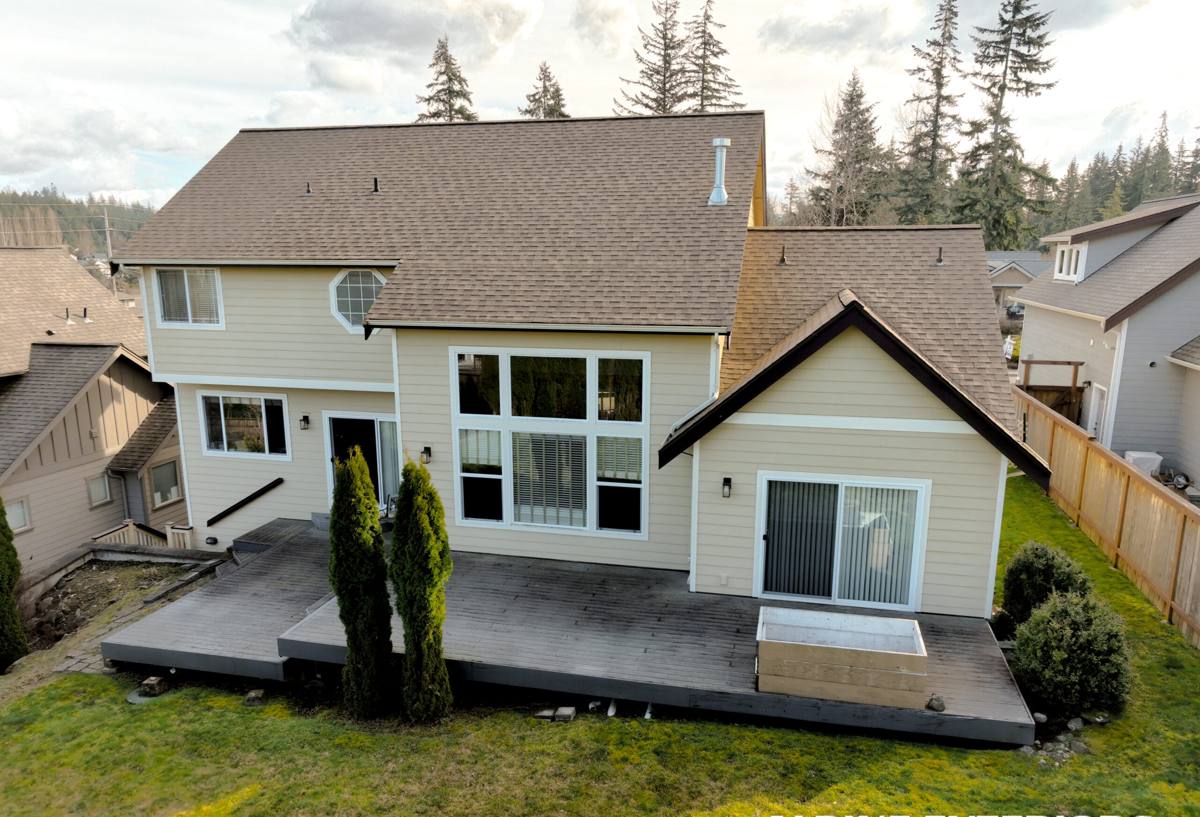
What Blaine's Climate Demands From a Window
Salt Air and Hardware Wear
Homes near Semiahmoo Bay and Drayton Harbor take a steadier dose of salt-laden air than towns set further inland, and that air works on window hardware, weatherstripping, and lower-grade fasteners over time. Locks, hinges, and balance mechanisms that aren't rated for a marine-influenced environment tend to stiffen, pit, or fail years ahead of schedule, and a window that's hard to latch fully closed isn't sealing the way it's supposed to, no matter how good the glass package is.
Driving Rain and Air and Water Infiltration
Rain in Blaine rarely falls straight down. Wind off the water pushes it sideways and up under sills and around frames, which means a window's air and water infiltration ratings matter here more than they would in a calmer, drier inland location. A window that tests fine in a lab under still conditions can still let air and moisture through in real-world wind-driven weather if the frame, glazing, and installation aren't matched to the exposure.
A Moss Season That Runs Most of the Year
Mild temperatures and near-constant dampness give moss and mildew a long growing season here, and window sills and frame corners are some of the first places it shows up, especially on shaded or north-facing walls. Beyond the cosmetic issue, that sustained moisture is exactly the condition that finds its way into a poorly sealed frame or a failing insulated glass unit and does slow damage that isn't obvious until it's advanced.
What "Energy-Efficient" Actually Means
The term gets used loosely in marketing, but a window's real energy performance comes down to a handful of measurable ratings on its NFRC label, and understanding them is the difference between buying on a number that matters and buying on a sticker that just looks reassuring.
- U-factor: measures how well the window resists heat flow. Lower is better, and this is the number that matters most for keeping heat inside during our wet, mild winters.
- Solar heat gain coefficient (SHGC): measures how much solar heat passes through the glass. The right target depends on which direction a window faces and how much sun that wall actually gets.
- Air leakage rating: measures how much air moves through the assembly. Lower matters a lot in a wind-exposed location like Blaine.
- Visible transmittance: measures how much light passes through — relevant to comfort and daylighting, not just energy use.
A window that's genuinely well suited to Blaine balances a low U-factor and low air leakage number with an SHGC appropriate to each wall's actual sun exposure, rather than one glass package applied uniformly across an entire house.
Comparing Frame Materials for This Climate
Frame material affects both energy performance and how well a window holds up to salt air and moisture over the years. Here's how the common options compare for a Blaine home.
| Frame Material | Insulating Value | Moisture & Salt Air Behavior | Typical Cost Factor |
|---|---|---|---|
| Vinyl | Good; multi-chamber designs perform well | Won't rot or corrode; performs well when installed correctly | Lower |
| Fiberglass | Very good; dimensionally stable across temperature swings | Excellent resistance to moisture and corrosion | Higher |
| Wood, clad exterior | Good; depends on core construction | Clad exterior shields the wood core from direct weather, but any breach in the cladding needs prompt attention | Higher |
| Aluminum | Poor unless thermally broken | Can corrode over time in salt-influenced air unless well-finished; conducts cold readily | Moderate to higher |
We'll walk you through which frame material fits your home's design, budget, and each wall's actual exposure rather than defaulting to whichever product is easiest to sell. A shaded wall facing the water and a sun-exposed south wall on the same house don't always call for the same answer.
Glazing Options Worth Understanding
Beyond frame material, the glass package itself does most of the work on energy performance. Double-pane glazing with a low-E coating and an argon gas fill is a solid baseline for most Blaine homes. Triple-pane glazing adds another layer of insulating value and can be worth the added cost on north-facing walls, rooms over unheated spaces, or homes where comfort near the windows in winter has been a persistent complaint — though for many south- and west-facing walls with reasonable exposure, a well-specified double-pane unit performs close enough that the extra cost of triple-pane doesn't always pencil out. Warm-edge spacers, which separate the panes of glass, also matter more here than in a drier climate, since a standard metal spacer conducts cold and creates a cooler edge zone where condensation is more likely to form.
What a Correct Installation Involves
Replacing a window is not just popping the old unit out and the new one in. In this climate especially, the installation details around the window matter as much as the window itself, since a well-rated window installed poorly will still leak air and let moisture into the wall.
Removing the Old Unit Without Damaging the Opening
The old window and its surrounding trim come out carefully, so the rough opening and any existing siding or trim aren't damaged in the process. This is also the point where we can see the actual condition of the framing and sill, including any moisture damage that's built up behind the old unit over the years.
Inspecting and Correcting the Sill and Flashing
Any soft or water-damaged framing gets addressed before a new window goes in — installing a new window over a compromised sill just buries the problem behind a new frame. The sill pan and flashing need to direct water outward, not let it pool or migrate into the wall assembly.
Setting the Window Level, Plumb, and Square
A window that isn't set correctly won't seal or operate properly no matter how good its energy ratings are on paper. Shims and fasteners go in per the manufacturer's specification, adjusted for the specific opening.
Air Sealing and Insulating the Gap
The gap between the new frame and the rough opening gets sealed with a low-expansion foam or backer rod and sealant system that fills the space without bowing the frame, then finished with proper interior and exterior sealant beads matched to the siding and trim material.
Final Weatherproofing and Hardware Check
Exterior caulking, trim, and any flashing details get finished and inspected, and every window gets operated and checked for a tight, even seal before we consider the job complete.
How Our Process Works
- On-site assessment: We look at your current windows, note which ones are underperforming and why, and check for any moisture or framing damage that needs to be addressed as part of the project.
- Product and glazing recommendation: Based on each wall's exposure and your budget, we recommend frame materials and glazing packages suited to Blaine's conditions rather than a single one-size-fits-all option.
- Written estimate: You get a clear, itemized estimate before any work is scheduled, with no pressure to decide on the spot.
- Careful removal and opening inspection: Old units come out cleanly, and we address any sill or framing issues we find before installing anything new.
- Installation and air sealing: Each window is set, sealed, and insulated to spec, with attention to the flashing and drainage details this climate requires.
- Final walkthrough: We check operation, seals, and hardware on every window with you before calling the job done.
Signs Your Current Windows Are Costing You Money
A window doesn't have to be visibly broken to be underperforming. Some signs to check for around your home:
- You can feel a draft near a closed window on a windy day
- Condensation regularly forms between the panes of an insulated glass unit, which means the seal has failed
- Frames feel cold to the touch even when the room is warm
- Windows are difficult to latch fully closed or don't sit flush in the frame
- Visible moss, mildew, or soft wood at the sill or lower frame corners
- Paint or finish peeling on the interior sill, which often points to trapped moisture behind it
- Noticeably higher heating costs compared to similarly sized rooms elsewhere in the house
Why Hiring a Crew That Already Works Blaine Matters
A crew that regularly installs windows in and around Blaine has already seen how salt air corrodes underspecified hardware, how wind-driven rain finds its way past a poorly sealed sill, and which walls in this specific location tend to need extra attention because of shade or exposure to weather coming off the water. That's practical knowledge that shows up in small decisions throughout a job — decisions a crew unfamiliar with this coastal stretch of Whatcom County might not think to make at all. It also means working with someone who's still reachable years down the road if a warranty question or a sealed-unit failure comes up, rather than a crew that was passing through for one project.
If your windows are drafty, fogging between the panes, or just due for an upgrade, we're glad to take a look and talk through options suited to your home and budget. Use the form below to request a free, no-pressure estimate.