 Birch Bay
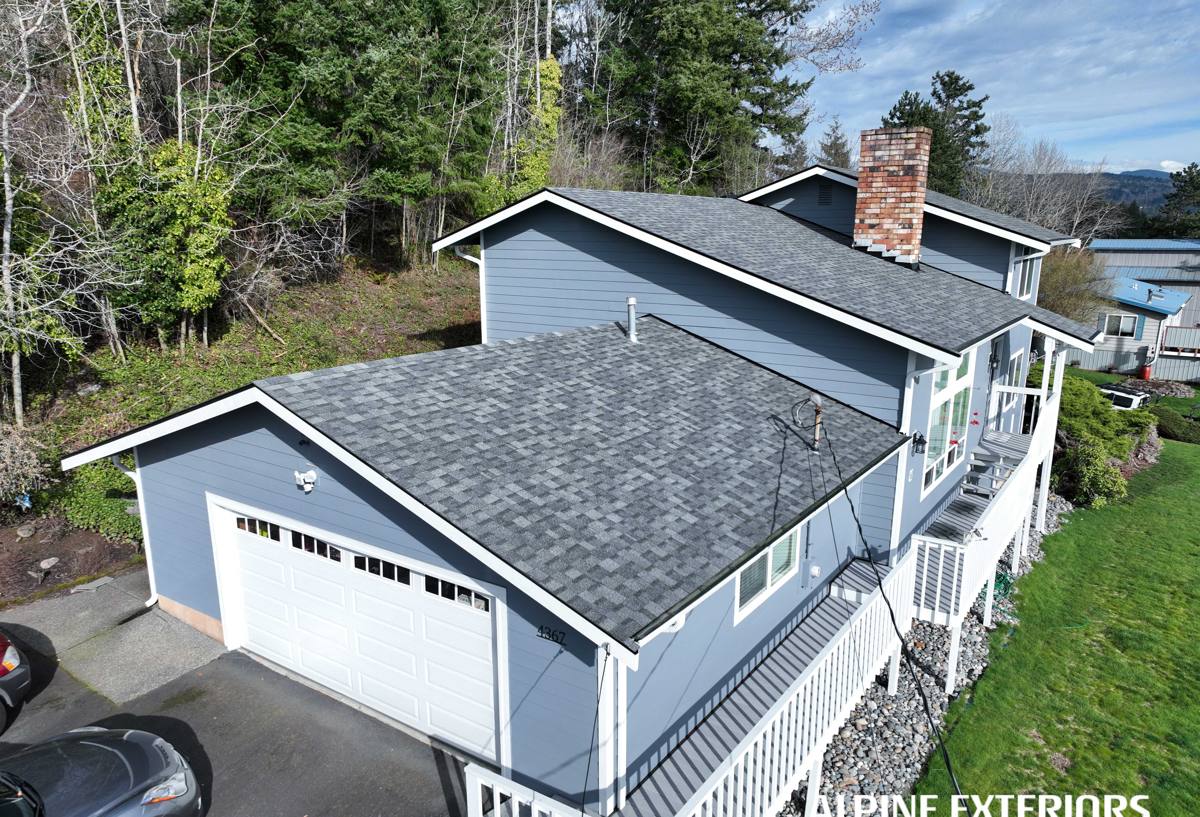
 Asphalt Shingle Roofing Built for What Lynden Roofs Actually Deal With
Lynden sits inland from Birch Bay and the Strait, but the roofs here still live under the same Whatcom County weather system: a marine-influenced climate that keeps things damp for months at a stretch, pushes driving rain sideways during winter storms, and carries salt-tinged air further inland than most homeowners expect. Add in the tree cover and shaded rooflines common on Lynden properties, and you get a long moss season that can start doing damage well before a homeowner notices anything wrong from the ground.
None of that means asphalt shingles are the wrong choice for this area — they're not. It means the installation details matter more here than they would in a drier climate, and the crew doing the work needs to actually understand how this region's weather behaves over a full year, not just how to nail down shingles on a dry day.
Why the Climate Around Lynden Is Harder on a Roof Than It Looks
Moisture That Doesn't Let Up
Whatcom County doesn't get the heaviest rainfall totals in the state, but it gets consistent, low-intensity rain over long stretches, punctuated by wind-driven storms. That pattern is tougher on a roof than a few heavy downpours, because shingles, underlayment, and flashing stay saturated for days at a time instead of drying out between rain events. Any weak point in the roofing system — a poorly lapped seam, a nail popped through the shingle face, flashing that's just caulked instead of properly integrated — gets repeated chances to let water in.
Salt Air Reaches Further Than People Think
Homes closer to Birch Bay deal with salt air directly, but the same marine airflow carries inland across the county, including into Lynden. Salt-laden moisture accelerates corrosion on exposed metal — roofing nails, flashing, vent stacks, gutter hardware — faster than it would in a purely inland climate. That's why fastener and flashing material choices matter here even for homes that aren't waterfront.
Moss and Algae Have All Winter to Work
Shaded, north-facing slopes and roofs under mature trees stay damp for extended periods, which is exactly what moss and algae need to establish. Once moss gets a foothold, it doesn't just sit on top of the shingles — it lifts shingle edges as it grows, holds moisture directly against the granule surface, and gradually works its way under the shingle tabs. A roof that looks fine from the driveway can already have moss doing quiet damage at the ridge and in the valleys.
What a Correctly Installed Shingle Roof Needs in This Climate
A roof that's going to hold up in Lynden's conditions needs more than shingles nailed to the deck. The parts most homeowners never see are usually what separates a roof that lasts from one that doesn't.
Underlayment and Water Barrier Details
Synthetic underlayment run correctly, with proper overlaps and sealed penetrations, is the backup system that protects the deck if wind-driven rain ever gets past the shingles — which it will, eventually, in this climate. Self-adhered ice-and-water barrier at eaves, valleys, and around penetrations adds another layer of protection in exactly the spots where water concentrates.
Ventilation That Actually Balances
Attic ventilation isn't just an energy-efficiency detail — in a wet, shaded climate, poor ventilation traps moisture under the roof deck, which shortens shingle life from underneath and can lead to sheathing rot that isn't visible until it's serious. Intake at the eaves has to be balanced with exhaust at the ridge or through roof vents; one without the other doesn't work.
Flashing, Not Just Caulk
Chimneys, skylights, wall-to-roof transitions, and valleys are where the vast majority of roof leaks actually start — not in the open field of shingles. Properly formed and step-flashed metal, integrated with the underlayment and shingle courses, holds up for the life of the roof. Caulk and sealant have their place, but they degrade over a few years and were never meant to be the primary defense.
Comparing Shingle Options for Lynden Homes
Not every asphalt shingle product is built the same way, and the differences matter more in a wet, moss-prone climate than they would somewhere drier.
| Shingle Type | What It Offers | Trade-Offs to Know |
|---|---|---|
| 3-tab shingles | Lower upfront cost, lighter weight, simple flat profile | Shorter service life, less wind resistance, less algae/moss resistance without upgraded granules |
| Architectural (laminate) shingles | Thicker, multi-layer construction, stronger wind ratings, longer manufacturer warranties | Higher material cost than 3-tab; still needs correct ventilation and flashing to perform |
| Algae-resistant (copper-granule) shingles | Granules formulated to resist blue-green algae streaking on shaded or north-facing slopes | Slight cost premium; doesn't eliminate the need for moss removal on heavily shaded roofs |
| Impact-rated shingles | Better resistance to debris and hail impact; sometimes insurance premium credit | Higher material cost; benefit is situational depending on tree cover and exposure |
For most Lynden homes with tree cover nearby, we lean toward architectural shingles with algae-resistant granules as the baseline recommendation — the extra upfront cost is usually small compared to the total job, and it directly addresses the moss and staining issues this climate causes.
What Affects the Cost of a Lynden Roofing Project
Every roof is different, and we don't quote a number until we've actually walked the roof, but the same handful of factors drive the price on almost every job in this area.
| Factor | Why It Matters |
|---|---|
| Roof size and number of planes | More squares and more valleys/hips mean more material and more labor-intensive flashing work |
| Roof pitch | Steeper roofs take longer to work safely and often require different fall-protection setups |
| Layers being removed | Tear-off of existing layers adds labor and disposal cost versus a single-layer roof |
| Deck condition underneath | Rotted or soft sheathing found during tear-off needs to be replaced before new shingles go down |
| Shingle tier chosen | 3-tab, standard architectural, and algae-resistant/impact-rated lines carry different material costs |
| Access and site conditions | Trees, landscaping, tight driveways, and dumpster placement all affect labor time |
Signs a Lynden Roof Needs a Closer Look
Most roofing problems in this climate develop slowly, which is exactly why they're easy to miss until they've caused real damage. Worth checking for:
- Green or black streaking on shaded slopes, or visible moss buildup along ridges and valleys
- Granules collecting in gutters or at the base of downspouts
- Shingle edges that look curled, cupped, or lifted rather than lying flat
- Daylight visible through the roof deck from inside the attic
- Water stains or discoloration on interior ceilings, especially after a windy rainstorm
- Soft or spongy spots when walking the roof, which can indicate deck rot underneath
- Rusting or visibly deteriorating flashing around chimneys, vents, or skylights
- A roof that's approaching or past the manufacturer's expected service life for its shingle type
Any one of these on its own isn't necessarily an emergency, but they're worth having looked at before the next wet season rather than after.
Our Asphalt Shingle Roofing Process
- On-site inspection. We walk the roof, check the attic for ventilation and moisture issues, and look at flashing, valleys, and penetrations — not just the shingle field.
- Honest scope and estimate. We explain what we're seeing, what's driving the cost, and what your realistic options are, including repair versus full replacement where that's a genuine choice.
- Tear-off and deck inspection. Old material comes off down to the deck so we can actually see what's underneath, rather than roofing over hidden problems.
- Deck repair as needed. Any soft, rotted, or delaminated sheathing gets replaced before anything new goes down.
- Underlayment and water barrier installation. Synthetic underlayment and ice-and-water barrier go in at eaves, valleys, and penetrations, sized and lapped correctly for this climate.
- Flashing and ventilation work. New flashing at chimneys, walls, and valleys, plus balanced intake and exhaust ventilation, are installed or corrected as part of the job — not left as an afterthought.
- Shingle installation. Shingles go down per manufacturer specification for nailing pattern and exposure, which is also what keeps the warranty valid.
- Cleanup and final walk-through. Job site and gutters get cleared of debris and nails, and we walk the finished roof with you before calling it done.
Repair or Full Replacement — How We Help You Decide
Not every roof problem means a full replacement, and we're not going to tell you it does. A localized leak from a single failed flashing detail, isolated storm damage, or a section of moss buildup can often be repaired without touching the rest of the roof. The decision usually comes down to the age of the existing shingles, how much of the roof is already showing wear, and whether the underlying deck is sound. We'll tell you plainly which category your roof falls into and why, rather than defaulting to the more expensive answer.
Why a Crew That Already Works in Lynden Matters
Roofing crews that only pass through an area occasionally tend to treat every roof the same way, regardless of climate. A crew that regularly works Whatcom County roofs — Birch Bay, Lynden, and the communities between them — has already seen how moss establishes on the shaded slopes typical of this area, how salt-influenced air affects fastener and flashing choices, and how the region's wet-season rain patterns expose weak flashing details that wouldn't show up in a drier climate. That local pattern recognition shows up in the details: where extra underlayment gets used, how ventilation gets balanced, and which shingle products actually hold up here versus which ones just perform well on paper.
It also means a real point of contact if a warranty question or a storm-related issue comes up after the job is finished, instead of trying to track down a crew that worked one job in the area and moved on.
Keeping a New Roof Performing After Installation
A correctly installed shingle roof still benefits from basic upkeep in this climate. Keeping gutters clear so water doesn't back up under the shingle edge, trimming overhanging branches to reduce shade and debris buildup, and having moss or algae addressed early — rather than left to spread across a full slope — all extend the practical life of the roof. None of this is complicated or expensive, but it's the kind of thing that gets skipped when nobody mentions it, and skipping it is how a well-installed roof ends up needing early attention anyway.
Let's Take a Look at Your Roof
If you're dealing with moss buildup, a suspected leak, or simply wondering how much life is left in your current roof, we're happy to take a look and give you a straight answer — no pressure, no hard sell. Use the form below to request a free estimate, and we'll walk the roof and talk through your options in plain terms.