 Birch Bay
 Roof Repair Built for Lynden's Weather
Lynden sits inland from the water but that doesn't spare its roofs from Whatcom County's toughest weather habits. Homes here still take on long stretches of driving rain off the Pacific, cool damp air that never fully dries out a north-facing slope, and wind that carries salt-tinged moisture in from the Strait of Georgia and Birch Bay even miles from shore. Add in the moss season that runs a good chunk of the year in this part of Washington, and a roof in Lynden works harder than most homeowners realize. Repairing that roof correctly means understanding what this specific climate does to shingles, flashing, and decking over time — not just patching whatever is leaking today.
We work on homes throughout Birch Bay and the surrounding Whatcom County communities, and Lynden's roofs show a consistent pattern: moisture-driven wear that starts small and gets expensive if it's ignored. This page covers what that looks like, what a correct repair actually involves, and how we approach the job.
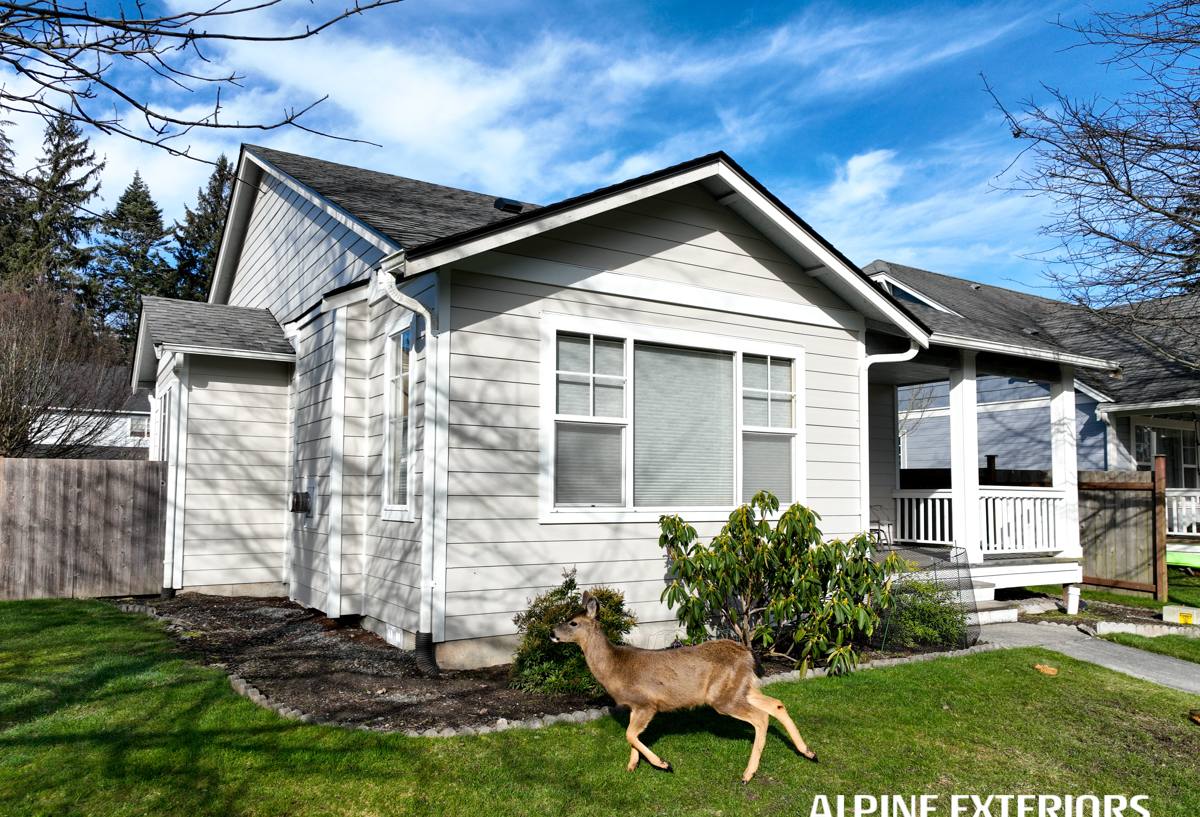
What This Climate Does to a Roof Over Time
Moss and Organic Growth
Whatcom County's damp, mild climate is close to ideal for moss. It takes hold fastest on north-facing slopes and shaded areas where sunlight can't dry the surface between rain events. Moss isn't just cosmetic — its root structure lifts shingle edges and holds water directly against the roofing material, which accelerates granule loss on asphalt shingles and rot on wood-based products. Left unaddressed for a few seasons, moss growth turns a simple cleaning job into a repair job.
Driving Rain and Wind-Driven Moisture
Storms in this region rarely fall straight down. Wind pushes rain sideways and up under shingle laps, around flashing, and into any gap that a calm-weather roof would never notice. This is why so many Lynden roof leaks show up at valleys, chimney flashing, vent boots, and skylight curbs rather than in the open field of the roof — those are the transition points where wind-driven rain finds a way in.
Temperature Swings and Material Fatigue
Whatcom County doesn't get extreme heat, but the freeze-thaw cycles of a wet winter still stress roofing materials. Water that gets into a small crack in flashing sealant or a cracked shingle can freeze, expand, and widen that opening. Over a few winters, a hairline problem becomes a real leak.
Signs a Lynden Roof Needs Repair
Most roof damage doesn't announce itself with a dramatic leak. It shows up as smaller signals first, and catching those early is what keeps a repair a repair instead of a replacement.
- Dark streaking or thick moss growth, especially on shaded or north-facing slopes
- Granules collecting in gutters or at the base of downspouts
- Shingles that are curling, cupping, or visibly lifted at the edges
- Soft or spongy decking felt underfoot in the attic, or daylight visible through the roof boards
- Water stains on interior ceilings, especially near chimneys, skylights, or where two roof planes meet
- Flashing that looks rusted, separated, or has cracked sealant around its edges
- Sagging in the roofline or a ridge that no longer runs straight
- Higher-than-usual heating bills, which can point to moisture-compromised insulation below a leak
Any one of these on its own might be minor. Several together usually mean water has been getting in longer than the visible symptoms suggest.
What a Correct Roof Repair Actually Involves
A lot of roof "repairs" amount to caulking over a symptom without addressing the cause. That approach might buy a season, but in a climate this wet, it rarely lasts. A repair done right starts with figuring out where the water is actually entering — which is often not directly above the stain you can see inside, since water travels along decking and rafters before it shows itself.
Diagnosis Before Anything Else
We check the roof surface, the flashing at every penetration and transition, the condition of the decking underneath, and the attic itself for moisture staining, mold, or compromised insulation. Chasing a leak without this step usually means fixing the wrong spot.
Addressing the Cause, Not Just the Symptom
If moss has lifted shingles, the repair needs to remove the moss, replace the damaged shingles, and correct whatever drainage or shading issue let the moss take hold in the first place — otherwise it grows back into the same spot within a year or two. If flashing has failed, we replace it rather than re-sealing it, since sealant over failed metal is a short-term fix at best.
Matching Materials and Technique
Repairs should tie into the existing roofing system correctly — matching shingle type and exposure, using compatible flashing metal, and following manufacturer specs for underlayment and fastening. A repair that doesn't match the surrounding roof properly can create a new weak point right next to the one it fixed.
How Our Process Works
- Inspection and diagnosis — We assess the roof surface, flashing, decking, and attic to find the actual source of the problem, not just where it's showing up.
- Honest scope and estimate — We explain what needs to be repaired, why, and what the options are — including when a repair is the right call versus when a section is too far gone to patch reliably.
- Repair work — Damaged materials are removed and replaced, moss and debris cleared, flashing corrected, and decking repaired or replaced where it's been compromised.
- Verification — We check the repaired area and surrounding sections to confirm the fix holds and that nothing nearby is at risk of becoming the next leak.
- Follow-up guidance — We tell you what to watch for and how to maintain the area going forward, since a repair is only as good as the upkeep after it.
Common Roofing Materials in Lynden Homes and Repair Considerations
Different roofing materials fail in different ways, and the right repair approach depends on what's actually on the roof.
| Material | Common Issue in This Climate | Repair Approach |
|---|---|---|
| Asphalt composition shingle | Granule loss, curling, moss lifting edges | Spot-replace damaged shingles, correct underlying moisture source, clear moss |
| Wood shake or shingle | Rot, splitting, and moss/moisture retention | Replace individual shakes, improve airflow and shading conditions where possible |
| Metal roofing | Fastener backout, seam and flashing wear | Re-fasten or replace failed hardware, reseal or replace flashing at penetrations |
| Flat or low-slope membrane | Ponding water, seam separation | Patch or reseal seams, address drainage so water isn't sitting on the surface |
Whatever the material, the underlying issue in Whatcom County is almost always moisture management — keeping water moving off the roof instead of sitting on it or soaking into it.
Repair or Replace? What Actually Factors In
Not every roof problem calls for a full replacement, and not every leak can be reliably fixed with a patch. Here's how we think through that decision with homeowners.
| Factor | Leans Toward Repair | Leans Toward Replacement |
|---|---|---|
| Age of roof | Well within expected material lifespan | Near or past the end of its expected service life |
| Extent of damage | Isolated to one area or a few sections | Widespread across multiple slopes |
| Decking condition | Solid, no rot found during inspection | Soft or rotted decking in multiple spots |
| Repair history | First or infrequent repair need | Repeated repairs in the same or nearby areas |
| Underlying cause | A fixable, one-time or maintainable issue | A systemic ventilation, slope, or material failure |
We'll never push a replacement when a proper repair will genuinely hold. We also won't recommend patching something that's going to fail again in a year, because that ends up costing more in the long run than doing it right the first time.
Maintenance Between Repairs: What Keeps a Lynden Roof Holding Up
A repair lasts longer when the roof around it is being kept up too. In this climate, a little regular attention goes a long way toward preventing the next call.
- Clear gutters and downspouts at least twice a year so rain has somewhere to go
- Remove moss and debris buildup before it has a chance to root into shingles
- Trim back overhanging branches that keep sections of roof shaded and slow to dry
- Check attic ventilation — poor airflow traps moisture against the underside of the decking
- Have flashing around chimneys, skylights, and vents checked periodically, since these are the most common leak points
- Address small leaks as soon as they're noticed rather than waiting for the next dry stretch
Why a Crew That Already Works Lynden Roofs Matters
Roofing crews who mostly work drier climates tend to underestimate how much moisture management drives roof performance out here. A repair approach that works fine in a low-humidity region can fail quickly against Whatcom County's rain patterns, moss pressure, and wind-driven moisture. Working regularly on homes in and around Birch Bay and Lynden means we're not guessing at how this climate behaves — we're seeing the same moss patterns, the same flashing failure points, and the same drainage issues repeat across similar homes, and we bring that pattern recognition to every inspection.
It also means straightforward answers. We'll tell you plainly when a repair is the right call, when it isn't, and what's actually driving the damage — not just what's visible from the ground.
Get a Straightforward Roof Assessment
If you're dealing with a leak, visible moss buildup, or damage from a recent storm, it's worth having a roof looked at before a small problem becomes a bigger one. We offer free, no-pressure estimates for Lynden homeowners — use the form below to get a straightforward look at what your roof actually needs.