 Birch Bay
 Roof Repair Built for Ferndale's Weather, Not Just Any Weather
Ferndale sits close enough to the water and far enough into Whatcom County's marine climate that its roofs take a different kind of beating than homes even twenty miles inland. Salt-laden air off the Strait works into metal fasteners and flashing. Driving rain off the water finds every gap in a roof system that would otherwise hold up fine in a drier climate. And the long, wet moss season here does more damage over years than any single storm does in a night. A roof repair that doesn't account for all three of those factors tends to fail again within a season or two — which is why we approach repair work in Ferndale differently than we would in a drier part of the state.
This page is about roof repair specifically, not full replacement. Most of the calls we get in this area are for a leak, a storm-damaged section, moss-related deterioration, or flashing that's finally given out after years of soaking and drying. We'll walk through what we actually find on Ferndale roofs, what a correct repair looks like, and how we run the job from first call to final walkthrough.
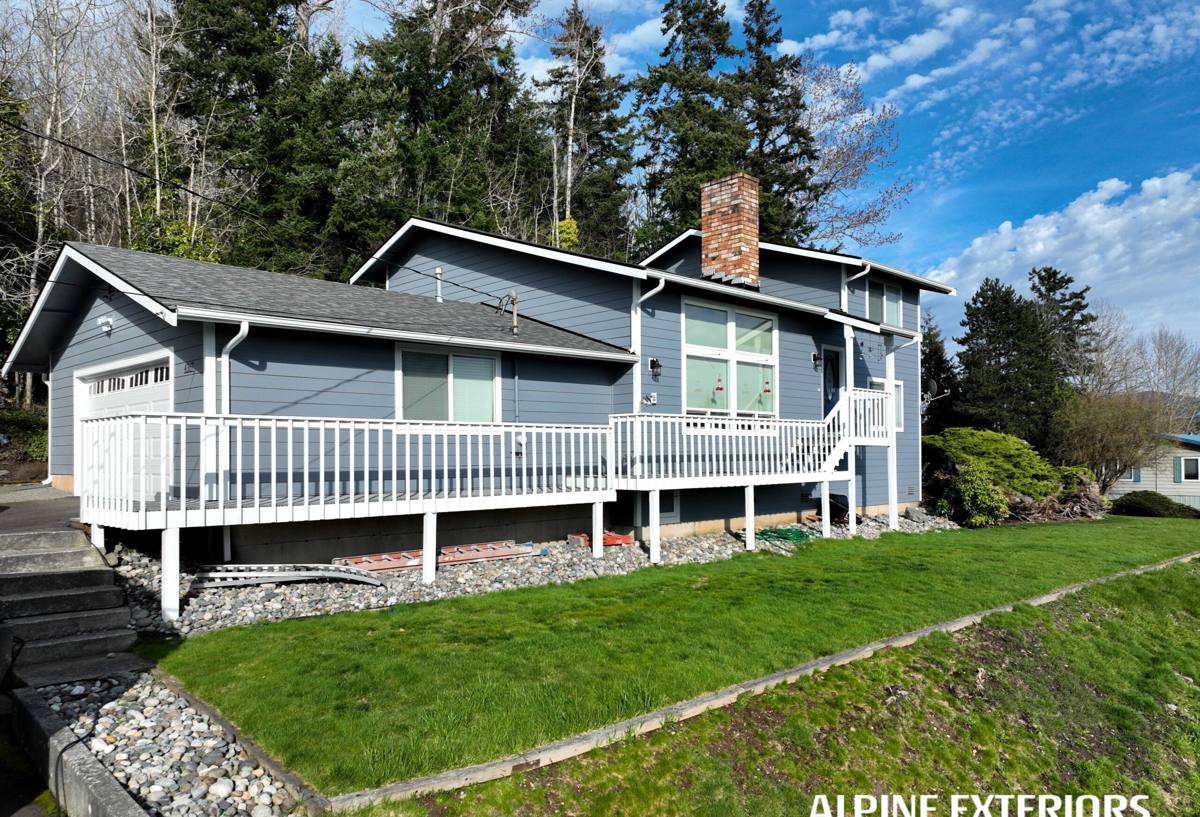
What Whatcom County's Climate Does to a Roof
Salt Air and Metal Fatigue
Homes closer to the water deal with airborne salt that accelerates corrosion on exposed metal — nails, flashing, gutter fasteners, and any exposed roofing hardware. It's slow and easy to miss until a fastener finally lets go or a flashing seam starts weeping. We check metal condition closely on every repair call in this area, even when the visible problem is somewhere else on the roof.
Driving Rain and Wind-Driven Water
Rain that comes in sideways behaves differently than rain falling straight down. It gets pushed up under shingle edges, into valleys, and around chimney and vent flashing that would otherwise shed water fine. A repair that only patches the surface without addressing how wind-driven rain moves across that section of roof is a repair that leaks again in the next storm.
Moss and Long-Term Moisture
Ferndale's moss season runs long — shaded roof sections, north-facing slopes, and areas under tree cover stay damp for months at a time. Moss doesn't just look bad; it holds moisture against the roofing material, lifts shingle edges as it grows, and works its way into fastener holes and seams. By the time moss is visible from the ground, it's often already done damage to the layer underneath.
Common Repair Calls We See in This Area
- Active leaks around chimneys, skylights, or plumbing vents where flashing has corroded or separated
- Shingle damage from wind events — lifted, cracked, or missing shingles after a storm
- Soft, spongy, or discolored roof decking found during a leak investigation
- Moss-damaged sections on shaded or north-facing roof slopes
- Gutter and edge flashing failures causing water to back up under the roofline
- Nail pops and fastener corrosion from long-term salt air exposure
- Valley leaks where two roof planes meet and water volume is highest
What a Correct Repair Actually Involves
A roof repair is only as good as the diagnosis behind it. Patching a stain on the ceiling without finding where water is actually entering the roof system just delays the next call — and often lets the damage spread quietly in the attic or wall cavity in the meantime. Our process on every repair call starts with tracing the leak or damage back to its actual source, which is sometimes several feet away from where the damage shows up inside the house.
Diagnosis Before Repair
We inspect the roof surface, flashing points, valleys, and any penetrations (vents, chimneys, skylights) near the reported problem area. Where a leak's origin isn't obvious from the roof surface, we check the attic side for water staining, trapped moisture, or decking damage that points back to the entry point.
Matching the Fix to the Cause
A storm-torn shingle gets a shingle repair. A corroded flashing seam gets flashing replacement, not a bead of sealant over the top of the problem. A moss-damaged section gets the affected shingles or underlayment replaced, plus a plan to keep moss from coming back in that spot. We don't apply a generic patch where the actual cause calls for something more specific — a patch that ignores the underlying cause is a repair that doesn't hold.
Decking and Structure Check
Any time we open up a section of roof for repair, we check the decking underneath. If moisture has softened or rotted the plywood or sheathing, that gets addressed as part of the repair rather than covered back over — roofing material only performs as well as what it's fastened to.
Repair vs. Replacement: How We Help You Decide
Not every damaged roof needs to come off. Age, extent of damage, and how much of the roof is affected all factor into whether repair makes sense or whether it's throwing money at a roof that's near the end of its service life. We'll give you a straight answer either way — our job is to tell you what the roof actually needs, not to upsell a replacement a repair would solve.
| Factor | Favors Repair | Favors Replacement |
|---|---|---|
| Roof age | Well within expected lifespan for the material | Near or past typical service life |
| Damage extent | Isolated to one section or penetration | Spread across multiple slopes or recurring in different spots |
| Decking condition | Solid, no widespread soft spots | Rot or moisture damage found in multiple areas |
| Moss/algae history | Limited to a treatable section | Long-term, widespread growth with shingle degradation underneath |
| Prior repairs | First or second repair on this roof | Roof has a long history of patch-on-patch repairs |
Why a Crew That Already Works Ferndale Roofs Matters
Roofing crews who work across a lot of different climates sometimes bring a one-size-fits-all repair approach — the kind that works fine in a dry climate but doesn't account for what wind-driven rain and long moss seasons do to a roof over time. Working this part of Whatcom County regularly means we've seen how specific roof orientations, tree cover patterns, and proximity to the water affect where problems tend to show up first. That local pattern recognition shortens the diagnosis step and helps us catch related issues nearby before they turn into their own repair call.
It also means we're not guessing at appropriate materials and fastening methods for salt air exposure and sustained moisture — we use hardware and techniques suited to this environment as a matter of standard practice, not as an upsell.
Our Process, Start to Finish
- Initial contact: You describe the problem — a leak, storm damage, visible moss, or anything else you've noticed.
- On-site inspection: We look at the roof surface and, where relevant, the attic side, to find the actual source of the problem.
- Honest assessment: We explain what we found, what's causing it, and whether repair or a broader look at the roof makes sense.
- Written estimate: Clear scope of work and price before anything is scheduled — no surprise add-ons once work starts.
- Repair work: Matched to the actual cause, including decking repair if needed, not just a surface patch.
- Final walkthrough: We show you what was done and what to watch for going forward.
Simple Maintenance That Extends the Life of a Repair
A good repair holds up longer when a few basic things are kept up on the homeowner's side between visits.
- Keep gutters clear so water isn't backing up under roof edges, especially during heavy fall rain
- Trim back overhanging branches on shaded slopes to reduce moss regrowth and let sections dry out between rains
- Have a fresh leak or new stain looked at promptly rather than waiting — early leaks are usually smaller, cheaper repairs
- After any significant windstorm, a quick visual check from the ground for missing or lifted shingles can catch problems early
- Avoid pressure-washing moss off yourself — it can drive moisture and debris further under shingles than it started
When to Call Instead of Wait
Some roof issues can reasonably wait for a scheduled inspection. Others shouldn't. An active interior leak, a section of missing shingles after a storm, or decking that feels soft when walked on are all reasons to get a look sooner rather than later — water damage in this climate compounds quickly once it has a path into the structure, and Ferndale's rain totals don't leave much of a dry window to put it off.
If you're dealing with a leak, storm damage, or a roof section that's been holding moss longer than it should, we're happy to take a look. We offer free, no-pressure estimates for roof repair work in Ferndale and the surrounding area — use the form below to get started.