 Birch Bay
 Window Installation in Ferndale: What This Stretch of Whatcom County Demands
Ferndale sits in the open, lower-lying farmland of the Nooksack lowlands, close enough to the Salish Sea and to Birch Bay that it shares the same marine-influenced weather pattern as the rest of the county's coastline. Homes here deal with salt-tinged air drifting in off the water, wind-driven rain that hits walls sideways instead of falling straight down, and a moss and mildew season that can run most of the year on shaded or north-facing sides of a house. None of that is unusual for this part of Washington, but it matters enormously for window work specifically, because a window opening is the single biggest interruption in a home's exterior envelope — more seams, more moving parts, and more places for water to get in than any other component on the wall.
We install windows throughout Ferndale and the surrounding Whatcom County area, including Birch Bay, and on every job we treat the flashing and installation detail as being just as important as the window unit itself. A quality window installed with sloppy flashing will leak in this climate. A modest, well-made window installed correctly — with proper flashing tied into the surrounding wall and siding — will usually outperform it.
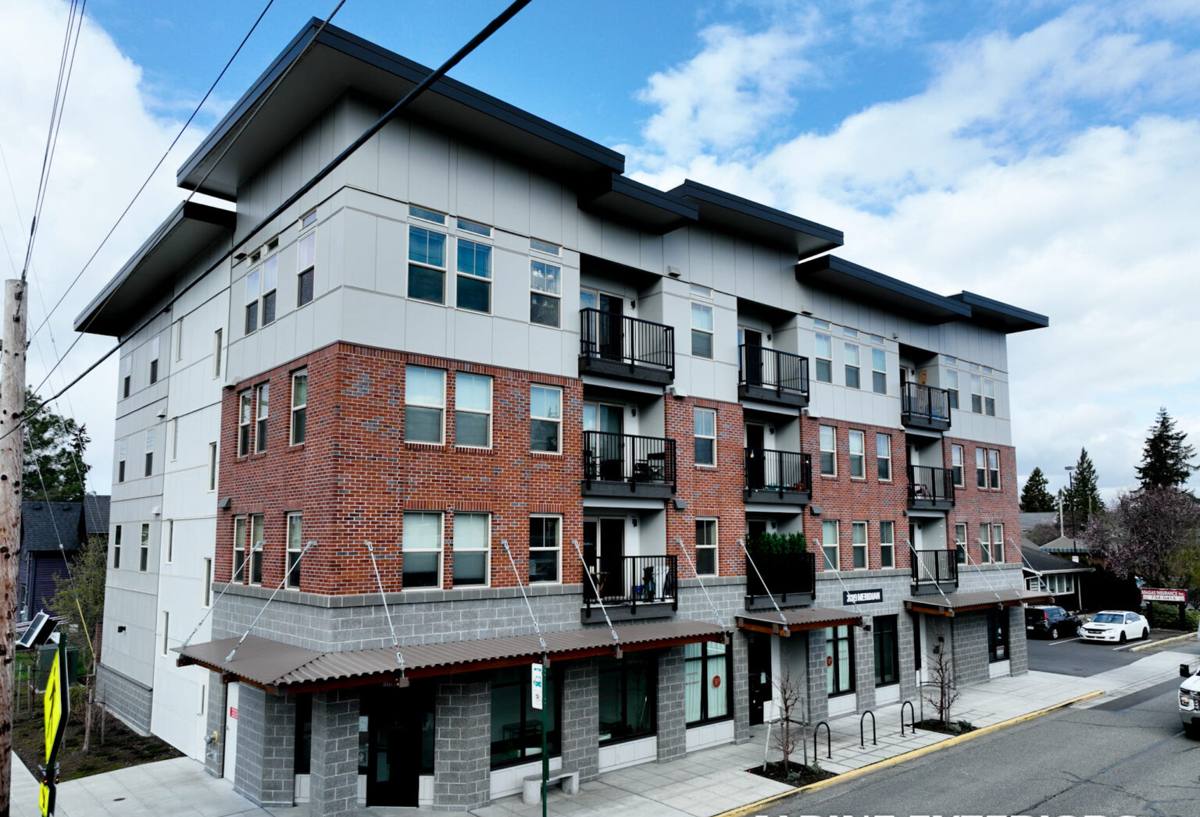
What Ferndale's Climate Does to a Window Installation
Salt Air and Hardware Corrosion
Ferndale's location near open water means homes here get a steady dose of salt-laden marine air, more than towns further inland see on a regular basis. Over years, that accelerates corrosion on window hardware, screen frames, and lower-grade fasteners — especially on elevations that face the prevailing weather. It's usually the hardware that shows wear first: stiff or pitted locks and hinges are often the earliest sign that a window's finish wasn't specified for the corrosion load this stretch of coastline actually delivers.
Wind-Driven Rain and Flashing
Rain in this part of Whatcom County rarely falls straight down. Storms push it sideways into window flashing, head trim, and the sill beneath the frame, which is a far tougher test than a simple annual rainfall number suggests. That sideways load is mostly a test of the installation, not the window product — most of the water damage we find around Ferndale windows traces back to a flashing detail that was skipped or done wrong, not a defective window.
Moss, Shade, and Sill Moisture
Mild temperatures and near-constant moisture through fall, winter, and spring give moss and mildew a long season to work with across the county, and window sills, trim, and the framing around older wood windows are common places it takes hold. Ferndale's open, lower-lying lots don't always offer the tree cover that shades homes further inland, but where shade or a north-facing wall does exist, moisture sits longer and the growth season runs longer with it.
New Construction, Full-Frame Replacement, or Insert — Picking the Right Approach
"Window installation" covers a few genuinely different jobs, and picking the right one matters more than picking a specific window brand.
| Approach | What It Involves | Best Fit |
|---|---|---|
| New construction | Window set into open framing before siding and finish work go on | Additions, new builds, or a wall being opened up for a larger opening |
| Full-frame replacement | Existing window and frame removed down to the rough opening; flashing rebuilt from scratch | Homes with existing sill or jamb moisture damage, or flashing that was never done correctly the first time |
| Insert replacement | New window fits into the existing, structurally sound frame | Homes where the existing frame and flashing are in good condition and only the window unit has failed |
Insert replacement is faster and less disruptive to the surrounding siding and trim, and it's a legitimate option when the existing frame checks out. But on an older Ferndale home where the original flashing is questionable, an insert replacement just seals a moisture problem up behind a new window instead of fixing it. We'll tell you honestly which situation an opening is actually in rather than defaulting to whichever option is quicker to sell.
What a Correct Installation Actually Involves
Sill Pan and Drainage
Every installation starts at the bottom of the opening. A properly pitched sill pan sheds water outward and away from the frame instead of letting it pool underneath, which is where a surprising amount of hidden rot starts on older homes in this climate.
Head and Jamb Flashing
Head flashing has to integrate with the housewrap or building paper above the window, lapped so water sheds down and out rather than behind the flashing. Jamb flashing ties into the surrounding wall assembly rather than relying on caulk as the only barrier — caulk breaks down and cracks over time, and it was never meant to be the sole line of defense against wind-driven rain.
Sealing and Insulation Without Trapping Moisture
Weep holes and drainage paths need to stay clear and functional, not sealed shut during installation, which is a mistake we still find when we open up an older opening. Insulation and air sealing around the frame should close drafts without trapping moisture against the framing, since a tightly sealed but poorly drained opening can create its own problems.
None of these steps meaningfully add to the cost of a job relative to the window itself. Skipping them is what turns a window that should last decades into one that's leaking behind the wall within a few winters.
A Quick Checklist Before You Hire
- Ask specifically how they'll flash the opening, not just what window brand they're selling
- Confirm current Washington contractor licensing and active liability insurance
- Get a written scope that separates the manufacturer's product warranty from the installer's labor warranty
- Ask whether your situation calls for insert replacement, full-frame replacement, or new construction, and why
- Get a realistic lead time in writing — larger or custom sizes can take several weeks to arrive
- Ask how they'll handle unexpected rot or damage found once the old window comes out
Choosing Windows for This Climate
Frame material matters less than installation quality, but it's still worth getting right, especially on elevations that take direct weather.
| Frame Material | Moisture & Corrosion Behavior | Typical Maintenance |
|---|---|---|
| Vinyl | Won't rot; performs well when welds and seams are installed correctly | Low |
| Fiberglass | Dimensionally stable across temperature swings; resists moisture well | Low |
| Wood, painted or clad | Attractive but vulnerable at joints and sills without consistent upkeep | Higher — regular finish maintenance |
| Aluminum | Conducts cold and can corrode in salt-influenced air unless well-finished | Moderate |
We'll walk through the honest trade-offs for your specific opening and sun exposure rather than defaulting to whichever product is easiest to sell. A shaded, north-facing wall on a Ferndale property and an open, sun-exposed south wall on the same house don't always call for the same answer, and glazing packages — double versus triple-pane, with or without low-E coatings — matter as much for condensation control in this climate as they do for energy bills.
Our Process, Start to Finish
- On-site assessment — we check frame condition, seal integrity, hardware function, and how the existing flashing ties into the siding around each opening
- Honest recommendation — insert replacement, full-frame replacement, or new construction, explained with the reasoning behind it
- Ordering and lead time — a realistic timeline for the units to arrive, since larger or custom sizes aren't a same-week job
- Removal and opening prep — the old unit comes out carefully, and any hidden rot or flashing failure gets addressed before the new window goes in
- Installation and flashing — sill pan, jamb, and head flashing built to a sequence suited to Ferndale's wind and rain exposure, not a generic template
- Trim and finish — exterior trim integrated to match the rest of the house
Cost Factors for Window Installation in Ferndale
| Factor | What It Affects | Why It Matters Here |
|---|---|---|
| Approach (insert, full-frame, new construction) | Labor scope and disruption to siding and trim | Existing flashing condition often decides which approach is honest, not just which is cheapest |
| Number and size of openings | Total material and labor | Larger or picture-format windows have more perimeter to flash correctly |
| Frame material and glazing package | Unit cost and long-term maintenance | Corrosion resistance and condensation control matter more given sustained marine air |
| Existing opening condition | Repair work before the new unit goes in | Years of trapped moisture behind an old window can rot sheathing and framing |
| Site access and lot conditions | Labor time and staging | Larger or tree-shaded Ferndale lots can add setup time |
Exact numbers depend on the specific home and openings involved, which is why we walk the property in person before giving a real estimate instead of quoting off a price sheet.
Signs a Ferndale Window Needs Attention
- Fogging or visible moisture trapped between panes on a double-pane window
- Drafts or a noticeable temperature difference near a closed window
- Soft, discolored, or spongy trim and sill material, especially on shaded walls
- Difficulty opening, closing, or locking a window that used to operate smoothly
- Visible daylight, gaps, or cracked caulk around the frame
- Water staining on interior walls or ceilings near a window
Any one of these is worth a professional look. Caught early, most point to a straightforward repair or reseal. Left through another wet season, several point to water damage already working into the surrounding wall framing.
Why a Crew That Already Works Ferndale Matters
Manufacturer installation guides are written for average conditions, and Ferndale's mix of open, lower-lying terrain and proximity to the water doesn't always match that average. A crew that installs windows across this part of Whatcom County through every season, not just an occasional job, has a working sense of which walls in this area take the worst of the wind, how far salt air actually reaches inland from Birch Bay and the coastline, and which flashing details are worth the extra time on install day so a homeowner isn't dealing with a callback two winters later. That experience shows up in decisions that never make it into a sales conversation — how much lap a flashing course needs, when a sill needs a sloped detail instead of relying on sealant, and which openings on a given lot see enough weather to justify extra attention.
If you're planning new windows for a Ferndale home — a straightforward replacement, a full-frame job on an older house, or new openings for an addition — we're glad to take a look and give you an honest read on what the project actually needs. We offer free, no-pressure estimates for window installation in Ferndale and the rest of our Whatcom County service area, including Birch Bay. Use the form below to get a time on the schedule.