 Birch Bay
 Ferndale Homes Face Unique Window-Performance Demands
Ferndale sits close enough to the water and to Birch Bay's marine air that windows here work harder than windows do fifty miles inland. Salt-laden air corrodes hardware and finishes faster than dry-climate manufacturers ever tested for. Driving rain off Puget Sound and the Strait pushes water sideways into wall assemblies, not just straight down. And the long, wet Whatcom County winters keep humidity high enough, long enough, that moss and mildew get a running start on any surface that stays damp — including window sills, frames, and the trim around them. A window that's rated efficient in a lab in Arizona doesn't automatically perform the same way on a house two miles from Birch Bay's shoreline.
This page is about one job, done right, in this one area: replacing or upgrading windows in Ferndale homes so they actually deliver the energy savings and comfort they're sold on, year-round, in this specific climate.
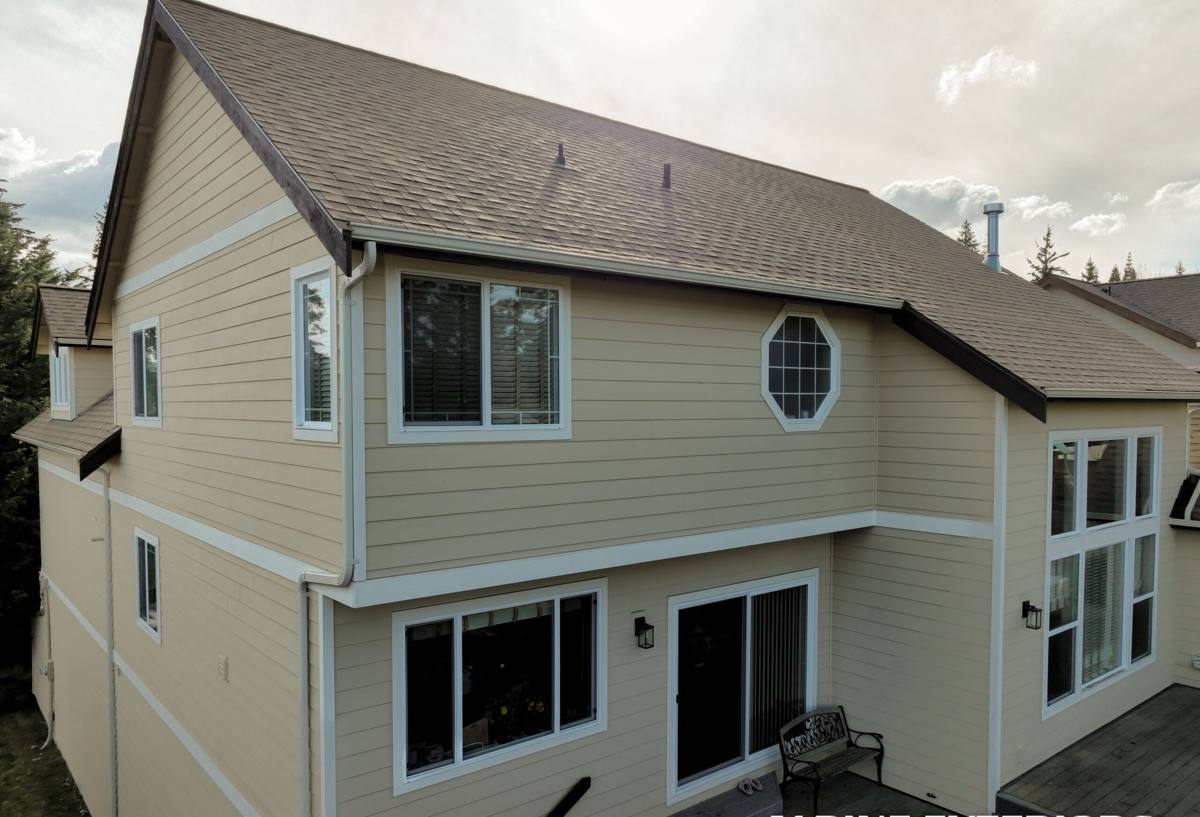
What Actually Makes a Window "Energy-Efficient" Here
Energy efficiency isn't one number — it's a combination of glass, gas fill, coatings, and frame construction working together. For Whatcom County's mix of cool, damp winters and mild, bright summers, the specs that matter most are:
- U-factor — how well the window resists heat loss. Lower is better for our heating-dominant climate.
- Low-E coatings — microscopically thin metallic layers that reflect heat back inside during winter and block excess solar gain in summer without darkening the glass noticeably.
- Gas fill (argon or krypton) — inert gas between panes that slows heat transfer better than plain air. Argon is the standard, cost-effective choice for most double-pane installs.
- Warm-edge spacers — the material separating the panes at the edge of the glass. Cheaper metal spacers conduct cold straight to the frame and are where condensation and eventual seal failure start; warm-edge (non-metal or thermally broken) spacers hold up better in our humidity.
- Solar Heat Gain Coefficient (SHGC) — matters more on south- and west-facing walls that catch direct sun, less on shaded north sides.
None of these specs mean much if the window isn't sealed and flashed correctly into the wall — which is the part most homeowners never get shown, and the part that actually determines whether a "high-efficiency" window performs that way for fifteen years or starts fogging and leaking in three.
Double-Pane vs. Triple-Pane for This Climate
Triple-pane glass gets marketed hard, and it does offer a lower U-factor. But Whatcom County's winters, while damp, aren't extreme-cold territory — we don't see the sustained sub-zero stretches that make triple-pane's added cost clearly pay for itself the way it does in colder inland climates. For most Ferndale homes, a well-built double-pane window with argon fill, a quality Low-E coating, and correct installation delivers strong performance for a lower price. Triple-pane can still make sense on a north- or west-facing wall that takes the brunt of weather, or for a homeowner prioritizing sound dampening near a busier road. We'll walk through where it's worth it and where it isn't, honestly, on your house.
Frame Materials: What Holds Up in Salt Air and Driving Rain
The frame matters as much as the glass in a marine climate. Some materials shrug off salt air and moisture; others need more upkeep to last.
| Frame Material | Performance in Salt Air / Rain | Maintenance | Typical Fit |
|---|---|---|---|
| Vinyl | Good — won't corrode or rot; seams and welds are the weak point over time | Low — occasional cleaning | Most budget-to-mid replacements |
| Fiberglass | Very good — dimensionally stable, resists moisture and salt exposure well | Low | Higher-exposure walls, longer-term hold |
| Aluminum | Poor without thermal break — conducts cold, prone to condensation and corrosion near salt air | Moderate to high | Rarely recommended residentially here |
| Wood / wood-clad | Fair — needs a sound exterior cladding and diligent sealing to survive driving rain | High — repainting, caulk checks | Historic or architectural-match projects |
We don't push wood-clad windows on exposed walls near Birch Bay's weather unless a homeowner specifically wants the look and understands the upkeep — the maintenance burden and moisture sensitivity are real trade-offs, not a knock on the product itself. For most Ferndale replacements, vinyl or fiberglass gives the best balance of performance and long-term cost.
Installation Is Where Efficiency Is Won or Lost
A correctly rated window installed poorly will underperform a modest window installed correctly. This is the part of the job that doesn't show up on a spec sheet, and it's where driving rain finds its way in over time.
The details that matter most in this climate:
- Flashing sequence — sill pan flashing, side flashing, and head flashing have to be layered correctly (shingle-style, water-shedding) so any water that gets past the window sheds out, not into the wall cavity.
- Sill pan drainage — a sloped, sealed sill pan gives water an exit path instead of letting it pool against the frame.
- Backer rod and sealant, not just caulk — proper joint sealing at the right depth, not a bead of caulk smeared over a gap.
- Continuous air seal — low-expansion foam or backer rod around the full perimeter, so conditioned air isn't leaking out (and humid outside air isn't leaking in) around the frame.
- Level, plumb, square set — a window that's racked even slightly stresses the seals and hardware, which shows up as sticking sashes or premature seal failure.
This is also where moss and mildew get invited in, if it's skipped. Poorly sealed gaps trap moisture against wood trim and sheathing, and in Whatcom County's long wet season that moisture doesn't dry out fast — it sits, and it grows something.
Our Process for a Ferndale Window Replacement
- On-site assessment. We look at existing window condition, frame material, current flashing (where visible), and any signs of past water intrusion or rot around openings.
- Honest product recommendation. Based on the wall's sun and weather exposure, we recommend frame material, glass package, and gas fill — not a one-size-fits-all upsell.
- Written estimate. Clear scope, materials, and price before any work starts.
- Removal and opening prep. Old window removed, opening checked and repaired for any hidden rot or damage before the new unit goes in — this step gets skipped by rushed installers and it's where problems hide.
- Flashing and sill pan installation. Done to shed water correctly, not just caulked over.
- Window set and shim. Leveled, plumbed, squared, and fastened per manufacturer spec.
- Air seal and exterior finish. Perimeter sealed, trim reinstalled or replaced, exterior finish matched.
- Walkthrough. We show you the finished work and how the window operates before we consider the job done.
What Drives the Cost of a Window Project
Window replacement pricing varies by house, and we'll always give you an exact number after seeing the actual openings — but these are the factors that move the price up or down:
| Factor | Why It Matters |
|---|---|
| Frame material | Vinyl is generally the most affordable; fiberglass and wood-clad cost more upfront |
| Glass package | Upgraded Low-E coatings, argon fill, or triple-pane add cost per window |
| Window size and count | Larger openings and whole-house replacements have per-unit efficiencies but higher total cost |
| Condition of the existing opening | Hidden rot or water damage found during removal adds repair scope |
| Access and height | Second-story or hard-to-reach openings take more labor time |
| New construction vs. retrofit frame | Retrofit (insert) windows are typically less invasive and less costly than full-frame replacement |
We'll flag which of these apply to your home during the assessment so there are no surprises in the estimate.
Maintenance in a Marine, Moss-Prone Climate
Even a well-installed, well-built window needs a little seasonal attention here. A short checklist we give Ferndale homeowners:
- Rinse salt residue and grime off frames and glass a couple times a year, especially on wind-exposed walls.
- Check weep holes (the small drainage openings at the base of the frame) periodically to make sure they aren't clogged with debris or moss.
- Inspect exterior caulking and sealant lines once a year for cracking or gaps — catch it early, before water gets behind the trim.
- Clear moss or organic buildup off sills and surrounding trim promptly rather than letting it sit through the wet season.
- Watch for condensation between panes — that's a sign a seal has failed and the insulating gas fill has escaped, not something a rag can fix.
- Test that locks and hardware operate smoothly; salt air can stiffen or corrode hardware faster than in a dry climate.
Why a Crew That Already Works Ferndale Matters
Window installation isn't complicated in theory, but it's unforgiving of shortcuts in a climate like this one. A crew that regularly works Ferndale and greater Birch Bay knows which walls take the worst of the weather, how the moss season affects timing and drying, and what a rushed flashing job looks like three years later when it starts leaking. That's not a marketing point — it's the difference between a window that performs for fifteen-plus years and one that needs re-caulking and re-flashing within a few winters.
We stand behind the installation work, not just the window product, because in this climate the installation is usually where problems start.
If you're weighing window replacement or upgrade options for a Ferndale home, we're glad to take a look and give you a straightforward, no-pressure estimate — what we'd recommend, why, and what it would cost. Use the form below to get started.