 Birch Bay
 Asphalt Shingle Roofing Built for Sumas Weather
Sumas sits inland in Whatcom County, but "inland" doesn't mean easy on a roof. Homes here deal with long stretches of driving rain off the Fraser Valley, heavy fog and dew that never quite burns off some winter mornings, and a moss season that can run eight months or longer in shaded, north-facing sections of a roof. Add in the salt-tinged air that moves through the county from the coast and settles into metal flashing and fasteners over time, and you've got a climate that's genuinely tough on roofing materials — even good ones installed poorly won't hold up.
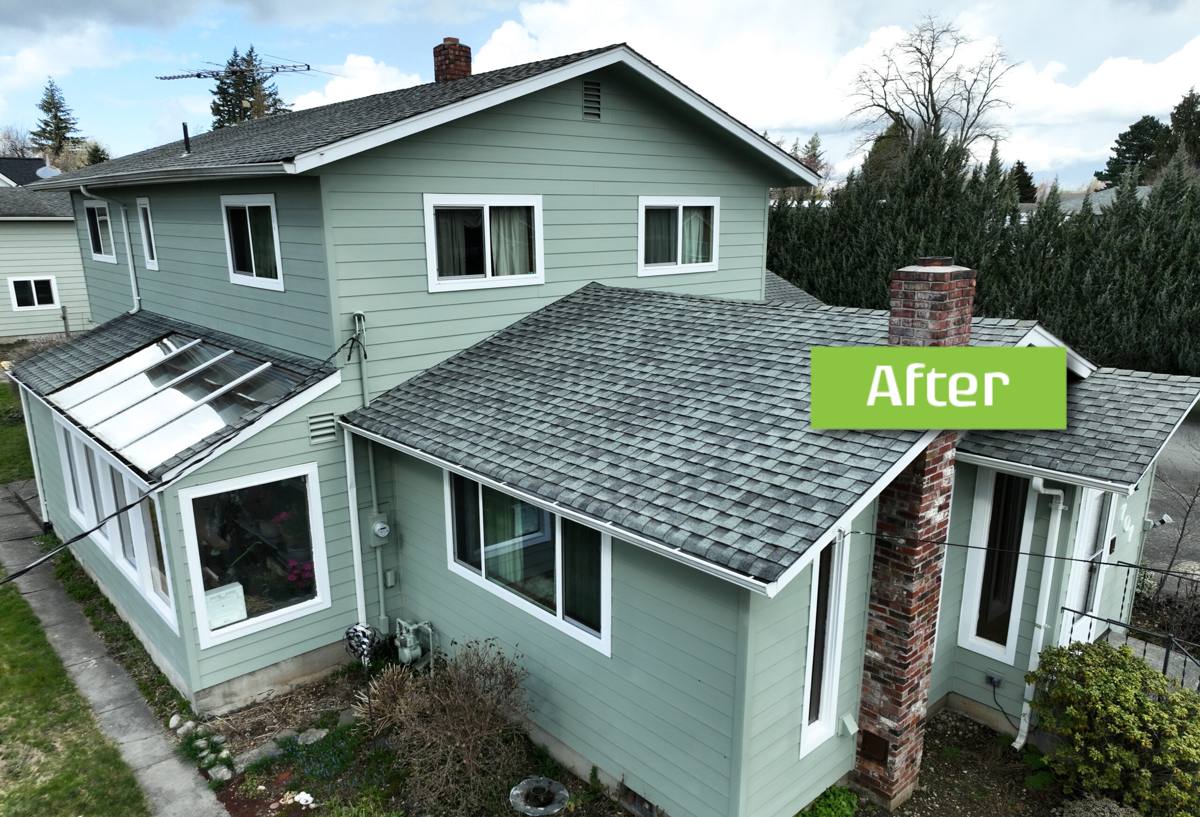
Asphalt shingle roofing is still the right call for the vast majority of Sumas homes. It's proven, it's repairable, and when it's installed correctly for this specific climate — right underlayment, right ventilation, right flashing details — it holds up well for decades. The problems we get called out for almost never start with the shingle itself. They start with something underneath it that was cut corners on.
What "Correct" Actually Means on a Roof Like This
A shingle roof is a system, not a single product. Every layer has a job, and in a wet climate like Whatcom County's, skipping or shortcutting any one of them shows up as a leak, a rot spot, or premature shingle failure within a few years instead of a few decades.
Underlayment
We use synthetic underlayment rather than old-style felt on Sumas roofs. It handles the repeated wet-dry cycling of a rainy climate better, doesn't wrinkle or tear as easily during install, and gives the shingles a more stable surface to seal against. In valleys and around any low-slope transitions, we add self-adhering ice-and-water membrane — not because Sumas gets heavy ice, but because that membrane also seals against wind-driven rain, which is the more common problem here.
Ventilation
This is the piece most often missing on older Sumas roofs we inspect. Without balanced intake and exhaust airflow, moisture from inside the house gets trapped in the attic, condenses against the roof deck, and rots sheathing from the underside — while the shingles on top still look fine. Proper ridge and soffit ventilation keeps the deck dry and also helps shingles run cooler in summer, which slows down granule loss and premature aging.
Flashing
Every place a roof plane meets something else — a chimney, a wall, a skylight, a vent pipe — is a spot where water can find its way in if the flashing isn't cut, lapped, and sealed correctly. In a climate with this much sustained rain, flashing mistakes don't show up as an obvious leak on day one. They show up as a slow stain on a ceiling eighteen months later, after the damage is already inside the wall.
Shingle Installation
Nail placement, exposure, and starter course alignment all matter more than most homeowners realize. Shingles nailed too high, too low, or with too few fasteners can lift in wind-driven rain — a regular event in this part of the county — and once a shingle lifts even slightly, water gets a path underneath it.
Comparing Shingle Options for a Sumas Roof
Not every shingle product is worth the same premium in this climate. Here's how the common options actually compare for a home in this area.
| Shingle Type | Typical Lifespan Here | Best For | Trade-Offs |
|---|---|---|---|
| 3-Tab Asphalt | 15–20 years | Budget-conscious re-roofs, rental properties | Lower wind rating, less algae resistance, flatter look |
| Architectural (Laminate) | 25–30 years | Most Sumas homes | Higher upfront cost, but far better wind and moisture performance |
| Impact-Resistant Architectural | 25–30 years | Homes with mature trees, high debris exposure | Added cost; may qualify for insurance discounts |
| Algae-Resistant (AR) Shingles | Same as base product | Shaded, north-facing roof planes | Slightly higher cost; noticeably slows moss/algae staining |
For most Sumas homes, we recommend architectural shingles with algae-resistant granules as the baseline, not the upgrade. Given how much of the year this region stays damp and shaded in places, the AR treatment pays for itself in fewer moss treatments and a roof that still looks clean at year ten instead of streaked and green.
Moss, Algae, and the Damp-Season Reality
Moss doesn't just look bad — it holds moisture against the shingle surface, works its way under tabs as it grows, and can lift shingles enough to let water in. On roofs with north-facing slopes or heavy tree cover, which describes a good number of properties in and around Sumas, moss growth is less a question of "if" and more "how soon" without some ongoing attention.
A correct install reduces the problem but doesn't eliminate it. Proper flashing at valleys keeps debris from collecting and holding moisture in one spot. Trimming back overhanging branches improves airflow and sun exposure across the roof plane. Zinc or copper strips near the ridge can help suppress regrowth over time as rain washes trace metal down the roof face. None of these are one-time fixes — they're maintenance habits that keep a well-installed roof performing the way it's supposed to for its full lifespan.
What Drives the Cost of a Sumas Re-Roof
| Factor | Why It Matters |
|---|---|
| Roof size and number of planes | More cuts, more seams, more labor and material |
| Pitch and accessibility | Steeper or harder-to-access roofs take longer and require more safety setup |
| Existing layers to remove | Tear-off of old shingles (sometimes multiple layers) adds labor and disposal cost |
| Deck condition | Rotted or soft sheathing found during tear-off needs replacement before shingles go on |
| Shingle grade selected | 3-tab vs. architectural vs. impact-resistant changes material cost significantly |
| Ventilation and flashing upgrades | Adding proper ridge vents or replacing old flashing is worth doing during a re-roof, not after |
We won't quote a number without seeing the roof — anyone who does is guessing, and a guess isn't a fair price for either of us. What we can tell you honestly: the deck condition is usually the biggest wildcard, and it's exactly the kind of thing you can't fully assess until the old shingles come off.
Our Process on a Sumas Roofing Job
- Inspection and honest assessment. We get on the roof, check the deck where accessible, look at existing flashing and ventilation, and tell you straight whether you need a full re-roof, a repair, or just maintenance.
- Written scope and material selection. You know exactly what shingle, underlayment, and flashing package you're getting before work starts — no surprise substitutions.
- Tear-off and deck inspection. Old material comes off, the deck gets checked board by board, and any rot or soft spots get replaced before anything new goes down.
- Underlayment, flashing, and ventilation install. This is the layer that determines whether the roof performs for 25 years or fails quietly in five.
- Shingle installation to manufacturer spec. Correct nailing pattern, exposure, and starter courses — not rushed, not shortcut.
- Cleanup and final walkthrough. Magnetic sweep for nails, debris hauled off, and we walk the job with you before we call it done.
A Practical Homeowner Checklist Before You Call Anyone About a Roof
- Check the attic (not just the ceiling) for water stains, damp insulation, or daylight coming through the deck
- Look for granules collecting in gutters — a sign shingles are aging or degrading
- Note any curling, cracked, or missing shingles from the ground with binoculars, not by climbing up yourself
- Check for moss buildup, especially on north-facing or shaded slopes
- Ask any contractor for proof of licensing and insurance before they get on your roof
- Get the scope in writing — shingle brand, underlayment type, flashing plan — before work starts
Why a Crew That Already Works Sumas Matters
Roofing code and best practice aren't identical from one climate to the next. A crew used to working in dry, low-wind regions can install a technically code-compliant roof that still underperforms here, because they're not building in the margin this climate demands — extra sealing at flashing points, ventilation sized for sustained damp conditions, and shingle selection that accounts for moss and algae exposure rather than just price point.
We work roofs across Whatcom County, from the salt air near Birch Bay to the wetter, tree-shaded conditions inland around Sumas, and we build every roof for the conditions it's actually going to face — not a generic spec sheet. That means when we tell you a certain underlayment or ventilation upgrade is worth the extra cost, it's because we've seen what happens on roofs in this exact region without it, not because it's an upsell.
When Repair Makes More Sense Than Replacement
Not every roofing call ends in a full tear-off, and we'll tell you that upfront if it's true. A localized leak from a single failed flashing point, a handful of wind-lifted shingles after a storm, or moss damage confined to one shaded section can often be repaired without replacing the whole roof — provided the rest of the shingle field and the deck underneath are still sound. We'll always give you that option when it's the honest one, even though a repair is a smaller job than a replacement.
Get a Straight Answer About Your Roof
If you're dealing with a leak, aging shingles, moss buildup, or you're just not sure what shape your roof is really in, we'll come take a look and give you a clear, no-pressure assessment. There's no cost and no obligation to the estimate — just a straight answer about what your roof needs and what it would take to get it there. Use the form below to get started.