 Birch Bay
 Why Ferndale Homes Need a Different Approach to Siding
Ferndale sits close enough to Birch Bay and the Strait of Georgia that salt-laden air is a real factor in how exterior materials age here, and far enough inland that river-valley humidity and shade from mature trees add a second layer of moisture exposure. Add Whatcom County's long, wet fall-through-spring stretch and the moss growth that comes with it, and you have a climate that is genuinely hard on siding. A product that performs fine in a dry inland climate can fail early in Ferndale if it wasn't engineered for constant damp and salt exposure.
When we install siding in Ferndale, we're not just matching a house's style — we're accounting for driving rain that hits siding sideways during winter storms, salt air that accelerates corrosion of fasteners and finishes, and moss and algae that thrive on siding that stays damp for days at a time. Getting siding installation right here means picking a product built for this, and installing it in a way that keeps water moving out, not in.
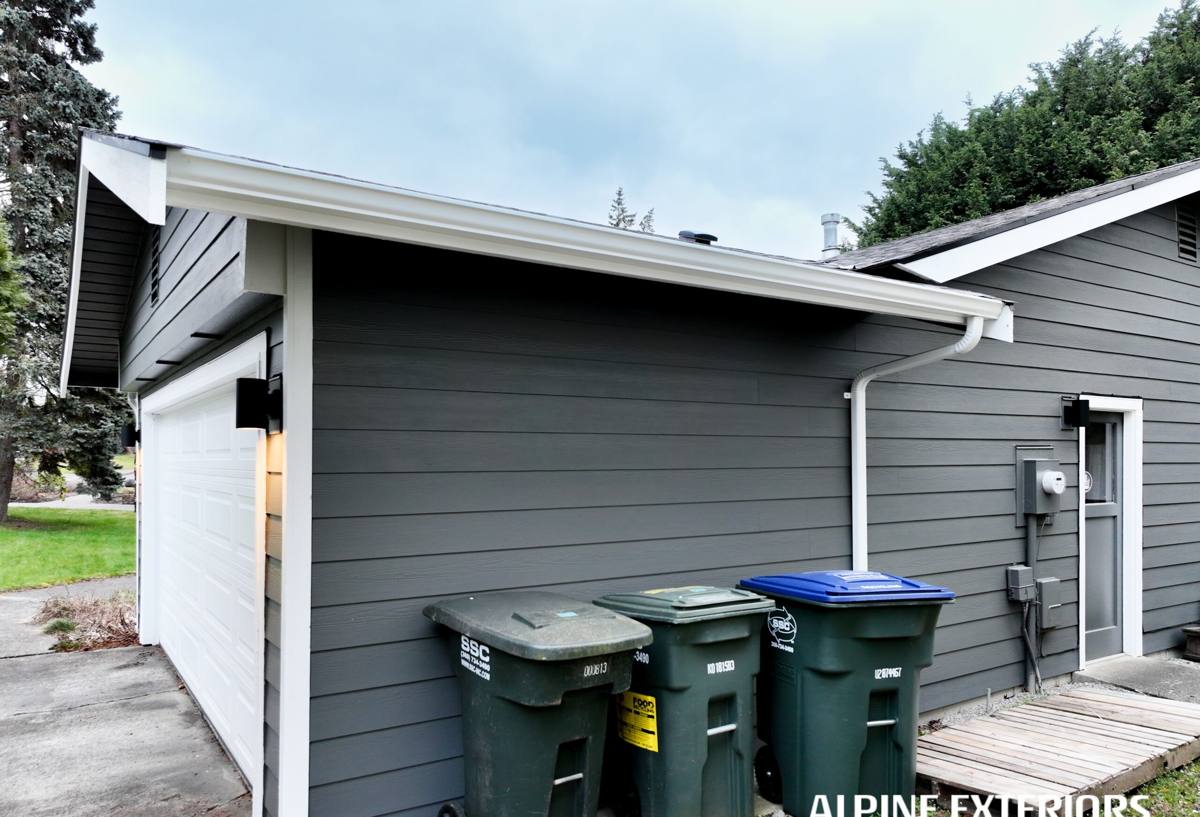
What Ferndale's Climate Does to Siding Over Time
Salt Air and Corrosion
Proximity to the Strait means airborne salt reaches Ferndale on onshore winds more often than most homeowners realize. Salt accelerates corrosion of exposed metal fasteners, degrades some paint systems faster than manufacturers' inland test data suggests, and can pit or discolor certain cladding finishes over years of exposure. Fastener choice and finish quality matter more here than they would fifty miles inland.
Driving Rain
Whatcom County storms frequently bring wind-driven rain, not just vertical rainfall. Wind-driven rain finds every unsealed lap, every under-flashed window, and every gap in a water-resistive barrier. Siding that isn't installed with the right laps, clearances, and flashing details will let water behind the cladding even if the siding material itself is sound.
Moss and Sustained Dampness
Shaded north-facing walls and areas near mature trees or dense landscaping stay damp longer after rain events. That sustained moisture feeds moss and algae growth on porous or textured surfaces, and it keeps wood-based products at risk of moisture uptake for more days out of the year than a sunnier, drier exposure would.
Why We Install James Hardie Fiber Cement — and Only That
We standardized on James Hardie fiber cement siding for every home we side, including in Ferndale, because it holds up to this specific mix of conditions better than the alternatives we used to install. A few reasons this matters locally:
- Fiber cement doesn't feed moss the way some surfaces do. It's not immune to surface growth in shaded, damp spots, but it doesn't absorb and hold water the way wood-based products can, which limits how much moisture is available to sustain growth.
- It's non-combustible. Not a Ferndale-specific concern the way coastal moisture is, but it's part of why we stopped installing wood and wood-composite products across the board.
- ColorPlus factory-applied finish is baked on and warranted against fading and flaking, which matters in a climate where a field-applied paint job would be fighting damp conditions during much of the recommended recoat window.
- HZ5 and HZ10 product lines are engineered specifically for wet, marine-influenced climates like ours, with moisture and freeze-thaw performance data behind them.
We used to install other products — vinyl, LP SmartSide, cedar, primed spruce. Each has a place in the market, but each also has a real trade-off in a climate like Ferndale's: vinyl can warp and doesn't stop moisture at seams the way a properly lapped fiber cement installation does; wood and wood-composite products need more frequent maintenance to stay ahead of moisture damage; primed spruce needs field paint and ongoing upkeep that's tough to keep current in a climate this wet. We'd rather install one product correctly than install several products with asterisks attached.
What Correct Siding Installation Looks Like Here
The siding material is only part of the equation. In Ferndale's climate, the installation details are what actually keep water out over the next 20-30 years. A correct James Hardie installation includes:
Water-Resistive Barrier and Flashing
A continuous, properly lapped weather-resistive barrier behind the siding, with flashing integrated at every window, door, deck ledger, and roof-to-wall transition. This is the layer that actually stops wind-driven rain that gets past the cladding — the siding is the first line of defense, not the only one.
Rainscreen or Proper Furring Where Called For
Depending on the wall assembly, a drainage gap behind the siding lets any moisture that does get through drain and dry out rather than sitting against the sheathing. In a climate with as many wet days as Whatcom County sees, this drainage plane is what keeps a small amount of incidental moisture from becoming a rot problem.
Fastener Selection
Corrosion-resistant fasteners, installed to Hardie's specified pattern and depth. Over-driven or under-driven nails are one of the most common causes of early siding failure, and it's a detail that's invisible once the job is done — which is exactly why it matters who's driving them.
Correct Clearances
Proper gaps at the ground, roofline, decks, and adjoining hardscape keep siding from sitting in standing water or snow, and keep splash-back from constantly wetting the bottom courses.
Caulking and Joint Treatment
Hardie's installation specs call for specific joint treatments at butt seams and trim — done right, this is one more barrier against wind-driven rain finding its way behind the siding.
Our Process for Ferndale Siding Installation Projects
- On-site assessment. We look at your home's exposure — which walls take the most weather, where shade and dampness linger, and the condition of the existing wall assembly.
- Product and color selection. We help you choose the right Hardie plank profile, texture, and ColorPlus color for your home, factoring in HOA or neighborhood considerations where relevant.
- Tear-off and inspection. Once old siding is removed, we inspect sheathing and framing for existing moisture damage before anything new goes on — this is often the point where hidden problems from a prior installation show up.
- Barrier and flashing installation. Weather-resistive barrier, window and door flashing, and drainage details go in before a single piece of Hardie siding is hung.
- Siding installation to manufacturer spec. Correct fastener pattern, clearances, and joint treatment, installed by crews trained on Hardie's specific requirements.
- Final inspection and cleanup. We walk the finished job against the installation checklist before calling it complete.
Cost Factors for Ferndale Siding Installation
Every home is different, but the factors that move the price of a siding installation project are consistent. Here's what typically drives cost up or down:
| Factor | Impact on Cost |
|---|---|
| Tear-off vs. new construction | Removing and disposing of existing siding adds labor and disposal cost |
| Sheathing/framing repair needed | Moisture damage found during tear-off can add material and labor |
| Home size and wall complexity | More corners, dormers, and cutouts around windows increase labor time |
| Siding profile and texture | Lap width and texture (smooth vs. woodgrain) affect material cost |
| Trim and accent work | Additional trim boards, batten details, or accent colors add scope |
| Access and site conditions | Steep lots, limited access, or extensive landscaping can affect labor |
We give straightforward, itemized estimates so you can see exactly what's driving the number, rather than a single lump-sum figure.
Signs Your Ferndale Home May Need New Siding Soon
- Visible moss or algae growth that returns quickly after cleaning
- Soft spots, bubbling, or delamination on wood-based or composite siding
- Paint that's peeling or failing faster than expected between recoats
- Warping, buckling, or gaps opening up at seams and corners
- Rising energy bills that suggest the wall assembly isn't sealing properly anymore
- Visible rust streaks around fasteners or trim
Any one of these is worth a look. Several together usually mean the wall assembly behind the siding is also at risk, which is worth catching before it turns into a bigger repair.
Why Hiring a Crew That Already Works in Ferndale Matters
Siding installation isn't a one-size-fits-all trade. A crew that already works Whatcom County's coastal-influenced climate knows to plan around wind-driven rain patterns, understands which wall exposures in this area need extra attention to drainage, and isn't guessing at flashing details for the first time on your home. That local, repeated experience shows up in the details — the ones you won't see once the siding is up, but that determine whether it performs for the next two to three decades.
If you're considering new siding for your Ferndale home, we're happy to walk the property with you, look at your home's specific exposure, and give you a straightforward, no-pressure estimate for a James Hardie installation built for this climate.