 Birch Bay
 Why Ferndale Decks Wear Out Faster Than People Expect
Ferndale sits close enough to the Salish Sea that homes here deal with the same coastal exposure as the rest of Whatcom County: salt-laden air, long stretches of driving rain, and a moss season that can run from early fall through late spring. A deck built the same way you'd build one in a drier inland climate simply doesn't hold up the same way out here. Fasteners corrode faster, wood fibers stay damp longer between dry spells, and any spot where water collects instead of shedding becomes a rot starting point within a few seasons instead of a few decades.
None of this means Ferndale decks are doomed to fail early. It means the repair work has to account for what the climate is actually doing to the structure, not just patch the symptom that's visible on the surface.
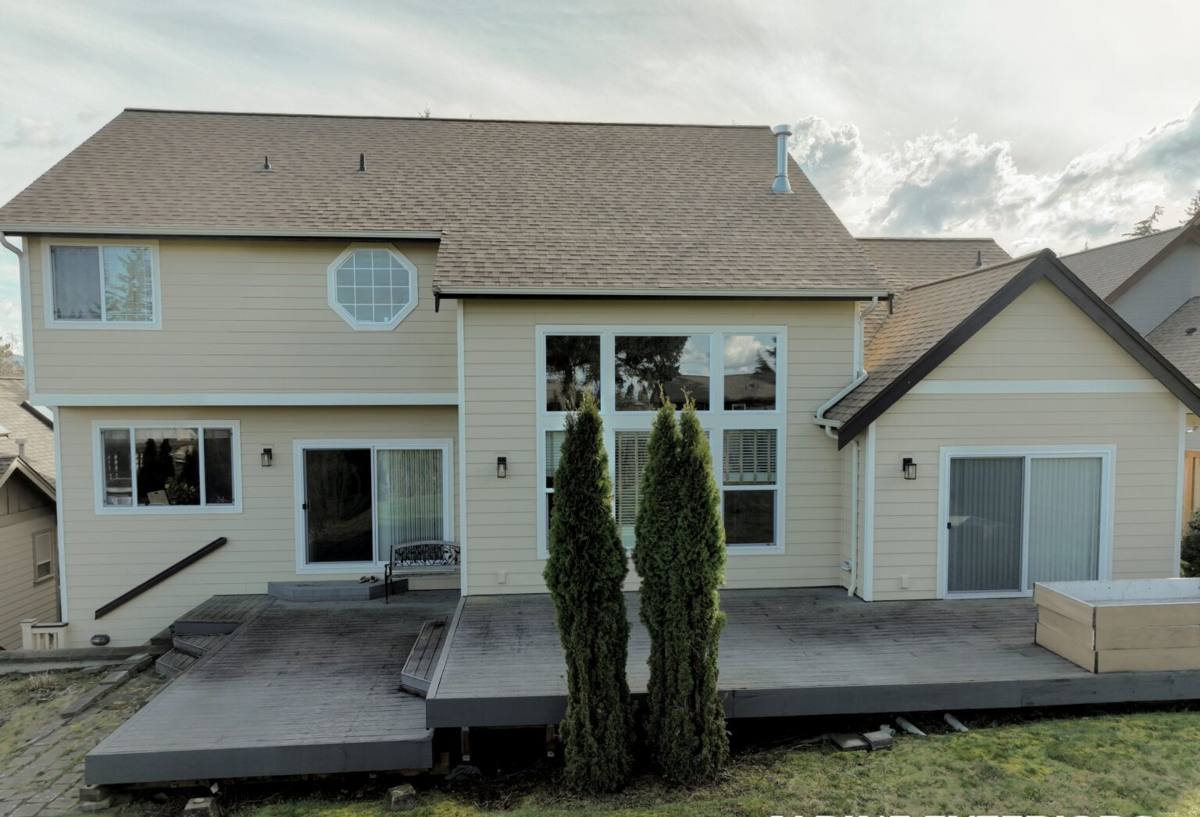
What Salt Air, Rain, and Moss Actually Do to a Deck
Salt Air and Metal Fasteners
Airborne salt accelerates corrosion in nails, screws, joist hangers, and bolts — especially on decks that face open water or get regular onshore wind. Once a fastener starts rusting, it loses holding strength well before it looks visibly bad, which is why a deck can feel "loose" in specific spots long before any board looks damaged.
Driving Rain and Water Intrusion
Wind-driven rain doesn't just fall straight down — it gets pushed sideways under railings, into ledger board connections, and behind fascia trim. Over time this finds any gap in flashing or caulking and works its way into framing members that were never designed to handle standing moisture.
Moss and Trapped Moisture
A long moss season means organic growth has more time to establish on shaded boards, north-facing steps, and anywhere debris collects between deck boards. Moss holds moisture against the wood surface, which keeps that spot wet far longer than the surrounding area dries — a slow but steady path toward soft, punky wood underneath.
Signs a Ferndale Deck Needs Repair — And What They Usually Mean
- Soft or spongy spots underfoot — usually rot in the decking board or the joist beneath it
- Railings that flex or wiggle — often a loose post connection or corroded fastener, not necessarily a full railing replacement
- Green or black staining on boards or stringers — active moss or mildew growth, sometimes cosmetic, sometimes a sign of prolonged moisture
- Gaps or separation where the deck meets the house — a ledger board flashing issue, which is one of the more serious problems to catch early
- Popped or rust-streaked fastener heads — a sign fasteners are corroding and losing grip
- Stair stringers that feel less solid than they used to — often the first structural component to show wear because they take direct rain and foot traffic
Not every one of these means a full rebuild. Part of doing this job honestly is telling a homeowner when a targeted repair will genuinely solve the problem, and being equally clear when the damage has gone far enough that patching would just be delaying a bigger cost later.
Repair or Replace? How We Make That Call
The right answer depends on how much of the structure is affected versus the surface decking, and whether the framing underneath is still sound. A table like this covers the general pattern we see, though every deck gets an actual hands-on inspection before we recommend anything.
| Situation | Typical Approach | Why |
|---|---|---|
| A few isolated soft boards, framing still solid | Board replacement | Localized damage hasn't spread to structural members |
| Loose railings or posts, deck surface otherwise fine | Fastener and connection repair | Corrosion or loosening is often isolated to hardware, not the wood itself |
| Rot at the ledger board connection to the house | Ledger repair with proper flashing | This connection carries structural load and controls water intrusion into the house rim joist |
| Widespread soft joists or beams under multiple boards | Partial or full deck rebuild | Once framing is compromised in several places, patching individual boards won't fix the underlying support |
| Deck is 20+ years old with recurring repairs | Case-by-case — often replacement | Older framing and fastener systems may be past the point where repair is the more cost-effective option long-term |
What a Correct Deck Repair Actually Involves
Finding the Real Source, Not Just the Visible Damage
A soft board is a symptom. Before replacing anything, we check what's underneath it — the joist, the flashing, the fastener condition — because replacing a board over a rotting joist just buys a year or two before the same spot fails again.
Matching Fasteners and Hardware to the Exposure
In a coastal-influenced climate like this part of Whatcom County, we use fasteners and structural hardware rated for the moisture and salt exposure the deck actually faces, not whatever is cheapest at the standard grade. This matters more on decks with direct wind exposure or proximity to water than it does on a fully sheltered, inland deck.
Correcting Drainage, Not Just Wood
If moss or standing water caused the original damage, replacing the board without addressing drainage — board spacing, slope away from the house, clearing debris paths — just sets up the same failure again. Part of a proper repair is making sure water has somewhere to go.
Flashing and Ledger Connections
Where the deck attaches to the house is one of the most important — and most often overlooked — parts of a repair. Proper flashing at this connection keeps water from tracking behind the siding and into the house framing, which is a bigger and more expensive problem than deck repair alone.
Our Process for Ferndale Deck Repair Jobs
1. Full Inspection
We check decking boards, joists, beams, posts, railings, stairs, and the ledger connection — not just the spot the homeowner called about. A problem in one area often has a related cause somewhere else on the structure.
2. Honest Scope and Estimate
We walk the homeowner through what we found, what's driving the damage, and what it will take to fix it correctly — including when a smaller repair is genuinely sufficient and when it isn't.
3. Repair Work
This includes removing and replacing damaged wood, correcting fastener and hardware issues, restoring flashing where needed, and addressing any drainage or moss-related causes so the same failure doesn't repeat.
4. Final Check
Before we consider a job finished, we confirm the repair is solid underfoot, connections are secure, and water has a clear path off the deck surface.
Maintenance That Extends the Life of a Repair
- Sweep debris out from between boards regularly, especially in shaded areas prone to moss
- Keep gutters and downspouts clear so runoff isn't dumping extra water onto or near the deck
- Check railings and stair connections for looseness once or twice a year
- Re-seal or re-stain exposed wood surfaces on the schedule the product calls for — coastal exposure shortens the useful life of most sealants compared to inland climates
- Address small soft spots or fastener issues early, before they spread to adjacent boards or framing
Why a Crew That Already Works in Ferndale Makes a Difference
A contractor who works Ferndale and the broader Birch Bay area regularly already has a feel for how local exposure — wind direction, rain patterns, how long moss season actually runs in a given yard — affects deck framing over time. That's different from general repair knowledge; it's pattern recognition built from seeing the same climate do the same things to wood and hardware, job after job. It also means straightforward logistics: material sourcing, scheduling around the wetter months, and being available if a repair needs a follow-up visit.
Whatcom County's weather isn't going to change, and a deck built or repaired without accounting for it will keep having the same problems on a short cycle. The goal of a proper repair is to break that cycle — not just make the deck look fixed for a season.
Get a Straight Answer About Your Deck
If your deck has a soft spot, a wobbly railing, or just feels like it's not holding up the way it used to, it's worth having someone look at it before the damage spreads further into the framing. We offer free, no-pressure estimates for Ferndale homeowners — an honest look at what's actually going on and what it would take to fix it right, whether that's a small repair or something bigger. Use the form below to get started.