 Birch Bay
 Siding That Actually Works for Ferndale's Climate
Ferndale sits close enough to the water that homes here deal with a different mix of weather stress than siding fifty miles inland. Salt-laden air off the Salish Sea, long stretches of driving rain through fall and winter, and a moss season that can run half the year all put real demands on exterior cladding. We work on homes throughout the Birch Bay area, including Ferndale, and we've standardized on one product for a reason: James Hardie fiber cement siding is the only material we've found that holds up to this specific combination of conditions without turning into a maintenance project every spring.
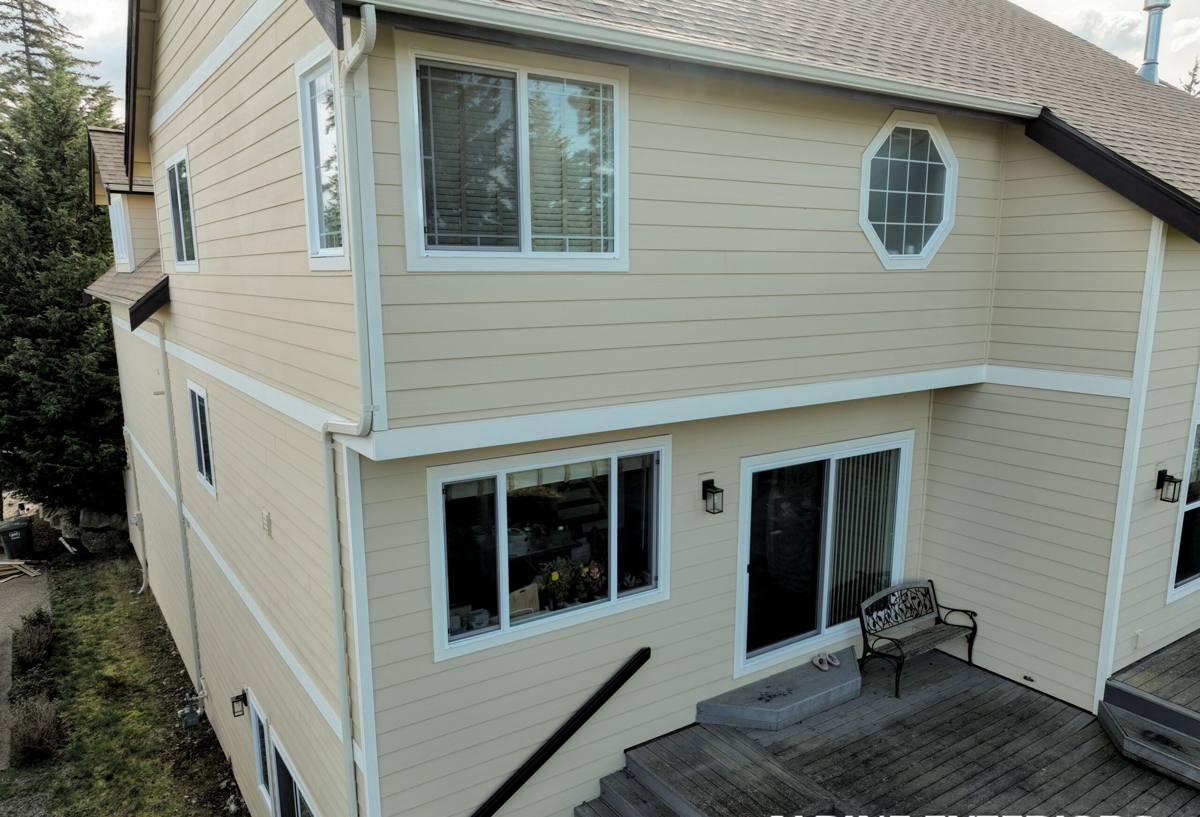
This page focuses on exactly one thing: what a correct James Hardie installation looks like on a Ferndale home, why the local climate makes some of the details non-negotiable, and how our process is built around getting it right the first time.
What Whatcom County Weather Does to Siding
Salt Air and Moisture
Properties near Birch Bay and the surrounding Whatcom County coastline are exposed to airborne salt that accelerates corrosion on fasteners, flashing, and any metal trim that isn't rated for it. Cheaper siding systems that rely on unprotected steel fasteners or thin aluminum trim tend to show rust streaks and pitting well before the siding itself fails. James Hardie's product line pairs with stainless or coated fasteners and proper flashing details specifically because the manufacturer engineered the system with coastal exposure in mind.
Driving Rain
Wind-driven rain off the water doesn't just hit siding — it gets pushed sideways into laps, seams, and butt joints. If those details aren't installed correctly, water finds its way behind the cladding and into the wall assembly, where it can sit for months before anyone notices a problem. This is a bigger factor in a coastal microclimate like Birch Bay than it is in more sheltered parts of the county.
Moss and Prolonged Dampness
The long wet season here means siding stays damp longer than it does in drier climates, which is exactly the environment moss and mildew need to take hold. Moss doesn't just look bad — it holds moisture against the surface, and on wood-based or poorly sealed products that moisture eventually finds a way in. Fiber cement doesn't feed mold growth the way wood-based siding can, and a factory finish that resists moisture absorption gives moss and mildew less to grip onto in the first place.
Why James Hardie Specifically
We install James Hardie fiber cement exclusively. We don't carry LP SmartSide, vinyl, Cemplank, Allura, primed spruce, or cedar, and we're upfront about why: every one of those products asks a coastal Whatcom County homeowner to accept a trade-off that Hardie doesn't.
- Non-combustible core — fiber cement doesn't burn, unlike wood-based siding products.
- ColorPlus factory finish — baked-on color that resists fading and chipping better than field-applied paint, which matters when salt air and UV are both working against a painted surface.
- HZ5 product engineering — Hardie's HZ5 line is formulated for harsher climate zones, which fits a marine-influenced area like this one better than a generic all-climate product.
- Dimensional stability — fiber cement doesn't swell, cup, or rot the way wood-based and some engineered wood products can when they take on repeated moisture.
- Transferable warranty — a real factor if you ever sell the home, since a warranty tied to the house rather than the original owner carries weight with buyers.
None of this means other products are junk. Vinyl is inexpensive and easy to source. Cedar looks great when it's new. LP SmartSide has a following. But for the specific combination of salt exposure, wind-driven rain, and a long damp season that Ferndale and the rest of the Birch Bay area deal with, we've made Hardie our standard because it's the product we're willing to warranty our workmanship against.
What a Correct Installation Actually Involves
The material is only half of the equation — a huge percentage of siding failures we get called out to inspect trace back to installation shortcuts, not product defects. On a coastal job like Ferndale, these details matter more than usual:
Weather-Resistive Barrier and Flashing
Every penetration, window, and door needs proper flashing integrated with the weather-resistive barrier underneath the siding, shingled correctly so water sheds outward and down, never inward. This is the layer that actually keeps a wall dry — the siding is the second line of defense, not the first.
Fastener Placement and Type
James Hardie specifies fastener type, spacing, and placement for a reason, and corrosion-resistant fasteners are especially important this close to the water. Nailing too close to panel edges, using the wrong fastener, or missing studs are common shortcuts that lead to cracking and loosening over time.
Proper Clearances and Gaps
Hardie panels need clearance from rooflines, decks, and grade, plus expansion gaps at joints, sealed with the correct sealant. Skipping these clearances is one of the most common code and warranty violations we see on homes that were sided by out-of-area crews unfamiliar with local inspection standards.
Caulking and Joint Treatment
In a climate with this much sustained rain, joint sealant needs to be applied correctly and to the manufacturer's spec — not just wherever looks tidy. Poor caulking is one of the fastest ways water finds a path behind the siding.
Our Process on a Ferndale Job
- Free on-site estimate — we look at your home's specific exposure (how close to the water, prevailing wind direction, existing moisture damage) and walk you through what it needs.
- Inspection of the wall assembly — before any new siding goes up, we check what's underneath. Old moisture damage or a failed barrier needs to be addressed first, not covered over.
- Product and color selection — we help you choose the right Hardie line and ColorPlus finish for your home and budget.
- Correct installation — flashing, fastening, clearances, and joint treatment done to manufacturer spec, not shortcuts.
- Final walkthrough — we go over the finished job with you before we consider it done.
Why a Crew That Already Works This Area Matters
Siding crews that mostly work inland or in drier climates sometimes underestimate what a coastal Whatcom County property needs — they'll spec standard fasteners where corrosion-resistant ones matter, or skip flashing details that don't come up as often outside a marine-influenced zone. A crew that regularly works Ferndale and the Birch Bay area already knows which details can't be skipped here, has already dealt with moss buildup patterns specific to shaded, damp lots near the water, and understands what local permitting and inspection expects. That familiarity shows up in fewer callbacks and a longer service life for the siding.
Cost Factors to Understand Before You Get Quotes
We don't publish blanket price-per-square-foot numbers because too many variables change the real cost — but here's what actually drives the estimate up or down:
| Factor | Why It Matters |
|---|---|
| Existing wall condition | Rot or moisture damage found during removal adds repair scope before new siding goes up |
| Home size and complexity | More corners, gables, and trim details mean more labor and cutting |
| Hardie product line chosen | Lap siding, shingle-style panels, and board-and-batten all price differently |
| ColorPlus vs. field-painted | Factory-finished panels cost more upfront but remove a repaint cycle down the road |
| Site access | Waterfront lots, steep grades, or tight setbacks can affect staging and labor time |
| Trim and accessory work | Corner boards, soffits, and fascia often get replaced or refreshed alongside the siding |
An accurate number only comes from an in-person look at your home — which is exactly what a free estimate is for.
Signs Your Ferndale Home May Need New Siding Soon
- Visible moss or algae buildup that returns quickly after cleaning
- Soft spots, bubbling, or cracking, especially on north- and west-facing walls
- Rust streaking near fasteners or trim
- Paint that's failing faster than it used to, even after repainting
- Gaps or separation at seams and corners
- Rising energy bills that could point to a failing wall assembly behind the siding
Any one of these is worth a look before it turns into a bigger repair. Catching wall assembly problems early, before they spread, is almost always cheaper than waiting.
Get a Straight Answer for Your Home
If you're weighing options for a Ferndale property, we're glad to come take a look, tell you honestly what your home's exposure calls for, and give you a free, no-pressure estimate — no matter what you decide to do with that information. Use the form below to get started.