 Birch Bay
 Roof Replacement in Bellingham: What the Climate Demands
Bellingham sits on Bellingham Bay in Whatcom County, just down the coast from Birch Bay, and the two places share the same weather pattern that makes roofing here different from roofing in a drier, inland climate. Marine air off the water carries a steady trace of salt, winter and fall storms push rain sideways instead of straight down, and a long moss season settles into shaded roof planes and doesn't fully let go until well into summer. A roof replacement done right in Bellingham has to be built around those three realities from the deck up, not treated as a generic job that happens to be happening in a wet place.
This page covers what a Bellingham roof replacement actually involves — the signs that tell you it's time, the materials that hold up here, what a correct install looks like layer by layer, and how we run the job as a crew that already works this stretch of Whatcom County out of Birch Bay.
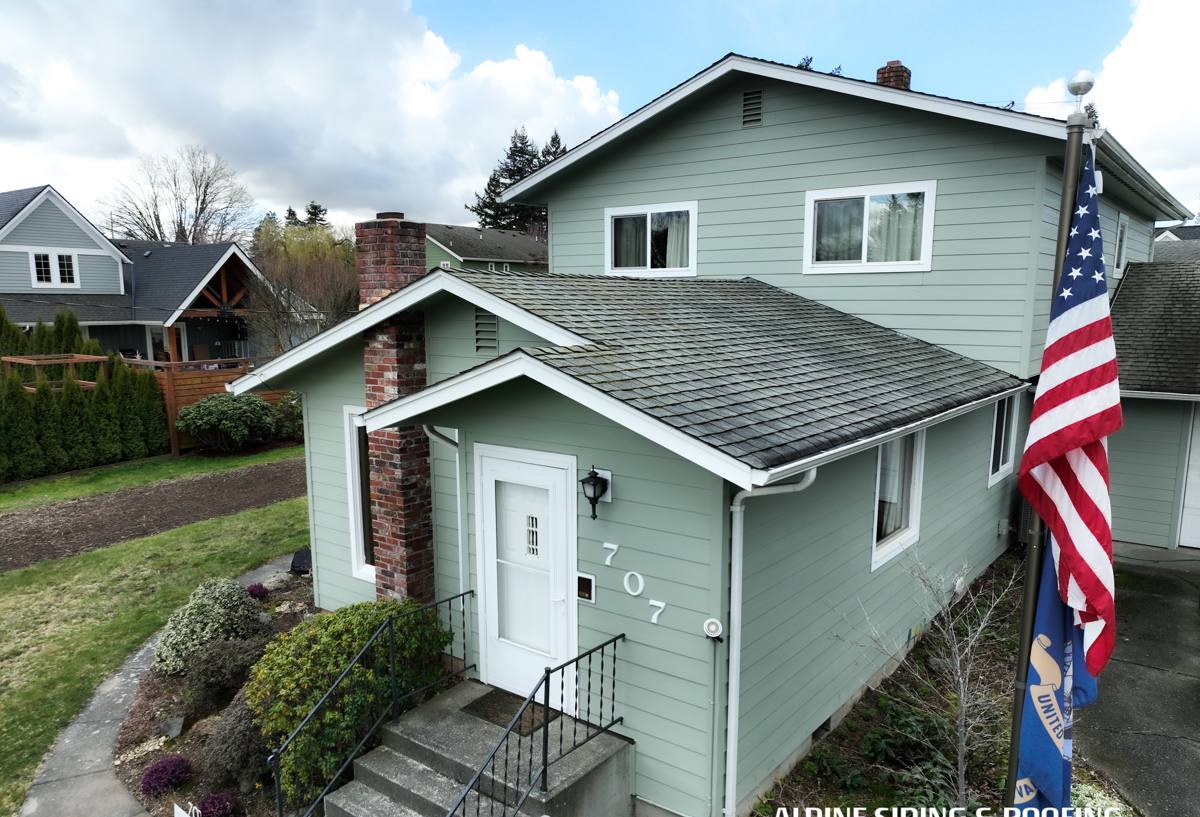
What Years of Bellingham Weather Do to a Roof
Marine Air and Salt-Laden Moisture
Being close to Bellingham Bay and the broader Salish Sea means roofs here take on more airborne salt and moisture than homes further inland. That accelerates corrosion on exposed metal — flashing, fasteners, vent caps, gutter hangers — well ahead of the timeline you'd see in a drier region. A roof can look structurally sound from the ground while the metal components at its penetrations are quietly rusting through underneath.
Wind-Driven, Sideways Rain
Storms coming off the water don't just drop rain straight down — wind pushes it sideways and forces it up under shingle edges and around flashing details that would stay dry in a calmer climate. That's a heavier real-world moisture load than an average annual rainfall number suggests, and it's why underlayment and flashing quality end up mattering as much as the shingle or material on top of them.
A Long Moss Season
Mild temperatures, shade from mature trees on a lot of Bellingham properties, and near-constant dampness through fall, winter, and spring add up to a moss season that can run most of the year on north-facing or tree-shaded roof planes. Moss doesn't just look bad — it holds moisture directly against the roofing surface and works its way under shingle edges as it grows, which shortens the practical life of a roof well below what the material is rated for.
Signs It's Time for Replacement, Not Another Repair
Some roof problems are a legitimate one-time repair. Others are a sign the roof as a whole is past the point where patching makes sense. A few of these together, especially on a roof already near the end of its expected lifespan, usually mean it's time to start planning for full replacement.
- Granule loss showing up in gutters or at the base of downspouts
- Shingles curling, cupping, or cracking across multiple roof planes, not just one spot
- Moss buildup that keeps returning within a season or two of being cleaned off
- Flashing around chimneys, skylights, or vents that's visibly lifted, rusted, or repeatedly caulked over
- Daylight, water stains, or a musty smell in the attic when checked on a dry day
- Two or more leak repairs in the past few years, especially in the same area
- A roof already at or past the expected lifespan for its material
What a Correct Roof Replacement Involves
A roof replacement is a system, not a single product. Every layer under the visible surface has a specific job, and skipping or shortcutting any one of them is where Bellingham's weather finds its opening.
Full Tear-Off and Deck Inspection
Stripping the roof down to bare decking is the only way to find rot, soft spots, or hidden moisture damage that's been developing under the old roofing, sometimes for years. Installing new material directly over an existing layer skips this step and simply seals whatever problems already exist underneath a fresh surface.
Underlayment and Ice-and-Water Shield
Synthetic or self-adhered underlayment gives the deck a real second line of defense against wind-driven rain that gets forced under shingle tabs rather than running straight off. Ice-and-water shield membrane at eaves, valleys, and other vulnerable transitions adds another layer of protection exactly where water is most likely to find a way in.
Flashing at Every Transition
Most roof leaks in this region don't start out in the open field of shingles — they start at flashing. Valleys, chimney and skylight penetrations, and roof-to-wall transitions all need new flashing that's properly lapped and integrated with the underlayment, not old flashing patched over with a bead of caulk.
Ventilation
Balanced intake and exhaust ventilation keeps the underside of the roof deck dry through Bellingham's wet months, slowing both wood rot and moss growth working from underneath the roof at the same time weather works on it from above. Older homes are frequently under-ventilated by current standards, and a replacement is the natural point to correct that.
Fastening to Manufacturer Spec
Correct nail type, count, and placement is what keeps a new roof locked down under wind load instead of lifting at the edges within a few storm seasons. It's a detail that costs nothing extra to do right and causes real problems years later when it's rushed.
Choosing a Roofing Material for a Bellingham Home
There's no single correct material for every home. The right choice depends on the roof's exposure, the home's style, and how much long-term maintenance a homeowner wants to take on.
| Material | Moisture & Moss Behavior | Salt-Air Durability | Typical Lifespan Here |
|---|---|---|---|
| Architectural (laminate) asphalt shingles | Good with algae-resistant granules; needs periodic moss removal on shaded slopes | Solid when flashing and fasteners are corrosion-resistant | 20-25 years |
| 3-tab asphalt shingles | More vulnerable to moss lift and granule loss over time | Lower-grade fasteners common at this price point | 12-18 years |
| Standing seam metal | Sheds moisture and moss well due to its slick, low-friction surface | Strong when panels and fasteners are properly rated for coastal exposure | 35-50 years |
| Composite/synthetic shingle | Resists moisture absorption better than wood-based products | Good, though hardware quality still matters | 25-40 years |
| Wood shake | Absorbs moisture readily; higher moss and rot risk without upkeep | Needs regular treatment in salt air | 15-20 years with consistent maintenance |
Architectural asphalt shingles remain the practical choice for most Bellingham homes — a solid balance of cost, appearance, and performance when installed correctly. Standing seam metal is worth the higher upfront cost for homeowners who want to minimize moss maintenance and get the longest realistic lifespan out of the investment. We'll walk through the honest trade-offs for your specific roof rather than steering everyone toward the same product.
How We Run a Bellingham Roof Replacement
We start with an on-site inspection of the existing roof — from the ground, the attic, and, where it's safe to access, the roof surface itself — to see how it's actually held up to salt air, wind-driven rain, and moss over its life. From there we put together a clear written scope covering material, tear-off, deck repair allowances, flashing, and ventilation, so there's no ambiguity about what's included before any contract is signed.
During the job, tear-off goes down to bare decking so any rot or soft spots get addressed before new material goes down, not covered up underneath it. Underlayment, flashing, and ventilation get installed as standard practice on every job, not offered as optional upgrades. Once the roof is on, we walk the site, clear debris, and do a final check before calling the job finished.
Why a Birch Bay Crew That Works Bellingham Regularly Matters
A crew that works this stretch of Whatcom County regularly already knows how salt air, wind exposure, and a long wet season behave here, and that knowledge shows up in the details — which fastener grade gets used, how flashing gets lapped at a valley, where extra ventilation gets added on an older home. We're based in Birch Bay and work Bellingham roofs on a regular basis, which means the coastal Whatcom County conditions this page describes aren't theoretical for us — they're what we account for on every job we run in the area.
Vetting a Roofing Contractor for This Job
- Confirm current Washington contractor licensing and active liability insurance, not just a verbal claim
- Ask how they handle flashing details specifically, not just which shingle brand they carry
- Get manufacturer warranty terms in writing, including what would void them
- Ask whether deck repair and disposal are included in the base bid or billed as surprise add-ons
- Check that they're an established local business, not a storm-season crew that won't be around for a warranty call
- Get a full written scope of work before signing anything, not just a one-line price
If your roof is showing some of these signs, or you just want an honest read on where it stands, we're happy to take a look. We offer free, no-pressure estimates for roof replacement in Bellingham and the surrounding Whatcom County area — use the form below to get started.