 Birch Bay
 Fiber Cement Siding for a Waterfront Whatcom County Neighborhood
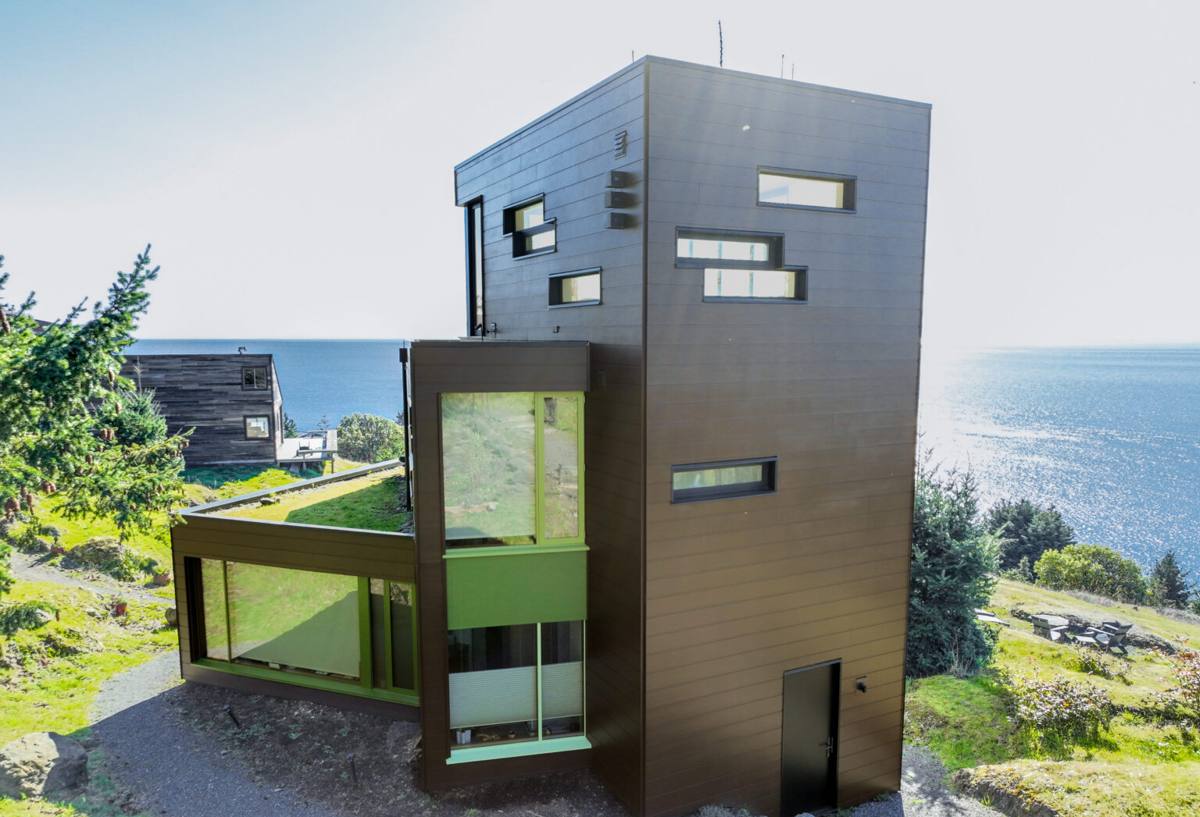
Birch Bay Village sits on one of the more exposed stretches of coastline in Whatcom County, and that location drives most of the decisions that go into a siding project here. The neighborhood is a mix of older cottages and cabins — many originally built as seasonal or vacation places and later converted or added onto for year-round living — alongside newer construction built to take advantage of the water views. Those two building eras don't age the same way, and they don't need the same siding approach, but they share the same weather: salt-laden marine air off the bay, driving rain that comes in sideways more often than straight down, and a moss season that can run most of the year on shaded walls.
This page is specifically about fiber cement siding for homes in Birch Bay Village — what the local climate actually does to a wall assembly, what a correct installation involves on both older and newer housing stock in this neighborhood, and how our process handles the details that get skipped on a rushed job. We install James Hardie fiber cement exclusively, and in an environment like this one, the reasons for that go well beyond appearance.
What Salt Air, Driving Rain, and Moss Do to Siding
Salt and Corrosion
Being close to the water means Birch Bay Village homes take on more salt-laden air than housing just a few miles inland. Salt accelerates corrosion of fasteners, flashing, and any exposed metal trim, and it wears down lower-grade finishes faster than a drier climate would. On a siding job, that means fastener choice and finish quality aren't cosmetic details — they're the difference between trim that still looks sharp in fifteen years and trim that's streaking or failing in five.
Wind-Driven Rain and Water Intrusion
Waterfront exposure also means more wind, and wind-driven rain doesn't behave like a normal rain shower. It gets pushed sideways into wall assemblies, window and door flashing, and any horizontal trim or transition where water can find a gap. A siding system that would perform fine in a calm, sheltered yard can still fail here — not because the material was wrong, but because the installation wasn't detailed for water moving sideways instead of falling straight down.
Moss and Shaded Walls
Mild temperatures, shade from trees and neighboring structures, and near-constant dampness add up to a long moss and mildew season across this part of Whatcom County. North-facing walls and anything shaded tend to show it first. Any siding material that's porous, or that holds moisture against the substrate instead of shedding it, becomes a growth surface over time — and once moss and mildew take hold, they hold moisture against the wall even longer, which speeds up whatever damage was already starting underneath.
Why Fiber Cement Is the Right System for This Neighborhood
We install James Hardie fiber cement siding exclusively — not LP SmartSide, not vinyl, not Cemplank, not Allura, not primed spruce or cedar. That's a professional standard, not a sales angle, and it's shaped directly by what this kind of coastal, wet climate does to exterior materials over time.
- Non-combustible core: Fiber cement doesn't feed a fire the way wood-based siding products can.
- Factory-applied ColorPlus finish: Color is baked on under controlled factory conditions rather than field-applied, which holds up better against the fading and chalking that salt air and UV exposure cause over time.
- Climate-engineered HZ formulation: Hardie's HZ5 product line is engineered for regions with heavy moisture exposure and freeze-thaw cycling, which is a fair description of waterfront Whatcom County.
- Dimensional stability: Fiber cement doesn't swell, cup, or warp the way engineered wood siding can after repeated wet-season moisture cycles.
- Strong transferable warranty: Hardie backs the product with a robust warranty structure, provided installation follows their published specifications.
None of that means other siding products are without merit — plenty of homeowners elsewhere are satisfied with them. It means that for a shoreline exposure like Birch Bay Village, we've made a professional call to install one system we can fully stand behind rather than offer a cheaper option that shifts long-term maintenance risk onto the homeowner.
What a Correct Installation Involves in This Neighborhood
Older Cottages and Conversions
A lot of Birch Bay Village's housing stock started as smaller seasonal cabins that were later insulated, added onto, or converted for full-time living. That history matters on a siding job because what's behind the existing siding on a home like this can vary a lot — original sheathing that was never designed for a year-round moisture load, older or missing weather-resistive barriers, or wall assemblies patched together across multiple additions. Before any new siding goes up, we check what's underneath rather than assuming it matches a newer, more standardized wall assembly. Sometimes that means straightforward overcladding; sometimes it means addressing sheathing or house wrap issues first so the new siding isn't installed over a problem that will keep causing trouble.
Flashing and Rain-Screen Detailing
Given how much wind-driven rain this neighborhood sees, flashing at windows, doors, and every horizontal trim transition has to be sequenced correctly — each layer lapped over the one below it so water sheds outward instead of working its way behind the cladding. On more exposed walls, a drainage gap or rain-screen detail behind the siding gives any water that does get past the outer layer a path to drain and dry out instead of sitting against the wall assembly. That detail matters more on a bay-facing wall than it does on a sheltered, tree-covered side of the same house.
Fastening and Clearances
Hardie's performance depends on installation following their published specifications — correct fastener type and spacing, proper clearance from grade, decks, and roof lines, and joints that are either factory-mitered or properly caulked. Skipping or shortcutting those details is the single most common reason a fiber cement job underperforms in a climate like this one; the material itself is rarely the point of failure.
Choosing a Profile for Birch Bay Village Architecture
The neighborhood's mix of older cottages and newer, view-oriented builds means there's no single "right" siding profile for every house here. The table below covers the main options and where each tends to fit.
| Profile | Typical Fit | Notes for This Climate |
|---|---|---|
| HardiePlank lap siding | Traditional cottages, most single-family homes | Widely used, proven detailing for wind-driven rain when installed with correct lap and flashing |
| HardiePanel vertical siding | Modern or contemporary builds, accent walls | Common on newer waterfront-facing construction; joint detailing needs extra attention |
| HardieShingle | Cottage or Cape Cod-style homes wanting a shingle look | More surface texture and seams, so flashing and gapping details matter more |
| HardieTrim boards | Corner boards, window and door trim, fascia | Pairs with any of the above; corrosion-resistant fastening matters most here |
Color is worth planning around ColorPlus factory finishes rather than field-applied paint wherever possible, since a factory finish holds up longer against the fading and streaking that salt air accelerates. On a home close enough to the water to catch direct salt spray, that's not a minor upgrade — it's the difference between repainting trim within a few years and not having to think about it for a long time.
Our Process for a Birch Bay Village Fiber Cement Project
- On-site assessment: We look at the existing wall assembly, the home's age and construction history, and which walls take the most direct wind and rain exposure.
- Scope decision: Based on what's behind the current siding, we determine whether overcladding is appropriate or whether sheathing, house wrap, or flashing needs to be addressed first.
- Product and profile selection: We walk through profile and color options that fit the home's style and the specific exposure of each elevation.
- Installation to spec: Correct fastening, flashing sequencing, clearances, and rain-screen detailing on exposed walls, following Hardie's published installation requirements.
- Trim, caulking, and finish work: Joints, corners, and penetrations sealed and detailed to shed water rather than trap it.
- Final walkthrough: We review the completed work with the homeowner before calling the job done.
Cost Factors for a Fiber Cement Project Here
Every home is different, but a few factors consistently move the price on a Birch Bay Village siding job more than others.
| Factor | Why It Matters |
|---|---|
| Tear-off vs. overclad | Removing old siding to address sheathing or moisture issues underneath adds labor but is sometimes the only correct option on older conversions |
| Wall exposure | Bay-facing or wind-exposed walls often need more rain-screen and flashing detail than sheltered sides of the same house |
| Trim and architectural detail | Corner boards, window trim, and multiple roof-to-wall transitions all add labor beyond flat wall area |
| Home size and stories | More square footage and taller walls mean more material, staging, and installation time |
| Access and site conditions | Tight lots, slopes, or limited equipment access common in this neighborhood can affect scheduling and labor |
We provide a written estimate specific to the home rather than a rough per-square-foot number pulled from an average — the factors above vary enough between an older cottage and a newer build that a generic estimate isn't useful here.
Maintaining Fiber Cement Siding in This Climate
Fiber cement is low-maintenance compared to wood-based siding, but "low-maintenance" isn't "no-maintenance" in a coastal, mossy climate. A short list of habits keeps a Birch Bay Village installation performing the way it's supposed to for the long run:
- Rinse salt residue and grime off the siding once or twice a year, especially on bay-facing walls
- Keep gutters clear so water isn't overflowing down the siding face
- Trim back trees and shrubs that keep a wall shaded and damp, since that's where moss takes hold first
- Check and refresh caulking at trim joints and penetrations every few years rather than waiting for a visible gap
- Walk the exterior after major windstorms and check for any lifted or damaged trim, especially on the most exposed elevation
- Address any small moss growth early with a gentle wash rather than letting it establish and hold moisture against the wall
Why a Crew That Already Works Birch Bay Village Matters
Siding installation guidance from a manufacturer assumes a fairly generic climate. It doesn't know that a particular street in Birch Bay Village catches direct wind off the bay while the next block over is sheltered by trees, or that a cottage built in the 1960s and converted for year-round use is going to have a different wall assembly than a house built ten years ago. That kind of neighborhood-specific knowledge only comes from doing the work here repeatedly — seeing which walls develop moss first, which older homes need sheathing addressed before new siding goes up, and which details actually matter once a Whatcom County winter tests them.
If you're weighing a fiber cement siding project for a home in Birch Bay Village, we're happy to take a look and put together a free, no-pressure estimate — no obligation, just a straight assessment of what your home actually needs.