 Birch Bay
 Board & Batten Siding Built for Semiahmoo's Marine Climate
Semiahmoo sits right up against the water, and that proximity shapes everything about how siding performs there. Salt-laden air moves off the bay and settles on exterior walls year-round, driving rain comes in sideways during winter storms, and the long stretches of overcast, damp weather common to Whatcom County keep north-facing walls and shaded corners wet longer than homeowners further inland ever have to deal with. Add in a moss season that can run from fall through spring, and you have a climate that is genuinely hard on exterior materials — not in a dramatic way, but in a slow, cumulative way that shows up as swelling, staining, and paint failure five or ten years down the road if the siding and the installation weren't built for it.
Board and batten is a popular choice in this part of Birch Bay because the vertical lines suit the coastal and craftsman-style homes common in the area, and the style has real practical roots — it was originally developed to shed water efficiently off vertical wall surfaces. Done right, in the right material, it's a strong fit for a Semiahmoo home. Done with the wrong product or a rushed installation, it's one of the faster ways to end up with rot at the battens and streaking at every seam.
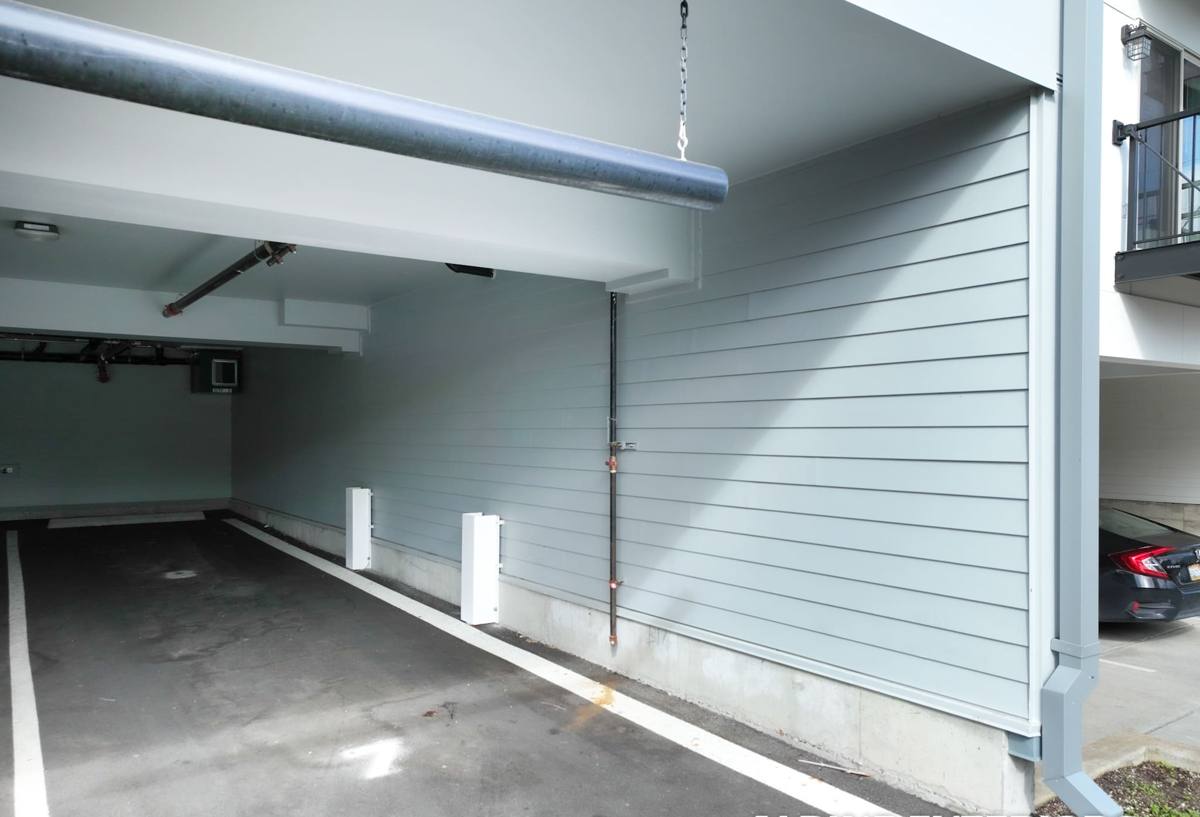
Why Board & Batten Is a Good Match for This Neighborhood
The vertical board-and-batten profile does two things well in a wet marine climate: it encourages water to run straight down the wall instead of collecting on horizontal ledges, and the batten strips cover the seams between panels, reducing the number of exposed joints where water can work its way behind the cladding. On a street where homes face open water exposure and shifting wind direction, that seam protection matters more than it would on a more sheltered inland lot.
The style also holds up visually against the kind of homes we see around Semiahmoo — a mix of newer coastal builds and older homes being updated with a more modern exterior. Board and batten reads as clean and current without looking out of place next to more traditional lap siding on neighboring homes.
What We Actually Install: James Hardie Board & Batten Systems
We only install James Hardie fiber cement, and for board and batten that generally means one of two Hardie approaches: HardiePanel vertical siding with separate batten strips, or Hardie Artisan Series panels where a more refined, tighter reveal is wanted. Both are fiber cement — not wood, not a wood composite, and not vinyl — which matters enormously in a salt air environment because fiber cement doesn't absorb moisture the way wood-based products do, and it doesn't degrade from UV and salt exposure the way vinyl can over time.
We don't offer board and batten in primed spruce, cedar, or engineered wood products for this reason. Those materials can look similar on day one, but in a climate with this much sustained moisture and salt exposure, the long-term maintenance burden and risk of moisture-related failure is a trade-off we're not willing to install and then have to explain to a homeowner later.
HardiePanel + Battens
Full vertical panels with separate wood-look battens fastened over the seams. This is the more traditional board-and-batten look and holds up well with the widest range of trim and batten spacing options.
Hardie Artisan Vertical Siding
A denser, engineered product with a more precise, tailored appearance and tighter tolerances. It costs more but gives a cleaner, more custom result — often chosen for street-facing elevations or homes going for a higher-end coastal look.
What a Correct Installation Involves
Board and batten fails, when it fails, almost always at the installation — not the material. The panel itself is durable; the vulnerable points are the seams, the fastening pattern, and whatever is (or isn't) behind the panel.
Drainage plane and rainscreen gap
Given how much wind-driven rain this stretch of coastline sees, we install a weather-resistant barrier and a drainage gap behind the panels so any moisture that gets past the surface has somewhere to go instead of sitting against the sheathing. This is the single biggest difference between board and batten that lasts and board and batten that rots from the inside out.
Flashing at every horizontal transition
Window heads, doors, and any horizontal trim need proper flashing detail. Vertical siding sheds water well down the field of the wall, but every horizontal interruption is a place water can be forced sideways or backward, and that's where we spend the extra attention.
Fastening and batten spacing
James Hardie publishes specific fastening schedules for panel and batten placement, and we follow them — correct nail placement, spacing, and embedment prevent the panel movement that eventually cracks caulk lines and opens gaps at the seams.
Caulk and finish
ColorPlus factory-finished panels reduce how much field caulking and painting is needed, which is a real advantage here — every joint that has to be field-caulked and painted is a joint that needs re-caulking and repainting eventually, and that's ongoing maintenance a homeowner has to stay on top of in a climate that's hard on exposed caulk lines.
Quick pre-installation checklist we go through on every Semiahmoo board and batten job:
- Inspect existing sheathing for hidden moisture damage before covering anything
- Confirm drainage plane and rainscreen strategy for the specific wall orientation
- Map flashing details at every window, door, and horizontal trim piece
- Select ColorPlus finish to minimize field painting and future maintenance
- Verify batten spacing and fastening schedule against Hardie's published specs
- Plan for the home's specific salt air and wind exposure, not a generic install
Board & Batten Material Comparison for a Semiahmoo Home
| Material | Moisture Behavior in Salt Air | Maintenance Burden | Typical Longevity |
|---|---|---|---|
| James Hardie Fiber Cement | Non-combustible, engineered to resist moisture absorption; factory finish holds up well to salt exposure | Low — occasional wash, no repainting with ColorPlus | Decades when installed to spec |
| Cedar or Primed Spruce | Absorbs moisture, prone to swelling and cupping in sustained damp conditions | High — regular refinishing, sealing, and moss/mildew treatment | Shorter, heavily dependent on upkeep |
| Vinyl Board & Batten | Doesn't absorb moisture but can warp, fade, and become brittle under UV and salt exposure over time | Low day-to-day, but limited repair options if damaged | Variable, shorter in harsh coastal exposure |
| LP SmartSide / Engineered Wood | Better than raw wood but still wood-based; vulnerable at cut edges and seams if moisture gets in | Moderate — edge sealing and seam maintenance matter | Depends heavily on installation quality |
Our Process for a Semiahmoo Board & Batten Project
We start with an on-site assessment of the specific wall orientation, exposure to prevailing weather, and condition of the existing siding and sheathing — a west-facing wall taking direct bay wind gets different attention than a sheltered side yard. From there we walk through panel and batten spacing, reveal style, and ColorPlus color options before any material is ordered.
During tear-off we check the sheathing underneath for hidden moisture damage, which is common on older Birch Bay homes that have been through several wet seasons with aging siding. Any compromised sheathing gets addressed before the new drainage plane and siding go on — installing new siding over a wet or damaged wall just hides the problem instead of fixing it. Installation follows Hardie's fastening and clearance specifications throughout, with particular attention to flashing at windows, doors, and any horizontal trim.
Living With Board & Batten in a Salt Air, High-Moss Environment
Even a well-installed system benefits from a little homeowner attention in this climate. None of this is heavy maintenance — it's mostly about not letting small issues sit through an entire wet season.
- Rinse salt residue off exterior walls a couple times a year, especially on wind-facing sides
- Keep gutters clear so overflow doesn't run down the siding face during heavy rain
- Trim back vegetation and tree cover that keeps walls shaded and damp, which encourages moss growth
- Check caulk lines at trim and penetrations annually and have any cracked caulk addressed promptly
- Address moss on adjacent roof or shaded siding areas early rather than letting it spread
Why a Crew That Already Works Semiahmoo Matters
Siding installation isn't one-size-fits-all across Whatcom County. A crew that regularly works this specific stretch of coastline already knows how wind-driven rain behaves against these homes, which orientations take the worst of the salt exposure, and where moss tends to establish first. That local familiarity shapes real decisions — where to add extra flashing attention, which walls need the most careful drainage detailing, and what finish will actually hold up rather than just look good on installation day. It's the difference between a generic install and one built for the specific conditions a Semiahmoo home actually faces.
If you're considering board and batten siding for a home in the Semiahmoo area, we're happy to take a look and talk through what your home specifically needs — no pressure, no obligation. Use the form below to request a free estimate.