 Birch Bay
 Storm Damage Roof Repair for California Creek
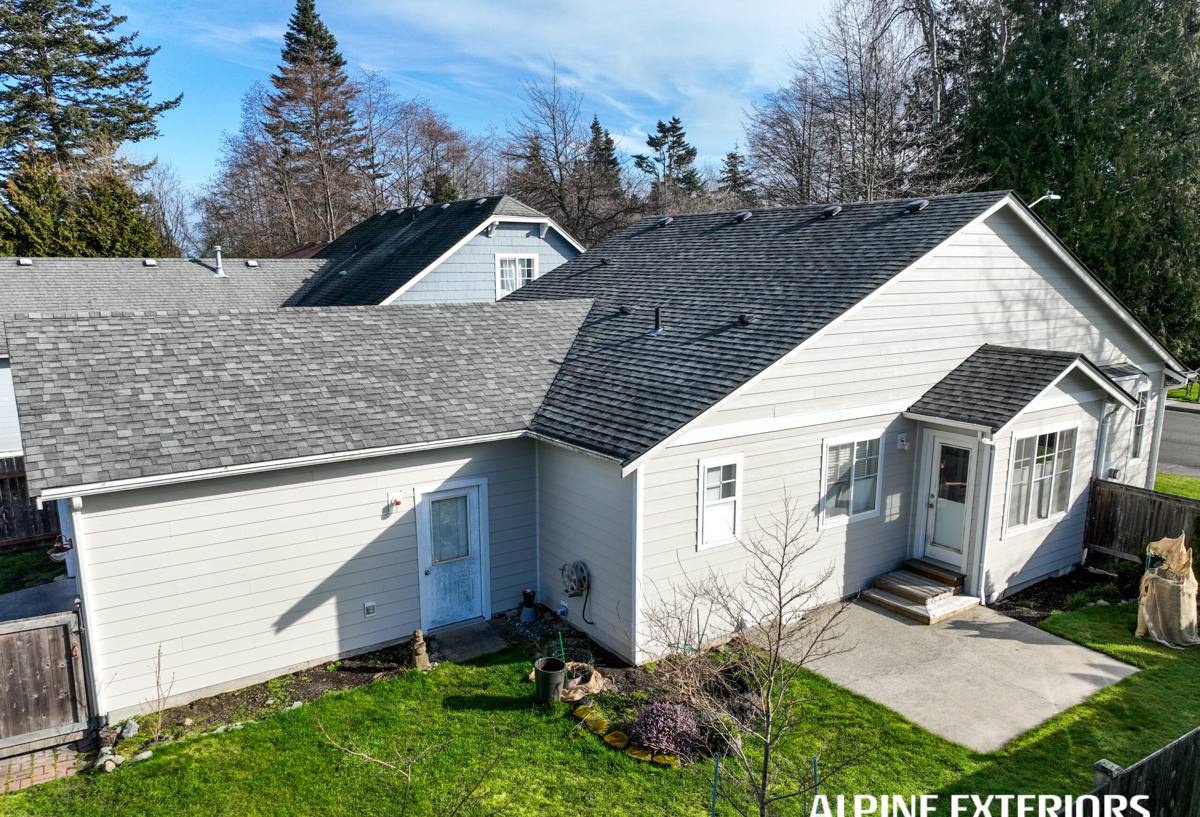
Homes in the California Creek area near Birch Bay sit close enough to the water that the roof over your head is doing more work than most people realize. It isn't just shedding rain — it's fighting salt air, holding up under winter windstorms off the Strait of Georgia, and staying clear of moss for most of the year. When a storm rolls through and knocks loose shingles, lifts flashing, or drives water under a seam, the damage often isn't obvious from the ground. We repair storm damage on California Creek roofs regularly, and we've learned that a repair done without accounting for this specific climate rarely holds up for long.
Why California Creek Roofs Take a Different Kind of Beating
This stretch of Whatcom County gets a combination of weather that's harder on roofing than most homeowners expect. It's not one big threat — it's several smaller ones stacking up year after year.
Salt air and corrosion
Proximity to Birch Bay and the Strait means airborne salt settles on roofing metal — flashing, fasteners, gutters, and vent caps — and accelerates corrosion. Galvanized fasteners that would last decades inland can start showing rust streaks in half that time here. Once a fastener corrodes, it loses grip, and that's often the first quiet failure point that lets a storm do real damage.
Driving rain
Storms here don't just drop rain straight down — wind off the water pushes it sideways, forcing water up under shingle edges, through nail holes, and into any gap in flashing that would stay dry in a calmer climate. A roof that's watertight in a light shower can still leak in a wind-driven storm if the underlayment and flashing details weren't built for that.
A long moss season
Mild, damp weather for much of the year means moss and algae get a long runway to establish themselves, especially on north-facing slopes and under tree cover. Moss holds moisture against the roofing material, lifts shingle edges as it grows, and gives wind something to grab onto during a storm. A roof with moss buildup is more vulnerable to storm damage than a clean one, not less.
What Storm Damage Actually Looks Like on the Ground
Not every storm-damaged roof shows an obvious hole. Most of what we find in California Creek falls into a handful of categories:
- Shingles cracked, torn, or blown off entirely, usually on the windward side of the roof
- Lifted or creased shingles that still look intact but no longer seal properly
- Flashing pulled loose or bent around chimneys, skylights, and roof-to-wall junctions
- Fasteners backed out or corroded to the point of losing grip
- Granule loss that leaves shingles exposed to UV and moisture
- Debris impact damage from branches, especially after wind events
- Water staining in the attic or on ceilings that shows up days after the storm, not during it
That last point matters. A lot of the storm damage we're called out for in this area doesn't announce itself right away. Water can travel along framing before it ever shows up as a stain, which is why a proper inspection after a storm covers more than just the spot where the leak appeared.
The Real Risk of Waiting
A small storm repair left alone doesn't stay small. Once a shingle is lifted or a flashing seam is open, every subsequent rain event — and given the driving rain common here, that's often — pushes more water underneath. In this climate, that moisture doesn't dry out quickly between storms. It sits, it feeds moss and algae growth, and it starts to compromise the decking underneath the roofing material. What starts as a straightforward shingle repair can turn into a decking replacement if it's ignored through even one wet season.
There's also an insurance angle worth knowing. Most homeowner's policies expect reasonably prompt action after storm damage, and documentation matters. Getting a repair assessed and addressed soon after a storm, with clear notes and photos of the damage, puts you in a much better position if you need to file a claim.
What a Correct Storm Repair Actually Involves
A storm repair is more than swapping out the shingles that are obviously missing. Done right, it includes:
A full damage assessment, not just the visible spot
Wind damage rarely limits itself to one area. We check the whole roof plane, not just where the homeowner saw a shingle come off, because wind uplift often loosens adjacent shingles that haven't failed yet but will in the next storm.
Underlayment and decking check
If water has been getting in for any length of time, the underlayment and the decking beneath it need to be checked before new shingles go down. Covering wet or compromised decking with new roofing just traps the problem.
Flashing done properly, not just caulked
A common shortcut in storm repairs is sealing a flashing gap with caulk instead of correcting the flashing itself. Caulk is a maintenance item, not a repair — it fails faster than proper metal work, especially under the salt exposure common near Birch Bay. We reset or replace flashing so the roof sheds water the way it's designed to, not the way a bead of sealant hopes it will.
Matching materials that hold up in this climate
Fasteners and flashing metal matter as much as the shingles themselves. In a salt-air environment, we favor corrosion-resistant fasteners and flashing over standard-grade materials, because the cost difference is small compared to redoing the work in a few years when standard hardware starts to fail.
Repair, Patch, or Replace — How We Decide
Not every storm-damaged roof needs the same level of work. The right call depends on the age of the roof, how widespread the damage is, and what condition the material was in before the storm hit.
| Situation | Typical approach | Why |
|---|---|---|
| Isolated wind damage on an otherwise sound, newer roof | Targeted repair — replace damaged shingles and flashing in that area | Surrounding material still has useful life; a full replacement isn't warranted |
| Storm damage on a roof already near the end of its service life | Repair now, plan for replacement | A patch buys time, but sinking major money into old material rarely pays off |
| Widespread granule loss or multiple damaged areas across the roof | Broader repair or partial re-roof | Scattered damage often signals the whole surface is compromised, not just the storm-hit spots |
| Decking found to be soft or water-damaged during inspection | Decking replacement plus roofing repair | New shingles over bad decking won't hold or perform correctly |
We'll walk you through which category your roof falls into and explain the reasoning — including when a repair is genuinely the right call and a full replacement isn't necessary.
Our Process, Start to Finish
- Inspection. We look at the whole roof, not just the damaged section, and check the attic where accessible for signs of water intrusion.
- Clear explanation. You get a plain description of what's damaged, what's causing it, and what it'll take to fix — including whether it's a repair or something bigger.
- Written estimate. No pressure, no surprise add-ons once work begins unless we find something new once material comes off, in which case we stop and talk to you first.
- Repair work. We match materials appropriately for the salt-air, high-moisture conditions here, and we don't leave a job half-sealed against the next storm.
- Cleanup and final check. Debris cleared, and a final look to confirm the repair is sound before we call it done.
Why Hiring a Crew That Already Works in California Creek Matters
Roofing crews that mostly work drier, inland areas sometimes underbuild for what this coastline throws at a house. Standard-grade fasteners, minimal flashing work, and caulk-over-flashing shortcuts might hold up fine somewhere with less wind-driven rain and no salt exposure — but they don't last here. A crew that regularly works Birch Bay and the surrounding Whatcom County coastline already knows to spec corrosion-resistant hardware, take flashing seriously, and account for moss and moisture retention when planning a repair. That local experience shows up in how long the repair actually lasts, not just how it looks the day it's finished.
After a Storm: A Quick Homeowner Checklist
- Look for missing, cracked, or curling shingles from the ground — binoculars work fine, no need to get on the roof
- Check gutters and the ground below the roofline for shingle granules or debris
- Look inside the attic (if accessible) for damp spots, staining, or daylight coming through the roof deck
- Note any ceiling stains inside the house, even faint ones — they can show up days after the storm
- Photograph any visible damage before it's covered by tarps or repairs, for your insurance file
- Avoid walking on a wet or damaged roof yourself — loose or weakened material isn't safe to inspect on foot
- Call for an inspection sooner rather than later — small storm damage gets worse with every rain that follows
Get an Estimate
If a recent storm has left shingles missing, flashing loose, or you've noticed a new stain on a ceiling, it's worth having someone look before the next system moves through. We offer free, no-pressure estimates for storm damage repair in the California Creek and Birch Bay area — use the form below to get a time on the schedule.