 Birch Bay
 Roofing on the Cherry Point Shoreline
Cherry Point sits along the Strait of Georgia just north of Birch Bay, and that location shapes everything about how a roof ages here. Homes are a mix of waterfront lots exposed to wind off the water and wooded, shaded parcels set back among fir and cedar. Both settings are hard on asphalt shingles, just in different ways. Waterfront roofs take the brunt of salt-laden air and driving rain off the Strait. Shaded, tree-covered roofs stay damp longer after every storm and grow moss faster than a roof out in the open. A shingle roofing job that holds up in Cherry Point has to account for whichever of these conditions — or combination of both — applies to your property.
We work throughout Whatcom County, and Cherry Point comes with its own checklist because of that. This page covers what a correctly built asphalt shingle roof needs out here, what tends to go wrong first, and how we approach the job so it's still doing its work in twenty-five years.
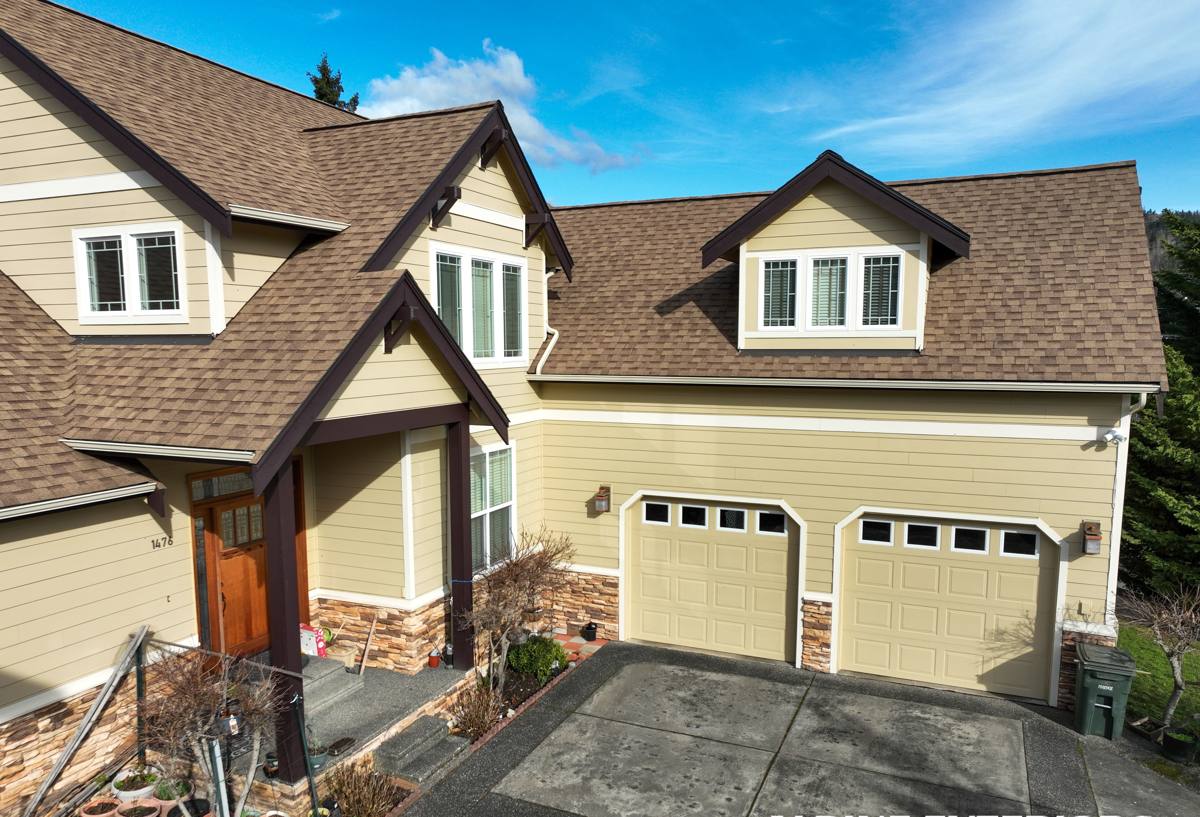
What Salt Air and Driving Rain Do to a Shingle Roof
Asphalt shingles are a solid, cost-effective roofing choice for this part of Washington, but only when they're installed with the local climate in mind. Three things drive most of the early failures we see on Cherry Point roofs:
Salt-Laden Marine Air
Homes close to the water deal with airborne salt that settles on roofing metal — flashing, vent caps, gutter fasteners — and speeds up corrosion. Cheap or mismatched metal components rust out well before the shingles themselves wear out, and once flashing fails, water gets underneath the shingle field no matter how good the shingles are.
Driving, Wind-Driven Rain
Storms coming off the Strait don't always fall straight down. Wind-driven rain gets pushed sideways and upward under shingle tabs, into ridge caps, and around any penetration that isn't sealed correctly. A roof built for calmer conditions inland can leak here even though the shingles themselves are rated fine — the failure point is almost always at a transition or fastening detail, not the shingle material.
Long Moss Season
Whatcom County's wet, mild winters and shaded lots give moss a long growing window. Moss holds moisture directly against the shingle surface, works its way under tabs as it grows, and lifts them just enough to let water in. On north-facing slopes and roofs under tree cover, moss is usually the single biggest driver of premature shingle failure we see in this area.
What a Correctly Built Roof Needs Out Here
None of this means asphalt shingles are the wrong choice for Cherry Point — they're not. It means the installation details matter more here than they would somewhere drier and more sheltered. A roof built to hold up needs:
- Corrosion-resistant flashing and fasteners at every valley, wall transition, and penetration — not just galvanized parts that will pit and rust in salt air over time
- A synthetic or self-adhering underlayment rated for high wind and driving rain, installed with enough lap to shed water pushed sideways, not just downward
- Balanced attic ventilation so moisture from inside the house doesn't condense against the roof deck and soften it from underneath
- Ice-and-water shield at eaves, valleys, and low-slope transitions where wind-driven rain and moss buildup are most likely to force water backward under shingles
- Shingles rated for the wind exposure of your specific lot — waterfront and open lots need a higher wind rating than a sheltered, tree-lined property
Skip any one of these and the shingles themselves become almost irrelevant — the roof will leak at the weak point regardless of shingle quality or price.
Signs a Cherry Point Roof Needs Attention
Because moss and salt exposure work slowly, a lot of roof damage out here builds up quietly before it shows up as an interior leak. Worth checking for, or having us check for, before it gets that far:
| What You See | What It Usually Means |
|---|---|
| Moss patches on north-facing or shaded slopes | Moisture is being held against the shingle surface; tabs may already be lifting underneath |
| Granules collecting in gutters | Shingle surface is wearing down faster than expected, often accelerated by trapped moisture |
| Rust streaks below flashing or vents | Metal components are corroding from salt exposure and need replacement before they fail |
| Curling or lifted shingle edges | Sun, wind, and moisture cycling have degraded the shingle's flexibility |
| Dark streaking across the roof field | Algae growth, common in persistently damp marine climates — a maintenance issue, not usually a structural one |
| Soft spots or sagging when walked | Deck moisture damage, usually from a long-term leak that's gone unaddressed |
Repair or Replace?
Not every one of these issues means a full tear-off. A roof with isolated flashing failure or a small area of storm damage can often be repaired cleanly if the rest of the shingle field and deck are sound. A roof with widespread granule loss, moss damage across multiple slopes, or a deck that's soft in more than one spot has usually passed the point where repair makes financial sense. We'll tell you honestly which category your roof falls into rather than defaulting to the more expensive answer.
Our Asphalt Shingle Roofing Process
Whether it's a full replacement or a targeted repair, the process on a Cherry Point job looks like this:
1. Roof and Attic Assessment
We look at the shingles, flashing, and ventilation, but we also check the attic side — moisture staining, insulation condition, and airflow tell us as much about a roof's real condition as the surface does.
2. Tear-Off and Deck Inspection
On a full replacement, we remove the existing roofing down to the deck and inspect the sheathing for soft or delaminated spots, replacing only what's actually damaged.
3. Underlayment and Flashing First
This is where most of the long-term performance in a marine climate comes from. We install wind-and-rain-rated underlayment and corrosion-resistant flashing before a single shingle goes down, because these are the layers that actually stop water — the shingles are the visible finish on top of them.
4. Shingle Installation to the Wind Exposure
Shingle selection and fastening pattern are matched to your lot's exposure — waterfront and open sites get a higher wind-rated product and tighter nailing pattern than a sheltered lot.
5. Ventilation Check
We confirm intake and exhaust venting are balanced so the new roof isn't fighting trapped attic moisture from day one.
6. Final Walkthrough
We walk the finished roof and go over what was done, what to expect over the first few seasons, and what routine maintenance — mainly moss control — will look like going forward.
Shingle Options and What They Cost to Own
Price is only part of the picture in a climate like this. What matters more is how a shingle class holds up to moss, wind, and salt exposure over its life, since that drives your real maintenance cost.
| Shingle Class | Typical Lifespan Here | Moss/Algae Resistance | Best Fit |
|---|---|---|---|
| 3-tab (economy) | Shorter end of range, especially on shaded slopes | Standard — no built-in resistance | Budget-driven projects on well-drained, sun-exposed roofs |
| Architectural / dimensional | Longer, more consistent performance | Often available with algae-resistant granules | Most Cherry Point homes, especially mixed sun/shade lots |
| Premium/high-wind rated architectural | Longest of the asphalt options | Algae-resistant granules standard on most product lines | Waterfront and high-exposure lots |
We'll walk you through actual product lines and current pricing during your estimate — this table is about the trade-offs, not exact numbers, since shingle pricing shifts with the market.
Living With Moss: What Actually Helps
You can't eliminate moss risk on a shaded Cherry Point lot, but you can manage it so it doesn't shorten your roof's life:
- Keep overhanging branches trimmed back so shingles get more sun and dry out faster after rain
- Clear needles and leaf debris from valleys and gutters regularly — trapped organic matter feeds moss growth
- Have moss physically removed rather than power-washed, which can strip granules and shorten shingle life
- Consider zinc or copper strips at the ridge on moss-prone roofs, which release trace metals that help slow regrowth over time
- Schedule a roof check after the wet season rather than waiting for a visible leak
Why Local Experience in Cherry Point Matters
A shingle roof installed with inland assumptions — standard flashing hardware, minimal underlayment, no thought given to wind exposure or moss — can look fine on install day and still fail early once it meets a few winters of Strait weather. Crews who work this stretch of Whatcom County regularly know which details actually matter here versus which are boilerplate, and they've seen firsthand how quickly a shortcut at the flashing or underlayment stage turns into an interior leak two or three years down the road. That's the difference between a roof that needs attention again in eight years and one that goes the full distance.
What to Expect When You Work With Us
- An honest assessment of whether your roof needs repair, partial replacement, or a full tear-off — no upselling to the bigger job when it isn't needed
- A written estimate that spells out shingle class, underlayment, flashing, and ventilation work, not just a single lump-sum number
- Materials matched to your specific lot's wind and moisture exposure, not a one-size-fits-all package
- Cleanup and a final walkthrough so you know exactly what was done and what to watch for
- Straight answers about maintenance, including realistic moss control expectations for a shaded or waterfront property
If your Cherry Point roof is showing moss, granule loss, or you just want an honest read on where it stands, we're glad to take a look. Use the form below to request a free, no-pressure estimate — we'll tell you what we actually find, not just what sells the biggest job.