 Birch Bay
 Cherry Point's Waterfront Climate Asks More of a Deck
Cherry Point sits right up against the Salish Sea, and that location shapes everything about how an outdoor deck ages here. Homes on this stretch of Whatcom County shoreline take on salt-laden air off the water, long stretches of driving rain in the fall and winter, and a shoulder season where moisture just sits under tree cover and along shaded fence lines. None of that is a dealbreaker for a deck project — but it does mean the build has to account for conditions that a deck going up in a drier inland neighborhood simply doesn't face.
Salt Air and Hardware Corrosion
Airborne salt doesn't just affect boats and railings — it accelerates corrosion on any exposed metal fastener, bracket, or ledger connection. On a lot of waterfront and near-waterfront decks we've seen, the boards themselves are still in decent shape while the fasteners underneath are rusting, staining the deck surface, and slowly losing their grip. Once a fastener starts to fail, the deck board around it moves more than it should, which speeds up wear on everything nearby.
Driving Rain and Moisture Intrusion
Storms coming off the water in this part of Whatcom County tend to arrive sideways, not straight down. That means rain gets driven into board seams, ledger connections, and any gap where a deck meets the house — areas a lot of installers treat as an afterthought. Where the deck attaches to the house is the single most common spot we find water damage on decks we're asked to repair or replace.
Moss Season and Shaded Surfaces
Cherry Point's tree cover and marine humidity add up to a long moss season — often stretching from fall through spring on any deck surface that doesn't get much direct sun. Moss holds moisture against the board surface, and on the wrong material that moisture doesn't just sit on top, it gets pulled into the board itself.
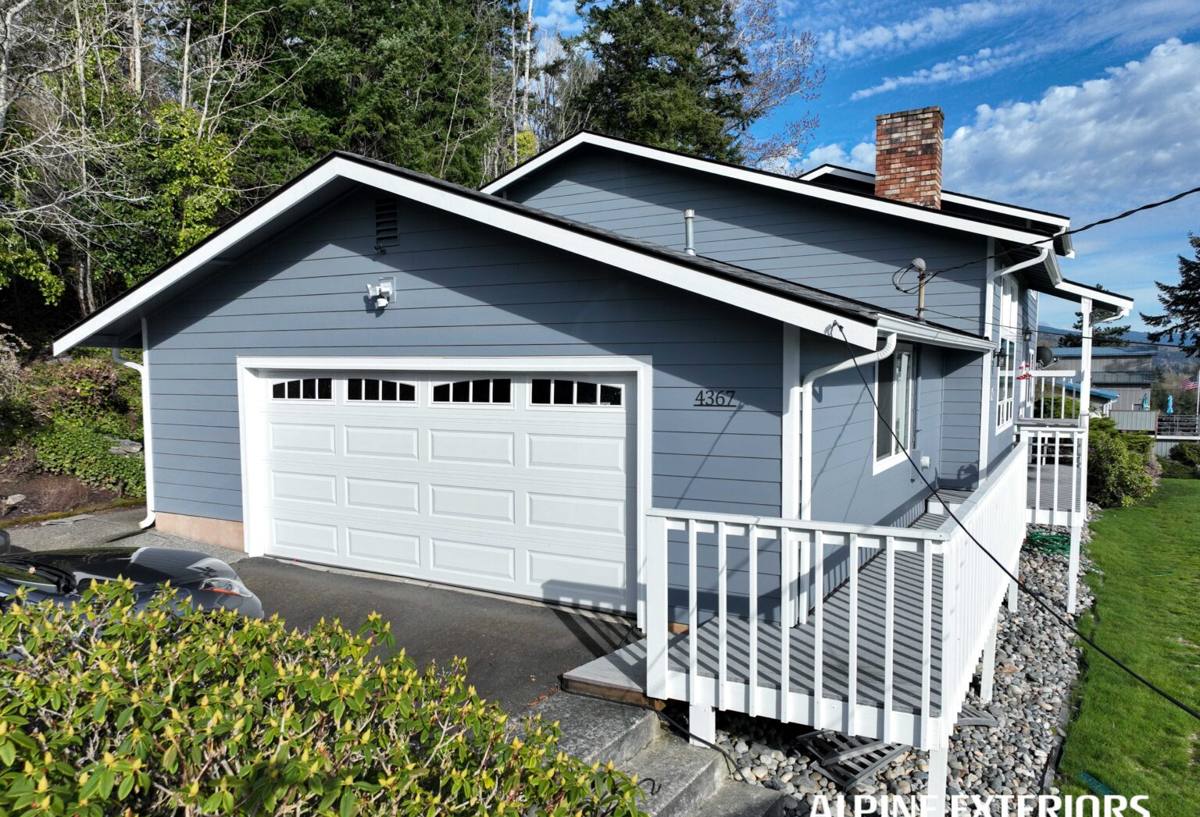
Why Composite Decking Fits This Environment
Composite decking is a manufactured board, typically a blend of wood fiber and plastic, built specifically to resist the kind of moisture cycling that wears out solid wood. For a Cherry Point property, that resistance matters more than it would somewhere drier, because the board is dealing with salt spray, driving rain, and moss-holding shade for a much larger share of the year.
How It Behaves Differently Than Wood
Solid wood decking swells when it's wet and shrinks when it dries, and that cycle is what eventually opens up cracking, splintering, and fastener movement. A quality capped composite board doesn't take on water the same way, so it doesn't go through that swell-and-shrink cycle nearly as hard. That's the real advantage in this climate — not that composite is indestructible, but that it handles repeated wet-dry cycles with a lot less structural stress.
Where Composite Still Needs Respect
Composite isn't maintenance-free, and we won't tell a homeowner it is. It can still develop surface grime, and lower-grade or uncapped composite boards can absorb some moisture at cut ends if they aren't sealed properly during installation. The performance difference between a well-installed composite deck and a poorly installed one is significant, which is really the point of this whole page.
What a Correct Composite Deck Build Looks Like Here
The board is only part of the system. A deck that's going to hold up on a Cherry Point property needs a substructure and installation approach that matches the climate, not just a name-brand board laid down over standard framing.
Substructure and Fasteners
We use corrosion-resistant fasteners and hardware rated for coastal exposure, not standard interior-grade hardware that will start rusting within a season or two of salt air exposure. Joist tape over the framing keeps water from sitting directly on the wood substructure, which is one of the cheapest, most overlooked upgrades on a coastal deck build.
Drainage and Slope
A deck surface needs a slight, consistent slope away from the house so water sheds instead of pooling. On composite decks especially, standing water in low spots is what feeds moss growth and stains the board surface over time. Getting this right is a framing-stage decision — it can't be fixed after the boards are down.
Board Spacing and Airflow
Proper gapping between boards, and airflow underneath the deck, matters more in a moss-prone environment than people expect. Tight-fitting boards with no airflow trap moisture right where moss wants to grow. We space and vent the structure so the deck can actually dry out between the region's rain events instead of staying damp for days.
Ledger and House Connection
Since the ledger-to-house connection is where we most often see water damage on older decks, we flash and seal that joint carefully, with attention to how driving rain off the water will hit that specific wall.
Comparing Decking Options for a Cherry Point Property
Every material has trade-offs. Here's an honest comparison of how the common options actually perform in this specific climate, not in a showroom.
| Material | Salt Air Resistance | Moss/Moisture Behavior | Upkeep |
|---|---|---|---|
| Capped composite | Strong — cap layer resists absorption and staining | Sheds moisture well; still needs periodic cleaning in shaded spots | Occasional wash; no sealing or staining |
| Uncapped composite | Moderate — more prone to surface fading and staining | Can hold moisture at cut ends and surface pores | More frequent cleaning; watch for staining |
| Pressure-treated wood | Weak — fasteners and wood both corrode/degrade faster near salt air | Absorbs water readily; feeds moss and rot in shaded areas | Regular sealing/staining, ongoing repairs |
| Cedar | Moderate natural rot resistance, but still affected by salt exposure | Better than treated pine, still needs finish maintenance | Periodic oiling/sealing, higher long-term cost |
This is why we steer most Cherry Point homeowners toward capped composite for anything exposed to open water views or full weather. It's not that other materials "fail" — it's that they demand more upkeep in exactly the conditions this property line already has plenty of.
Our Process for a Cherry Point Deck Project
Site Visit and Assessment
We start on-site, looking at sun exposure, wind direction off the water, existing drainage patterns, and how the deck will tie into the house. A deck on an open, wind-exposed side of a Cherry Point lot gets treated differently than one tucked under tree cover on the same property.
Design and Material Selection
We walk through board options, color, and hardware with the homeowner, being straightforward about cost versus long-term upkeep for each choice — no upselling to the most expensive option if it's not the right fit for how the deck will be used.
Build and Inspection
Framing, flashing, and fastener installation are all done to the standard described above, with inspection points before the boards go down — because once decking is installed, framing and flashing problems are hidden and expensive to fix.
Walkthrough and Care Guidance
Before we leave the job, we walk the finished deck with the homeowner and go over basic seasonal care specific to this location, not a generic care sheet.
Keeping a Composite Deck Looking Good Through Whatcom County Winters
A little routine care goes a long way toward getting the full lifespan out of a composite deck here. This is what we recommend to Cherry Point homeowners:
- Sweep debris and standing leaves off the deck regularly in fall — trapped organic matter is what feeds moss and staining
- Rinse salt residue off the surface periodically, especially after storms with onshore wind
- Use a soft-bristle brush and a composite-safe cleaner on shaded, moss-prone areas rather than a pressure washer on high setting, which can damage the board's cap layer
- Check railing posts and stair connections once a year for any sign of fastener corrosion or movement
- Keep gutters and downspouts near the deck clear so roof runoff isn't adding extra water onto the deck surface
- Trim back overhanging branches where practical to cut down on shade and debris that prolong moss season
Why It Matters to Hire a Crew That Already Works Cherry Point
A lot of decking problems we're called to fix weren't caused by bad materials — they were caused by a build that didn't account for where the house actually sits. A crew that hasn't worked this coastline before might use standard interior fasteners, skip joist tape because it's "not usually necessary," or miss how hard driving rain hits a particular wall orientation near the water. Those aren't dramatic mistakes on day one — they show up two or three years later as rust stains, soft spots, and boards that never quite dry out.
Working Whatcom County's coastal properties regularly means we've already seen how salt air, rain direction, and shade patterns play out on decks in this specific area, and we build accordingly from the start rather than learning it on your project.
Get an Honest Look at Your Deck Project
If you're planning a new composite deck or replacing an aging one on your Cherry Point property, we're happy to take a look, walk the site with you, and lay out honest options for your specific spot on the water. There's no pressure and no obligation — just a straight assessment and a free estimate using the form below.