 Birch Bay
 Decking Built for Ferndale's Weather, Not Just Ferndale's Style
Ferndale sits close enough to Birch Bay and the Strait of Georgia that homes here deal with a mix most decking never sees in a showroom: salt-laden air drifting off the water, driving rain that comes in sideways more often than straight down, and a moss and algae season that can stretch from October well into May. A deck that looks great in a catalog photo can still fail here if it wasn't chosen and installed with that combination in mind. We're a Birch Bay-based crew that works this stretch of Whatcom County regularly, and composite decking is one of the projects we get called back to fix — usually because the first installer didn't account for how this climate actually behaves.
This page is about one job: composite deck installation for homes in and around Ferndale. Not a general decking overview — the specific decisions that matter when your deck has to survive a Pacific Northwest coastal winter every single year.
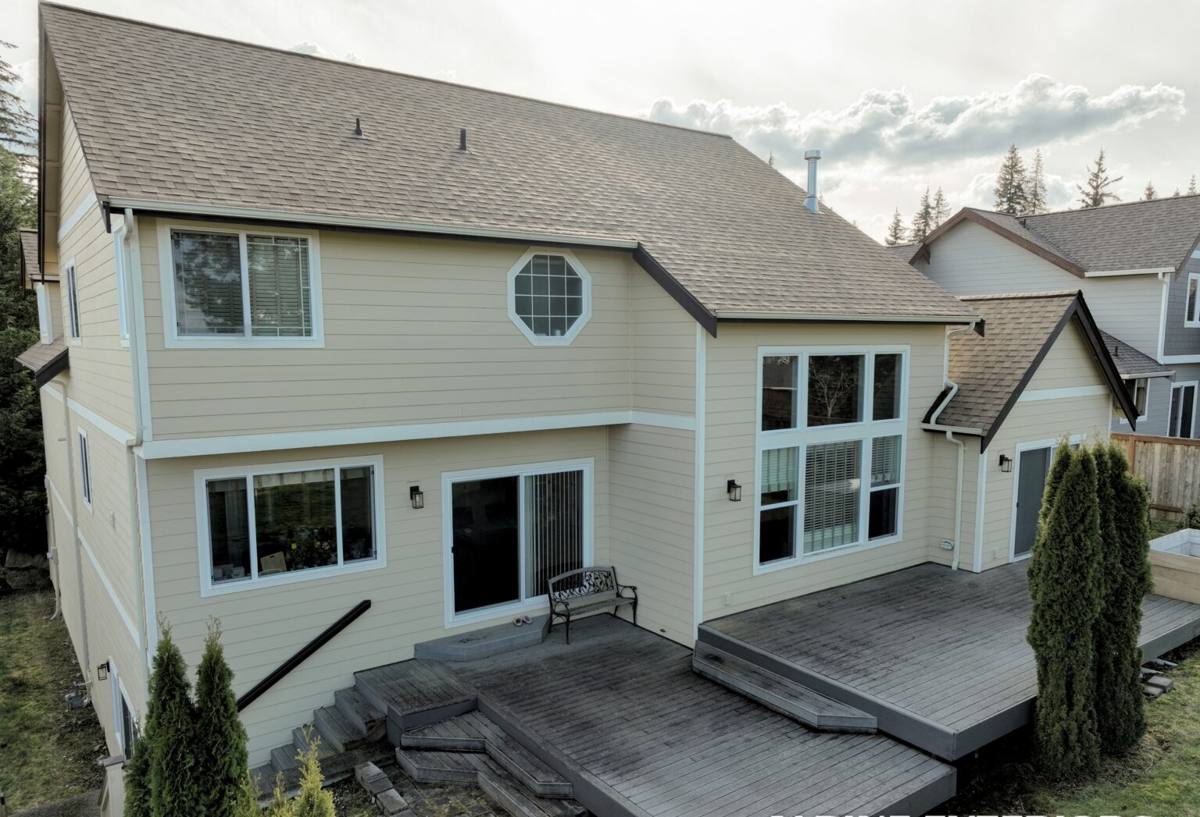
What This Climate Actually Does to a Deck
Three things drive almost every decking problem we see in this area:
Salt Air
Proximity to Birch Bay and the Strait means airborne salt settles on exposed surfaces, including fasteners, flashing, and any exposed metal hardware. Over time, standard-grade hardware can corrode faster here than it would twenty or thirty miles inland. It doesn't ruin composite boards themselves, but it will eat cheap screws, brackets, and ledger connections if the wrong materials were used.
Driving Rain
Wind off the water pushes rain at an angle, which means it gets up under railings, into board gaps, and against the house where the deck ledger attaches. Flashing and drainage details that would be fine in a drier climate aren't enough here. Water finds the path of least resistance, and if that path is your ledger board or your joists, you've got a rot problem waiting to happen — even with composite decking on top.
Long Moss Season
Whatcom County's wet stretch runs long. Shaded decks, north-facing decks, and decks under trees stay damp for months at a time, which is exactly what moss and algae need to take hold. Composite decking resists rot, but it doesn't resist surface growth on its own — the board's texture, the airflow underneath it, and the maintenance routine all matter just as much as the material.
Composite Decking, Explained Honestly
"Composite decking" covers a range of products, and they are not all built the same:
- Capped composite — a wood-plastic core wrapped in a protective polymer shell. This is what we recommend for this area almost every time. The cap resists moisture absorption, staining, and surface mold far better than uncapped material.
- Uncapped composite — older-style composite without the protective shell. It can still absorb some moisture and is more prone to surface staining and mildew over time, which is a real drawback in a climate this wet.
- PVC decking — fully synthetic, no wood content, excellent moisture resistance, but it handles and installs differently than composite and carries its own cost and expansion considerations.
Brands like Trex, TimberTech, and Fiberon all make capped composite lines, and the differences between them usually come down to board profile, color retention, and warranty structure rather than one being categorically "better." What matters more than the brand name is whether the product is capped, how it's ventilated underneath, and whether the installation respects the manufacturer's spacing and fastening requirements — those details affect how well it holds up to this specific climate.
What a Correct Installation Actually Involves
A composite deck is only as good as what's underneath it. Most of the failures we get called to inspect trace back to shortcuts in the structure, not the decking material itself.
Framing and Joists
Pressure-treated joists, correctly spaced for the specific composite product being used — composite typically needs tighter joist spacing than wood decking, and that spec varies by manufacturer and board profile. Using wood-decking spacing under composite boards is a common shortcut that leads to bounce and premature sagging.
Ledger Attachment and Flashing
This is the single most important structural detail on a deck attached to the house, and it's the one most likely to get rushed. Proper flashing keeps driving rain from working its way behind the ledger board and into your home's wall assembly. Given how much sideways rain this area gets, we treat ledger flashing as non-negotiable, not optional.
Ventilation Underneath
Composite decking needs airflow beneath it to shed the moisture that inevitably gets between and under the boards. Decks built low to the ground or without adequate underside clearance stay damp longer, which speeds up moss and algae growth on the surface even though the boards themselves aren't rotting.
Fasteners and Hardware
Stainless steel or coated fasteners rated for coastal/marine exposure, not standard hardware. Given the salt air off Birch Bay, this is one area where cutting corners shows up within a few years, not decades.
Board Spacing and Drainage
Correct gapping between boards lets water drain through instead of pooling on the surface, and it accounts for the slight expansion and contraction composite goes through with temperature swings.
Composite vs. the Alternatives
| Material | How It Handles This Climate | Maintenance | Typical Lifespan |
|---|---|---|---|
| Capped Composite | Strong resistance to moisture absorption, staining, and rot | Periodic cleaning to keep moss/algae from taking hold | Often 25+ years with proper install |
| Uncapped Composite | Better than wood, but more prone to surface staining and mildew | More frequent cleaning than capped | Shorter than capped composite |
| Pressure-Treated Wood | Absorbs moisture readily; needs consistent upkeep to resist rot | Regular sealing/staining, especially in a wet climate | Often 10–15 years before major repair or replacement |
| PVC | Excellent moisture resistance, fully synthetic | Low, but installation is less forgiving of temperature swings | Comparable to or longer than composite |
What Drives Cost on a Ferndale Composite Deck
We're not going to throw out a per-square-foot number that doesn't mean anything without seeing your project — but here's what actually moves the price:
| Factor | Why It Matters Here | Cost Impact |
|---|---|---|
| Deck size and shape | More linear footage of framing, fascia, and railing | High |
| Height off grade | Taller decks need more substructure and code-compliant railings/stairs | Medium-High |
| Ledger and flashing complexity | Proper flashing against driving rain takes more time to do right | Medium |
| Board tier (capped vs. premium capped) | Higher-end capped lines cost more but resist this climate longer | Medium |
| Removal of an existing deck | Tear-off and disposal of old wood decking | Medium |
| Railing and fastener spec | Marine-grade hardware and railing systems cost more than standard | Low-Medium |
Our Process
- On-site walk-through — we look at sun/shade exposure, existing structure if there is one, drainage, and how exposed the site is to wind and rain off the water.
- Honest product recommendation — we'll tell you which composite tier makes sense for your budget and your specific exposure, not just the highest-margin option.
- Written scope and estimate — framing, fasteners, flashing details, and board selection spelled out before any work starts.
- Permitting — Whatcom County and local jurisdictions require permits for most deck construction; we handle that step rather than leaving it on you.
- Build, with structure first — framing, ledger flashing, and ventilation get done right before a single composite board goes down.
- Final walkthrough — we go over the finished deck and basic care with you before we consider the job done.
Living With a Composite Deck Here: A Maintenance Checklist
Composite decking is low-maintenance, not no-maintenance — especially with a moss season this long. A few habits go a long way:
- Sweep debris (leaves, needles, seed pods) off the surface regularly, especially in fall — trapped organic matter holds moisture and feeds moss/algae growth.
- Rinse and lightly scrub with a soft brush and mild soap a couple of times a year, more often on shaded or north-facing decks.
- Avoid pressure-washing at close range or high PSI directly into board grooves — it can force water where it shouldn't go and damage the cap layer.
- Check railing hardware and fasteners periodically for corrosion, given the salt air off Birch Bay.
- Keep gutters and downspouts near the deck clear so runoff isn't dumping extra water onto or under the deck surface.
- Trim back vegetation that's shading the deck if moss keeps returning in the same spots.
Why Hiring a Crew That Already Works Ferndale Matters
Anyone can install composite decking on a dry, calm day. The difference shows up in how the deck performs three winters later. A crew that works Birch Bay, Ferndale, and the rest of Whatcom County regularly already knows how this specific coastline behaves — where driving rain tends to hit hardest, how much airflow a deck actually needs to fight moss in a shaded yard, and which hardware holds up against salt air instead of quietly corroding under the railing. That's not something you get from a general contractor passing through the area once. It's the difference between a deck that needs attention every year and one that just holds up.
If you're weighing a new composite deck, a replacement for an aging wood deck, or just want a straight answer on whether your current deck's structure is sound underneath, we're happy to walk the site with you. Reach out for a free, no-pressure estimate — use the form below to get started.