 Birch Bay
 Roof Repair in Cottonwood Beach: A Job the Coast Doesn't Let You Skip
Cottonwood Beach sits close enough to the water that its roofs live a different life than roofs ten miles inland. Salt-laden air, wind-driven rain off the Strait, and a moss season that can run eight or nine months out of the year all put steady pressure on shingles, flashing, and the wood underneath them. A roof that would go twenty-five years without a second thought in a dry inland climate can start showing real trouble in half that time here if it isn't maintained and repaired correctly along the way.
Roof repair isn't glamorous work, but it's the difference between a roof that reaches its full service life and one that fails early and takes decking, insulation, or interior finishes with it. This page covers what Cottonwood Beach homes actually need from a roof repair, what a correct repair looks like, and how we approach the work.
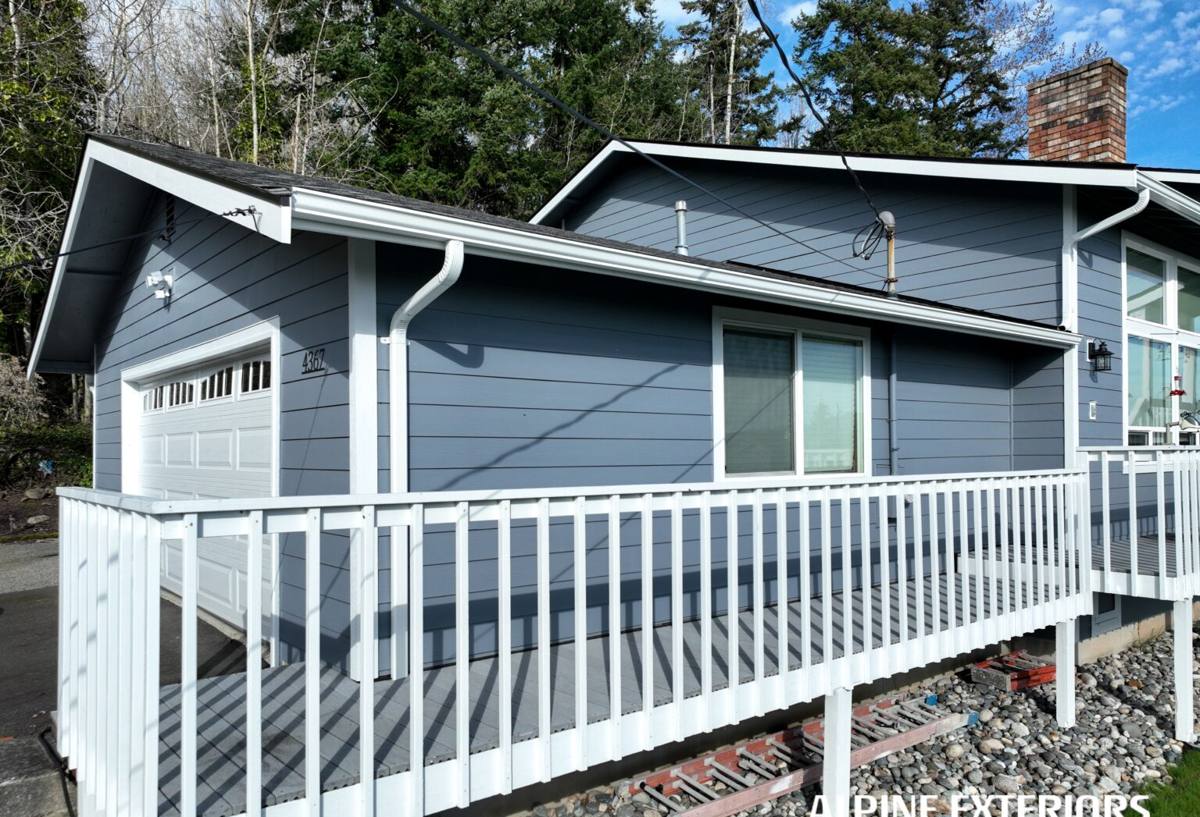
What Whatcom County's Coastal Climate Does to a Roof
Three conditions do most of the damage on roofs in and around Birch Bay, and Cottonwood Beach gets a concentrated dose of all three:
Salt Air
Airborne salt from the Strait of Georgia accelerates corrosion on any exposed metal — nails, flashing, vent caps, drip edge. Fasteners that would last decades elsewhere can start rusting and losing their grip years sooner near the water. Once a fastener corrodes and backs out, the shingle or flashing piece it was holding is no longer sealed, and that's how water finds a way in.
Driving Rain
Wind off the water doesn't just drop rain straight down — it pushes it sideways and up under laps, edges, and flashing that were only ever designed to shed water moving downhill. Roof details that would be fine in a calm rain (a slightly short flashing lap, a marginal seal around a pipe boot) get tested hard in a wind-driven storm, and that's usually when a small weakness turns into an active leak.
A Long Moss Season
Cool, damp, shaded conditions for most of the year make this a strong moss climate. Moss holds moisture against the roof surface far longer than the shingle would otherwise stay wet, and its root structure works into shingle mat and granules over time. Left unchecked, moss doesn't just look bad — it shortens the roof's life and can lift shingle edges enough to let wind-driven rain underneath.
Signs a Cottonwood Beach Roof Needs Repair
Most roof failures don't start as a hole — they start small and get worse over one or two wet seasons. Worth checking for, or having checked, on a regular basis:
- Granules collecting in gutters or at downspout outlets — a sign shingles are wearing thin
- Moss or dark streaking concentrated on north-facing or shaded slopes
- Curling, cracked, or missing shingles, especially after a windy winter storm
- Rust staining or visible corrosion around flashing, vent pipes, or nail heads
- Soft spots, sagging, or a spongy feel when walking a low-slope section
- Water stains on ceilings or in the attic, particularly near chimneys, skylights, or valleys
- Daylight visible through the roof deck from inside the attic
Any one of these on its own might be minor. Several together, or anything involving active water intrusion, means it's time for a proper inspection rather than a wait-and-see approach.
What a Correct Roof Repair Actually Involves
A quality repair starts with finding the real source of the problem, not just patching where the water showed up. Water travels — a stain on a bedroom ceiling can trace back to a flashing failure several feet away at a valley or chimney. Rushing straight to a patch without tracing the path means the same leak often comes back within a season or two.
Diagnosis First
A correct repair begins with getting on the roof (or in the attic, or both) to trace water back to its actual entry point — checking flashing laps, valleys, penetrations, and the general condition of the surrounding shingles before deciding what needs to be done.
Flashing and Penetrations
Given how much of the water damage in this climate traces back to flashing and penetrations rather than the field of the roof itself, this is where repair quality matters most. Step flashing at walls, counter-flashing at chimneys, and boots around vent pipes all need to be properly lapped, fastened, and sealed — not just caulked over. A tube of sealant slapped over a bad flashing detail is a stall, not a repair.
Matching Materials
Repairs should use shingles and flashing that match the existing roof as closely as possible in type, weight, and color, so the patched area sheds water the same way the rest of the roof does and doesn't stand out as an obvious repair.
Moss and Debris Treatment
Where moss has taken hold, a proper repair includes safe removal and treatment, not just a quick sweep. Moss should be worked off in a way that doesn't tear up the shingle mat underneath, followed by treatment to slow regrowth. Zinc or copper strips near the ridge can help suppress future moss growth by releasing metal ions that wash down the roof slope with every rain.
Ventilation Check
Poor attic ventilation traps moisture underneath the roof deck, which speeds up rot and can encourage moss and algae growth from beneath. Any real repair should include a look at whether intake and exhaust venting are doing their job, since fixing the surface without fixing the ventilation underneath is a half-measure.
Repair vs. Replacement: What Actually Drives the Decision
Not every problem roof needs a full tear-off, but not every problem roof should be patched indefinitely either. The honest answer depends on a handful of factors:
| Factor | Leans Toward Repair | Leans Toward Replacement |
|---|---|---|
| Age of roof | Under roughly 15 years, good condition otherwise | Near or past its expected service life |
| Extent of damage | Localized — one valley, one penetration, storm damage in one section | Widespread wear, multiple failure points across several slopes |
| Decking condition | Deck is sound and dry | Deck is soft, rotted, or repeatedly getting wet |
| Moss/algae history | First real occurrence, caught early | Chronic, recurring despite past treatment |
| Underlying cause | Isolated flashing or fastener failure | Systemic ventilation or material failure |
A straight answer on which side of that line a roof falls on is worth more than an upsell. If a repair will genuinely hold, that's what we recommend.
Our Process for Cottonwood Beach Roof Repairs
- Inspection. We get on the roof and, where relevant, into the attic to trace the actual source of any leak or wear, not just the symptom.
- Straight assessment. We explain what we found, whether it's a repair or something bigger, and why — in plain terms, before any work starts.
- Written scope. A clear description of what will be repaired, with what materials, before we schedule the work.
- The repair itself. Proper tear-out of the damaged area, correct flashing and shingle installation, and moss/debris treatment where needed.
- Final check. We walk the repair and the surrounding roof area to confirm the fix is solid and nothing nearby was missed.
Materials We Use — and Why
For repair work in a salt-air, high-moisture climate like this, we favor corrosion-resistant fasteners and flashing metals over standard-grade materials, since the cost difference is small compared to what it costs to redo a repair that failed early from corrosion. We also lean toward algae-resistant shingle products for any full-section replacement within a repair, since they hold up better against the moss and algae pressure this area sees compared to standard shingles — that's a maintenance and longevity call, not a knock on standard shingles used in drier climates where they perform fine.
We stay away from repair shortcuts — surface-only caulking over failed flashing, mismatched shingle patches, or skipping the underlying cause — because in this climate those shortcuts tend to fail within a wet season or two, and the homeowner ends up paying for the same repair twice.
Why Local Experience in Cottonwood Beach Matters
A roofer who works this stretch of Whatcom County regularly knows which slopes on a Cottonwood Beach home tend to hold moss longest, how much wind exposure a given lot has off the water, and what flashing details tend to fail first in this specific climate versus a drier part of the state. That's not something you get from a general roofing background alone — it comes from repeated seasons of repair calls in this exact area. It also means a faster, more accurate read on what's actually wrong the first time we're on the roof, rather than a lot of guessing.
Keeping a Cottonwood Beach Roof Healthy Between Repairs
A few habits go a long way toward stretching the life of a roof in this climate and catching small issues before they become repair calls:
- Have gutters cleared at least twice a year so water isn't backing up under the roof edge
- Have moss growth checked and treated before it spreads across a full slope
- Trim back overhanging branches that keep shaded roof sections damp longer
- Walk the attic after major windstorms to check for new light leaks or staining
- Get a professional look at flashing and penetrations every few years, even with no visible leak
- Address small repairs promptly — a $200 flashing fix now beats a $2,000 deck repair later
If you're seeing moss buildup, missing shingles, or a stain that's showing up after every storm, we're happy to take a look and give you a straight read on what it needs — no pressure, no upsell. Reach out for a free estimate using the form below.