 Birch Bay
 Siding Installation for Cottonwood Beach Homes
Cottonwood Beach is one of the shoreline residential pockets that make up the Birch Bay area, and homes here deal with the same demanding mix of conditions as the rest of this stretch of Whatcom County coastline — salt-laden marine air, rain that gets driven sideways by wind off the water, and a moss season that runs long into the year on shaded walls. Like much of the Birch Bay shoreline, Cottonwood Beach includes a mix of older cottage-style homes and newer construction, and many sit close enough to the water that they take a more direct hit from that exposure than a home set back further inland would.
Siding installation in a setting like this isn't a one-size-fits-all job. The material has to be chosen for what this specific exposure does to a wall over decades, and the installation has to account for wind, moisture, and drainage details that a calmer, drier location simply doesn't require. This page covers what siding installation actually involves for a Cottonwood Beach home, why we've standardized on one product for this kind of climate, and how our process works from first visit to finished wall.
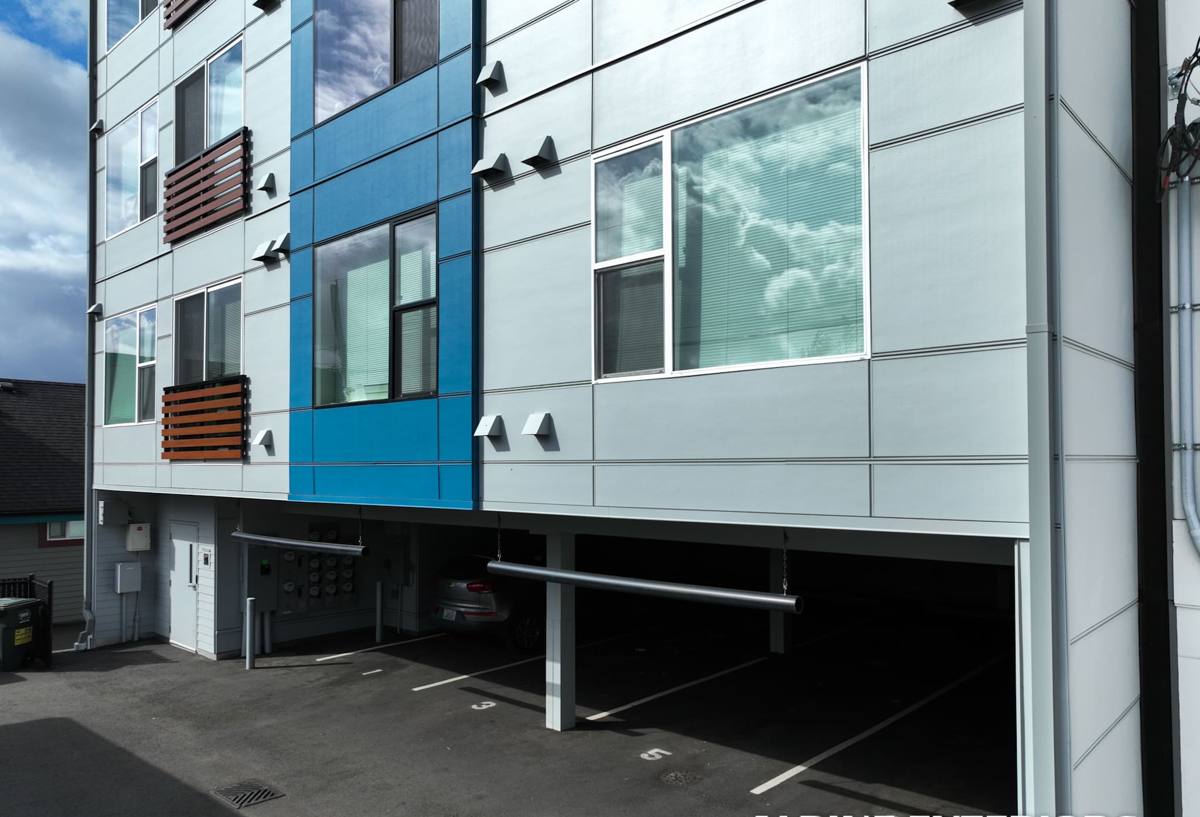
What Cottonwood Beach's Climate Asks of a Siding System
Salt Air and Direct Water Exposure
Proximity to the water means a steadier dose of salt-laden air than homes further inland in Whatcom County see, and that salt exposure accelerates corrosion in fasteners, flashing, and any lower-grade metal trim on the wall. It also breaks down weaker paint and coating systems faster than a drier climate would. Every material and piece of hardware that goes into a Cottonwood Beach siding job needs to be chosen with that corrosion risk in mind from the start, not selected for looks alone and hoped to hold up.
Driving, Wind-Pushed Rain
Waterfront exposure also means more wind, and wind-driven rain behaves differently than a straight-down downpour. It gets pushed sideways into lap joints, corner trim, and window and door flashing — the exact places a siding system is supposed to shed water, not absorb it. A siding product and installation detail that performs fine in a sheltered, calm setting can still fail here specifically because water is arriving from the side, not from above, and finding its way in through gaps that a straight-rain climate would never expose.
A Long Moss and Mildew Season
Mild temperatures combined with near-constant moisture give moss and mildew a long growing season on this part of the coast. Shaded walls and anything facing north or blocked by trees or a neighboring structure are usually the first places it shows up, and it's more than a cosmetic issue — sustained organic growth holds moisture directly against the wall assembly behind it. Any siding material with even a little surface porosity gives that growth something to hold onto, and a wall that stays damp longer than it should is a wall that ages faster.
Why We Install Only James Hardie Fiber Cement Siding
We used to install a wider range of siding products before narrowing to one system, and that decision came out of years of service calls, tear-offs, and inspections on homes dealing with exactly this kind of salt air, sustained moisture, and moss exposure — not from a supplier relationship or a sales pitch. For a shoreline property in Cottonwood Beach, the case for fiber cement is a practical one, not a brand preference.
- Non-combustible core: Fiber cement doesn't feed a fire the way wood-based siding can, which matters for household safety and can matter for insurance underwriting as well.
- Factory-applied ColorPlus finish: Color is baked on under controlled factory conditions instead of brushed on in the field, which resists fading, chalking, and moisture intrusion far longer than site-applied paint.
- Climate-engineered HZ product lines: Hardie builds different formulations for different climate zones, and its HZ5 line is engineered for regions with heavy moisture exposure and freeze-thaw cycling — a real match for waterfront Whatcom County.
- Dimensional stability: Fiber cement doesn't swell, cup, or warp the way engineered wood products can after repeated wet-season moisture cycles.
- Strong transferable warranty: Hardie backs its products with a solid warranty structure, provided the installation follows spec, which gives homeowners real recourse rather than a marketing claim.
We don't install LP SmartSide, vinyl siding, Cemplank, Allura, primed spruce, or cedar. Each of those products has a legitimate place in the broader market, and plenty of homeowners elsewhere are satisfied with them. But on a shoreline exposure like Cottonwood Beach, we made a professional call that we'd rather stand fully behind one system than offer a cheaper option that quietly shifts long-term maintenance risk onto the homeowner.
What a Correct Siding Installation Actually Involves
Material choice only gets a Cottonwood Beach home halfway there. Fiber cement only performs the way it's designed to when the installation itself follows Hardie's published specifications, and in a high-exposure coastal setting, skipping any of the following steps tends to show up faster than it would on a sheltered inland lot.
- Correct fastener type, material, and spacing — corrosion-resistant hardware throughout, not standard fasteners that start failing in salt air within a few seasons
- Proper clearance from grade and from roof lines, so siding isn't wicking up ground moisture or trapping water where it meets a roof plane
- A drainage plane or rain-screen detail behind the panels where the wall assembly calls for it, giving any moisture that gets past the surface a way to drain and dry
- Correctly lapped, factory-mitered, or properly caulked joints at every seam and corner, since seams are where wind-driven rain finds its way in first
- Flashing integration at windows, doors, and any wall penetrations, tied correctly into the house wrap rather than relying on caulk to bridge a gap
- House wrap and weather barrier installed and lapped correctly before the first piece of siding goes up
A Hardie product installed loosely or out of spec will still develop moisture problems in a climate like this one. The material is only as good as the installation behind it, and that's true nowhere more than a few hundred feet from the water.
Comparing Siding Materials for a Cottonwood Beach Property
| Material | Moisture Behavior | Maintenance in Salt Air | Typical Longevity Here |
|---|---|---|---|
| James Hardie fiber cement | Dimensionally stable, resists swelling and cupping | Low; factory finish resists fading and chalking | 30+ years with correct installation |
| Vinyl siding | Can warp or distort under heat and settle over time | Low upfront, but seams and fasteners remain exposure points | Variable; shorter in high-wind coastal spots |
| LP SmartSide / engineered wood | Wood-based core is moisture-sensitive at cut edges and joints | Moderate; edge sealing and caulk upkeep matter | Depends heavily on installation and ongoing maintenance |
| Cedar / primed wood | Absorbs and releases moisture readily | High; regular refinishing needed in salty, wet air | Shorter without consistent upkeep |
Matching the Right Hardie Product to This Site
Fiber cement isn't a single product — Hardie makes several profiles and formulations, and the right choice depends on the home's style and how directly it faces the water.
| Product | Best Use | Why It Fits Cottonwood Beach |
|---|---|---|
| HardiePlank lap siding (HZ5) | Most standard single-family homes | Traditional lap profile sheds wind-driven rain well when installed with correct overlap and flashing |
| HardiePanel vertical siding | Accent walls, gables, modern or board-and-batten style homes | Clean vertical lines with the same climate-engineered core as the lap product |
| HardieShingle siding | Craftsman and cottage-style homes, accent sections | Textured, cottage-appropriate look without real wood shingle's moisture absorption |
| HardieTrim boards | Corners, window and door casing, fascia | Factory-finished trim resists the same salt and moisture exposure as the field siding |
Color and profile come down to the individual home and the owner's preference, but the underlying formulation matters — an HZ5 line built for heavy moisture and freeze-thaw exposure is the correct spec for this stretch of coastline, not a standard formulation meant for a drier region.
How Our Installation Process Works
We start with an on-site assessment of the existing siding, looking specifically at how the current wall assembly has handled moisture and salt exposure over time — where staining or soft spots show up, how trim and flashing are holding, and whether the home is a repair, a partial re-side, or a full tear-off. From there we put together a clear, written scope covering material, profile, color, and timeline before any work begins.
On tear-off day, we remove the old siding down to the sheathing, check for hidden moisture damage that isn't visible from outside, and make any substrate repairs needed before the new wall assembly goes on. House wrap, flashing, and drainage detailing go in as standard practice, not optional add-ons, because those are exactly the details that determine whether a wall lasts one wet season or several decades in this climate. The new Hardie siding then goes up to spec — correct fastening, clearances, and joint treatment — followed by trim and a final walkthrough so the homeowner knows what the finished system does and doesn't need going forward.
Why a Local Crew That Already Works Cottonwood Beach Matters
A crew that works this stretch of the Birch Bay shoreline regularly already knows how salt air, wind exposure, and sustained moisture behave differently here than they do even a few miles further inland. That familiarity shows up in the details — which fastener grade gets used without being asked, how flashing gets lapped at a window facing open water, where extra drainage detailing earns its cost — and those details are what separate a siding job that looks fine on day one from one that's still performing correctly ten winters later.
- Ask what siding material they install and why, and whether they'll put it in writing with a warranty
- Confirm current Washington contractor licensing and active liability insurance
- Ask how they detail flashing at windows, doors, and corners specifically for wind-driven coastal rain
- Ask what fastener type and grade they use, and whether it's rated for salt air exposure
- Get a clear, written scope of work before signing anything
If your Cottonwood Beach home needs new siding, or you just want an honest read on whether what's on the wall now still has good years left in it, we're happy to take a look. Reach out below for a free, no-pressure estimate.