 Birch Bay
 Building a Deck That Holds Up in Ferndale's Climate
Ferndale sits close enough to Birch Bay and the Strait of Georgia that homes here deal with a version of coastal weather most inland Whatcom County towns don't see as often: salt-laden air, wind-driven rain that gets pushed sideways under eaves and railings, and a moss season that can run from October clear through April. A deck built with generic, one-size-fits-all specs from a big-box plan set will show its age fast in this environment — soft spots at the ledger board, green film on the boards by January, and fasteners bleeding rust by year two. A deck built for Ferndale specifically holds up because every decision, from footing depth to fastener grade, accounts for what this stretch of coastline actually does to lumber and hardware over time.
We're not describing a different product than a deck anywhere else in Washington. We're describing the same deck, built with more attention paid to the details that fail first in salt air and standing moisture.
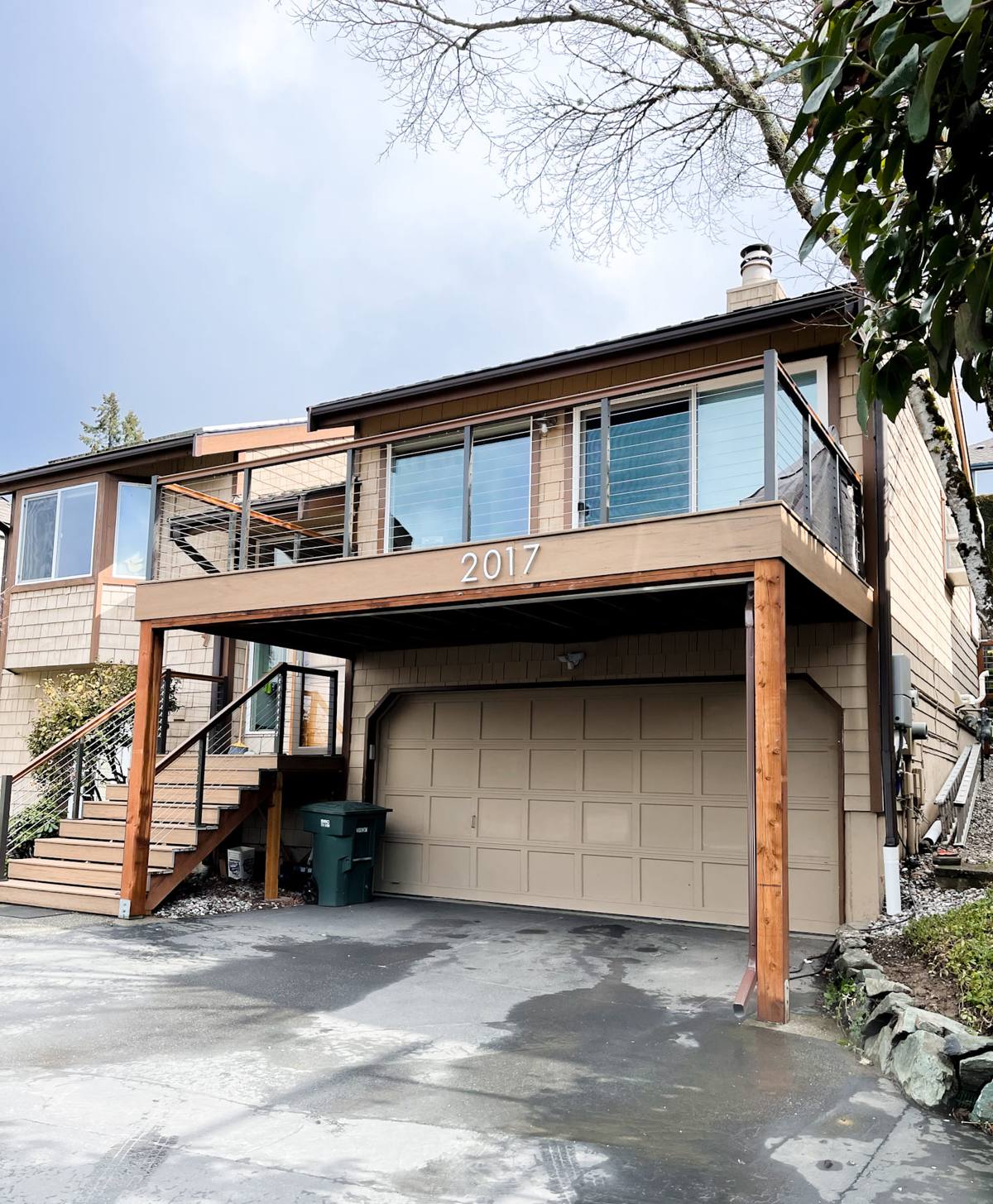
What Ferndale's Climate Actually Does to a Deck
Salt Air and Metal Fatigue
Airborne salt from the Strait doesn't just affect homes right on the water. It travels inland on prevailing winds and settles on any exposed metal — joist hangers, screws, railing brackets, post bases. Over years, standard galvanized coatings break down faster near the coast than they would twenty or thirty miles inland, leading to rust streaks on the decking, weakened hardware, and eventually fastener failure at connection points that are supposed to be structural, not decorative.
Driving Rain and Trapped Moisture
Storms off the water tend to arrive with wind, which means rain doesn't just fall on a deck — it drives into gaps, under rail caps, and against the house where the deck ledger attaches. If that connection isn't flashed and sealed correctly, water works its way behind the siding and into the rim joist, which is one of the most common sources of hidden rot we find on decks we're asked to repair or rebuild in this area.
Moss Season
Whatcom County's damp, mild winters are ideal moss-growing conditions, and a deck surface holds moisture longer than a roof or a driveway because it's shaded, often has limited airflow underneath, and doesn't drain as fast if it wasn't built with the right slope. Moss on a walking surface isn't just unattractive — it's a slip hazard, and it holds moisture against the board surface, which accelerates whatever decay process is already underway.
What a Correctly Built Deck Involves
Footings and Framing
Footings need to be sized and set to local frost depth and soil conditions, not guessed at. We use pressure-treated framing lumber rated for ground contact where posts meet concrete, and we keep every structural connection — post-to-beam, beam-to-joist, joist-to-ledger — hung with corrosion-resistant hardware rated for the exposure this area gets, not the cheapest hanger on the shelf.
The Ledger Connection
This is the single most important detail on any deck attached to a house, and it's the one that fails most often when it's done wrong. Proper ledger installation means correct flashing that sheds water away from the house framing, structural lag bolts or through-bolts (never just deck screws), and a gap or flashing detail that keeps the ledger from sitting flush against wet siding. We treat this connection as the load-bearing, water-managing detail it is — because when it's wrong, the failure happens inside the wall where you can't see it until there's already damage.
Decking Material
Boards need consistent spacing for drainage and airflow, correct fastening (hidden fastener systems or coated screws, not whatever was cheapest), and a surface that doesn't trap water in seams. Composite and PVC decking have gotten a lot better at shedding moisture and resisting mildew than they were years ago, and for a shaded, damp lot they're often the lower-maintenance choice. Real wood — cedar in particular — still has a place for homeowners who want that look and are willing to stay on top of sealing and cleaning on a regular schedule. Either way, the choice should be made with eyes open about the maintenance trade-off, not just the upfront price.
Railings and Hardware
Railing posts and connectors are exposed to weather on every side, which makes them a common spot for early corrosion. We spec hardware rated for coastal or high-moisture exposure rather than standard interior-grade fasteners, because the cost difference is small and the failure it prevents — a loose or corroded railing post — is a safety issue, not just a cosmetic one.
Our Process for a Ferndale Deck Project
- On-site assessment. We look at drainage on the lot, sun/shade exposure, proximity to salt air, and the condition of the house framing where the deck will attach.
- Design and material selection. We walk through decking material options, railing style, and layout based on how you actually use the space, with honest pros and cons for each material given your specific lot.
- Permitting. Most decks above a certain height or attached to the house require a permit through the local jurisdiction. We handle that process rather than leaving it to you.
- Framing and ledger work. This is where we're most careful — footings, structural connections, and the ledger flashing detail get done to spec, not shortcut.
- Decking, railing, and finish work. Boards, railings, stairs, and any trim get installed with attention to drainage gaps and fastener consistency.
- Final walkthrough. We go over maintenance expectations with you directly — what to expect from the material you chose, and a realistic cleaning/sealing schedule if applicable.
Decking Material Comparison
| Material | Moisture Resistance | Maintenance | Typical Lifespan (well-built) |
|---|---|---|---|
| Pressure-treated wood | Good if sealed regularly | Annual cleaning/sealing recommended | 15-20 years |
| Cedar | Naturally decay-resistant, but surface needs upkeep | Sealing every 1-2 years to hold color and resist mildew | 15-20+ years |
| Composite | Very good, resists rot and moss growth | Occasional washing, no sealing | 25-30 years |
| PVC/capped composite | Excellent, essentially non-porous surface | Minimal — occasional washing | 25-30+ years |
These are general ranges based on the material and how it's installed and maintained — actual lifespan depends heavily on site conditions, drainage, and how consistently a homeowner keeps up with cleaning or sealing.
Cost Factors Homeowners Should Know
Deck pricing varies a lot based on size, height off the ground, material, and railing style, so we won't quote a number without seeing the site. What we can tell you is what tends to move the price:
- Decking material — composite and PVC cost more upfront than wood but less over the deck's life in maintenance
- Height and stairs — a deck that requires stairs, especially with a landing or turn, adds framing and labor
- Railing style — cable, glass, or custom railing systems cost more than standard baluster railing
- Ledger and structural complexity — if the existing house framing needs repair before the ledger can attach correctly, that's addressed before decking goes on, not after
- Site access and drainage prep — a sloped or poorly draining lot may need additional grading or footing work
Signs an Existing Deck Needs Attention
If you already have a deck in the Ferndale or Birch Bay area, a few warning signs are worth checking before they become bigger problems:
- Soft or spongy spots underfoot, especially near the house
- Rust streaks running down from screws, hangers, or railing brackets
- Persistent moss or green film that comes back within weeks of cleaning
- Gaps or separation where the deck meets the house siding
- Railing posts that wiggle or feel less solid than they used to
Any of these can be a simple fix if caught early, or a sign of deeper rot at the ledger or framing if left alone through another wet season.
Why Local Experience Matters Here
A crew that builds decks across different climates in Washington knows the code minimums. A crew that works Ferndale and Birch Bay regularly knows what actually happens to those minimums after five winters of salt air and driving rain — which hardware grades hold up, which ledger details actually shed water in a sideways storm, and which decking products handle a shaded, moss-prone yard without turning into a maintenance headache. That's the difference between a deck that meets code on paper and one that's still solid, dry, and safe a decade from now.
If you're planning a new deck or dealing with an aging one in Ferndale, Birch Bay, or the surrounding Whatcom County area, we're happy to take a look and talk through what your specific lot and budget call for. Reach out for a free, no-pressure estimate using the form below.