 Birch Bay
 Bellingham's Climate Doesn't Forgive Weak Siding
Homes in and around Bellingham sit close enough to the water that salt air is part of daily life, and Whatcom County's weather doesn't give siding much of a break the rest of the year either. Between the marine moisture rolling off the Salish Sea, driving rain that comes in sideways during winter storms, and a moss season that can stretch from fall through spring in the shaded, damp corners of a lot, exterior cladding here works harder than it does almost anywhere else in the state. Siding that isn't built for this combination — salt, standing moisture, and organic growth — tends to show it early: chalking, swelling, soft spots, and moss creeping up from the bottom courses.
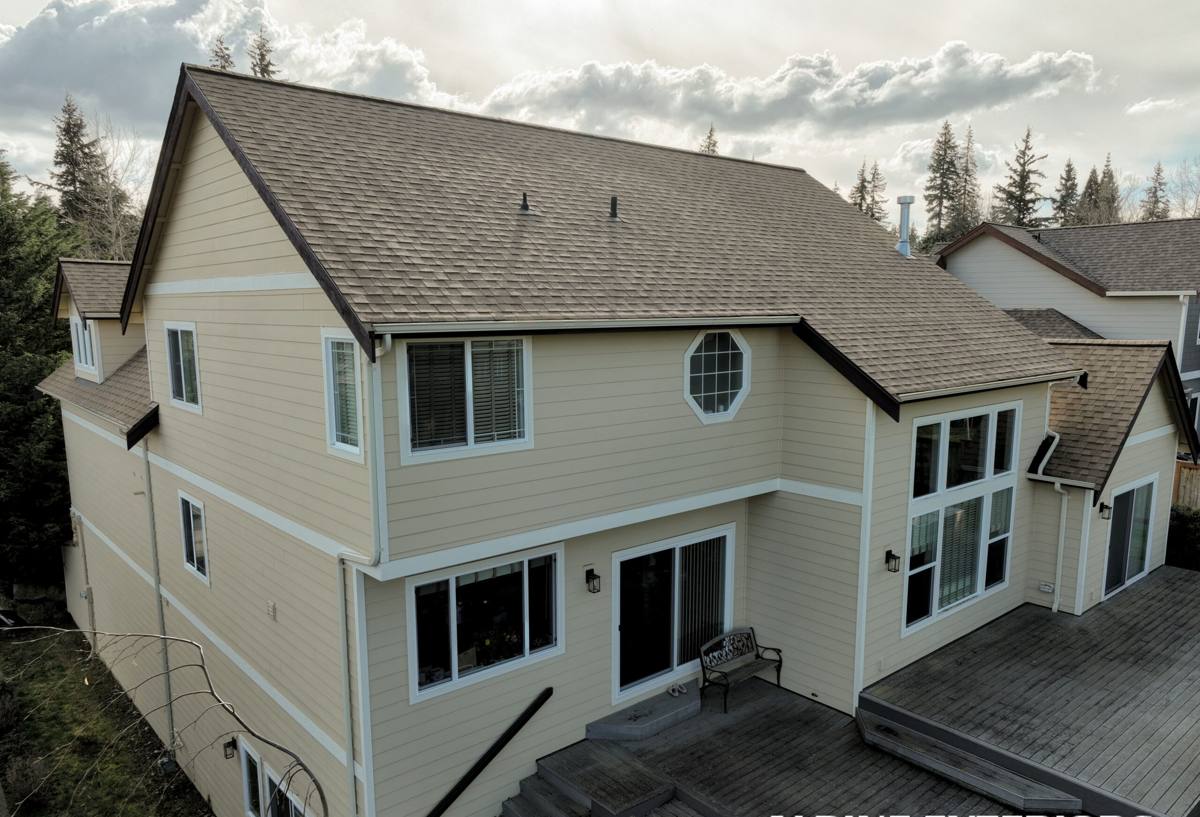
This page is about one job done right: James Hardie fiber cement siding, installed correctly, on a home in the Bellingham area near Birch Bay. We only install James Hardie, and we explain why on our other pages — here, the focus is narrower: what this climate demands, what a correct installation looks like, and why it matters that the crew doing the work already knows this area.
Why Salt Air, Rain, and Moss Change the Equation
Salt Air
Airborne salt is corrosive to metal fasteners, flashing, and trim, and it accelerates the breakdown of coatings that aren't formulated to resist it. Siding products with weaker factory finishes can fade, chalk, or lose adhesion faster in a coastal-influenced environment than they would fifty miles inland. Fastener choice and flashing material matter as much as the siding itself here.
Driving Rain
Wind-driven rain doesn't just hit a wall — it gets pushed into laps, seams, and penetrations that would stay dry in a calmer climate. Siding systems that rely on face-sealing (caulk and paint alone) to keep water out tend to fail over time as those seals age. A correctly built water-resistive barrier and drainage plane behind the siding matters more here than the siding material itself.
Moss Season
Shaded north faces, tree cover, and the region's long damp stretches give moss and algae plenty of time to take hold on any surface that stays wet. Moss doesn't just look bad — it holds moisture against the wall assembly, and on porous or absorbent siding materials it can contribute to slow, hidden damage over years.
What James Hardie Brings to This Specific Climate
James Hardie fiber cement is engineered from cement, sand, and cellulose fibers — it's non-combustible and doesn't absorb and swell with moisture the way wood-based products do. For Bellingham-area homes, three things matter most:
- HZ5 engineered product line: Hardie's HZ5 formulation is built for climates with freeze-thaw cycling and sustained moisture exposure, which fits Whatcom County's winters better than a generic, non-region-specific product.
- ColorPlus factory finish: a baked-on finish applied under controlled conditions holds color and resists fading, chalking, and salt-air degradation far better than field-applied paint, and it comes with its own finish warranty.
- Non-combustible, dimensionally stable material: fiber cement doesn't swell, cup, or rot the way wood and some wood-composite products can when they stay damp for extended periods — relevant on shaded, moss-prone elevations.
None of that matters, though, if the installation underneath it is wrong. Product quality and installation quality are two separate problems, and in this climate, installation is where most long-term failures actually start.
What a Correct Installation Involves Here
A Hardie installation that's built for coastal Whatcom County weather goes beyond nailing boards to a wall. The details that matter most in this environment:
Water Management Behind the Siding
A continuous weather-resistive barrier, properly lapped and taped, is the primary defense against driving rain — the siding itself is the second line, not the only one. Rainscreen or drainage gap furring is worth discussing on shaded or exposed elevations, since it lets any moisture that does get behind the siding drain and dry instead of sitting against the wall.
Flashing and Fastening
Every window, door, and penetration needs flashing detailed to shed water outward, not trap it. In a salt-air environment, fastener and flashing metal selection matters — the wrong metal corrodes faster and can stain the finish over time. James Hardie publishes specific fastener and clearance requirements, and skipping them is one of the most common ways installers create callbacks.
Clearances and Gaps
Hardie specifies minimum gaps between siding and roofing, decking, and grade, plus expansion gaps at butt joints and trim. These aren't cosmetic guidelines — they exist specifically to keep moisture from wicking into the board ends, which is where fiber cement is most vulnerable if it's not sealed and gapped correctly.
Caulking and Sealant Strategy
Caulk is a backup, not the primary water barrier. Installers who rely on heavy caulking to compensate for tight or missing gaps are setting up a maintenance problem down the road, since sealant is the first thing to fail as it ages and cracks.
How Our Process Works
- On-site assessment: we walk the home, check current siding and sheathing condition, note shaded/moss-prone elevations, and identify moisture or ventilation issues before quoting anything.
- Prep and moisture barrier: old siding removed, sheathing inspected and repaired as needed, weather-resistive barrier installed and properly lapped.
- Flashing and drainage details: window, door, and penetration flashing installed to Hardie spec, with drainage planning on elevations that need it.
- Siding installation: HZ5 product installed to manufacturer fastening and clearance specifications, with corrosion-resistant fasteners appropriate for a coastal-influenced climate.
- Final walkthrough: we review the completed work with you, including maintenance basics specific to your home's exposure and elevations.
Comparing Siding Options in a Coastal Whatcom County Climate
| Material | Moisture Behavior | Salt Air Durability | Moss Resistance |
|---|---|---|---|
| James Hardie Fiber Cement | Dimensionally stable, doesn't swell or rot | ColorPlus finish resists fading and chalking | Non-porous surface, doesn't hold moisture like wood |
| Vinyl | Doesn't absorb water, but can warp under heat/sun cycling | Finish is baked into the material but can fade unevenly over time | Seams and laps can trap debris and moisture |
| LP SmartSide (wood-strand) | Engineered wood core is vulnerable if edges or cuts aren't fully sealed | Coating performs adequately but is more failure-sensitive at seams | Wood-based core is more susceptible to prolonged moisture exposure |
| Cedar / Primed Spruce | Natural wood absorbs and releases moisture, prone to cupping/checking | Requires ongoing refinishing to resist salt and UV breakdown | Most susceptible — organic material moss readily colonizes |
This is why we standardized on James Hardie rather than stocking multiple product lines: in a climate like this, the material and finish that hold up with the least long-term maintenance burden is the one worth building our process around.
Living With Hardie Siding in a Moss and Salt-Air Environment
Even the right product needs basic upkeep in this climate. A simple annual routine keeps a correctly installed Hardie exterior performing the way it's designed to:
- Rinse the exterior annually, focusing on shaded north- and east-facing walls where moss and algae are most likely to establish
- Trim back vegetation and tree branches that keep siding shaded and damp longer than necessary
- Check and re-caulk sealant joints around trim and penetrations every few years as part of routine maintenance, not as a substitute for proper flashing
- Watch gutters and downspouts near siding runs — overflow during heavy Whatcom County rain events is a common source of localized water damage
- Address any impact damage or exposed fastener heads promptly, since exposed cut edges are the most moisture-vulnerable part of any fiber cement installation
Why a Crew That Already Works This Area Matters
Installation quality is what determines whether James Hardie siding performs for decades or develops problems in a few years — and installation quality depends heavily on whether the crew understands the specific climate they're building for. A crew that regularly works Bellingham and the greater Birch Bay area already knows which elevations tend to hold moss, how driving rain behaves on exposed sites near the water, and where salt air makes fastener and flashing choices non-negotiable rather than optional upgrades. That local pattern recognition doesn't replace following the manufacturer spec — it's what makes following the spec correctly, every time, second nature instead of guesswork.
Ready to Talk About Your Home
If your siding is showing moss buildup, chalking, soft spots, or you're planning ahead for a replacement, we're happy to take a look and walk you through what correct James Hardie installation would involve for your specific home and exposure. Request a free, no-pressure estimate using the form below — there's no obligation, just a straight assessment.