 Birch Bay
 Why Blaine Homes Need Siding Built for This Climate
Blaine sits right up against the Salish Sea, close enough to Birch Bay and the Whatcom County shoreline that salt-laden air is a daily fact of life, not an occasional nuisance. Add in driving rain that comes sideways off the water during winter storms, and a moss season that can stretch from late fall well into spring, and you have a combination that ages ordinary siding materials fast. Wood siding absorbs moisture and swells. Vinyl gets brittle in the cold snaps and can warp when trapped moisture builds up behind it. Even lower-grade fiber cement products can fail early if they aren't engineered for a marine environment and installed with real attention to flashing and drainage.
Homes in Blaine take this weather on year after year. Siding here isn't just a cosmetic layer — it's the first line of defense against a climate that never really lets up. That's the lens we use when we talk about siding for this neighborhood: not what looks good on a sunny showroom day, but what still looks and performs well after a decade of Whatcom County winters.
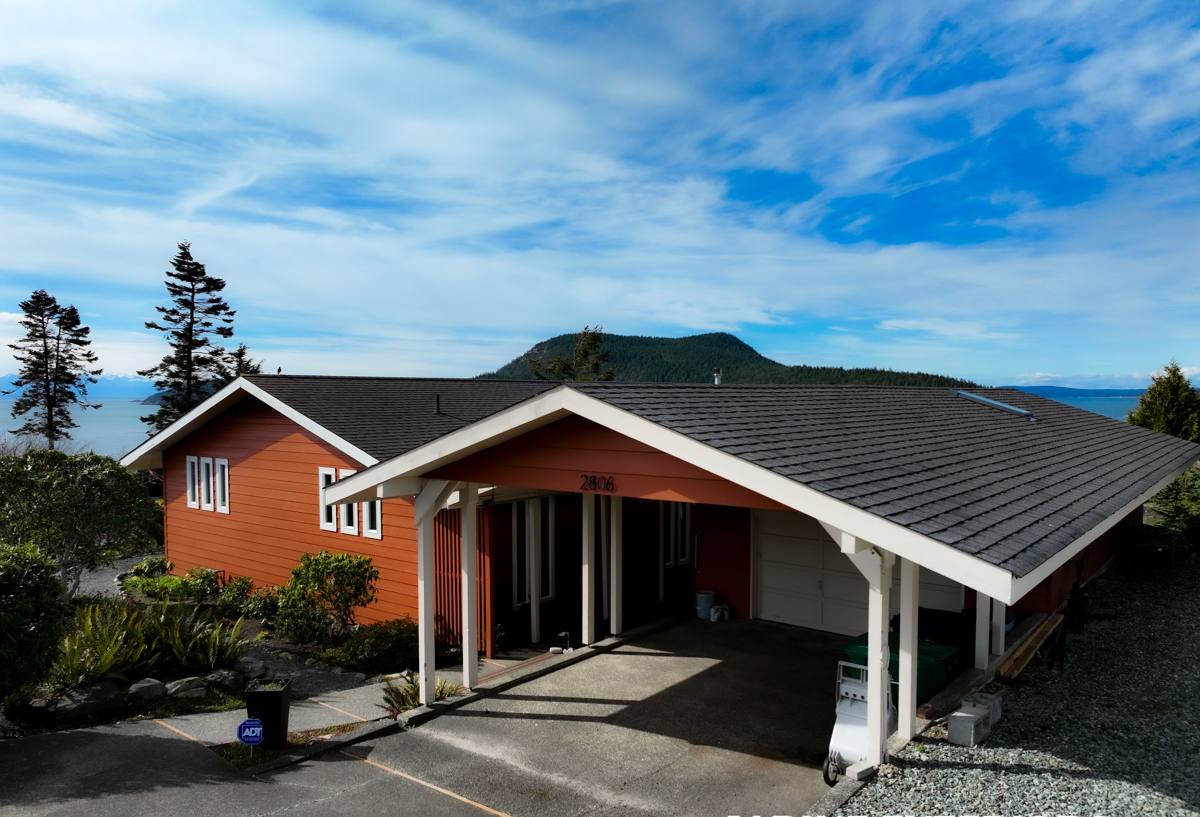
What James Hardie Brings to a Coastal Property
We install James Hardie fiber cement siding exclusively. That's a deliberate standard, not a default. Hardie's boards are non-combustible, resist moisture absorption far better than wood-based products, and hold their factory finish for years without the chalking and fading that plague lower-cost siding. For a property exposed to salt spray and prolonged damp, those properties matter more than they would somewhere drier and further inland.
Engineered for the Pacific Northwest
James Hardie makes region-specific product formulations under its HZ5 engineered-for-climate system, which covers the Pacific Northwest's wet, temperate conditions. That's different from a one-size-fits-all fiber cement product. The HZ5 formulation is built to resist the freeze-thaw cycling and sustained moisture exposure that's normal for a coastal Whatcom County winter, rather than being optimized for a drier climate and hoping it holds up here.
ColorPlus Factory Finish
Most Hardie siding we install goes on with the ColorPlus finish — a factory-applied, baked-on coating that's more durable than field-applied paint. For a home fighting salt air and UV exposure off the water, that finish resists fading and chipping longer than a repaint would, and it means the color match stays consistent across the whole elevation, including trim.
Choosing the Right Hardie Product Line for Blaine
Not every Hardie product is the right fit for every home, and part of doing this job correctly is matching the product line to the house style and its exposure to weather. Here's how the main options compare for a coastal Whatcom County property:
| Product | Best Use | Coastal Consideration |
|---|---|---|
| HardiePlank Lap Siding | Traditional and craftsman-style homes | Most common choice; wide range of widths and textures, strong track record in wet climates |
| HardiePanel Vertical Siding | Modern builds, accent walls, gable ends | Clean lines shed driving rain well when flashed correctly at seams |
| HardieShingle | Cottage and Craftsman detailing | More seams to manage; needs careful installation to avoid moisture traps in a high-rain area |
| HardieTrim | Corners, window and door casing, fascia | Pairs with any of the above; keeps trim from rotting the way wood trim does near salt air |
For most Blaine homes we work on, a HardiePlank field with HardieTrim accents is the practical, proven combination. Homes with more architectural detail sometimes mix in panel or shingle sections for visual interest, but every added seam is a place water can find its way in if the installation isn't tight — which is why the installation details below matter as much as the product choice itself.
What Correct Installation Looks Like in a Marine Environment
Fiber cement siding is only as good as the installation behind it. In a climate that throws sustained wind-driven rain and salt exposure at a house, the details that get skipped on a rushed job are exactly the details that cause failures a few years down the road.
Flashing and Water Management
Every window, door, and penetration needs proper flashing integrated with a weather-resistant barrier behind the siding — not caulk used as a substitute for flashing. Housewrap seams need to be lapped correctly, shingle-fashion, so water sheds outward rather than getting directed behind the cladding.
Clearances That Actually Get Followed
James Hardie specifies minimum clearances between the bottom of the siding and grade, roofing, decks, and other horizontal surfaces. In a high-rainfall area those clearances aren't a suggestion — they're what keeps splashback and standing water away from the bottom course of siding, which is the first place premature damage shows up when clearances get ignored.
Fastening for Coastal Conditions
Fastener choice matters more near salt air. We use corrosion-resistant fasteners and follow Hardie's nailing patterns exactly — proper penetration depth, correct spacing, and blind-nailing where the product calls for it. Fasteners driven too shallow, too deep, or in the wrong location are a common cause of boards cupping or splitting over time, and it's an easy thing to get wrong if a crew is moving fast.
Joints and Caulking
Butt joints get treated with either a flashed seam or a quality sealant rated for the exposure, and expansion gaps are left where Hardie's specifications call for them. Caulking every seam solid without expansion room is a shortcut that looks fine on install day and causes cracking within a couple of seasons.
Our Process on a Blaine Job
Every property is different, but the sequence we follow stays consistent because it's built around getting the water management right before a single piece of visible siding goes up.
- On-site assessment — we look at existing siding, trim, and moisture damage, and check for problem areas like poor grading, tight roof-to-wall transitions, or deck ledger connections that need addressing before new siding goes on.
- Product and color selection — we walk through HardiePlank, panel, and trim options and ColorPlus color choices suited to the home's style and the coastal light here.
- Tear-off and substrate check — old siding comes off and we inspect sheathing for rot or moisture damage before it gets covered up again, since covering a compromised substrate just hides a problem instead of fixing it.
- Weather barrier and flashing installation — this is the step that determines how the siding performs in ten years, and we don't rush it.
- Hardie siding installation — installed to manufacturer specification for fastening, clearance, and joint treatment.
- Trim, caulking, and final detailing — corners, window and door trim, and touch-up work to match the ColorPlus finish.
- Walkthrough — we review the finished work with the homeowner before calling the job done.
Color Choices and Coastal Light
Light off the water behaves differently than inland light — it's brighter and flatter on overcast days, which is common through a Blaine winter, and can wash out darker colors or make certain tones read differently than they do on a sample chip. We help homeowners see how ColorPlus options actually look against the specific exposure and surroundings of their home rather than picking purely off a small swatch. Because ColorPlus is a factory finish rather than a field-applied paint, the color you choose is the color you're committing to for years, which makes getting this step right worth the extra time.
Living With Hardie Siding: Moss Season and Ongoing Care
One advantage of fiber cement over wood siding is that it doesn't feed moss and mildew the way organic material does, but a long moss season in this part of Whatcom County still means algae and moss can build up on the surface, especially on north-facing walls and areas shaded by trees. That's a surface-level issue, not a structural one, but it's worth staying ahead of.
- Rinse siding with a garden hose and soft brush once or twice a year, focusing on shaded and north-facing walls where moss tends to collect
- Avoid high-pressure washing directed at seams and joints, which can force water behind the siding
- Keep gutters clear so overflow doesn't run down the face of the siding and stay damp
- Trim back vegetation and tree limbs that keep a wall shaded and slow-drying
- Check caulking at trim and joints every couple of years and have it refreshed if it's cracking or pulling away
- Watch for any bubbling or peeling at the ColorPlus finish, which can signal a moisture issue behind the board worth having checked
None of this is heavy maintenance — it's the kind of upkeep that keeps siding looking good rather than work required to keep it functional. That's part of the trade-off Hardie owners get for the upfront investment: a lower long-term maintenance burden than wood, without the moisture and warping issues that come with cheaper composite or vinyl products in a wet marine climate.
What Drives the Cost of a Job Like This
Every home is different, and we don't publish blanket per-square-foot pricing because the honest answer depends on the specifics of the house. The factors below are the ones that actually move a quote up or down.
| Factor | Why It Matters |
|---|---|
| Home size and wall complexity | More corners, gables, and dormers mean more cutting, trim, and labor time |
| Substrate condition | Rot or moisture damage found during tear-off adds repair work before new siding can go on |
| Product line mix | Plank, panel, shingle, and trim combinations price differently based on material and install time |
| Existing siding removal | Tear-off and disposal of old material adds labor beyond a straightforward re-side |
| Height and access | Two-story walls, steep grading, or limited access affect equipment and time needed |
| Trim and detail level | Additional trim work and architectural detailing add material and labor |
We give a real number after we've actually looked at the house — not a guess over the phone — because the substrate condition alone can change a quote significantly once tear-off starts.
Why a Crew That Already Works in Blaine Matters
Coastal siding work isn't the same job as siding a house thirty miles inland. A crew that regularly works properties along the Whatcom County coastline already knows to plan around wind and rain windows, understands how salt exposure affects fastener and flashing choices, and has seen firsthand what happens when those details get skipped on a previous job elsewhere. That local pattern recognition is hard to substitute for. It's also why we install one product system rather than offering a menu of options — sticking with James Hardie's engineered-for-climate lines and installing them the same correct way every time means we're not guessing at how a different material will hold up under conditions we already understand well.
If you're weighing a siding replacement or repair on a Blaine-area home, we're glad to come take a look, walk the exterior with you, and put together a straightforward, no-pressure estimate — no obligation, just an honest read on what your home needs.