 Birch Bay
 Siding That Has to Work in Nooksack's Climate, Not Just Look Good on Day One
Nooksack sits inland in the river valley country of Whatcom County, but "inland" doesn't mean dry. Moist marine air off the Puget Sound and Strait of Georgia pushes through the lowlands most of the year, and combined with river-valley humidity and heavy tree cover, homes here spend a lot of the calendar wet. Add the region's famously long, gray stretch of fall-through-spring rain and the moss and algae growth that comes with it, and you've got a climate that is genuinely hard on exterior building materials — not dramatic, just relentless.
That combination matters more than most homeowners realize when it's time to re-side a house. Siding in this area isn't just cladding for curb appeal. It's the layer standing between your framing and months of driving rain, standing humidity, and organic growth that wants to take hold on any surface that stays damp. Products that aren't built for this get soft, swell, streak, or grow moss faster than they should. We see it on a lot of the homes we're called out to in this part of the county.
What "salt air and driving rain" actually does to a house
Even away from the immediate coastline, Whatcom County's marine weather systems carry moisture and airborne salts further inland than people expect, especially during winter storms. Combined with wind-driven rain that hits walls at an angle instead of falling straight down, siding here has to shed water at seams, laps, and corners — not just resist a garden hose test. Homes with poor flashing detail or the wrong material end up with staining, soft spots, and moss creeping up from the shaded, damp side of the house within just a few years.
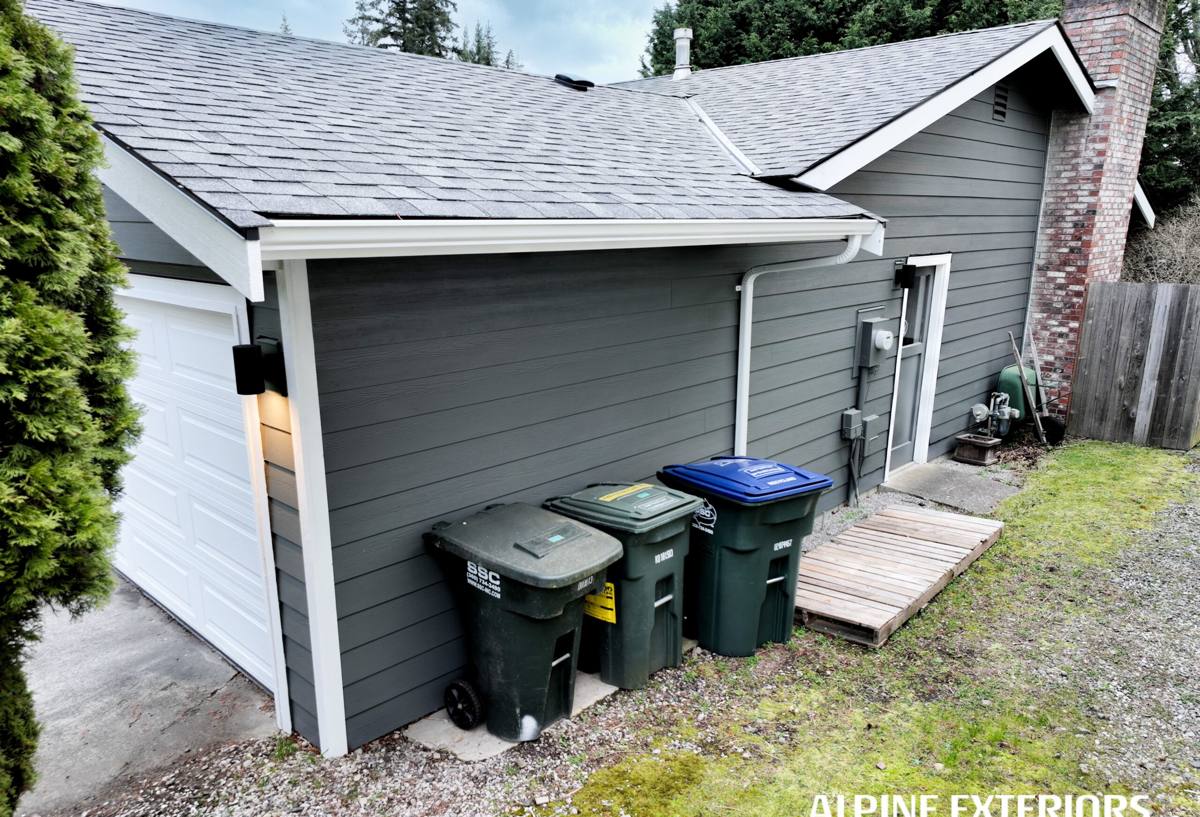
Why We Only Install James Hardie Fiber Cement Here
We made a decision a while back to stop installing vinyl, LP SmartSide, and other engineered wood or composite products, even though we get asked about them regularly. It's not that those products don't have a place somewhere — it's that they don't hold up the way we want a Nooksack homeowner's siding to hold up over 20 or 30 years in this climate. Vinyl expands, contracts, and can crack in cold snaps; it also can't stop moss and mildew from colonizing its surface the way a properly finished fiber cement product does. Engineered wood products are more moisture-sensitive at cut edges and seams than fiber cement, and if water gets behind them or sits at a poorly sealed joint, the core material can swell and deteriorate.
James Hardie fiber cement is cement, sand, and cellulose fiber. It doesn't feed mold or rot, it doesn't expand and contract with temperature the way vinyl or wood does, and its factory-applied ColorPlus finish is baked on under controlled conditions rather than sprayed on site — which means better adhesion and a longer-lasting color that resists the fading and streaking you often see on painted wood siding in wet climates. It's also non-combustible, which matters to a lot of homeowners in areas near open land and agricultural fields where burning and wildfire risk are part of living rural or semi-rural.
The Right Hardie Product Line for a Nooksack Home
James Hardie makes climate-engineered product lines, and choosing the correct one for this region isn't cosmetic — it affects long-term performance. Western Washington, including Whatcom County, falls into Hardie's HZ5 climate zone, which is engineered for moisture-heavy, moderate-freeze climates rather than the hot, dry, or deep-freeze zones the HZ10 line is built for. Installing the wrong zone product is one of the more common mistakes we see from crews that don't specialize in Hardie.
| Product Line | Best Use | Why It Fits This Area |
|---|---|---|
| HardiePlank Lap Siding (HZ5) | Most home exteriors | Traditional lap look, engineered for wet, moderate climates like ours |
| HardiePanel Vertical Siding | Board-and-batten style, accents | Clean modern lines, sheds water well when installed with proper battens and flashing |
| HardieShingle | Gable accents, Craftsman-style details | Adds texture without the maintenance burden of real cedar shingles |
| HardieTrim | Corners, fascia, window trim | Matches siding durability so trim doesn't fail before the field siding does |
Color and finish
ColorPlus finishes are the better choice for this climate specifically because they resist the fading, chalking, and moisture staining that field-applied paint struggles with under constant damp conditions. For homeowners who want a different color down the road, Hardie siding can still be repainted using approved products, but most people find the factory finish holds up long enough that they never need to.
What a Correct Installation Involves Here
Fiber cement siding is only as good as the installation behind it, and this is where a lot of siding jobs quietly fail long before the material itself would have. In a climate like ours, a few details are non-negotiable:
- Proper rainscreen gap or drainage plane behind the siding so any moisture that gets past the surface can drain and dry instead of sitting against the sheathing
- Correct flashing at every window, door, and roofline intersection — the majority of moisture intrusion we find starts at these transitions, not the flat field of the wall
- Manufacturer-specified fastening pattern and fastener type, since under- or over-driven nails void warranty coverage and can cause cracking
- Proper joint sealing and caulking at butt joints, using products rated for exterior fiber cement, not general-purpose caulk
- Minimum ground clearance so siding doesn't sit low enough to wick moisture from soil or splash-back during heavy rain
- Cut edges primed or sealed on site, since factory finish doesn't extend to field cuts
Skip any one of these and you can still end up with moisture problems behind Hardie siding, even though the board itself is doing its job. This is the argument for hiring installers who do this constantly, rather than a general contractor adding siding as a side offering.
What We See Going Wrong on Older Nooksack Homes
Moss and organic growth
Shaded walls, especially north-facing sides and areas under mature trees, hold moisture longer and are where we see moss and algae establish first. On older wood or poorly finished siding, that growth works into the surface over time. Hardie's factory finish resists this far better, but it still needs airflow and drainage behind it — which comes back to correct installation, not just the product.
Soft spots and rot at penetrations
Around hose bibs, vents, and old trim details, we regularly find soft or rotted sheathing on homes with older wood or composite siding, usually traced back to a missing or failed flashing detail that let water track behind the wall for years before anyone noticed.
Warped or brittle vinyl
On homes with vinyl siding, temperature swings and sun exposure over the years tend to leave panels warped, buckled, or brittle enough to crack on impact — cosmetic problems that also open gaps for moisture to get behind the material.
Our Process for a Nooksack Siding Project
We start with an on-site walkthrough of the home, checking the condition of the existing siding, sheathing, and trim, and looking for the moisture or rot issues described above before we ever talk about product selection. From there we put together a written estimate that spells out the product line, colors, and scope — no vague allowances. Once a project is scheduled, our crew handles tear-off, any necessary sheathing repair, installation of a proper drainage plane, and full installation to Hardie's fastening and clearance specifications, followed by a final walkthrough with the homeowner before we consider the job done.
Cost Factors for a Hardie Siding Project in This Area
Every home is different, so exact numbers require an on-site look, but the factors that move the price on a typical Nooksack project are fairly consistent:
| Factor | Why It Matters |
|---|---|
| Existing wall condition | Rotted or damaged sheathing found during tear-off adds repair time before new siding can go on |
| Home size and wall complexity | Multiple stories, dormers, and cut-up wall lines take more labor than simple rectangular walls |
| Product line and profile | Lap siding, vertical panel, and shingle accents carry different material and labor costs |
| Trim and accent scope | Full HardieTrim packages cost more than reusing sound existing trim where possible |
| Access and site conditions | Tree cover, slope, and outbuildings common on larger Whatcom County lots can affect staging and scaffolding needs |
Why Hiring a Crew That Already Works Nooksack Matters
A crew that regularly works this part of Whatcom County already knows what the local climate does to a wall over time, has a feel for which details tend to fail first on older homes here, and isn't guessing at the right Hardie climate zone or installation spec for the area. That familiarity shows up in fewer surprises during tear-off, fewer callbacks for missed flashing details, and a finished job that's actually built for the weather it has to survive, not just the weather on installation day.
If your Nooksack home's siding is showing moss, soft spots, fading, or age, we're glad to come take a look. We'll give you a straightforward, no-pressure assessment and a written estimate for James Hardie siding done right — just fill out the form below to get started.