 Birch Bay
 Windows Built for the Lummi Island Climate
Homes around Lummi Island and Birch Bay sit right up against the Salish Sea, and that location shapes everything about how a window should be built and installed. Salt-laden air corrodes hardware and fasteners faster than it does further inland. Wind-driven rain off the water pushes water sideways into gaps that would stay dry in a more sheltered spot. And Whatcom County's long, damp shoulder seasons mean moss and algae get a real foothold on anything that stays wet for days at a time, including window sills, trim, and the caulk lines around a frame. A window that would perform fine in a dry, protected inland neighborhood can fail years early out here if it wasn't chosen and installed with this specific exposure in mind.
This page is about custom window work specifically for Lummi Island area homes — what the climate demands, what a correct installation actually involves, and why it pays to hire a crew that already understands this stretch of coastline instead of learning it on your house.
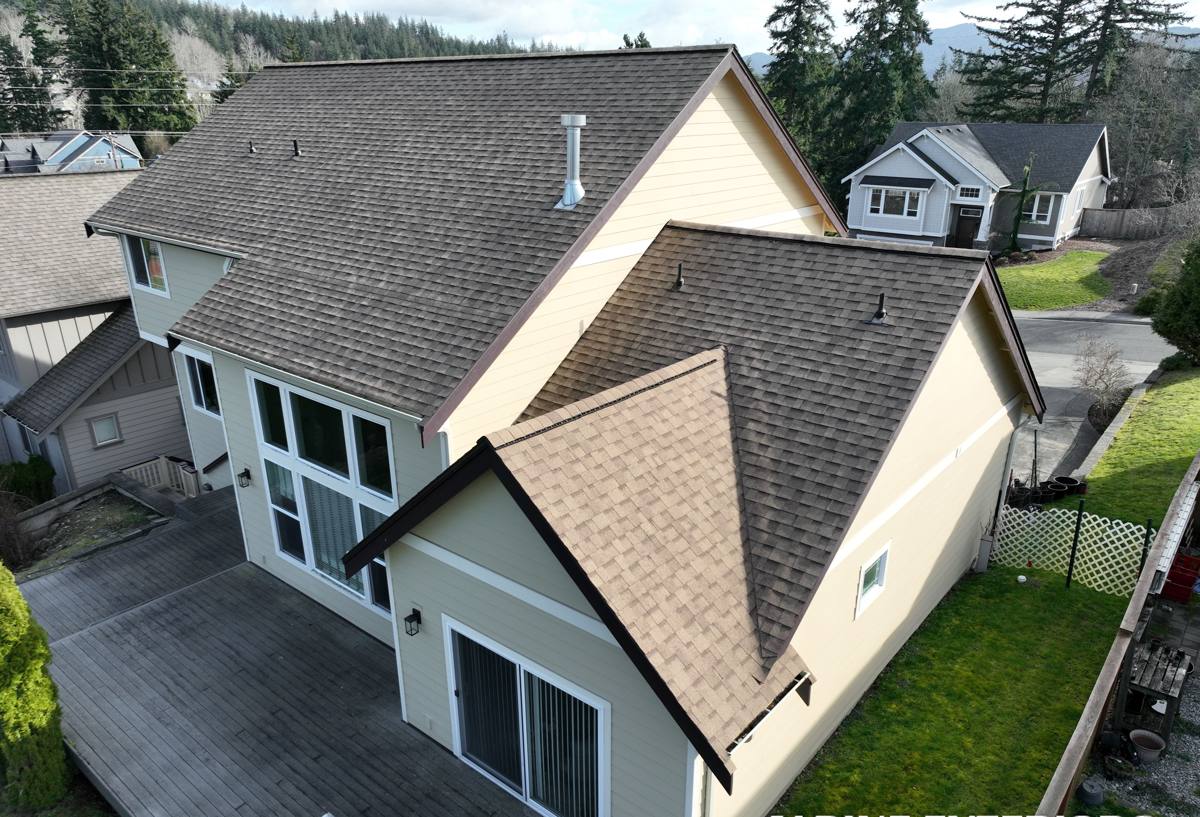
What "Custom" Actually Means Here
Custom windows aren't just about odd shapes or oversized openings, though we handle those too. On this coast, custom usually means matching the window to the specific exposure of each wall of your house:
- Different glazing or frame specs for the ocean-facing side of the house versus the sheltered side
- Non-standard openings in older homes where stock replacement sizes don't fit cleanly
- Matching sightlines and trim profiles on additions or remodels so new windows don't look bolted on
- Upgraded hardware and fasteners in corrosion-prone areas near the water
- Tempered or laminated glass where code or safety calls for it, such as near doors or low sills
A generic, one-size-fits-all order from a box-store catalog doesn't account for any of that. Custom work starts with actually looking at your house and its exposure before anything gets ordered.
What a Correct Installation Involves
Most window failures we get called out to inspect on the coast aren't failures of the window itself — they're failures of the installation around it. Water finds its way in through the gaps between the window unit and the framed opening, not usually through the glass or sash. A correct job addresses that directly.
The details that actually matter
- Sill pan flashing under every window, so any water that does get past the exterior seal drains back out instead of sitting on the sill or dripping into the wall cavity
- Proper flashing sequencing — house wrap, flashing tape, and window flange layered so water always sheds downward and outward, never behind the layer below it
- Backer rod and quality exterior sealant rated for UV and marine exposure, not a generic caulk that hardens and cracks within a couple of years
- Correct shimming and fastening so the frame doesn't rack out of square, which is what causes sashes to bind or fail to seal over time
- Interior air sealing with low-expansion foam or backer rod, which controls condensation as much as it controls drafts
Skip any one of these and you can end up with a window that looks fine for a year or two, then starts showing rot in the trim, staining on the interior sill, or a musty smell in the wall below it. On this coast, that timeline is often faster than homeowners expect, especially on walls that catch prevailing wind and rain directly.
Choosing the Right Frame Material
Frame material is one of the biggest decisions, and it's also where salt air and moisture make the biggest difference. Here's how the common options actually compare for this environment, not in general marketing terms:
| Frame Material | Salt Air / Moisture Behavior | Maintenance | Typical Cost Position |
|---|---|---|---|
| Vinyl | Doesn't corrode or rot; UV exposure can fade or become brittle over many years | Low — occasional cleaning | Lower to mid-range |
| Fiberglass | Very stable in moisture and temperature swings; strong resistance to warping | Low | Mid to upper-mid range |
| Wood (unclad) | Handsome, but vulnerable to rot and moss growth in constant damp exposure without diligent upkeep | High — regular painting/sealing | Mid to high, varies with species |
| Wood with aluminum or fiberglass cladding | Exterior face resists moisture well; interior keeps a wood look | Moderate | Upper range |
| Aluminum (uninsulated) | Conducts cold and promotes interior condensation; hardware can corrode in salt air without marine-grade fasteners | Moderate | Varies |
Our default recommendation for direct water-facing exposures around Lummi Island is vinyl or fiberglass with stainless or marine-rated hardware, simply because they hold up with the least ongoing maintenance. Where a homeowner wants a real wood look, clad wood is usually the better trade-off than unclad wood exposed to this much weather — not because unclad wood windows are a bad product, but because keeping them properly painted and sealed in a marine climate is a real, ongoing commitment we want clients to go in with eyes open about.
Glass and Performance
For this climate, we generally push clients toward double or triple-pane insulated glass units with a low-E coating. The bigger practical concern on the coast is usually condensation and heat loss during the wet season more than summer heat gain, so glazing selection should be matched to that reality rather than a generic energy-code minimum. Tempered or laminated glass is required in certain locations by code — near doors, in low sills, in bathrooms — and we account for that in the quote up front rather than as a surprise change order.
Our Process
- On-site assessment of every opening, noting exposure direction, existing rot or moisture damage, and any non-standard sizing
- Recommendation on frame material, glazing, and flashing detail for each wall based on actual exposure, not a blanket spec for the whole house
- Written estimate with the reasoning behind material choices, so you understand what you're paying for and why
- Removal of old units with inspection of the framed opening for hidden rot or moisture damage before anything new goes in
- Installation with sill pan flashing, correct flashing sequencing, and marine-grade sealant and fasteners
- Interior and exterior trim finish work to match the rest of the house
- Final walkthrough and operation check on every window before we consider the job done
If we open a wall and find rot or water damage that wasn't visible beforehand, we'll stop and talk you through it before doing anything — that's a straight conversation, not an upsell.
Why a Crew That Already Works This Area Matters
There's a real difference between a contractor who occasionally takes a job out toward Lummi Island and one who works this stretch of Whatcom County regularly. A few reasons that matters:
- Exposure knowledge — knowing which walls on a typical local home take the worst of the wind-driven rain, and detailing those openings accordingly
- Material judgment earned locally — having actually seen how different frame materials and sealants hold up here after a few winters, not just what a spec sheet claims
- Logistics — if a job is on Lummi Island itself, getting crew, materials, and equipment across on the county ferry takes planning around the schedule, and that's easier to do well when it's not the first time you've done it
- Local code familiarity — Whatcom County permitting and inspection expectations for window replacement and structural openings
- Accountability — a local crew is easy to reach if something needs a follow-up visit after the job is done
A crew unfamiliar with the area might default to standard inland specs, which can leave a homeowner with a window that underperforms for the specific wall it's on.
Signs Your Current Windows Are Losing the Battle
| What You're Seeing | Likely Cause |
|---|---|
| Black staining or moss on the sill or lower frame | Standing moisture, often from missing or failed sill pan flashing |
| Fogging between panes | Failed insulated glass seal — the unit needs replacing, not just re-caulking |
| Soft or spongy trim around the frame | Water intrusion into the wall or trim substrate, likely ongoing |
| Hardware that's stiff, corroded, or won't latch cleanly | Standard-grade hardware degrading under salt air exposure |
| Persistent drafts despite closed and latched sashes | Frame has racked out of square, or original air sealing has failed |
A Practical Maintenance Checklist
Even a well-installed window benefits from some basic upkeep in this climate:
- Clear moss and debris from sills and tracks each fall before the wet season sets in
- Check exterior caulk lines annually for cracking or separation
- Wipe down hardware and tracks periodically to keep salt residue from building up
- Watch for condensation between panes as an early sign of seal failure
- Repaint or reseal exposed wood trim on the schedule the manufacturer recommends, don't stretch it
If your windows are showing any of the wear signs above, or you're planning a remodel and want the openings done right the first time, we're happy to come take a look. Estimates are free, there's no pressure, and we'll give you a straight read on what your home actually needs — use the form below to get started.