 Birch Bay
 Windows Built for Marietta's Weather, Not Just Its Views
Marietta sits close enough to Birch Bay and the Strait of Georgia that its homes take a different kind of weathering than houses even a few miles inland in Whatcom County. Salt-laden air moves in off the water, wind-driven rain hits window walls at an angle instead of falling straight down, and the long gray stretch of fall through spring keeps everything damp long enough for moss and algae to get a foothold. Windows here don't just need to look good — they need to keep that combination of salt, moisture, and shade-driven dampness out of the wall cavity for the next twenty or thirty years.
A lot of window problems we get called out for in this area aren't really window problems at all. They're installation problems that took a few years of salt air and driving rain to show up. That's the piece we want to walk through here: what Marietta homes actually need from their windows, what a correct installation looks like, and why the crew doing the work matters as much as the window brand on the label.
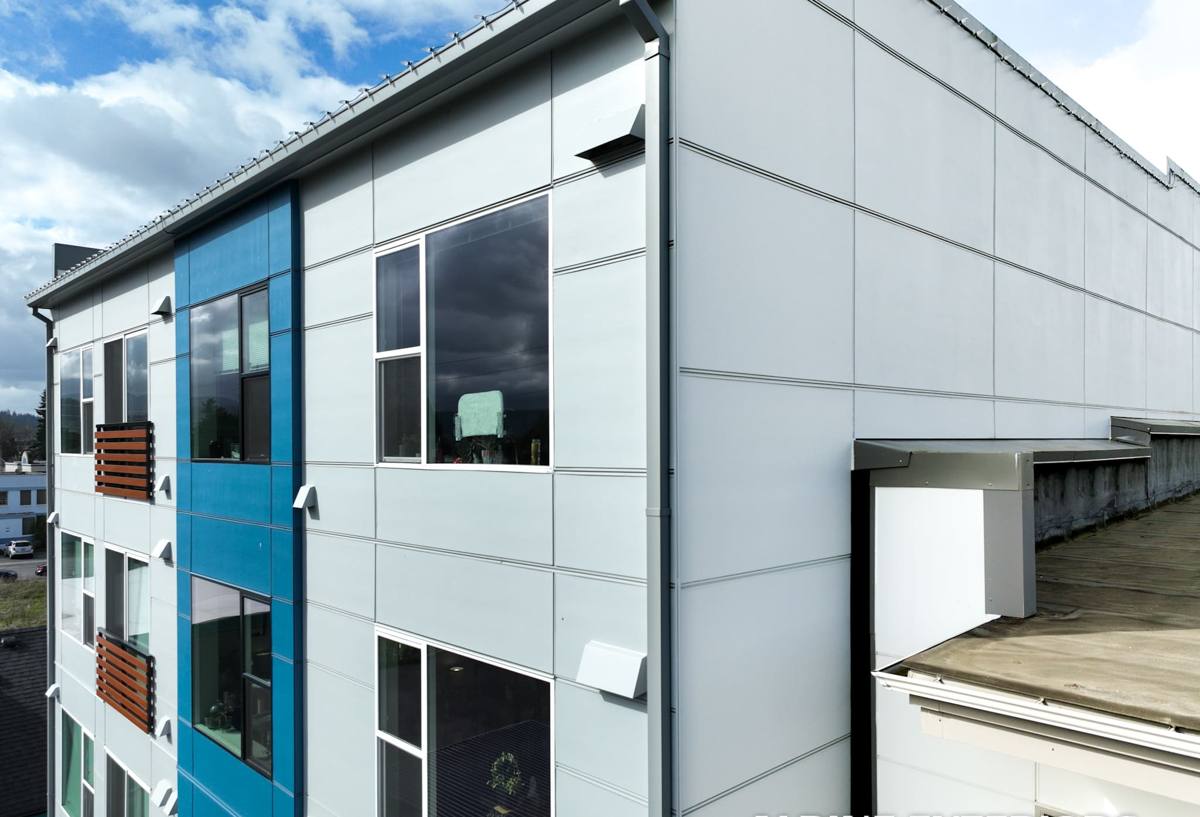
What Salt Air and Driving Rain Actually Do to a Window Assembly
Salt Air and Hardware
Salt in the air settles on everything, including window hardware, screen frames, and exposed fasteners. Over time it accelerates corrosion on lower-grade metal components — locks start sticking, cranks on casement windows get stiff, and aluminum or steel parts that aren't rated for coastal exposure can pit and discolor years before they should. This is why we pay attention to hardware finish and material, not just glass and frame, when we're speccing windows for anything near the bay.
Driving Rain and Wind-Loaded Water
Most of Whatcom County's rain falls straight down, but near the water it regularly comes in sideways under wind pressure. That changes how water behaves around a window opening. Instead of running off a sill, wind-driven rain can get pushed up and under trim, into gaps at the head flashing, or through a sill pan that wasn't sloped correctly. A window that would perform fine in a sheltered inland lot can leak in a Marietta location simply because it's catching wind-loaded water the original installer never accounted for.
Moss, Algae, and Sun-Starved Siding
The long moss season here isn't just a roof and siding issue — it affects windows too. Sills and trim that stay damp and shaded for months at a time grow moss and algae the same way a north-facing roof slope does. Once organic growth gets a grip on wood trim or a poorly sealed sill, it holds moisture against the surface and speeds up rot underneath, often invisibly, until the trim goes soft.
Signs a Marietta Home's Windows Are Losing the Fight
- Soft or spongy wood at the sill, jamb, or trim when pressed with a thumb
- Moss or dark green-black staining building up on the sill or bottom trim year after year
- Fogging or a permanent haze between the panes of a double- or triple-pane unit (seal failure)
- Drafts you can feel on a windy day even with the window latched shut
- Locks, cranks, or hardware that have become stiff, corroded, or hard to operate
- Paint or finish peeling specifically around the window opening, but not elsewhere on the wall
- Visible daylight or a gap where trim meets siding
Any one of these on its own might be minor. Several together, especially on a wall that faces prevailing wind and rain, usually means water has been getting behind the window assembly for a while.
What a Correct Custom Window Installation Actually Involves
"Custom" in this context means the window is sized and detailed to fit the actual opening and wall assembly of the home, rather than forcing a stock size into a rough opening that doesn't quite match. In an older Marietta-area house, openings are rarely perfectly square, and the original flashing details were built to a different standard than what coastal exposure calls for today. A correct installation addresses that instead of just swapping unit for unit.
The Sequence We Follow
- Remove the old window and inspect the opening — checking the sill, jambs, and header framing for hidden rot or past water damage before anything new goes in.
- Repair or rebuild the rough opening if framing or sheathing has been compromised, so the new window sits on solid material.
- Install a sloped sill pan so any water that does get past the window has a built-in path back outside instead of pooling against the framing.
- Set the window and check for level, plumb, and square — a window that's slightly racked in the opening stresses the seals and hardware every time it's operated.
- Flash the head, jambs, and sill in the correct shingle-style order (sill first, then jambs, then head) so water is always directed outward and downward, never trapped behind a layer above it.
- Seal and insulate the gap between the window frame and rough opening with an appropriate sealant and backer material — not just spray foam alone, which can hold moisture against wood if it's the only barrier.
- Finish the exterior trim with attention to how it sheds water, since trim profile affects how much rain runs off versus sits against the wall.
Skipping or rushing any one of these steps is usually where the "why is this new window leaking already" calls come from a few years later.
Choosing Window Materials for This Climate
There's no single "best" window material for every home — it depends on the home's exposure, budget, and maintenance appetite. For a Marietta property exposed to salt air and driving rain, here's how the common options generally compare:
| Frame Material | Coastal Durability | Maintenance | Typical Trade-Offs |
|---|---|---|---|
| Vinyl | Good — won't rust or rot, handles salt air well | Low | Fewer color/finish options; can look less traditional on older homes |
| Fiberglass | Very good — dimensionally stable, resists moisture and corrosion | Low | Higher upfront cost than vinyl |
| Aluminum | Fair — needs marine-grade or coated hardware near salt air | Moderate | Conducts cold/heat more than other frame types |
| Wood | Requires diligent upkeep in damp, shaded areas | High | Classic look, but most vulnerable to moss and rot if maintenance lapses |
| Wood-clad (wood interior, composite/aluminum exterior) | Good — exterior shell shields wood from weather | Low to moderate | Higher cost; interior wood still needs normal indoor care |
We're upfront that we steer most Marietta clients away from bare wood exteriors and uncoated aluminum hardware unless there's a strong preservation or appearance reason to use them, simply because of the extra maintenance those choices demand this close to the water. That's a maintenance-and-longevity call, not a knock on any manufacturer — plenty of wood and aluminum windows perform fine inland or on sheltered elevations.
Glass Packages Worth Considering
Beyond frame material, the glass package matters for comfort and condensation control. Double-pane, low-E glass is the practical baseline for this region. Homes on more exposed lots, or owners who want better sound dampening from wind and weather, sometimes step up to triple-pane or upgraded low-E coatings — worth discussing based on which direction the window faces and how exposed that wall is.
Our Process for Marietta Window Projects
Every project starts with a look at the actual wall and opening, not just a measurement for a quote. On a coastal-exposed job we're specifically checking:
- Which elevations take the brunt of prevailing wind and rain
- Condition of existing flashing, sill pans, and trim around each opening
- Any signs of past water intrusion in the wall cavity or framing
- Shaded, damp areas where moss and algae are already established
- Whether existing hardware or trim shows salt-related corrosion or wear
From there we walk through material and glass options that fit the home's exposure and the owner's budget, give a clear written scope, and schedule the work around weather — installing windows during a stretch of driving rain isn't good for the opening or the install quality, so timing matters here more than in drier climates.
Why a Crew That Already Works in Marietta Matters
Window installation looks the same on paper everywhere, but the details that actually keep water out change with the site. A crew that's worked other homes in this specific stretch of Whatcom County already knows which elevations tend to take the worst of the wind-driven rain, how fast moss establishes on shaded trim here, and which older flashing details from past decades tend to fail first. That's not something you get from a general contractor bio — it comes from having actually done the work on homes with the same exposure, block after block.
It also matters for permitting and code compliance, which can vary by jurisdiction even within the same county. A local crew already knows what Whatcom County expects for egress sizing, energy code compliance, and inspection sequencing, so there are fewer surprises mid-project.
Maintaining New Windows Through Birch Bay's Moss Season
A correctly installed window still benefits from basic upkeep in this climate:
- Rinse salt residue off frames and glass periodically, especially after storms
- Keep gutters and downspouts clear so roof runoff isn't dumping extra water onto window walls below
- Brush or gently rinse moss and algae off sills and trim before it builds up and holds moisture
- Operate hardware (locks, cranks, hinges) a few times a year even on windows you don't open often, so corrosion doesn't get a chance to set in unnoticed
- Check exterior caulking annually and re-seal any cracked or shrunken joints before the wet season sets in
None of this is complicated, but it's the difference between a window system that reaches its full service life and one that starts failing early simply from neglect in a demanding climate.
Let's Look at Your Windows
If you're dealing with drafts, visible moisture damage, stiff hardware, or windows that just feel past their prime on your Marietta home, we're happy to take a look and give you a straight read on what's going on and what it would take to fix it right. Use the form below to request a free, no-pressure estimate.