 Birch Bay
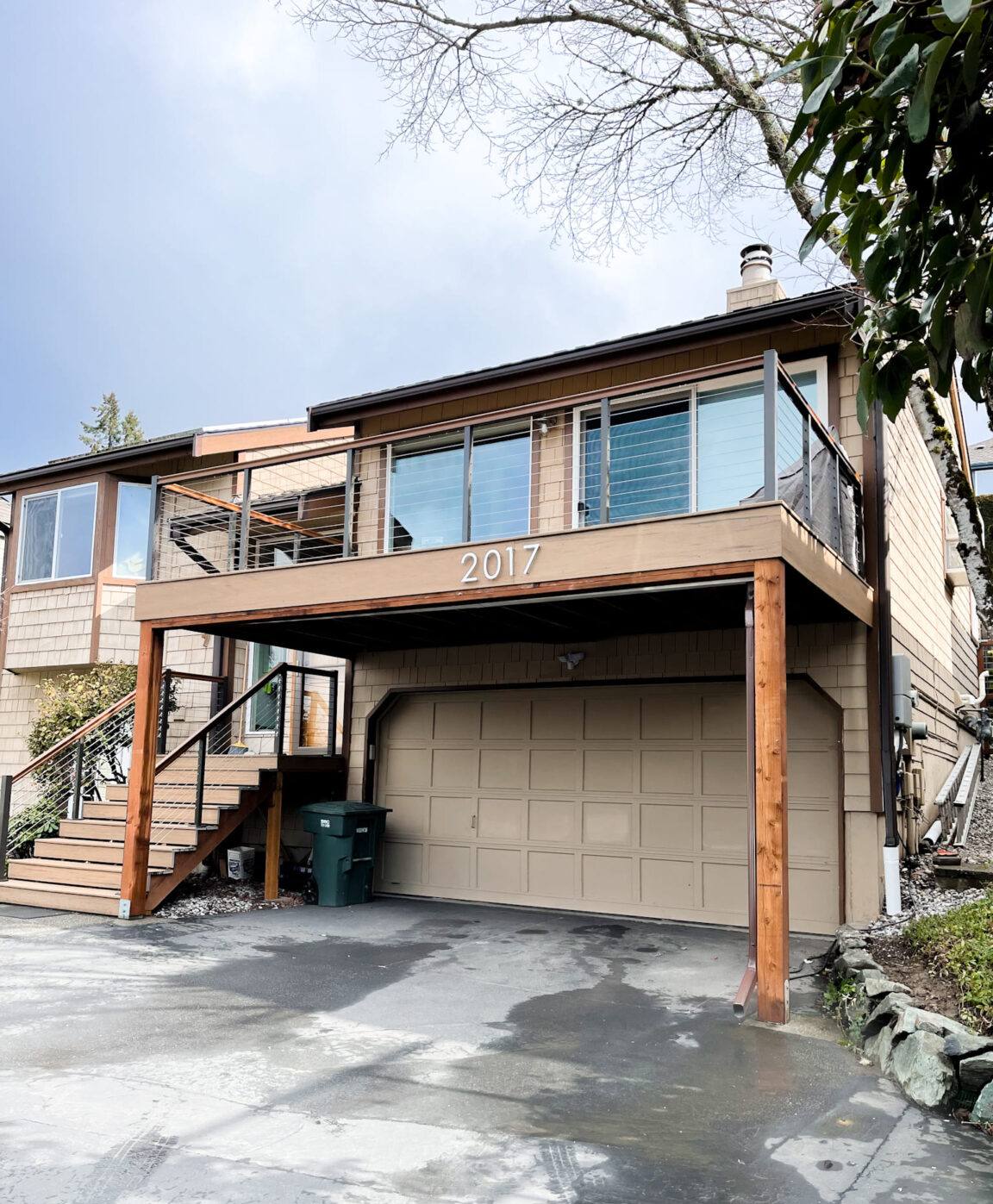
 Deck Building in Marietta: Built for This Coastline, Not a Catalog Photo
Marietta sits along the same stretch of Whatcom County coastline as Birch Bay, and the two share the same weather problems: salt-laden wind off the water, long stretches of driving rain, and a moss season that seems to run longer every year. A deck built to a generic national spec — the kind you'd get from a big-box design template — will often look fine for a season or two, then start showing problems that are specific to this coastline: corroding hardware, soft spots where water sits, and a slick green film that shows up faster here than it would twenty miles inland.
We build decks for homes in the Marietta area with that reality in mind from the first design conversation, not as an afterthought once the framing is already up. That means specific choices about fasteners, drainage, material, and layout that are easy to skip if a crew isn't used to building this close to salt water.
How Salt Air, Rain, and Moss Actually Damage a Deck
Salt Air and Metal Hardware
Airborne salt accelerates corrosion on anything metal — screws, joist hangers, post bases, bolts. On a deck built inland, standard galvanized hardware might hold up for decades. Close to Birch Bay's shoreline, the same hardware can start rusting and staining the wood around it within a few years if it isn't rated for coastal exposure. Once a fastener starts to corrode, it loses holding strength long before it looks obviously bad, which is part of why this problem gets missed until a board or railing feels loose.
Driving Rain and Trapped Water
Rain that comes in sideways off the water finds its way into joints, under railings, and behind ledger boards in a way that straight-down rain doesn't. If a deck's flashing, gaps, and drainage aren't planned for that, water gets trapped against framing and fasteners instead of running off, and that's where rot starts — usually in places you can't see until the damage is well along.
Moss and the Slip Hazard It Creates
Moss needs shade and consistent moisture, and Whatcom County's coastal microclimate provides plenty of both for a good part of the year. On a deck, moss doesn't just look bad — it holds moisture against the decking surface and turns into a genuine slip hazard on stairs and walking surfaces, especially in the low light of fall and winter mornings.
Choosing Decking Material for a Marietta Home
There's no single "best" decking material — the right call depends on your budget, how much upkeep you're willing to do, and how close your lot sits to open water and wind. Here's how the common options actually perform in this specific climate:
| Material | Upfront Cost | Maintenance | Coastal Performance |
|---|---|---|---|
| Pressure-treated pine | Lowest | Regular sealing/staining needed | Good if fasteners and sealing are kept up; vulnerable if maintenance lapses |
| Cedar | Mid-range | Periodic oiling or staining | Naturally rot-resistant, but softer wood is more prone to moss and surface wear in constant moisture |
| Composite decking | Higher | Occasional washing, no staining/sealing | Very stable in salt air and rain; some boards can still grow surface moss if never cleaned |
| PVC decking | Highest | Occasional washing | Fully moisture-resistant surface; strongest option for constant coastal exposure |
Our default recommendation for homes in this area leans toward composite or PVC decking for the walking surface, paired with a properly treated and fastened wood substructure underneath — you get a surface that shrugs off moss and moisture, on a frame built to actually hold up.
Framing and Fasteners: The Part of the Deck You Don't See
Coastal-Rated Hardware
We use stainless steel or coastal-rated (high-corrosion-resistant) fasteners and structural connectors on decks in the Marietta and Birch Bay area, not standard galvanized hardware. It costs more up front. It's also the single biggest factor in whether a deck's structure is still sound in fifteen years or starting to fail in five.
Ledger Board Attachment and Flashing
Where the deck attaches to the house is the most common point of hidden water intrusion on any deck, and it matters even more here because of how much sideways rain this coastline gets. Proper flashing at the ledger board keeps water from working its way behind the siding and into the house framing — this is not a place to cut corners or skip a step to save time.
Footings for Wet, Variable Soil
Soil conditions near the water can vary quite a bit within a short distance, and drainage around footings affects how well they perform over time. We size and set footings based on what we actually find on your site and the loads your specific deck design will carry, not a one-size-fits-all minimum.
Drainage and Layout Decisions That Matter on This Coastline
Board Gaps and Airflow
Decking boards need consistent gaps to let water drain through and air move underneath. Too tight, and boards trap moisture against each other; too wide, and you get an uneven, less comfortable walking surface. We set gap spacing based on the specific material and expected seasonal movement, not a generic default.
Deck Height and Ground Clearance
Low ground clearance restricts airflow under the deck, which slows drying time after rain and gives moss and mildew more opportunity to take hold underneath. Where a design allows for it, we build in enough clearance for the space under the deck to actually dry out between storms.
Grading and Water Direction
Water needs somewhere to go once it comes off the deck. We look at how the ground around posts and footings sheds water before we finalize layout, so runoff moves away from the structure instead of pooling against it.
Our Deck Building Process
- Site visit and assessment — we look at sun exposure, wind direction, drainage, and how close your lot sits to open water, since that changes our hardware and material recommendations.
- Design and material selection — we walk through decking, railing, and hardware options with honest cost and maintenance trade-offs, no upsell pressure.
- Permitting — we handle the permit application for you where one is required for your project's size and height.
- Framing and structural work — footings, ledger attachment, and framing built with coastal-rated hardware throughout.
- Decking, railing, and finish work — surface installed with proper gapping, fastening, and any staining or sealing your material calls for.
- Final walkthrough — we go over the finished deck with you, including basic maintenance guidance specific to your material choice.
Permits and Whatcom County Considerations
Most decks above a certain height or attached to the structure of the house require a permit in Whatcom County, and requirements can vary depending on your specific lot and jurisdiction near Birch Bay and Marietta. Skipping a required permit can create real problems later — at resale, at insurance claim time, or if the work needs to be inspected for any reason. We handle this step as part of the job rather than leaving it for the homeowner to sort out.
A Pre-Build Checklist for Marietta Homeowners
- Confirm whether your project needs a Whatcom County permit before work starts
- Ask what grade of fastener and hardware will be used — insist on stainless or coastal-rated, not standard galvanized
- Decide how much ongoing maintenance you're willing to do (staining/sealing vs. wash-only materials)
- Check that the design accounts for drainage and airflow underneath, not just the visible surface
- Ask how ledger board flashing will be handled where the deck meets the house
- Get a clear, written estimate that spells out material grade, not just a total price
Why a Crew That Already Works This Area Matters
A deck built by a crew that hasn't worked this specific coastline before is guessing at how much salt exposure, rain, and moss this area actually sees — and guesses tend to land on the side of standard, inland-spec materials and hardware because that's what's familiar. A crew that already builds decks around Birch Bay and Marietta isn't guessing. We know which hardware grade actually holds up here, which decking surfaces stay usable through a wet Whatcom County winter, and which layout choices keep moss from taking over a shaded deck by year two.
If you're planning a new deck or replacing one that's showing its age, we're glad to come take a look and talk through honest options for your specific property — no pressure, no pushy upsell, just a straight assessment of what your deck actually needs to hold up on this coastline. Reach out using the form below for a free estimate.