 Birch Bay
 Metal Roofing Built for Marietta's Coastline
Marietta sits close enough to the water that homes here take a different kind of weather beating than roofs just a few miles inland. Salt-laden air drifts in off the bay, driving rain comes in sideways during winter storms, and a long, damp moss season sets in every fall and doesn't let go until late spring. A roof that would hold up fine in a drier part of Whatcom County can fail early here if it wasn't chosen and installed with this specific coastline in mind.
This page is about one thing: metal roofing on homes in Marietta. Not a general overview of metal roofing everywhere, and not a pitch for every roofing product we offer. Just what actually matters if you own a home in this pocket of Birch Bay and you're weighing a metal roof.
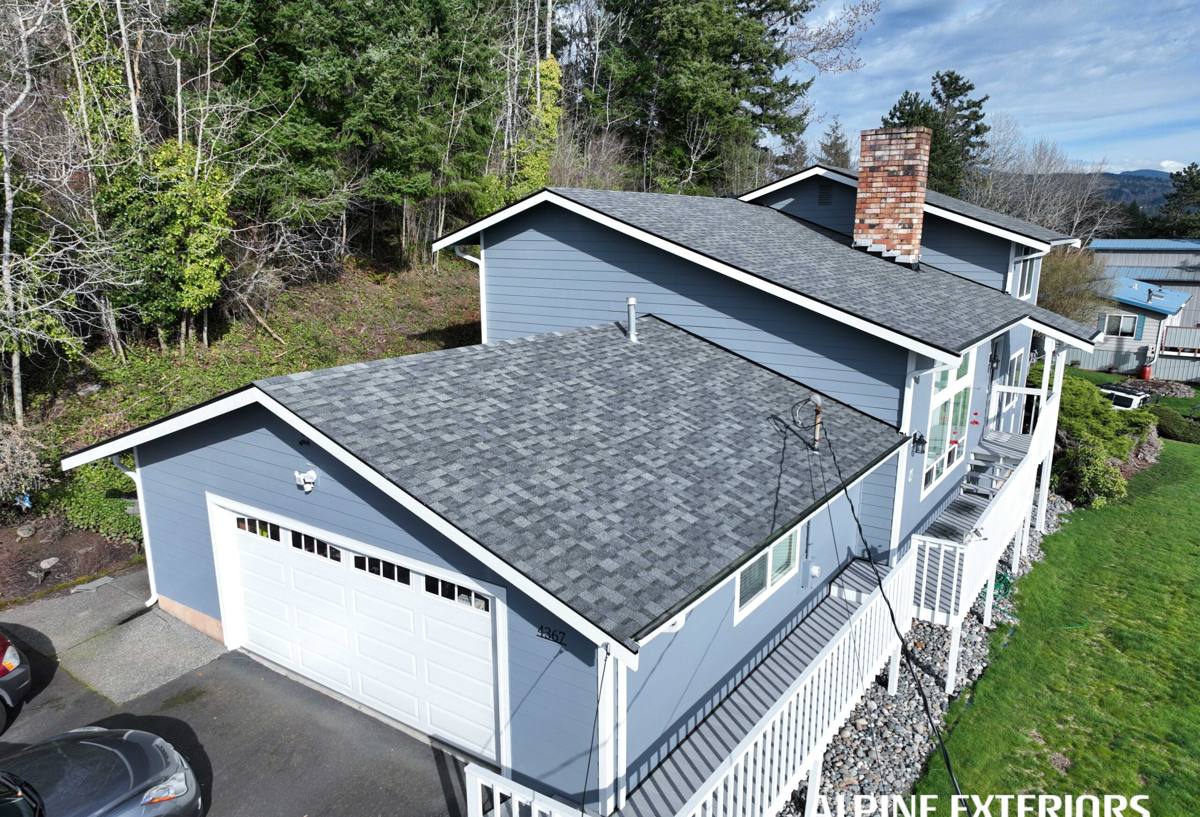
What Salt Air, Rain, and Moss Actually Do to a Roof
Salt-Driven Corrosion
Airborne salt doesn't just sit on the surface of a roof — it works into fasteners, flashing seams, and any spot where two dissimilar metals touch. Over years, that accelerates corrosion far faster than the same materials would experience a few miles from the water. This is why the metal, coating, and fastener choice matter more in Marietta than they would in, say, downtown Bellingham.
Wind-Driven Rain
Storms off the Salish Sea don't always arrive as straight-down rain. Wind pushes water sideways and upward under laps, ridge caps, and flashing that would stay dry in a calmer climate. A roof system here has to assume water will be pushed into places gravity alone wouldn't take it, which changes how underlayment, fastener spacing, and flashing details need to be handled.
Moss and Trapped Moisture
Whatcom County's long wet season is ideal for moss growth on north-facing slopes and anywhere shade keeps a roof damp. On some roofing materials, moss holds moisture against the surface and slowly degrades it. Metal doesn't feed moss the way organic shingle surfaces can, but moss can still take hold in dirt and debris that collects in valleys, and it will hold moisture against fasteners and seams if a roof isn't kept clear.
Why Metal Roofing Is a Strong Fit for This Climate
Metal roofing isn't automatically the right answer for every home, but for a saltwater-adjacent, high-rainfall property like most homes in Marietta, it solves several problems at once:
- Sheds wind-driven rain quickly instead of absorbing it, which matters when storms come in sideways off the bay
- Doesn't provide the organic surface that moss and algae feed on, so growth stays mostly limited to trapped debris rather than the roofing material itself
- Handles the freeze-thaw and constant damp-dry cycling of this climate without the granule loss and cupping that shorten the life of some other roofing types
- With the right coating system, resists the specific corrosion risk that coastal salt air creates
The tradeoff is that metal roofing is more sensitive to installation quality than some alternatives. A metal roof done right in a coastal climate will outlast almost anything else on the market. A metal roof done wrong — wrong fastener metal, wrong underlayment, poor flashing details — can develop problems faster than a simpler roofing system would, because the same wind and salt exposure that metal is good at resisting will find every weak point in a rushed installation.
Choosing the Right Metal Roofing System
Not all metal roofing is the same product wearing different colors. The panel style and base metal both affect how a roof performs in Marietta's specific conditions.
| Panel Type | Best Suited For | Maintenance Considerations | Relative Cost |
|---|---|---|---|
| Standing seam steel | Full roof replacements, homes wanting a clean, fastener-free surface | Concealed fasteners reduce salt-air corrosion points; occasional debris clearing in valleys | $$$ |
| Exposed-fastener steel | Outbuildings, garages, budget-conscious full replacements | Exposed fasteners need periodic inspection and eventual re-seating near the coast | $$ |
| Standing seam aluminum | Homes closest to the water or with heavy salt exposure | Naturally corrosion-resistant; lowest long-term maintenance in this specific climate | $$$$ |
For most Marietta homes, standing seam in either steel or aluminum is the practical choice — concealed fasteners mean fewer places for salt air to start corrosion. Homes with more direct water exposure, or owners planning to stay in the home long enough to value the lowest possible long-term maintenance, are often better served by aluminum. We'll walk through the honest tradeoffs for your specific roof rather than defaulting to whichever product is easiest to sell.
A Note on Coatings and Fasteners
The coating on the panel and the metal in the fasteners matter as much as the base panel material. Mismatched metals in contact with each other — steel screws in aluminum panels, for example — set up galvanic corrosion that accelerates in salt air. Part of doing this job correctly in Marietta is making sure every component of the system, not just the visible panel, is matched for this environment.
What a Correct Installation Actually Involves
The panels are the visible part of a metal roof, but most of what determines whether it holds up in Birch Bay's climate happens underneath and around them.
Underlayment
A high-quality synthetic or self-adhering underlayment matters more here than in a drier climate, because it's the backup layer that has to perform if wind-driven rain gets past a seam or lap. We pay particular attention to ice-and-water shield style membrane at eaves, valleys, and any low-slope transitions, since those are the areas most exposed to standing or driven water.
Flashing and Penetrations
Every place something interrupts the roof plane — a chimney, vent pipe, skylight, or wall transition — is a place water can find a way in if the flashing isn't detailed correctly. This is where rushed installations fail first, and it's the area we spend the most time getting right.
Fastening and Panel Layout
Panel layout, seam direction, and fastener spacing all need to account for the prevailing wind and rain direction specific to a site. A roof oriented and fastened without that in mind can end up with laps facing the wrong way for the weather it actually gets.
Ventilation
Proper attic and roof ventilation prevents condensation from forming on the underside of metal panels, which is a common cause of hidden moisture problems in coastal climates with big daily temperature swings between damp mornings and warmer afternoons.
Our Process for a Marietta Metal Roofing Project
- On-site inspection. We look at your existing roof structure, decking condition, ventilation, and any signs of moisture or corrosion before recommending a system.
- Honest scope and options. We explain which panel type and metal fit your home, your budget, and how close you are to the water — not a one-size answer.
- Tear-off and deck check. We remove the old roofing and inspect the decking underneath, since a metal roof is only as good as what it's fastened to.
- Underlayment and flashing first. The details that don't show once the job is done are where we spend the most careful attention, before a single panel goes on.
- Panel installation. Panels are installed with fastener and seam layout suited to this site's wind and rain exposure, not a generic default.
- Final walkthrough. We go over the finished roof with you, including what maintenance to expect given Marietta's climate.
Maintaining a Metal Roof in This Climate
Metal roofing is low-maintenance compared to most alternatives, but "low-maintenance" doesn't mean "no-maintenance" in a salt-air, high-moss climate. A little attention keeps a well-installed metal roof performing for its full lifespan.
- Clear debris from valleys and gutters at least twice a year — trapped organic material holds moisture against the panel and fasteners
- Rinse accumulated salt residue off the roof surface periodically if the home is close to the water, especially after long dry spells followed by wind
- Check exposed fasteners (if you have an exposed-fastener panel system) every couple of years for signs of loosening or corrosion
- Keep overhanging branches trimmed back to reduce shade, debris, and the conditions moss needs to establish
- Have flashing around penetrations inspected periodically, since that's the first place a leak will start if a seal begins to fail
Why a Crew That Already Works Marietta Matters
Metal roofing installation is unforgiving of shortcuts, and coastal installations are less forgiving still. A crew that hasn't worked this specific stretch of Whatcom County coastline can get the panel installation technically correct and still miss the details that matter here — using the wrong fastener metal for salt exposure, underestimating how far wind-driven rain travels under a lap, or skipping extra underlayment at eaves because it "usually" isn't necessary inland.
We work on homes throughout Birch Bay, including Marietta, and we build every metal roofing job around the conditions this specific coastline creates rather than a generic installation checklist. That's the difference between a metal roof that needs attention in eight years and one that quietly does its job for decades.
If you're weighing metal roofing for a home in Marietta, we're happy to take a look and give you a straightforward, no-pressure estimate — including an honest read on whether metal is the right fit for your specific roof. Fill out the form below to get started.