 Birch Bay
 Why Siding in Marietta Takes More Punishment Than Inland Homes
Marietta sits close enough to the water that its siding lives a different life than a house twenty miles inland in Whatcom County. Salt-laden air off the bay accelerates corrosion on fasteners, trim flashing, and any exposed metal components. Wind-driven rain off the Strait doesn't just wet a wall's surface — on exposed elevations it drives moisture sideways and upward, finding every gap in caulking, every loose panel edge, and every spot where old paint has started to crack. Add a moss and algae season that, in this part of Washington, can run most of the year on north- and west-facing walls that never fully dry out, and you have a combination that wears through siding systems faster than the manufacturer's glossy brochure ever suggests.
None of this means Marietta homes are doomed to constant repair. It means the margin for error is smaller. A caulking joint that would last a decade in a dry inland climate might fail in half that time here. A panel that's slightly out of level, or a butt joint that wasn't properly flashed, becomes a moisture entry point much faster near the water. When we look at a repair call in this neighborhood, we're not just patching what's visibly damaged — we're asking why that spot failed first, because the answer usually points to the actual weak point in the wall assembly.
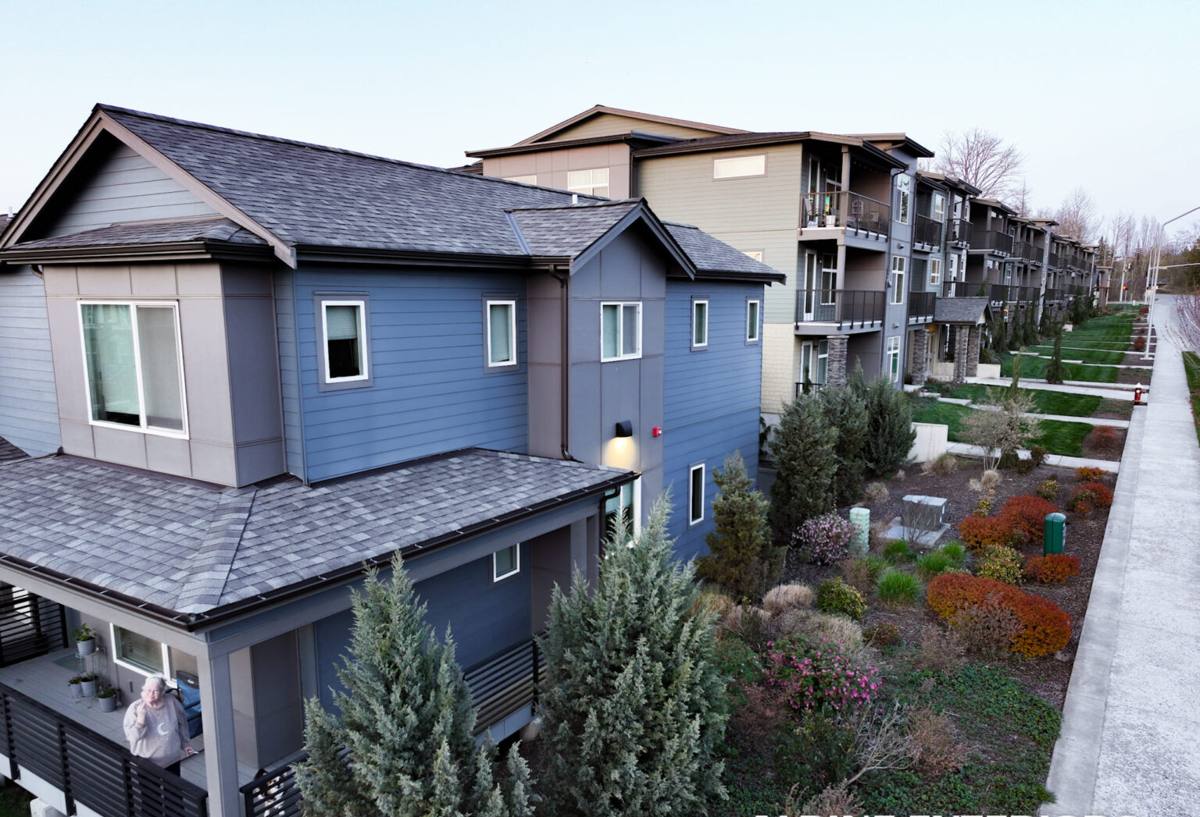
Signs Your Marietta Home Needs Siding Repair, Not Just a Paint Job
A lot of siding problems get masked with a fresh coat of paint, which buys a season or two of good looks before the underlying issue resurfaces — often worse. Here's what actually signals a repair is needed rather than a cosmetic touch-up:
- Soft or spongy spots when you press on the siding, especially near the bottom courses or around window and door trim
- Visible cracking or splitting along panel edges or at butt joints
- Persistent moss or algae growth that returns within weeks of cleaning, particularly on shaded or north-facing walls
- Bubbling, peeling, or chalking paint that keeps coming back in the same spots year after year
- Streaking or discoloration below nail heads or fasteners, which usually means water is getting behind the panel
- Gaps opening up at corners, trim boards, or where siding meets flashing around windows
- A musty smell or visible staining on interior walls that share an exterior with damaged siding
If you're seeing more than one of these, it's worth having someone look at the wall assembly, not just the surface. Siding is the first line of defense for the sheathing and framing behind it — by the time damage shows on the outside, there's a reasonable chance moisture has already been working on the inside of that wall for a while.
What Correct Siding Repair Actually Involves
A repair done right isn't just cutting out the damaged section and nailing up a new piece. There are a few steps that separate a lasting repair from one that fails again in a year or two:
Diagnosing the cause, not just the symptom
Before any siding comes off, the goal is to understand why that spot failed. Was it a flashing detail that was never installed correctly? A caulk joint that dried out and cracked? A drainage plane issue behind the siding? Replacing damaged material without fixing the underlying cause just resets the clock on the same failure.
Checking what's behind the siding
Once panels are pulled, we check the water-resistive barrier, sheathing, and framing for moisture damage or rot. In a climate like Birch Bay's, it's not unusual to find that damage has traveled further than the visible siding failure suggested. Any compromised sheathing or framing needs to be addressed before new siding goes back on — covering it up doesn't make it go away.
Matching material and finish
Patch repairs need to match not just the profile of the existing siding but its finish and color, or the repair sticks out for years. This is one of the reasons factory-finished fiber cement is easier to repair cleanly than field-painted materials — more on that below.
Re-sealing and re-flashing correctly
Every repair is a chance to fix a detail that was done wrong the first time. That means proper flashing at trim and window returns, correct caulk joints (not caulk used as a substitute for flashing), and fastening that follows manufacturer spec rather than whatever's fastest.
Repair or Replace? A Cost-Factor Breakdown
Not every siding problem calls for a full re-side, and not every problem is fixable with a patch. The right call usually comes down to how much of the wall is affected and what's driving the damage.
| Factor | Favors Repair | Favors Replacement |
|---|---|---|
| Extent of damage | Isolated to one or two wall sections | Spread across multiple elevations |
| Underlying moisture | Localized, source identified and fixable | Widespread rot or long-term water intrusion |
| Age of existing siding | Siding is mid-life and otherwise sound | Siding is near or past its expected service life |
| Material match | Matching material/finish is available | Original product discontinued or badly faded |
| Budget timing | Targeted fix now, plan ahead for full project | Repair costs approaching a meaningful share of replacement |
A straightforward answer we give a lot of Marietta homeowners: if the damage is contained and the rest of the siding is in decent shape, repair is the honest recommendation. If we're finding rot in multiple spots or the siding itself is simply worn out, we'll say so — patching a wall that's failing everywhere just delays a bigger expense.
Our Siding Repair Process
- Inspection. We walk the exterior, checking not just the obvious damage but adjacent areas that take similar exposure — corners, window heads, and any wall that faces prevailing wind and rain.
- Diagnosis. We identify what caused the failure — flashing, caulking, drainage, or material fatigue — so the repair addresses the actual problem.
- Written scope. You get a clear explanation of what needs to happen and why, before any work starts.
- Repair. Damaged material comes out, sheathing and framing are checked and repaired if needed, and new siding goes in matched to the existing wall, with correct flashing and fastening.
- Final check. We walk the finished repair with you so you know exactly what was done and what to watch for going forward.
Why We Only Repair and Replace With James Hardie Fiber Cement
When we're patching a wall, we're only installing James Hardie fiber cement siding — never vinyl, LP SmartSide, cedar, or primed spruce. That's a deliberate standard, not a limitation. Hardie's ColorPlus factory finish is baked on and consistent from batch to batch, which makes color-matching a repair section far more reliable than trying to match field-painted wood or weathered vinyl that's faded unevenly. Fiber cement is non-combustible, doesn't rot, and won't absorb water the way wood-based siding can — a meaningful advantage in a climate where moss and moisture are a year-round fact of life. Hardie's HZ5 product line is engineered specifically for climates like ours, with formulations built to hold up against sustained damp and temperature swings rather than the hot, dry conditions other regions deal with.
We've seen what happens when other materials are patched or repaired in this climate — vinyl that's brittle with age cracks further when you try to work with it, and wood-based siding that's already taken on moisture rarely stops at "repaired." Standardizing on one product means we know its failure points, its repair techniques, and its warranty terms cold, and that consistency is part of what makes a repair last.
Why Hiring a Crew That Already Works Marietta Matters
Siding repair looks straightforward from the outside — cut out the bad piece, put in a new one — but the details that make it last are specific to the site. A crew that's worked Birch Bay and the surrounding Whatcom County coastline knows which elevations take the worst of the wind-driven rain, how aggressively moss establishes itself in the shaded, damp spots common to this area, and how salt air affects fasteners and trim over time. That's the difference between a repair that's cosmetically fine for a season and one that actually holds up through another wet winter off the water.
Local experience also means knowing which permitting and code requirements apply in Whatcom County for exterior repair work, and having a realistic sense of how long materials and jobs actually take given local weather windows — repair work near the coast often has to work around rain days that inland crews don't plan for.
Keeping a Repair Lasting Once It's Done
A correctly done repair should hold up for years, but a little homeowner maintenance goes a long way in this climate:
- Rinse siding periodically to keep salt residue and grime from building up, especially on walls facing the water
- Keep gutters and downspouts clear so runoff isn't sheeting down the siding
- Trim back vegetation that keeps a wall shaded and damp, which encourages moss regrowth
- Walk the exterior once or twice a year and look for new cracking, gaps, or soft spots before they turn into bigger repairs
- Address minor caulk failures promptly rather than waiting for them to become water intrusion
If your Marietta home has siding that's showing its age or damage from a recent storm, we're happy to take a look and give you a straight answer on whether it calls for a repair or something more. Reach out for a free, no-pressure estimate using the form below.