 Birch Bay
 Cottonwood Beach's Roofing Challenge
Cottonwood Beach sits close enough to the water that the roof over your head deals with a different set of problems than a roof a few miles inland in Whatcom County. Salt-laden air blows off Birch Bay, wind-driven rain finds every gap in flashing and fastener, and a long, damp moss season settles in and doesn't let go for months at a time. A roof here isn't just shedding water — it's fighting corrosion, holding up under sideways rain, and resisting a constant, low-grade assault from moisture and organic growth. That combination is exactly why metal roofing gets asked about so often in this neighborhood, and why a metal roof installed the right way here looks very different from one installed on a dry, sheltered lot inland.
This page is about metal roofing specifically for Cottonwood Beach homes — what the climate actually does to a roof, what a correct installation involves, and why hiring a crew that already works this stretch of Birch Bay makes a real difference in how the job turns out.
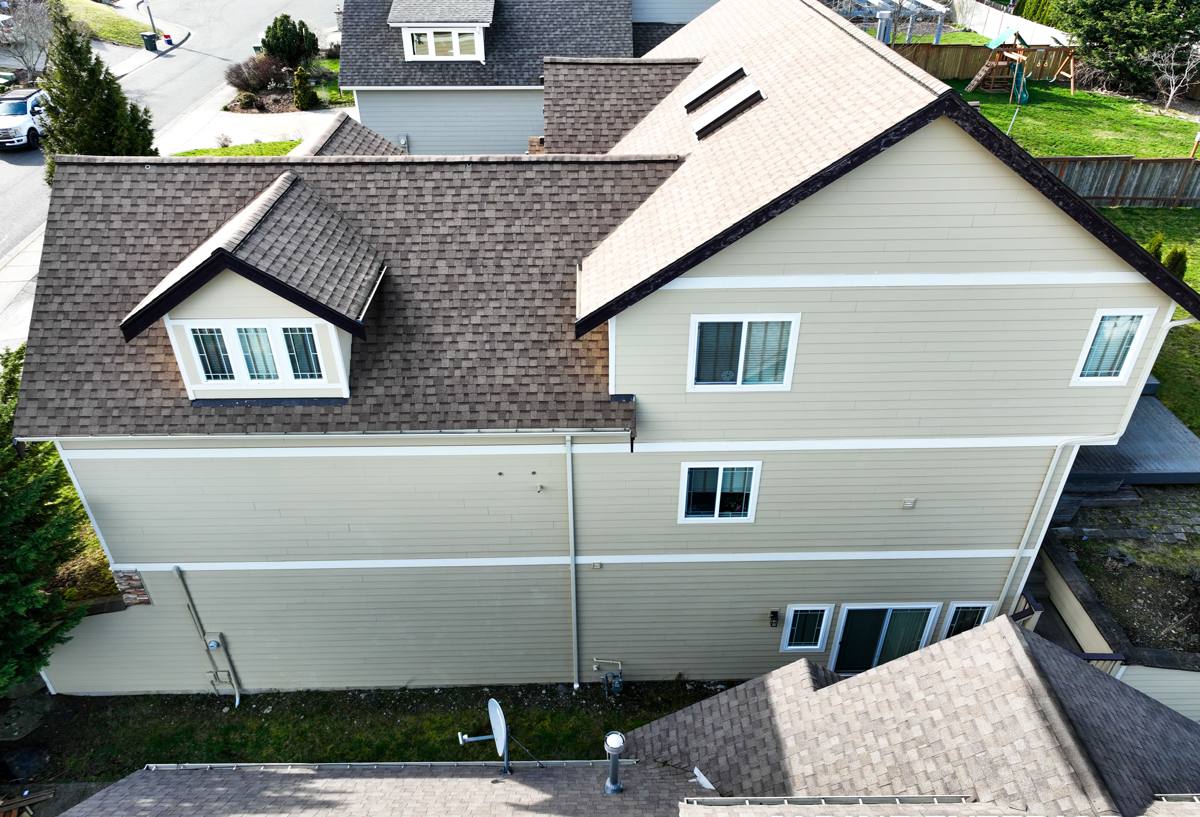
What Salt Air, Driving Rain, and Moss Season Actually Do to a Roof
Salt Air and Corrosion
Airborne salt from Birch Bay settles on every exterior surface, including the roof, and it doesn't wash off completely even in heavy rain. Over years, that salt film accelerates corrosion on unprotected metal — fasteners, flashing, and any exposed cut edges are the first places it shows up. This is a bigger factor here than it is for roofs installed even a short distance inland, and it's the main reason material choice and coating quality matter more in Cottonwood Beach than in a lot of other parts of the county.
Driving, Wind-Driven Rain
Rain in this area doesn't just fall straight down — storms off the water push it sideways, which means it gets forced under laps, around penetrations, and into any seam that isn't properly sealed or lapped. A roof that would be fine in a calmer inland setting can leak here if the underlayment, flashing details, and fastening pattern weren't built with wind-driven rain specifically in mind.
A Long Moss Season
Whatcom County's damp, mild winters and shaded, moisture-holding conditions give moss and algae a long window to establish themselves on a roof — often most of the year. Moss holds moisture against roofing material, works into seams, and on the wrong roofing product can shorten its service life considerably. Metal roofing resists moss far better than most other roofing materials, but "resists" doesn't mean "immune," and roof design (pitch, shading, overhanging trees) still matters.
Why Metal Roofing Works Here — and What to Watch For
Metal roofing is a strong fit for Cottonwood Beach's climate for a few concrete reasons: it sheds water fast instead of absorbing it, it doesn't give moss the porous surface it needs to root in the way some other materials do, and a properly coated panel handles salt air far better than untreated or poorly finished metal. It also holds up well under the area's wind exposure when it's fastened and detailed correctly.
That said, metal roofing isn't a install-it-and-forget-it product in a salt-air environment. The panels themselves usually aren't the weak point — the fasteners, flashing, and cut edges are, because that's where bare metal and dissimilar-metal contact are most likely to be exposed. A metal roof that's engineered for this location accounts for that from the start, not as an afterthought.
Panel Options Compared
Not every metal roofing system is built the same, and the right choice for a Cottonwood Beach home depends on budget, roof style, and how much you want to think about maintenance later. Here's an honest comparison of the main options we work with:
| Panel Type | Fastener Exposure | Salt-Air Durability | Typical Fit |
|---|---|---|---|
| Standing seam (concealed fastener) | Fasteners hidden under the seam | Best — no exposed fastener heads for salt to attack | Homes facing the water directly, long-term owners |
| Exposed-fastener steel panel | Fasteners through the panel face, gasketed | Good, but gaskets and fastener coatings need to be right and eventually re-checked | Budget-conscious projects, outbuildings, shops |
| Stone-coated steel (shingle-profile) | Fasteners largely concealed under coating | Good; coating adds a protective layer over the steel | Homeowners who want a traditional shingle look with metal's durability |
For homes with direct wind and salt exposure — which describes a lot of Cottonwood Beach lots — we generally steer people toward standing seam because there's simply less exposed hardware for the environment to work on over time. That's a professional judgment call based on maintenance burden and long-term performance, not a knock on exposed-fastener systems, which are a perfectly reasonable choice for a lot of buildings.
What a Correct Installation Actually Involves
The panel is the part homeowners see, but most of what determines whether a metal roof performs well in this climate happens underneath and around it. A correct installation for a Cottonwood Beach home includes:
- Full synthetic underlayment as a continuous water barrier under the panels, not a patchwork of felt.
- Ice-and-water membrane at eaves and valleys, where wind-driven rain and any winter freeze-thaw are most likely to force water backward.
- Corrosion-resistant fasteners and flashing matched to the panel material, so you're not mixing metals that react against each other in salt air.
- Properly lapped and sealed flashing at every penetration — chimneys, vents, skylights — since these are the most common leak points on any roof.
- Correct fastening pattern for wind exposure, tightened to manufacturer spec rather than "close enough."
- Adequate attic and roof ventilation, which controls condensation on the underside of the panels and helps prevent trapped moisture from feeding rot in the deck below.
Skip any one of these and the panel on top can still look fine while the roof underneath is failing. This is the part of the job that separates a roof that lasts decades from one that needs attention again in a few years.
Our Process, Start to Finish
We keep the process straightforward and don't ask you to make decisions you don't have enough information for:
- On-site inspection. We look at your current roof, deck condition, ventilation, and how exposed the home is to wind and salt off the bay.
- Honest recommendation. We tell you which panel system fits your home and budget, and why — including the trade-offs, not just the upsides.
- Written estimate. Clear scope, materials, and price — no vague allowances that turn into surprise charges later.
- Tear-off and deck check. We remove the old roofing and inspect the deck for rot or soft spots before anything new goes down, since covering a bad deck just hides the problem.
- Underlayment, flashing, and panel installation. Done to manufacturer spec, with the corrosion-resistant hardware this location calls for.
- Final walkthrough. We go over the finished roof with you before we consider the job done.
What Affects the Cost
We won't quote a price without seeing the roof, but these are the real factors that move the number up or down, so you can think about your own project realistically:
| Factor | Why It Matters |
|---|---|
| Panel system chosen | Standing seam costs more up front than exposed-fastener panels but needs less long-term attention |
| Roof complexity | Valleys, dormers, and multiple penetrations mean more flashing work and labor time |
| Deck condition | Rot or soft sheathing found at tear-off adds repair cost before new roofing goes down |
| Tear-off vs. overlay | A full tear-off costs more but lets us check the deck and start clean — usually the right call in this climate |
| Ventilation upgrades | Adding or correcting ridge and soffit venting adds cost but protects the deck long-term |
Maintenance in a Moss-Heavy, Salt-Air Climate
A well-installed metal roof in Cottonwood Beach needs less maintenance than most roofing materials, but "less" isn't "none." A short, realistic maintenance checklist:
- Clear leaves, needles, and debris from valleys and gutters at least once a year, more often under overhanging trees.
- Watch for moss establishing on the north-facing or shaded sections of the roof, and remove it gently before it spreads.
- Have flashing and sealant at penetrations checked periodically — these fail before the panels do.
- Keep gutters and downspouts clear so water isn't backing up against eave flashing during heavy rain.
- After major windstorms, a quick visual check for lifted panels or displaced flashing is worth the five minutes it takes.
Why a Local Crew That Already Works Cottonwood Beach Matters
Metal roofing installation isn't exotic, but installing it correctly for a specific site's wind and moisture exposure takes judgment that comes from having actually worked on roofs in that exact setting. A crew that's already done roofs along Birch Bay knows which fastener and flashing combinations hold up to this specific salt-air exposure, understands how the local wind pattern off the water affects fastening and panel choice, and isn't guessing at how much ventilation a given attic needs based on textbook numbers alone. That local familiarity shows up in fewer callbacks and a roof that's built for the conditions it's actually going to face, not generic conditions from a manufacturer's spec sheet written for somewhere else entirely.
If you're weighing metal roofing for a home in Cottonwood Beach, we're glad to come take a look and give you a straight answer — what your roof actually needs, what it'll cost, and why. Reach out for a free, no-pressure estimate using the form below.