 Birch Bay
 Cherry Point Roofs Work Harder Than Most
Cherry Point sits right up against the marine environment that defines this stretch of Whatcom County — open water on one side, wind-driven weather rolling through for most of the year. A roof here isn't just shedding rain like it would inland; it's fending off salt-laden air, near-constant humidity, and long stretches of shade and dampness that keep moss and algae established almost year-round. Add in the wind gusts that come off the Strait and the driving rain that hits shingles at an angle instead of straight down, and you've got a roofing environment that punishes shortcuts fast.
We've installed and repaired roofs across Birch Bay and the surrounding Whatcom County shoreline long enough to know that a roof spec'd for a dry inland subdivision doesn't hold up the same way out here. The materials, the underlayment, the ventilation, and the flashing details all need to account for salt air and moisture, not just wind speed on a spec sheet.
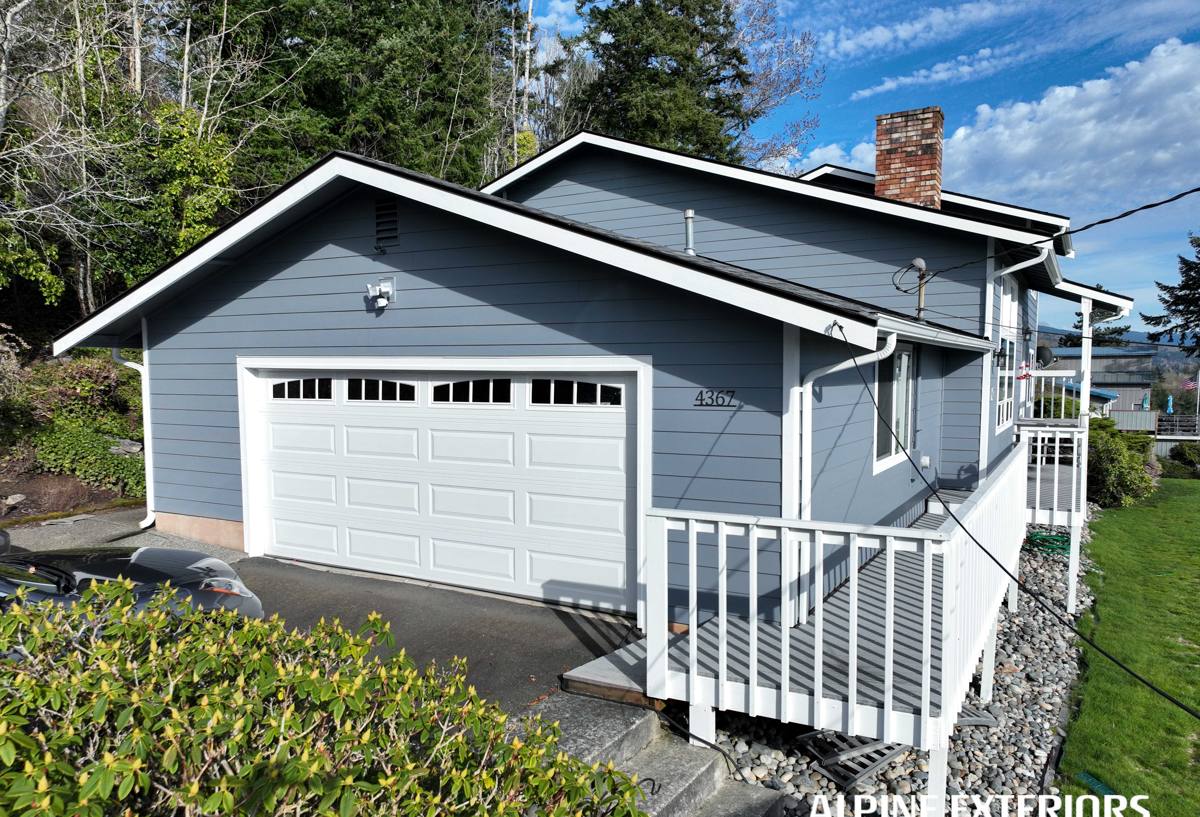
What a Correct Installation Actually Involves
"New roof" sounds like one job, but a properly installed roof in a coastal exposure area is really a stack of decisions that each matter on their own. Skipping or downgrading any one of them is usually where the callback five years later comes from.
Deck Condition Before Anything Else
We don't install new roofing over a deck we haven't inspected. Salt air and chronic moss retention accelerate rot in sheathing that's been under a failing roof for a while, especially near eaves and valleys where water lingers longest. Soft or delaminated sections get replaced before a single shingle goes down — not patched over.
Underlayment and Water Barrier
In a driving-rain climate, wind can push water sideways and up under standard shingle laps. We use synthetic underlayment across the full roof and self-adhered ice-and-water barrier at eaves, valleys, and any low-slope transitions — the spots where wind-blown rain and ponding are most likely to find a way in.
Ventilation That Matches the Moisture Load
Humid marine air trapped in an attic is what accelerates sheathing rot and gives moss a longer growing season on the shady side of the roof. Balanced intake and exhaust ventilation isn't an upsell — it's how the roof deck stays dry enough to reach its expected service life at all in this climate.
Flashing at Every Penetration
Chimneys, vents, skylights, and wall-to-roof transitions are where the vast majority of coastal roof leaks start — not the field of the shingles themselves. We use corrosion-resistant flashing and step-flash every wall intersection rather than relying on sealant alone, since caulk is the first thing salt air and UV break down.
Choosing the Right Roofing Material for This Exposure
There's no single "best" roofing material for Cherry Point — there's a best material for your roof's slope, shade exposure, and how long you plan to stay in the home. We'll walk through the honest trade-offs rather than pushing one option.
| Material | Coastal/Moss Performance | Maintenance Burden | Typical Lifespan Here |
|---|---|---|---|
| Architectural asphalt shingle | Good with proper algae-resistant granules; moderate resistance to moss in shaded areas | Periodic soft-wash cleaning recommended | 25–30 years |
| Standard 3-tab shingle | Lower wind rating, less algae resistance | Higher — moss and streaking show sooner | 15–20 years |
| Standing seam metal | Sheds moisture fast, very poor moss retention surface | Low — occasional gutter/fastener check | 40–50+ years |
| Synthetic/composite shingle | Strong moisture and impact resistance | Low to moderate | 30–40 years |
For homes with heavy tree shade or a north-facing slope — common on shoreline lots with mature evergreens — we lean toward materials with better algae resistance or a metal option, since moss simply has more time to establish where the sun doesn't reach the roof for much of the day.
Our Installation Process, Step by Step
- On-site inspection and estimate — we look at slope, shade pattern, current ventilation, and any signs of existing moisture damage before quoting anything.
- Material selection — we go over the trade-offs above based on your specific roof, budget, and how long you plan to own the home.
- Permitting — we pull the required permit and coordinate any inspection touchpoints so you don't have to track it down yourself.
- Tear-off and deck inspection — full removal of old roofing, with sheathing checked and replaced wherever rot or delamination is found.
- Underlayment and water barrier installation — synthetic underlayment plus ice-and-water barrier at all vulnerable transitions.
- Ventilation correction — intake and exhaust balanced to the attic's actual size and moisture load, not just code minimums.
- Roofing material and flashing installation — installed to manufacturer spec, with every penetration properly step-flashed.
- Final walkthrough — we go over the finished roof with you and cover basic care specific to your material and site.
Moss and Algae: What Actually Works Long-Term
Given how much of the year stays damp and shaded around here, moss control is worth planning for at install time rather than fighting after the fact. A few things make a real difference:
- Algae-resistant shingle granules (copper- or zinc-infused) slow regrowth on asphalt roofing
- Zinc or copper strips installed near the ridge let rainwater carry trace metal down the roof face, which suppresses moss over time
- Keeping overhanging branches trimmed back reduces the shade and debris that let moss take hold in the first place
- Gentle annual cleaning — soft wash, never pressure washing, which strips granules and shortens shingle life
- Clear gutters and valleys going into fall, before the wet season settles in
None of these replace a correctly installed, well-ventilated roof — they extend the life of one. A roof with poor ventilation or the wrong underlayment will grow moss and fail early no matter how often it's cleaned.
What Drives the Cost of a Cherry Point Roof
Every roof quote should be able to explain where the number comes from. The biggest swing factors we see locally are below.
| Cost Factor | Why It Matters Here |
|---|---|
| Roof size and number of planes | More valleys and hips mean more flashing detail and labor, regardless of material |
| Deck condition | Sheathing replacement adds cost but is non-negotiable where rot is found |
| Material choice | Metal and composite cost more upfront but reduce moss-related maintenance and last far longer |
| Access and slope | Steeper or harder-to-access roofs (common on shoreline lots) take more time and safety equipment |
| Ventilation upgrades | Correcting inadequate attic ventilation adds a modest cost but protects the whole investment |
Broad ranges are all anyone should quote you before actually inspecting the roof — anything more precise sight-unseen is a guess, not an estimate.
What to Ask Before Hiring Anyone for This Job
A new roof is one of the largest single investments in a home, and it's also one of the easiest jobs to do just well enough to pass a quick look while failing in five years. Before signing anything, it's worth asking:
- Are you licensed and insured to work in Washington, and can you provide proof?
- Will you pull the permit, or is that left to me?
- What underlayment and ice-and-water barrier do you use, and where specifically will it go?
- How will you handle ventilation — will it be assessed and corrected, or left as-is?
- What happens if you find deck rot once tear-off starts — how is that priced and communicated?
- What's covered under workmanship warranty versus manufacturer material warranty, and for how long?
A contractor who answers these clearly and specifically, without hedging, is usually the one who's done this correctly many times before.
Why Local Experience in This Exact Area Matters
Roofing crews who mostly work drier, more sheltered inland areas don't always plan for what Cherry Point and the rest of the Birch Bay shoreline throw at a roof — the salt exposure, the wind-driven rain angle, the shade patterns that keep moss going most of the year. Working this stretch of Whatcom County regularly means we've seen which details actually hold up out here and which ones look fine on paper but fail early against this specific climate. That's less about brand loyalty to any one shingle or metal product and more about installation discipline — underlayment coverage, flashing detail, and ventilation sized correctly for a coastal attic.
Get a Straightforward Estimate
If your roof is showing granule loss, moss buildup, or you're just planning ahead before a leak forces the issue, we're happy to take a look and walk you through the honest options for your specific roof — no pressure, no inflated urgency. Use the form below to request a free estimate for new roof installation in Cherry Point.